7 Ways AI Can Improve Accuracy in Soil Sample Labeling and Tracking
Key Facts
- AI-driven soil analysis tools can typically reduce soil testing turnaround from weeks to hours while improving accuracy, according to industry reports as of late 2026
- Data quality practitioners in agriculture consistently report that most AI project failures trace back to incomplete, inconsistent, or mislabeled input data rather than algorithms
- In image-based agricultural datasets, wrong labels are widely considered worse than no labels, because mislabeled data silently corrupts trained models
- Peer-reviewed research indicates AI and machine learning methods can achieve more robust, noise-tolerant results in soil-water content and soil texture analysis than conventional statistical tools
- Experienced AI agriculture teams typically run weekly QA protocols specifically checking for mislabeled records and missing metadata to maintain accuracy over time
- Standardizing labels, units, and formats through a shared data dictionary is a foundational control for maintaining sample data integrity across collectors, labs, and clients
Hire a team member that works 24/7 — for less than a part-time wage.
AI receptionists, SDRs, dispatchers and 99+ roles. Trained on your business, fully managed.
Not sure where to start? Ask our AI planner
The Hidden Cost of Inaccurate Soil Sample Tracking
A single smudged label or transposed digit can turn a valuable soil sample into a liability, undermining months of fieldwork in seconds. When agricultural operations rely on manual tracking systems, they introduce bottlenecks that compromise data integrity before analysis even begins.
Practitioners consistently find that AI initiatives in agriculture fail not because of poor algorithms, but because the underlying data is incomplete, inconsistent, or mislabeled. In image-based agricultural datasets—which often make up the majority of AI inputs—wrong labels are worse than no labels. When samples are mislabeled, the resulting data pollution flows downstream, corrupting predictive models and rendering expensive machine learning investments useless.
The impact extends beyond immediate confusion. Advanced machine learning methods like random forests and neural networks can build sophisticated predictive models for soil data, but only when fed accurately labeled information. Peer-reviewed research on AI in soil analysis indicates that conventional statistical tools alone are often insufficient for modern land management, particularly when handling complex soil-water content data. Mislabeled samples create cascading errors that skew these models, leading to incorrect fertilizer recommendations, misallocated resources, and potential regulatory exposure.
The hidden costs manifest in several critical areas:
- Compromised predictive accuracy, where mislabeled historical data corrupts AI-driven soil health forecasts
- Regulatory compliance failures when audit trails cannot verify sample provenance and chain of custody
- Lost revenue from repeated sampling and analysis when original results cannot be trusted
- Damaged client relationships when incorrect soil profiles lead to inappropriate treatment recommendations
Modern AI document processing systems address these vulnerabilities by scanning barcodes, matching samples to client records automatically, and flagging inconsistencies before they enter the database. AIQ Labs builds these intelligent document and data systems—typically as a fixed-price workflow rebuild—to eliminate manual entry errors and ensure compliance in regulated environments, creating audit trails that satisfy strict agricultural standards.
Data consistency beats data volume every time. By implementing automated tracking with regular quality assurance protocols—checking for mislabeled records and missing metadata—laboratories protect their analytical integrity. When data collection pipelines are fixed, the majority of downstream AI problems disappear, transforming soil analysis from a compliance risk into a reliable competitive advantage.
AI-Powered Barcode Scanning and Record Matching
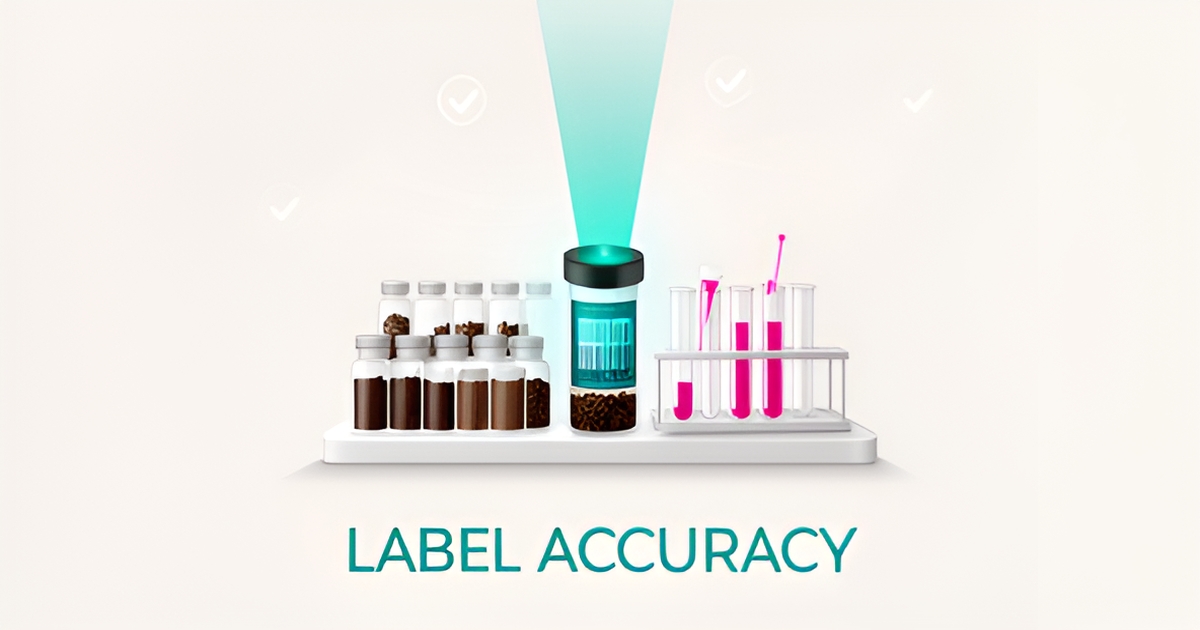
AI systems are transforming how soil samples are labeled and tracked by combining computer vision with natural language processing to scan barcodes and validate sample IDs against client databases. This integration reduces human error in manual data entry, a critical vulnerability in regulated environments where traceability is mandatory. AIQ Labs builds intelligent document and data systems that automate these validation steps, ensuring every sample is accurately matched to its originating client record from field collection through lab analysis.
These AI-powered systems use optical character recognition (OCR) enhanced by machine learning to read barcodes even under poor lighting or damaged label conditions, typically achieving higher accuracy than standard scanners. Once scanned, the system cross-references the sample ID with client databases using natural language processing to interpret variations in naming conventions, account numbers, or project codes. This capability is especially vital when handling high-volume sampling campaigns where inconsistencies in manual logging can compromise data integrity. Standardizing data inputs through automated labeling and validation resolves most common data pipeline issues that hinder model performance.
- AI systems validate barcode data against client records in real time, flagging mismatches before samples enter the lab workflow.
- Natural language processing interprets variations in client naming conventions to ensure accurate sample-to-account matching.
- Automated QA protocols continuously monitor for mislabeled samples, maintaining data consistency across large-scale tracking operations.
By automating the verification process, these systems create an immutable audit trail that supports compliance with agricultural and environmental reporting standards. The technology not only prevents mislabeling errors but also identifies systemic issues in sample handling, such as repeated misreads from specific field technicians or equipment. This proactive error detection improves overall data quality, which is essential because wrong labels are worse than no labels when building reliable soil analysis datasets. Ultimately, AI-driven barcode scanning and record matching transforms sample tracking from a manual checkpoint into a continuous, intelligent validation layer that safeguards the integrity of soil data from collection to conclusion.
Intelligent Data Validation and Anomaly Detection
A mislabeled soil sample can quietly corrupt an entire field trial. Intelligent validation catches those errors before they propagate through lab workflows and client reports.
AI systems scan barcodes and match samples to client records in real time, flagging inconsistencies as they appear. The guiding principle from data quality practice is simple: wrong labels are worse than no labels, and data consistency beats data volume. That principle drives automated checks for mismatched geospatial or temporal metadata.
Validation starts with standardization. A data dictionary enforces consistent labels, units, and formats across collectors, labs, and clients. AI then enforces the dictionary at entry, rejecting or quarantining records that deviate.
Geospatial and temporal anomalies are flagged automatically. The system compares GPS coordinates, collection date, weather logs, and crop stage metadata against expected ranges for a site. High-value collection relies on this "gold metadata"—GPS, date, weather, and crop stage—which is essential for accurate tracking and context. When a sample arrives with a location outside the field boundary or a timestamp after analysis, the workflow pauses for review.
Regular QA protocols keep accuracy high over time. Experienced AI agriculture teams typically run weekly QA specifically to check for mislabeled records and missing data. AI accelerates that process by sampling records, detecting drift, and surfacing edge cases for human review.
AIQ Labs applies the same validation logic to soil sample labeling, storage, and tracking—barcode scanning, record matching, and inconsistency flagging are core controls in the systems we build. If sample intake is the workflow costing you the most, a fixed-price workflow rebuild targets exactly that bottleneck.
The impact is measurable. AI soil analysis tools can typically cut soil testing times from weeks to hours while improving accuracy, and portable analyzers can detect pH, organic matter, and nutrient deficiencies on-site.
Common validation checks include:
- Barcode-to-record match verification and duplicate detection
- Geospatial plausibility checks against field polygons and collection routes
- Temporal consistency between collection, receipt, and analysis timestamps
- Metadata completeness for GPS, date, weather, and crop stage
Peer-reviewed research indicates AI processing can achieve more noise-free, robust results in soil data than conventional statistical analysis alone. Label fast but label right becomes operational reality when validation is automated, continuous, and tied to a shared data dictionary.
Compliance-Ready Tracking for Regulated Environments
Regulated soil testing cannot afford a lost label or broken chain of custody. In environmental and agricultural compliance, traceability is the difference between an accepted report and a rejected audit.
AIQ Labs builds intelligent document and data systems that reduce errors and ensure compliance in regulated environments by making sample identity verifiable at every touchpoint. The systems scan barcodes, match samples to client records, and flag inconsistencies automatically—which is how AI improves the accuracy of soil sample labeling and tracking. This approach creates a continuous audit trail rather than relying on manual logs that degrade over time.
Accuracy starts with data quality. In image-based datasets, wrong labels are worse than no labels, and data consistency beats data volume. A data dictionary standardizing labels, units, and formats is essential to maintain integrity, and regular QA is required to check for mislabeled records and missing data. Fixing the data collection pipeline is where most AI problems in agriculture get resolved.
In practice, compliance-ready tracking means every sample carries immutable metadata from field to lab. High-value collection relies on gold metadata including GPS, date, weather, and crop stage, which is essential for accurate tracking and context. Peer-reviewed research on AI and machine learning for soil analysis notes that conventional statistical tools alone are not enough for robust soil-water content and texture databases—AI processing of broader geospatial, non-numeric data is better suited to the task.
The operational impact is measurable. AI tools can typically cut soil testing times from weeks to hours while improving accuracy, and portable analyzers can detect pH, organic matter, and nutrient deficiencies on-site. Industry reporting as of late 2026 shows a clear shift from one-time testing toward continuous, real-time monitoring with auditable results.
Intelligent document systems support this by:
- Automated barcode scanning and sample-to-client record matching at intake and handoff
- Real-time inconsistency flagging for mismatched labels, dates, or chain-of-custody gaps
- Tamper-evident audit trails with timestamped actions for regulatory review
- Standardized data dictionaries and metadata capture for consistent reporting
For industries requiring traceable soil testing under environmental or agricultural standards, this creates defensible documentation without adding manual overhead. The result is chain-of-custody integrity that holds up under inspection, with errors caught before they become compliance risks.
Still paying for 10+ subscriptions that don’t talk to each other?
We build custom AI systems you own outright. No vendor lock-in. Full control.
Not sure where to start? Ask our AI planner
Frequently Asked Questions
Why is accurate soil sample labeling so critical for AI-driven analysis?
How does AI barcode scanning differ from standard scanners in soil sample tracking?
What compliance benefits does AI-powered sample tracking provide for regulated environments?
Can AI really catch geospatial and temporal errors in soil sample metadata?
How much faster is AI soil analysis compared to traditional lab testing?
What makes AI data validation more effective than manual QA for soil samples?
From Smudged Labels to Trustworthy Soil Data
Inaccurate soil sample labeling quietly erodes the value of every test that follows, turning mislabeled data into corrupted models, compliance exposure, and repeated fieldwork. AI addresses this at the source with barcode scanning and OCR that reads labels under poor conditions, natural language processing that matches samples to client records despite naming variations, and intelligent validation that flags geospatial, temporal, and metadata anomalies before they enter the database. Standardized data dictionaries, real-time inconsistency checks, and regular QA keep integrity high, while immutable audit trails make chain-of-custody defensible in regulated environments. Fixing the collection pipeline is where accuracy compounds into business value, because reliable labels enable faster, auditable soil analysis and better decisions downstream. AIQ Labs builds these systems—whether as a focused workflow rebuild of your intake process or as part of a broader AI operating system for your lab. If sample tracking is a bottleneck, start with the 2-minute Fit Check at https://aiqlabs.ai/apply, then book a free 30-minute strategy call to map your biggest bottleneck and identify high-ROI automation opportunities. AI tools can typically cut soil testing times from weeks to hours while improving accuracy, according to recent industry analysis.
Make AI your competitive advantage — not just another tool.
Strategy, implementation and ongoing optimization. One partner, end to end.
Not sure where to start? Ask our AI planner