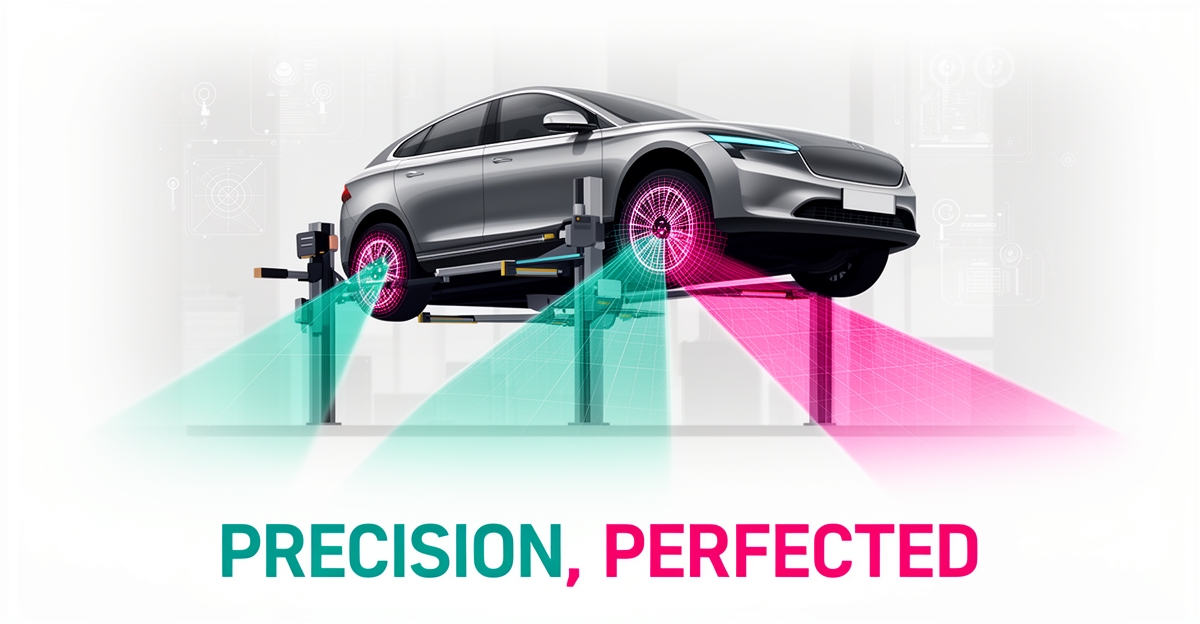
7 Ways AI Can Improve Accuracy in Wheel Alignment Measurements
Key Facts
- AI-augmented inspections typically surface more reportable findings than human-only inspections because AI attention is exhaustive rather than selective
- Predictive maintenance approaches can meaningfully reduce maintenance planning time while increasing equipment uptime through AI-driven analysis
- Computer vision systems can classify surface damage with high accuracy in alignment inspections removing inspector variance
- Per-inspection cost of AI analysis has fallen sharply as inference costs drop making consistent validation practical
- AI systems typically need a period of domain-specific data to reach full accuracy potential before delivering reliable insights
- Temporal comparison enables detection of gradual alignment drift invisible to single-point inspections revealing wear progression over time
- Hybrid AI-human workflows preserve contextual judgment while eliminating measurement variance between technicians maximizing strengths of both approaches
Hire a team member that works 24/7 — for less than a part-time wage.
AI receptionists, SDRs, dispatchers and 99+ roles. Trained on your business, fully managed.
Not sure where to start? Ask our AI planner
Why Wheel Alignment Measurements Fail: The Consistency Problem
Two technicians measure the same vehicle on the same morning and produce alignment readings that differ by several millimeters—yet both insist their numbers are correct. This scenario plays out in automotive shops daily, revealing the fundamental weakness of manual alignment measurement: human variability.
Unlike digital sensors that measure with microscopic precision, human technicians bring inherent inconsistency to every inspection. According to analysis of vehicle inspection workflows, human attention operates selectively, focusing on obvious issues while overlooking subtle deviations. In alignment work, this selective attention means a technician might catch severe toe misalignment while missing minor camber drift that will cause uneven tire wear over the next several thousand miles.
Environmental factors compound these inconsistencies. Temperature fluctuations affect both the vehicle's suspension components and the measurement equipment itself, while shop lighting conditions can obscure visual inspection points. A technician working at 8 AM with fresh eyes produces different results than the same technician at 4 PM after six hours of repetitive measurements. Industry analysis suggests AI-augmented inspections surface more reportable findings than human-only inspections—not because humans lack skill, but because human attention is selective while AI attention is exhaustive.
Manual measurement processes also suffer from data fragmentation. When technicians record alignment specs on paper or basic digital forms, critical context disappears—road conditions the vehicle typically encounters, previous adjustment history, and subtle patterns that only emerge across multiple inspections. Writing on automotive predictive maintenance notes that manual approaches lack the temporal intelligence to compare current measurements against historical baselines, turning every alignment into an isolated event rather than part of a continuous diagnostic narrative.
The core challenge lies in the mismatch between human cognition and the demands of precision measurement:
- Attention fatigue: Human focus degrades during repetitive tasks, causing technicians to miss subtle measurement deviations after the tenth identical inspection of the day
- Environmental sensitivity: Temperature, lighting, and shop conditions physically alter both the vehicle and measurement equipment, introducing variables that manual processes cannot consistently account for
- Inconsistent baselines: Without automated historical comparison, each alignment starts from zero, preventing technicians from recognizing gradual wear patterns that indicate developing problems
- Documentation gaps: Manual data entry creates opportunities for transcription errors and loses the rich contextual metadata needed for accurate trend analysis
This consistency problem extends beyond individual shops to multi-location operations where different technicians, equipment calibrations, and procedural interpretations create measurement silos. A vehicle receiving "identical" service at two locations may actually receive significantly different alignment corrections based solely on which technician performed the work.
The solution requires systems that maintain unwavering attention to detail while adapting to each vehicle's unique history. This is where AI-driven workflow automation transforms the equation. AIQ Labs' AI Workflow Builds rebuild the one workflow that costs your shop the most—monitoring every measurement step, validating inputs against historical patterns, and flagging inconsistencies in real-time. By combining sensor data with machine learning that never experiences fatigue or distraction, these systems establish the exhaustive, consistent analysis that alignment precision demands.
AI-Powered Sensor Integration and Real-Time Data Analysis
AI-powered sensor integration transforms wheel alignment from a periodic check into a continuous monitoring process. By connecting vibration, temperature, and pressure sensors to AI systems, alignment data flows in real-time, capturing subtle changes that precede visible wear or handling issues. This approach enables shops to detect misalignment patterns before they impact tire life or fuel efficiency, shifting maintenance from reactive to predictive.
Machine learning algorithms analyze this continuous data stream against historical baselines to identify anomalies that indicate developing alignment problems. Predictive maintenance systems can meaningfully reduce planning time while increasing equipment uptime, allowing technicians to intervene early based on data trends rather than waiting for customer complaints or visible tire damage. These systems learn from thousands of alignment cycles to distinguish normal operating variations from true misalignment signals.
AIQ Labs builds custom AI systems that integrate sensor data with workflow automation to maintain consistency across every alignment procedure. The technology processes multi-sensor inputs simultaneously, correlating vibration patterns with temperature fluctuations and pressure changes to build a comprehensive picture of wheel behavior. This integrated analysis catches issues like gradual camber drift or toe-in progression that might be missed during isolated manual checks.
- Continuous vibration monitoring detects imbalance before it causes uneven tread wear
- Real-time temperature analysis identifies bearing or brake drag affecting alignment
- Pressure trend tracking reveals slow leaks that alter tire contact patch over time
By combining sensor fusion with machine learning, AI systems provide alignment technicians with actionable insights rather than raw data. The technology highlights which specific adjustment angles need correction and predicts how long current settings will remain within tolerance based on driving conditions. This precision reduces comebacks and ensures alignments hold longer, directly improving shop efficiency and customer satisfaction.
Computer Vision and Automated Measurement Validation
Wheel alignment measurements demand repeatable precision, and computer vision removes the variability that has long plagued manual checks.
AI-driven vision systems analyze alignment indicators and surface conditions with high classification accuracy for surface damage detection, identifying dents, scratches, paint chips and misalignment markers that are easy to miss under shop lighting. According to industry analysis of AI damage detection, this level of performance is achieved by applying the same evaluation criteria to every measurement, eliminating inspector variance across shifts and locations.
Consistency scales where human attention cannot. Analysis of AI-augmented inspections finds they surface more reportable findings than human-only inspections because human attention is selective while AI attention is exhaustive. The system reviews every frame of an inspection video, flagging subtle toe, camber and caster deviations alongside surface indicators that correlate with alignment stress.
This approach mirrors how AIQ Labs builds custom AI systems that monitor and validate every step of an alignment process. By combining sensor data, historical patterns and machine learning, the models maintain consistency in alignment measurements while learning site-specific norms over time.
Computer vision validation typically delivers:
- Automated capture and frame-by-frame analysis of alignment rig readings and component surfaces
- Standardized scoring against a fixed criteria set, removing inspector-to-inspector drift
- Temporal comparison across inspections to reveal progressive wear or recurring misalignment
- Flagging of additional reportable findings that human-only reviews miss
The hybrid workflow keeps human judgment where it matters. Technicians perform physical assessments and final sign-off while AI provides exhaustive visual analysis and structured data extraction. That division addresses the limits of purely manual or purely automated systems and maximizes the strengths of each.
Economic viability has improved sharply as inference costs fall. Analysis of inspection economics shows per-inspection cost of AI analysis has dropped dramatically, making consistent validation practical for high-volume shops and multi-location operations.
When computer vision is embedded in an automated workflow, alignment becomes a repeatable, auditable process rather than an opinion-based check.
Temporal Intelligence: Comparing Measurements Across Time
A single alignment check captures a moment in time. AI turns that moment into a continuous story by keeping a visual record of every measurement and comparing it visit to visit.
That temporal intelligence reveals gradual wear patterns and alignment drift that single-point inspections cannot detect. When platforms maintain visual records of every inspection, AI can perform temporal comparison, revealing changes that no single inspection can show. The capability that most fundamentally changes the inspection paradigm isn't AI's ability to analyze a single inspection—it's the ability to compare inspections across time.
Alignment drift rarely appears overnight. Subtle shifts in toe, camber, or caster accumulate from road conditions, suspension fatigue, and repeated loading. Human inspectors see today's numbers; AI sees the trend line. By analyzing historical data and real-time inputs from wheel sensors, AI algorithms detect patterns or anomalies that may indicate potential failures or the need for servicing. This proactive approach shifts maintenance from reactive to predictive.
The business impact is measurable. Predictive maintenance can reduce the time required to plan maintenance while increasing equipment uptime and availability. For service operations, temporal comparison provides causation evidence for insurance applications and transforms declined work conversations by showing wear progression over time.
AI-augmented inspections surface more reportable findings than human-only inspections because human attention is selective while AI attention is exhaustive. In a hybrid workflow, technicians perform physical assessments while AI provides consistency and comprehensive visual analysis. That combination preserves contextual judgment while eliminating variance between inspectors.
In practice, this is workflow automation at work. AIQ Labs builds custom AI systems that monitor and validate every step of the alignment process using sensor data, historical patterns, and machine learning to maintain consistency in alignment measurements.
Temporal comparison enables true predictive maintenance through:
- Visual record retention of each alignment measurement with timestamped images and sensor data
- Automated drift detection that flags slow changes in toe, camber, caster beyond normal tolerance bands
- Wear pattern correlation linking alignment shifts to tire wear, suspension components, and driving history
- Predictive alerts that recommend service before symptoms appear to the driver
The result is consistency at scale. When inspections are linked across time, the system builds a reliable degradation model for each vehicle. Fleet managers can schedule maintenance at optimal times based on actual usage patterns rather than arbitrary mileage intervals.
For shops and fleets, this means fewer comebacks, better customer trust, and data-driven service recommendations. AI does not replace the technician; it gives the technician a memory that spans every visit and the ability to prove what changed, when, and why.
Implementing AI Alignment Systems: The Hybrid Approach
Successful AI integration in wheel alignment begins with recognizing that technology amplifies human expertise rather than replacing it. The hybrid model leverages AI's exhaustive analytical capabilities while preserving the irreplaceable value of technician judgment for physical assessment and contextual interpretation. This approach creates a system where consistency and precision meet practical shop-floor reality.
Sensor deployment forms the foundation of this implementation strategy. Shops should install calibrated sensors on alignment racks to capture real-time data on camber, caster, toe, and thrust angle measurements during every vehicle service. These sensors generate continuous streams of dimensional data that feed directly into AI analysis engines, creating the raw material for pattern recognition and anomaly detection. The quality of this initial data collection directly impacts system accuracy, making proper sensor placement and calibration critical first steps.
Data collection requirements follow a predictable timeline. AI systems typically need a period of domain-specific inspection data before reaching full accuracy potential, as models need sufficient exposure to the shop's specific vehicle mix, common adjustment patterns, and typical measurement variations. During this period, the AI builds its understanding of normal measurement ranges while flagging outliers for technician review. This learning phase transforms raw sensor data into meaningful insights about alignment trends and potential issues.
Quality control workflows establish the human-AI partnership that defines the hybrid approach. Technicians perform physical assessments including tire condition checks, suspension component inspections, and road test evaluations while AI systems simultaneously analyze measurement data for consistency and precision. The AI flags measurements outside established tolerances or identifies patterns suggesting underlying issues like bent components or worn bushings. Technicians then validate these AI-generated alerts through physical inspection, creating a feedback loop that continuously improves both human and machine accuracy.
Integration with existing shop systems completes the implementation cycle. AI alignment data flows into shop management software to automatically populate service records, trigger recommended maintenance alerts, and generate detailed customer reports. This connectivity eliminates manual data entry while ensuring alignment measurements become part of each vehicle's complete service history. The result is a streamlined workflow where AI handles the exhaustive measurement analysis while technicians focus on interpretation, explanation, and the physical work that keeps vehicles operating safely and efficiently.
Still paying for 10+ subscriptions that don’t talk to each other?
We build custom AI systems you own outright. No vendor lock-in. Full control.
Not sure where to start? Ask our AI planner
Frequently Asked Questions
Why do my wheel alignment readings vary between technicians?
Can AI actually measure alignment more accurately than a person?
How does AI catch alignment issues that manual checks miss?
Will AI replace my alignment technicians?
What business benefits do shops see from AI alignment systems?
How long does it take to get accurate results from an AI alignment system?
From Measurement Variance to Competitive Precision
Wheel alignment accuracy no longer depends on which technician shows up or how many measurements they've already completed that day. By integrating sensor data, computer vision, and temporal analysis, shops can eliminate the consistency gap that has plagued manual processes—surfacing more reportable findings while building predictive maintenance capabilities that prevent comebacks before they happen. The path forward isn't about replacing skilled technicians with algorithms; it's about giving those technicians AI systems that maintain exhaustive attention to detail while human expertise handles physical assessment and customer trust. Start by auditing your current measurement variance—compare readings across different technicians and shifts to establish your baseline. Then implement hybrid workflows where AI validates every measurement against historical patterns while your team focuses on interpretation and repair. AIQ Labs builds custom workflow automation systems that monitor and validate every step of this process, turning alignment from an isolated service into a continuous diagnostic advantage. Ready to eliminate measurement variance from your operation? Start with the 2-minute Fit Check to map your specific automation opportunities.
Make AI your competitive advantage — not just another tool.
Strategy, implementation and ongoing optimization. One partner, end to end.
Not sure where to start? Ask our AI planner