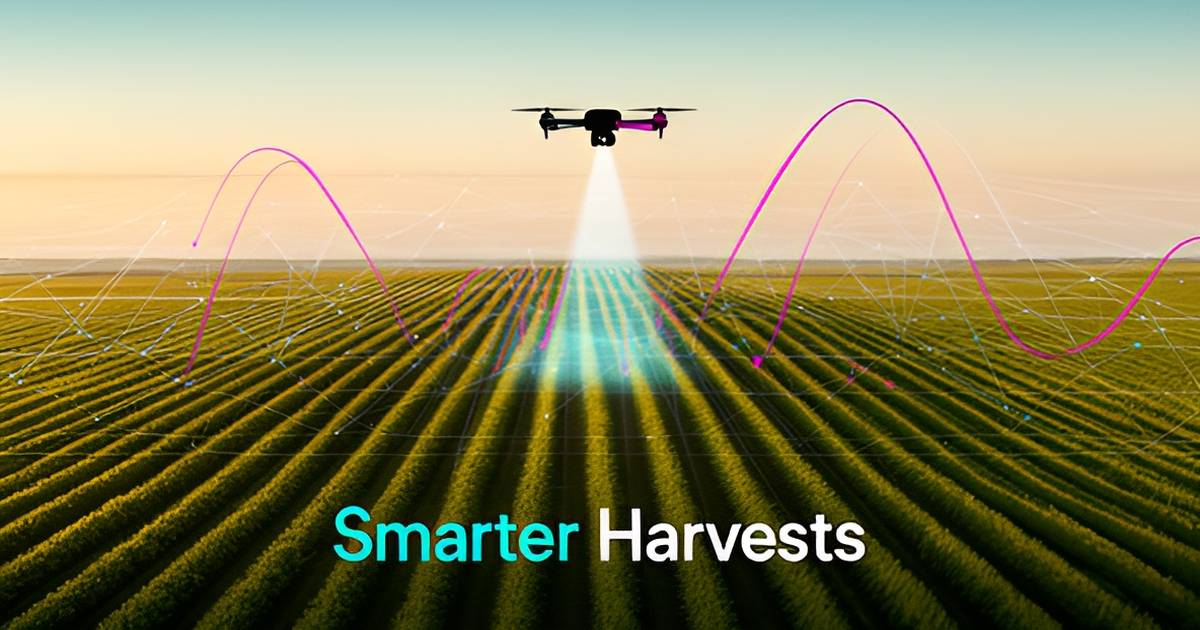
7 Ways AI Can Improve Crop Yield and Harvest Timeliness
Key Facts
- AI yield prediction typically reaches 85% to 95% accuracy versus 60% to 75% for traditional methods according to industry research
- AI-based yield prediction can cut input costs by up to 25% per AI adoption analysis
- A Maharashtra rice cooperative reported accuracy above 88% and input costs cut by nearly 22% after AI integration from a published case study
- Models using four or more data sources gain roughly 15 to 20 percent higher accuracy than single-source approaches per Nature Scientific Reports
- Advanced regression models have achieved R² of 0.92 with mean absolute error as low as 0.015 in peer-reviewed work
- High-throughput image-based phenotyping enables precise automated trait acquisition across lab to field scales as described in research
Hire a team member that works 24/7 — for less than a part-time wage.
AI receptionists, SDRs, dispatchers and 99+ roles. Trained on your business, fully managed.
Not sure where to start? Ask our AI planner
The Hidden Cost of Guesswork in Modern Harvest Operations
For decades, harvest timing has been a high-stakes gamble built on regional averages and seasonal intuition rather than field-level reality. Traditional forecasting methods typically achieve only 60% to 75% accuracy, leaving operators blind to the micro-variability that determines whether a crop reaches its genetic potential or succumbs to weather windows and spoilage. This guesswork cascades through the entire operation — triggering premature input applications, misallocated labor, and harvest schedules that miss the narrow peak-quality window by days that cost millions.
The financial toll is measurable and persistent. Reliance on broad statistical models drives up to 25% higher input costs because farmers over-apply fertilizer, water, and crop protection as insurance against uncertainty. A rice cooperative in Maharashtra experienced this firsthand before integrating an AI system that analyzed satellite imagery, soil data, and weather intelligence together; they subsequently dropped input costs by nearly 22% while pushing prediction accuracy above 88%. The difference wasn't better farming — it was better data feeding better decisions.
- Regional averages mask field-level stress signals that satellites detect weeks before ground visibility
- Single-source models (weather-only or imagery-only) lack the 15–20% accuracy gains of multi-source integration
- Manual scouting cannot scale across thousands of acres with the frequency needed for timely intervention
- Labor and equipment scheduling based on inaccurate forecasts creates bottlenecks and idle capacity
The shift toward precision is already underway. High-throughput image-based phenotyping now enables automated trait acquisition from controlled labs to complex field environments, replacing periodic manual measurements with continuous, multi-scale monitoring. When combined with environmental data streams, these systems reduce the time between insight and action — critical when a three-day delay in harvest can slash marketable yield by double digits. AIQ Labs helps harvesting companies unify these data sources into field-specific forecasts — whether through a single workflow rebuild or a full AI Operating System — turning the variability that once forced guesswork into the signal that drives precision.
How AI Transforms Field Data into Precision Forecasts
Modern agriculture generates terabytes of field data every season, but raw numbers alone don't drive decisions. AI systems bridge that gap by fusing satellite imagery, weather intelligence, soil sensors, and multi-year yield histories into field-level forecasts that update in near real time, consistently achieving 85% to 95% accuracy where traditional statistical methods typically plateau at 60–75% according to industry research.
This precision rests on five core technologies working in concert. Remote sensing platforms — from orbiting satellites to low-altitude drones — capture crop health signals weeks before stress becomes visible on the ground. Machine learning models ingest those signals alongside hyper-local weather and soil data to detect patterns no human analyst could spot manually. Computer vision translates canopy imagery into quantitative biomass and disease metrics. Farm management software stitches every operational record into a single timeline, while climate modeling layers long-range scenarios onto daily decisions as detailed in recent analysis.
- Satellite and UAV remote sensing for continuous canopy monitoring
- Predictive ML models trained on historical yield and environmental data
- Computer vision pipelines that quantify disease, nutrient status, and biomass
- Integrated farm management platforms unifying operational records
- Field-scale climate modeling for scenario planning
Research confirms that models combining four or more of these data streams gain 15 to 20 percent higher accuracy than single-source approaches per a study in Nature Scientific Reports. Advanced regression techniques such as Random Forest and LightGBM have delivered R² scores of 0.92 with mean absolute errors as low as 0.015, while explainable AI tools like SHAP and LIME surface the exact drivers — temperature, rainfall-nutrient interactions, planting-date deviations — so agronomists can act with confidence validated in peer-reviewed work.
The technology doesn't replace agronomic judgment; it sharpens it. AIQ Labs helps harvesting companies deploy these integrated systems so field teams receive actionable forecasts — not dashboards — that reduce input costs by up to 25% and shrink the decision cycle from weeks to days.
Early Warning Systems: Detecting Crop Stress Before It's Visible
Crop stress rarely announces itself until yield is already lost. By the time wilting or discoloration is visible in the field, the window for low-cost intervention has narrowed dramatically.
AI shifts monitoring from reactive scouting to early warning by fusing continuous remote sensing with field-level data. Satellites continuously monitor crop health and growth patterns across large areas, and AI models analyze this imagery to detect stress and flag problems weeks before they are visible on the ground, giving farmers and planners early warning when yields are at risk. This lead time converts a crisis response into a targeted correction.
The accuracy of those warnings scales with data diversity. Industry research shows that models combining four or more data sources see accuracy gains of 15 to 20 percent over those using fewer. Multi-source integration is now standard practice in precision agriculture, where high-throughput image-based phenotyping enables the precise and automated acquisition of traits across various spatial and temporal scales, from controlled laboratory settings to intricate field environments.
Effective early warning systems typically combine:
- Satellite and UAV imagery for canopy temperature, NDVI, and growth anomalies
- Soil and climate data including moisture, nutrient levels, and microclimate
- Weather intelligence and field-level forecasts of rainfall, heat, or drought impact
- Historical yield and farm management records for baseline comparison
When these streams are fused, AI crop yield prediction typically achieves 85% to 95% accuracy, compared to traditional statistical methods which typically achieve 60% to 75%. That precision supports proactive actions such as irrigation adjustments, nutrient top-ups, or targeted pest control before damage compounds.
The business value is measurable. AI yield forecasting analysis finds AI-based yield prediction can cut input costs by up to 25%, with a rice cooperative in Maharashtra improving prediction accuracy to over 88% and dropping input costs by nearly 22% after integrating an AI system. Early detection also protects harvest timeliness by preventing stress events that force delayed or split harvests.
For harvesting companies, this translates into fewer spoilage events and more predictable logistics. AIQ Labs builds multi-source monitoring that flags risk weeks ahead of visual symptoms — as a fixed-price workflow build or as part of a connected AI Operating System. The approach does not replace agronomist expertise; it makes that expertise more powerful by giving it better, faster data to act on.
From Prediction to Profit: Real-World ROI from AI Yield Systems
Prediction accuracy is no longer a research metric — it is a cash-flow lever for growers who harvest on time and waste less.
AI yield systems turn field-level data into operational decisions. By analyzing soil, weather, satellite imagery and historical data, models produce near-real-time forecasts that drive action, not just planning. According to industry research, AI crop yield prediction consistently achieves 85% to 95% accuracy, compared to traditional statistical methods which typically achieve 60% to 75% accuracy.
That jump changes how inputs are used. Analysis of AI adoption in agriculture shows AI-based yield prediction can cut input costs by up to 25%. The gain comes from precision, not reduction. Farmers apply fertilizer, water and pest controls where models flag stress weeks before it is visible on the ground.
Real operations show the pattern. A rice cooperative in Maharashtra, India, improved prediction accuracy to over 88% and dropped input costs by nearly 22% after integrating an AI system. The cooperative used the forecast to optimize harvest timing, reduce spoilage, and allocate labor and storage more efficiently.
Accuracy improves with data diversity. Research published in Nature Scientific Reports shows models combining four or more data sources see accuracy gains of 15 to 20 percent over those using fewer. Satellite observations, UAV imaging, soil and climate data, and spatiotemporal information are integrated to monitor traits across scales.
For harvesting companies, this translates into measurable operational impact:
- Optimized harvest timing from field-level predictions that update in near real-time
- Reduced spoilage through early stress detection and proactive intervention
- Better resource allocation for labor, transport and storage based on precise yield forecasts
- Improved cash flow via input cost reductions up to 25% and fewer emergency purchases
AIQ Labs works in AI for Agriculture & Food Production, helping harvesting companies deploy AI systems that analyze environmental data to maximize yield and reduce spoilage. The technical capability maps directly to profit when forecasts are embedded in harvest planning and logistics.
The value is not replacing agronomist expertise. It is making that expertise more powerful by giving it better, faster data to act on. With prediction accuracy jumping from 60-75% to 85-95%, decisions move from regional averages to field-specific execution.
Implementing AI Yield Prediction: A Practical Roadmap for Harvest Operations
Deploying AI yield prediction is not about installing software—it is about building a data infrastructure that learns your operation. The most successful implementations treat AI as a strategic asset, not a subscription service.
Start with your data foundation. AI models perform best when they ingest four or more distinct data streams—satellite imagery, soil sensors, weather intelligence, and historical yield records. Research shows that systems combining multiple sources achieve 15 to 20 percent higher accuracy than those relying on fewer inputs. If your current farm management platform cannot export clean, structured data, that is your first bottleneck to resolve.
Integration comes next. Your AI system must connect with existing workflows, not disrupt them. This means building two-way API connections between your yield prediction models and the tools your team already uses—whether that is climate monitoring dashboards, irrigation controllers, or harvest scheduling software. When AI predictions flow directly into operational decisions, you shift from reactive farming to proactive management.
Consider a phased rollout:
- Pilot with one crop type or field zone to validate accuracy against ground truth
- Integrate weather and soil data streams before adding satellite or drone imagery
- Train your team on interpreting AI outputs alongside agronomic expertise
- Scale to full operation only after achieving consistent 85%+ prediction accuracy
Ownership matters more than most operators realize. Subscription-based SaaS platforms lock you into their data models, their update cycles, and their pricing. When you build a custom AI system, you own the code, the models, and the insights. You can modify algorithms for your specific crop varieties, regional microclimates, and harvest timelines without waiting for a vendor's feature roadmap. This control becomes critical when AI is making decisions that affect millions in revenue.
This is exactly how AIQ Labs delivers: AI Workflow Builds rebuild the one workflow that costs you the most at a fixed price, in phases, while an AI Operating System connects forecasting, monitoring, and logistics into one operating layer you own outright — built in milestones, with no vendor lock-in and no recurring platform fees. Just AI infrastructure that works for your harvest, season after season.
Ready to move beyond pilot programs? Take the 2-minute Fit Check, then book a free 30-minute strategy call to map your implementation roadmap with an engineer who has deployed these systems in production.
Still paying for 10+ subscriptions that don’t talk to each other?
We build custom AI systems you own outright. No vendor lock-in. Full control.
Not sure where to start? Ask our AI planner
Frequently Asked Questions
How much more accurate is AI yield prediction compared to traditional forecasting methods?
What kind of cost savings can we realistically expect from implementing AI for harvest planning?
Does the AI replace our agronomists and field scouts, or just give them better data?
Why do we need four or more data sources — isn't satellite imagery enough?
How early can AI detect crop stress compared to walking the fields?
We've tried pilot programs before that stalled — how is a custom implementation different from a SaaS subscription?
From Guesswork to Harvest Confidence
Harvest timing has moved from regional averages and intuition to field-level, near-real-time forecasts. By fusing satellite imagery, weather intelligence, soil sensors and historical yield data, AI lifts prediction accuracy from 60–75% with traditional methods to typically 85–95%, enabling early stress warnings weeks before visual symptoms and tighter input use. That precision shows up as measurable ROI: up to 25% lower input costs, fewer spoilage events, and harvest windows hit with confidence rather than missed by days. The shift isn't about replacing agronomic judgment; it's about giving teams better, faster data to act on. A practical next step is to audit your four core data streams, pilot AI forecasting on one crop zone or field, and embed the outputs directly into labor, transport and storage planning. AIQ Labs helps harvesting companies deploy AI systems that analyze environmental data to maximize yield and reduce spoilage — built in phases and owned outright. Start the 2-minute Fit Check at aiqlabs.ai/apply, then book a free 30-minute strategy call to map your implementation roadmap with an engineer who has deployed these systems in production.
Make AI your competitive advantage — not just another tool.
Strategy, implementation and ongoing optimization. One partner, end to end.
Not sure where to start? Ask our AI planner