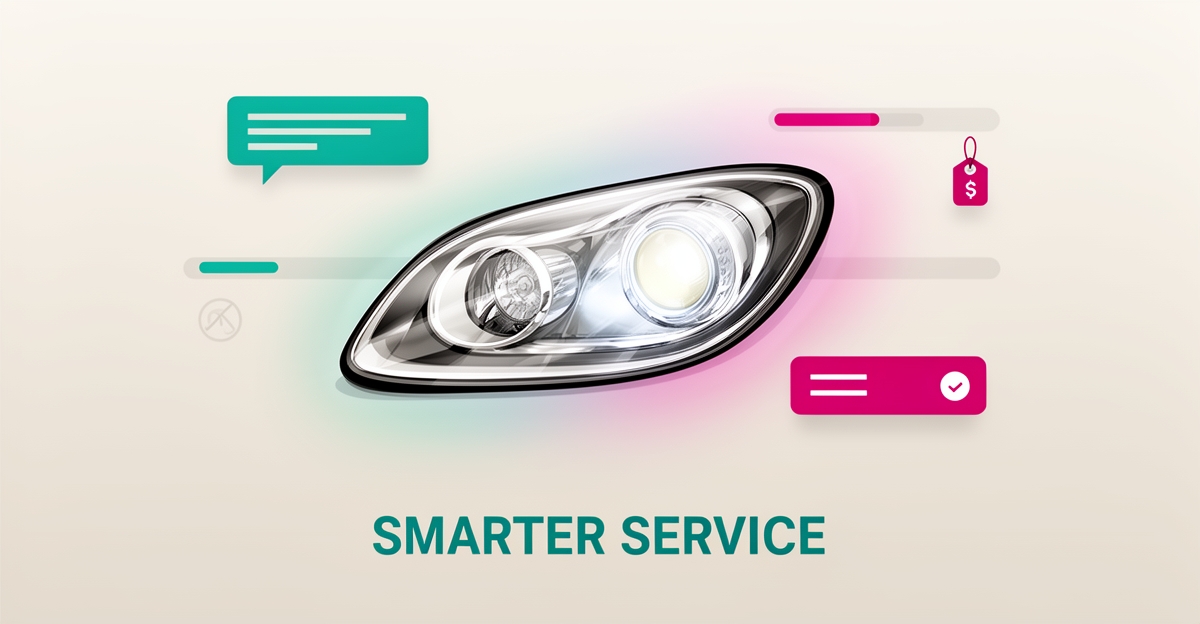
7 Ways AI Can Improve Customer Experience in Headlight Restoration
Key Facts
- A large share of executives report deploying AI agents for customer service, and adoption has kept climbing through 2026
- A majority of customers say their last AI interaction didn't solve their problem—deployment without grounding is the usual cause
- Most support tickets are repetitive in nature, which is exactly what grounded AI handles best
- Grounded AI agents typically resolve the majority of routine inquiries on first contact
- AI can typically handle most routine inquiries automatically when connected to real service data
- As of late 2026, customer service is shifting from reactive answers to anticipating needs through grounded AI
- Transparent AI disclosure turns customers into AI-positive advocates as trust becomes a competitive advantage
Hire a team member that works 24/7 — for less than a part-time wage.
AI receptionists, SDRs, dispatchers and 99+ roles. Trained on your business, fully managed.
Not sure where to start? Ask our AI planner
The Customer Experience Gap in Headlight Restoration
Headlight restoration shops lose customers in the moments between inquiry and appointment. Slow quotes, repeated questions about vehicle details, and opaque service tracking create friction that feels personal to the owner and costs the shop trust.
Customers expect immediate answers and clear next steps. When they receive a scripted bot that asks for information they already provided, frustration builds quickly. Industry findings consistently show that a majority of customers say their last AI interaction didn't solve their problem, and that most support tickets are repetitive in nature.
That repetition is the core of the gap. Shops ask for make, model, and damage history on every channel, then leave customers waiting for a manual quote. The process signals inefficiency, not expertise. Trust erodes when automation feels like a barrier instead of a concierge.
The shift from scripted bots to grounded AI changes the dynamic. Modern agents use business data to anticipate needs rather than force verification steps. As of late 2026, roughly half of executives report already deploying AI agents for customer service, moving toward concierge-like interactions.
For headlight restoration, the friction points are predictable and measurable:
- Slow quotes that require back-and-forth emails or calls before pricing is clear
- Repetitive verification of vehicle and service history on every touchpoint
- Opaque service tracking with no real-time updates on appointment status or completion
These moments train customers to expect delay. When AI is deployed without context, customers feel trapped in automation loops and quietly churn. Transparency and a clear human exit are design constraints, not afterthoughts.
AI customer support and chatbots address this by enabling instant support, transparent pricing, and service tracking. Customers feel more confident when they receive immediate responses and clear next steps after a quote, rather than a form to fill out. For many shops, the fastest entry point is an AI Employee—a managed receptionist or service dispatcher that answers every call and message, at a fraction of the cost of another hire.
AIQ Labs designs customer experience systems that treat trust as a design constraint. By mapping AI touchpoints against trust sensitivity and instrumenting for sentiment, not just containment, shops can automate routine status checks while keeping high-risk conversations human-led.
The result is a super agent model where AI handles data gathering and repetitive inquiries, and humans focus on complex problem-solving and relationship building.
From Scripted Bots to AI Concierges for Auto Service
The evolution from scripted bots to AI concierges is transforming how auto service businesses engage with customers, moving beyond rigid scripts to dynamic, data-driven interactions. Modern AI agents now leverage business data like vehicle make, model, and service history to deliver instant, personalized quotes and transparent pricing—eliminating the need for customers to repeat basic details. This shift aligns with the trend, now well established in 2026, of executives deploying AI agents for customer service, recognizing that grounded, context-aware systems build trust by anticipating needs rather than forcing repetitive verification steps.
For headlight restoration specifically, this means an AI concierge can greet a returning customer by name, reference their 2020 SUV's last service date, and immediately offer a quote for a headlight refresh based on wear patterns from prior visits—all without the customer lifting a finger. Such proactive personalization reduces friction and positions the business as attentive and knowledgeable, directly addressing the frustration that comes from the repetitive inquiries making up most support tickets. By automating these routine transactions, human staff are freed to focus on complex concerns like explaining restoration techniques or addressing unexpected damage, creating a seamless handoff when empathy and expertise are required.
Transparency becomes a natural byproduct of this grounded approach. AI agents can provide real-time service tracking—showing exactly when a technician began work, estimated completion time, and any parts used—while clearly disclosing their automated nature to build trust. This aligns with the emerging "zero-click economy," where success is measured by delivering outcomes seamlessly rather than prompting customers to navigate forms or menus. As AI handles data gathering and initial problem identification, human agents evolve into relationship managers who offer guidance on maintenance schedules or warranty details, turning routine service into an opportunity for deeper engagement. The result is a customer experience that feels less like a transaction and more like a trusted advisor guiding them through every step of their headlight restoration journey.
7 High-Impact AI Use Cases for Headlight Restoration Shops
For headlight restoration shops, AI transforms customer interactions by delivering instant, transparent, and proactive service—turning routine inquiries into trust-building moments. Modern AI systems grounded in service history and vehicle data can provide immediate quotes, proactive reminders, and real-time tracking without forcing customers through repetitive verification steps. By late 2026, roughly half of executives report deploying AI agents for customer service, recognizing the shift from scripted bots to dynamic, concierge-like experiences. This approach ensures customers feel understood from the first touchpoint, reducing friction and increasing confidence in the service process.
AI-powered instant quote chat eliminates wait times by using vehicle details and service history to generate accurate pricing immediately upon contact. Rather than asking customers to describe their headlights or wait for a callback, the AI can say, "I see your 2020 SUV needs restoration—here's your quote based on last year's service." This grounded interaction builds trust by demonstrating immediate value and transparency. Because most support tickets are repetitive in nature, AI is well suited to handling these routine inquiries efficiently while freeing human staff for complex consultations.
Proactive service reminders and transparent pricing further enhance the customer experience by anticipating needs and eliminating surprise costs. AI analyzes service intervals and driving conditions to send timely alerts—such as, "Your headlights are due for a check based on 18 months of use"—positioning the shop as a trusted advisor. When combined with clear, upfront pricing disclosed during the AI interaction, customers report greater confidence in next steps. Companies using grounded AI agents typically see the majority of routine inquiries resolved on first contact, proving that data-driven personalization improves outcomes without sacrificing the human touch.
Live service tracking, voice booking, agent assist for staff, and personalized follow-ups complete the AI-enhanced CX loop. Customers can check restoration progress in real time via chat or voice, book appointments naturally through conversational AI, and receive tailored aftercare tips based on their vehicle type and finish preference. Human agents, supported by AI tools that surface service history or suggest responses, focus on high-value interactions like explaining premium coatings or addressing concerns. This human-in-the-loop model ensures AI handles routine tasks while humans provide empathy and expertise—creating a seamless experience where technology enables, rather than replaces, meaningful connection. By designing every interaction with a clear path to human support and full transparency, headlight restoration shops turn AI into a trust accelerator, not a barrier.
Implementing AI Without Losing Trust
Implementing AI in customer experience requires more than technological capability—it demands a deliberate strategy that preserves and builds trust. For headlight restoration businesses, where customers often seek immediate clarity on pricing and service timelines, AI can deliver instant responses only when deployed with intention. Research consistently shows that while a large share of executives are already using AI agents for customer service, a majority of customers report their last AI interaction failed to solve their problem—highlighting the gap between deployment and effectiveness.
The path forward begins with mapping AI touchpoints against trust sensitivity. Routine inquiries—like checking service status or providing transparent quotes based on vehicle history—can be automated aggressively, since most support tickets are repetitive in nature. However, high-risk interactions such as billing disputes or complex service escalations should remain under human leadership or AI-assisted oversight to prevent trust erosion. This segmentation ensures AI handles efficiency while humans focus on emotional connection and problem-solving.
Every AI interaction must include a clear human exit. Customers trapped in automation loops lose confidence in the brand, so designing seamless transitions to human agents is non-negotiable. Transparency is equally vital: disclosing AI use builds trust, with customers who know they're interacting with AI and find it helpful becoming more AI-positive. Conversely, misleading interactions create vocal detractors.
Finally, redesign human roles to handle the complex, high-value interactions AI escalates. As AI manages data gathering and routine tasks, human agents become "super agents" equipped to deliver empathy and creativity—turning service moments into relationship-building opportunities. This balance of speed and sincerity is where true customer experience improvement begins.
For businesses ready to implement this approach, AIQ Labs offers structured pathways to integrate AI responsibly. Fix the one workflow that costs you the most with a fixed-price Workflow Build, deploy managed AI staff through AI Employees, or connect everything into an owned AI Operating System built in phases. Explore your fit with a free strategy call, or chat live with an AI transformation agent to map your next steps.
Still paying for 10+ subscriptions that don’t talk to each other?
We build custom AI systems you own outright. No vendor lock-in. Full control.
Not sure where to start? Ask our AI planner
Frequently Asked Questions
Will an AI chatbot just ask me the same make and model questions I already gave on the phone?
Can AI actually give me an instant, accurate headlight restoration quote?
How do I know customers won't feel trapped by automation?
What's the difference between a scripted bot and an AI concierge for my shop?
Can AI help with real-time service tracking without extra staff work?
Is AI just for big companies or can a small headlight restoration shop use it without losing trust?
Turn Headlight Restoration Into a Trust-Building Experience
Headlight restoration shops lose trust in the small gaps between inquiry and appointment—slow quotes, repeated vehicle questions, and opaque tracking train customers to expect delay. The shift from scripted bots to grounded AI concierges changes that dynamic by using business data to anticipate needs, deliver instant personalized quotes, and provide real-time service tracking without forcing repetitive verification. When AI handles routine status checks and data gathering, human teams become super agents focused on complex problem-solving and relationship building. That balance of speed, transparency, and a clear human exit is what turns automation from a barrier into a concierge. AIQ Labs designs customer experience systems that treat trust as a design constraint, mapping AI touchpoints to trust sensitivity and instrumenting for sentiment, not just containment. If you want to see where instant support, transparent pricing, and service tracking can fit your shop, start the 2-minute Fit Check at https://aiqlabs.ai/apply for a free 30-minute strategy call to map your highest-ROI workflow. You can also reach the team anytime at [email protected].
Make AI your competitive advantage — not just another tool.
Strategy, implementation and ongoing optimization. One partner, end to end.
Not sure where to start? Ask our AI planner