7 Ways AI Can Improve Customer Retention in Your RV Repair Business
Key Facts
- Industry research commonly cites that a 5% increase in retention rates can lead to a 25-95% increase in customer lifetime value according to industry research
- Acquiring a new customer typically costs several times more than retaining an existing one per industry research
- Repeat buyers tend to spend significantly more than new customers based on industry research
- A large share of support tickets are repetitive and can be automated from customer experience analysis
- Businesses deploying AI agents have reported automating the majority of routine incoming inquiries per LinkedIn content
- Most small business owners believe retaining existing customers is more cost-effective than acquiring new ones per industry research
- Recovering a lost customer typically costs far more than retaining one according to industry research
Hire a team member that works 24/7 — for less than a part-time wage.
AI receptionists, SDRs, dispatchers and 99+ roles. Trained on your business, fully managed.
Not sure where to start? Ask our AI planner
Why Customer Retention Is Critical for RV Repair Businesses
In the RV repair industry, loyalty is earned one service visit at a time, and losing it is expensive. Customer retention is the foundation of sustainable growth for specialized service businesses where trust and consistent service define reputation.
According to industry research, most small business owners believe retaining existing customers is more cost-effective than acquiring new ones. That belief is backed by hard economics. Acquiring a new customer typically costs several times more than retaining an existing one, and winning back a lost customer usually costs far more than keeping them in the first place.
The financial upside of retention is equally compelling. Research commonly cited across the industry suggests that a 5% increase in retention rates can lead to a 25-95% increase in customer lifetime value. Repeat buyers also tend to spend meaningfully more than new customers, and retained customers generate more revenue at a lower cost than acquisition.
For RV repair businesses, this dynamic is amplified by the nature of the service. Customers have significant investments in their vehicles and rely on specialized expertise, parts availability, and timely service. Trust built through consistent, reliable repairs drives repeat business and referrals. When that trust erodes, customers take their rigs — and their lifetime value — to competitors.
Retention challenges are real. Market analysis shows a majority of small businesses cite acquiring new customers as a major challenge, which makes protecting existing relationships even more critical.
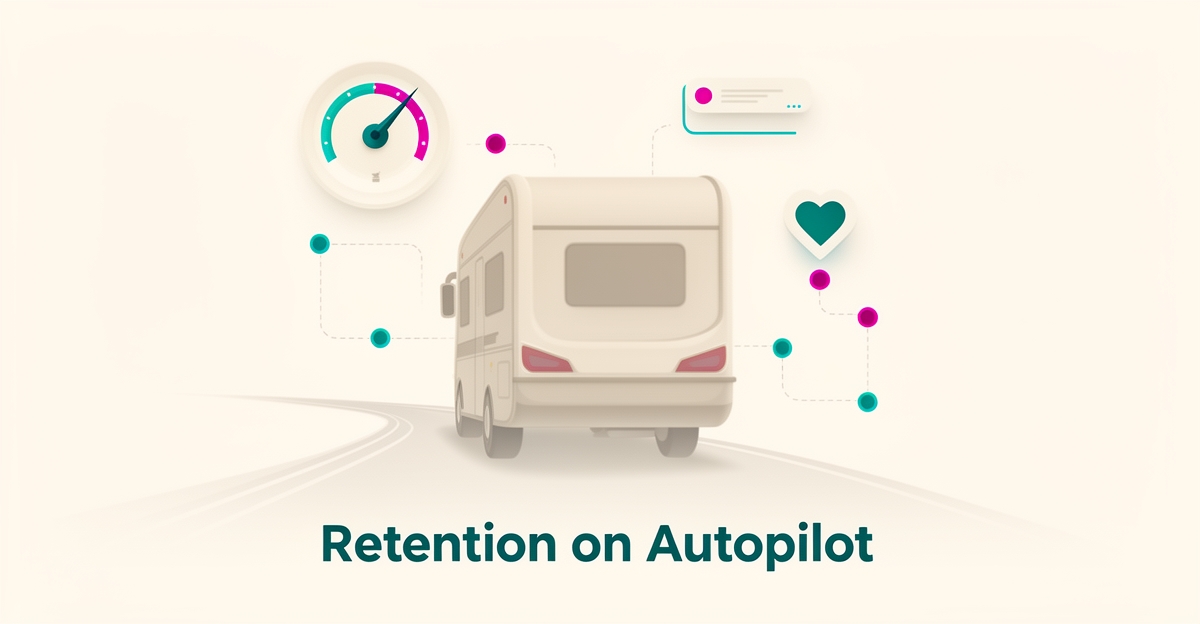
AI Customer Relationship Management shifts retention from reactive to proactive. In the RV industry, loyalty stems from trust and consistent service, and AI can strengthen that foundation by:
- Personalizing follow-ups based on service history and vehicle type
- Tracking vehicle health and predicting maintenance needs
- Sending timely maintenance alerts before small issues become costly repairs
- Maintaining continuous engagement between service visits
These capabilities create a proactive retention engine rather than a reactive service desk. AIQ Labs helps RV centers implement AI-driven loyalty systems that keep customers returning by automating the personalized touchpoints that build long-term trust — whether that starts with a single managed AI employee handling scheduling and follow-ups or a fuller rebuild of your retention workflow.
When retention becomes systematic, businesses stop chasing new customers to replace churn and start compounding value from the relationships they already have.
How AI Transforms Retention: Personalization, Prediction, and Automation
The economics of customer loyalty are hard to ignore: research commonly cited suggests that a 5% increase in retention rates can drive a 25–95% increase in customer lifetime value, while acquiring a new customer typically costs several times more than keeping an existing one. For RV repair shops where trust is the currency of repeat business, AI shifts retention from reactive guesswork to a proactive, data-driven discipline.
AI delivers this shift through three interconnected pillars. First, personalization at scale uses service history and vehicle data to tailor maintenance alerts and repair recommendations to each customer's unique usage patterns. Second, predictive analytics flags at-risk customers before they churn, allowing targeted outreach with relevant offers or check-ins. Third, autonomous engagement deploys AI agents to handle routine inquiries—instantly, 24/7—so human technicians and advisors focus on complex diagnostics and relationship-building.
- Data-driven service recommendations based on individual RV usage and repair history
- Predictive models that identify customers likely to defect before they leave
- AI agents resolving common scheduling, pricing, and status questions automatically
- Seamless handoff to human staff for high-touch consultations and complex repairs
The results can be measurable. Customer experience analysis points to businesses that have automated the majority of routine incoming inquiries with AI agents and cut response times substantially across channels. With a large share of support tickets typically repetitive, this automation frees significant capacity. AIQ Labs helps RV centers implement these same loyalty systems — combining managed AI employees, targeted workflow builds, and connected AI operating systems — so every follow-up, health check, and maintenance alert strengthens the trust that keeps customers returning.
Practical AI Implementation Steps for RV Repair Shops
RV repair shops live and die on repeat business, and AI makes retention proactive instead of reactive. Trust built through consistent service is the core of loyalty in this industry, and the right implementation turns service history into a predictable retention engine.
Start by connecting AI to the systems you already use. Integrating machine learning into your existing customer database enables pattern recognition across service history, vehicle health, and communication logs. This foundation supports data analysis that identifies behavior trends and predicts needs before they become churn signals. According to industry research, most small business owners believe retaining existing customers is more cost-effective than acquiring new ones.
Vehicle health tracking becomes actionable when AI reads usage patterns and service intervals. Shops can deploy AI-powered maintenance alerts based on mileage, seasonality, and prior repairs to prompt timely service. Predictive analytics identifies high-risk customers and triggers preventative outreach, shifting the model from reactive fixes to proactive care. Research commonly cited suggests a 5% increase in retention rates can lead to a 25-95% increase in customer lifetime value.
Autonomous engagement handles the routine so technicians can focus on complex repairs. AI employees provide 24/7 appointment scheduling, confirmations, and follow-ups without adding headcount — typically at a fraction of the cost of a human hire. This approach mirrors customer experience findings where analysis shows a large share of support tickets are repetitive and can be automated.
Practical implementation steps for RV repair shops include:
- Connect AI to CRM to unify vehicle health, service history, and contact records for a single source of truth
- Deploy AI-powered maintenance alerts that trigger based on usage patterns and seasonal risk factors
- Use AI employees for 24/7 appointment scheduling, service reminders, and post-service follow-ups
- Create AI-driven loyalty programs that reward repeat business with personalized incentives based on service history
Loyalty programs gain impact when AI tracks behavior and automates rewards. Personalized incentives tied to actual service needs strengthen relationships and increase repeat spend. Repeat buyers tend to spend significantly more than new customers, making retention a genuine revenue lever.
AIQ Labs helps RV centers implement AI-driven loyalty systems that keep customers returning by aligning these steps with CRM integration, autonomous engagement, and predictive alerts. The result is proactive retention that preserves trust, reduces churn cost, and scales without proportional staff increases.
Still paying for 10+ subscriptions that don’t talk to each other?
We build custom AI systems you own outright. No vendor lock-in. Full control.
Not sure where to start? Ask our AI planner
Frequently Asked Questions
Is it really cheaper to keep RV repair customers than find new ones?
How much can improving retention actually grow my RV shop?
What does AI actually do for customer retention in an RV repair business?
Can AI handle customer inquiries without losing the personal touch?
What results have other businesses seen with AI agents for customer experience?
Where do I start implementing AI for retention in my shop?
From Reactive Repairs to Proactive Loyalty: Your Next Step
This guide has shown how AI transforms customer retention in RV repair from a reactive cost center into a proactive growth engine. By personalizing follow-ups, predicting maintenance needs, and automating routine engagement, AI strengthens the trust that keeps customers returning—directly impacting your bottom line through higher lifetime value and reduced acquisition costs. The research is consistent: small gains in retention can compound into large gains in lifetime value, and keeping existing customers is far more cost-effective than chasing new ones. For RV repair shops where loyalty is built on expertise and consistency, AI provides the tools to systematize that trust without adding headcount. Ready to see how these strategies apply to your specific operations? Start with a free, no-obligation Fit Check to identify your highest-ROI automation opportunities. Start the Fit Check and, if it's a fit, book a free 30-minute strategy call to map your retention plan.
Make AI your competitive advantage — not just another tool.
Strategy, implementation and ongoing optimization. One partner, end to end.
Not sure where to start? Ask our AI planner