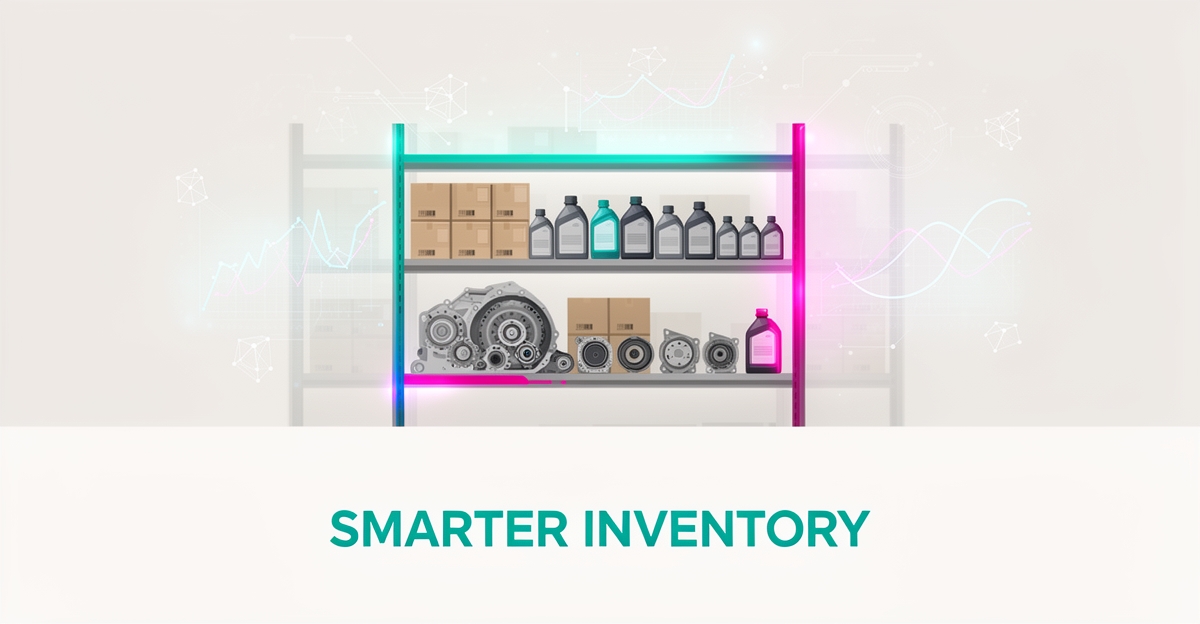
7 Ways AI Can Improve Inventory Management for Transmission Fluid and Parts
Key Facts
- AI-powered forecasting can meaningfully improve demand prediction accuracy over manual methods, according to industry research
- Many businesses report significantly fewer stockouts after adopting AI-driven inventory systems, as reported in industry research
- AI implementation is typically associated with inventory holding cost reductions in the 15-25% range per industry studies
- Stockouts often trigger rush shipping fees that can inflate part costs by 30-50% based on industry analysis
- Manual counting errors commonly run 2-5% per cycle count, distorting reorder triggers per operational data
- The AI in warehousing market has been growing rapidly, with continued strong expansion projected through the late 2020s per Netstock analysis
- Industry research suggests AI can substantially reduce both excess inventory and stockouts per industry research
Hire a team member that works 24/7 — for less than a part-time wage.
AI receptionists, SDRs, dispatchers and 99+ roles. Trained on your business, fully managed.
Not sure where to start? Ask our AI planner
The Hidden Cost of Guesswork in Auto Parts Inventory
The hidden cost of guesswork in auto parts inventory runs deeper than empty shelves or overflowing bins. When transmission fluid and critical components are managed through intuition or outdated spreadsheets, shops face a cascade of avoidable expenses that erode profitability. Manual systems struggle to account for seasonal repair spikes, regional vehicle model popularity, or sudden shifts in repair volume—leading to stockouts that frustrate customers and force rushed, premium-priced emergency orders for technicians. These reactive patterns don't just inconvenience operations; they directly strain cash flow by tying up capital in excess inventory while simultaneously losing sales when essential parts aren't available. Industry research suggests that the large majority of businesses see fewer stockouts after implementing AI-driven inventory solutions, highlighting how guesswork creates preventable revenue leaks. Beyond lost sales, the financial toll includes inflated holding costs from overstocking slow-moving parts—capital that could fund technician training, shop upgrades, or emergency reserves instead sits idle on shelves. Studies indicate AI implementation is typically associated with holding cost reductions in the 15-25% range through smarter demand forecasting that aligns stock levels with actual repair patterns. For transmission specialists, this means avoiding costly overages of specialty fluids while ensuring gaskets, seals, and filters arrive just as needed. The true expense of guesswork isn't measured in individual stockouts or overstocks—it's the compounding effect on operational agility, customer trust, and the ability to invest in growth rather than constantly firefighting inventory crises. Data indicates businesses using AI for inventory management often achieve substantially higher forecast accuracy, transforming reactive scrambling into proactive planning that protects both profitability and reputation.
- Stockouts trigger rush shipping fees that can inflate part costs by 30-50%
- Excess inventory of transmission fluids risks degradation, creating waste and safety hazards
- Manual counting errors commonly run 2-5% per cycle count, distorting reorder triggers
- Emergency orders bypass volume discounts, often increasing per-unit costs by 15-25%
- Cash tied up in overstock reduces funds available for technician training or equipment upgrades
For shops relying on tribal knowledge or static reorder points, the shift to AI-powered inventory management isn't just about technology—it's about reclaiming control over operational destiny. AIQ Labs builds inventory workflows that learn from your shop's unique repair patterns, seasonal trends, and regional demand signals to ensure critical transmission components are available when needed without draining working capital. Whether that starts with a single Workflow Build around your most expensive inventory process or grows into a fuller AI Operating System for the whole shop, this approach turns inventory from a persistent liability into a strategic advantage where data-driven decisions replace costly guesswork. The businesses seeing the strongest results aren't just reducing stockouts—they're building resilient operations that adapt to market shifts while preserving cash flow for what truly matters: keeping vehicles running and customers satisfied. Ready to move beyond guesswork? Start the Fit Check to uncover your inventory's hidden costs and map a path to AI-powered precision.
How AI Forecasts Demand with Precision for Auto Parts
Auto parts demand fluctuates constantly—driven by seasonal driving patterns, model-specific failure rates, and regional repair volumes—making manual forecasting unreliable. AI transforms this complexity into precision by analyzing historical sales data alongside external variables like weather, holidays, and vehicle registration trends to predict exactly which transmission fluids, gaskets, or sensors will be needed and when. According to industry research, AI-powered forecasting can substantially outperform traditional methods that rely on gut instinct or static historical averages. This level of accuracy allows auto shops and distributors to align inventory with real-time needs, eliminating guesswork from replenishment planning.
The impact is measurable: businesses using AI forecasting commonly report meaningful reductions in both excess inventory and stockouts, directly improving cash flow and customer satisfaction. Research suggests most businesses see fewer stockouts after implementing AI inventory systems, while holding costs often drop by 15-25% due to optimized stock levels. For transmission fluid—where shelf life and temperature sensitivity add complexity—AI ensures the right viscosity and formulation are stocked based on seasonal climate shifts and local vehicle fleets, preventing both waste and critical shortages during peak repair seasons.
AIQ Labs builds custom forecasting models that ingest shop-specific data—such as repair order histories, vehicle make/model frequency, and regional service trends—to continuously refine predictions. These systems don't just forecast; they learn, adapting to new patterns like emerging EV service needs or shifts in popular vehicle models. By syncing with existing shop management tools, AI-driven inventory becomes a proactive operation rather than a reactive scramble. The result is a leaner, more responsive supply chain where critical parts are always available—without tying up capital in unnecessary stock.
From Prediction to Action: AI-Driven Inventory Execution
Forecasts are only useful if they trigger the right action at the right time. For transmission shops, that means fluid, gaskets, filters and model-specific parts moving from prediction to purchase without manual chasing.
AI automates the reorder loop by continuously matching predicted demand to live stock. Machine learning models analyze historical sales, seasonal trends, vehicle models and regional repair volume to predict future demand with greater accuracy than manual methods. Industry research shows AI can meaningfully improve forecast accuracy and reduce stockout incidents.
When demand signals shift, the system acts. Automated workflows generate purchase orders, route approvals and update shop systems in real time. This reduces manual data entry errors and frees technicians to focus on repair work rather than inventory checks. Analysis of automation benefits notes holding cost reductions in the 15-25% range with AI.
Integration is what makes execution reliable. AI inventory systems sync with shop management, parts catalogs and supplier portals so critical parts like transmission fluid and gaskets are always available. Multi-agent workflows handle research, decisioning and communication across tools, creating a single source of truth for stock levels and replenishment.
The market momentum is clear. The AI in warehousing market has grown rapidly in recent years, with continued strong growth projected through the late 2020s. Netstock analysis highlights strong annual growth as businesses move from piloting to scaling.
For SMB shops, custom execution matters more than generic dashboards. AIQ Labs builds inventory workflows that sync with shop operations to ensure critical parts are always available—backed by 200+ multi-agent systems deployed across production environments.
Execution capabilities typically include:
- Automated reorder triggers tied to forecast demand and lead times
- Two-way sync with shop management and accounting systems
- Multi-agent workflows for purchase order creation, approval and supplier communication
- Real-time alerts for low stock on high-impact items like transmission fluid and gaskets
Businesses using AI commonly report fewer stockouts, with most seeing fewer stockouts after implementation. That reliability translates to faster bays, fewer delays and stronger customer trust.
Prediction without action creates waste. When forecasting is coupled with automated execution and deep system integration, inventory becomes a competitive advantage rather than a cost center.
Still paying for 10+ subscriptions that don’t talk to each other?
We build custom AI systems you own outright. No vendor lock-in. Full control.
Not sure where to start? Ask our AI planner
Frequently Asked Questions
How does AI actually predict which transmission parts I'll need next month?
What's the real cost of sticking with manual inventory counts for my shop?
Can AI really reduce stockouts for specialized transmission fluids?
How much can I save on inventory holding costs with AI?
Will AI inventory software integrate with my existing shop management system?
Is AI inventory management worth the investment for a small transmission shop?
Turn Inventory Guesswork Into Your Competitive Edge
The gap between shops that guess and shops that know is widening. AI-powered inventory management replaces static spreadsheets and tribal knowledge with dynamic systems that learn your shop's unique rhythm—predicting demand for transmission fluid and critical components before you realize you need them, then executing reorders automatically. With most businesses reporting fewer stockouts after implementation, the question isn't whether AI works, but how quickly you can capture that advantage. AIQ Labs builds inventory workflows that integrate directly with your existing shop management tools—starting with a fixed-price Workflow Build for the process costing you the most, and scaling to a full AI Operating System when you're ready. You don't need to become a data scientist to benefit—you just need a partner who understands both AI engineering and the realities of auto repair. Ready to see exactly where your inventory is leaking profit? Take the two-minute Fit Check, then book a free 30-minute strategy call to identify your highest-ROI automation opportunities.
Make AI your competitive advantage — not just another tool.
Strategy, implementation and ongoing optimization. One partner, end to end.
Not sure where to start? Ask our AI planner