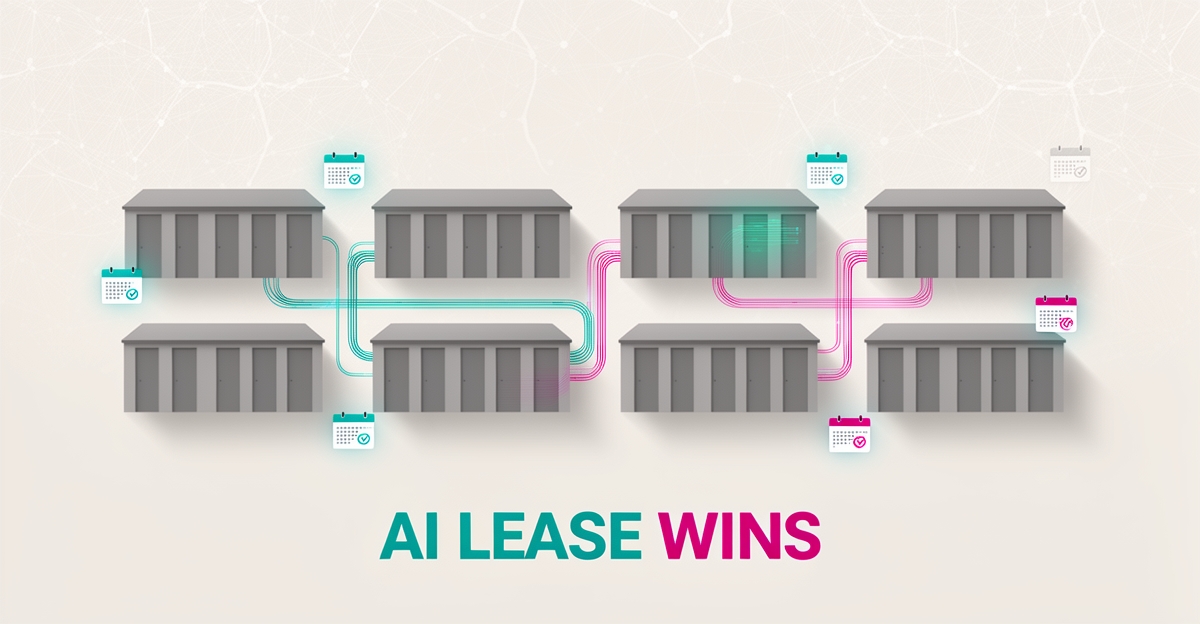
7 Ways AI Can Improve Lease Management in Self-Storage Facilities
Key Facts
- Industry research suggests AI can meaningfully speed up lease abstraction and reduce energy and maintenance costs through predictive maintenance, with operators commonly reporting savings in the 20% range
- AI-powered systems can reduce technician dispatches significantly, improving efficiency and tenant satisfaction
- Smarter maintenance and resource allocation typically drive meaningful reductions in operational costs
- Automating lease renewals, rent collection, and maintenance requests frees staff from repetitive tasks and enables focus on strategic growth
- AI can flag tenant churn and non-payment risk weeks in advance by analyzing payment timing, portal logins, and support ticket sentiment
- AI transforms pricing from guesswork to data-driven advantage by analyzing market trends, occupancy, and competitor rates in real time
- Properly integrated AI solutions work alongside existing property management software rather than forcing a full replacement
Hire a team member that works 24/7 — for less than a part-time wage.
AI receptionists, SDRs, dispatchers and 99+ roles. Trained on your business, fully managed.
Not sure where to start? Ask our AI planner
The Hidden Costs of Manual Lease Management in Self-Storage
Self-storage operators live in a reactive loop: chasing late rent, scrambling for missed renewal dates, and dispatching technicians after a unit issue escalates. Manual lease management keeps teams busy on spreadsheets and phone calls while margins quietly erode.
Paper-based tracking and manual follow-ups create a cycle of time-consuming, error-prone work that pulls managers away from strategic growth. Industry analysis notes AI is transforming property and self-storage operations by streamlining lease management processes, enhancing decision-making, and improving tenant experiences. The contrast with AI-powered approaches is stark.
Automation removes the repetitive burden that fuels errors. AI can automate routine tasks such as lease renewals, rent collection, and maintenance requests, reducing the workload for property managers and freeing up time for strategic tasks. Facilities using AI commonly report faster lease abstraction and meaningful reductions in energy and maintenance costs through predictive maintenance and facility optimization.
Predictive capabilities turn maintenance from reactive to proactive. Smarter maintenance and resource allocation can drive substantial operational cost savings while improving asset uptime, with fewer technician dispatches improving both efficiency and tenant satisfaction. Fewer emergency calls mean fewer disruptions and better retention.
Manual processes also hide churn risk until it's too late. Without data signals, operators miss early warning signs for non-payment and renewal drop-off. AI-powered insights for automatic rent alerts, early warning signs for non-payment, and tenant churn prediction let managers act before revenue is lost.
The hidden costs show up daily:
- Missed renewals and late rent chasing that consume staff hours
- Reactive maintenance that spikes energy and repair spend
- Manual data entry errors that create compliance and billing risk
- Delayed issue resolution that damages tenant experience
Shifting from manual to AI-powered lease management trades time-consuming, error-prone work for automation, efficiency, and scalability. The integration of AI into lease management processes is streamlining operations, enhancing decision-making, and improving tenant experiences, as noted in recent coverage of AI agents for lease management.
Predictive Intelligence: Catching Non-Payment and Churn Before It Happens
Non-payment rarely appears out of nowhere. AI reads the patterns that precede it — late payments, reduced portal logins, support tone shifts, and payment method changes — and flags at-risk tenants weeks before a delinquency hits.
Automatic rent alerts remove the manual chase. AI monitors lease dates and payment history to trigger reminders via email, SMS, or chat at the optimal time for each tenant, reducing missed payments and freeing staff from repetitive follow-ups. This automation is part of how AI streamlines lease management processes and improves tenant experiences.
Early warning signs for non-payment become visible through behavioral analytics. The system analyzes payment history, usage patterns, and communication frequency to score risk in real time. Managers can intervene with payment plans or outreach before accounts become delinquent, turning collections from reactive to proactive.
Tenant churn prediction builds on the same data foundation. AI models identify subtle signals of dissatisfaction — declining engagement, increased support requests, or lapses in auto-pay — and correlate them with historical churn. Facilities can act with retention offers or personalized check-ins while the relationship is still salvageable.
Predictive intelligence also supports broader operational efficiency. Industry research points to faster lease abstraction and meaningful reductions in energy and maintenance costs through predictive maintenance and facility optimization, along with fewer technician dispatches and better tenant satisfaction.
Smarter resource allocation compounds the benefit. Property management analyses commonly cite operational cost reductions in the 20% range through smarter maintenance and resource allocation, creating budget room for proactive tenant care.
Unified customer data makes this possible. Instead of siloed reports, managers see a live churn and delinquency score per tenant with explainable triggers, built from lease, payment, and interaction data in a single risk view.
Typical signals AI monitors include:
- Payment timing drift and failed auto-pay attempts
- Reduced portal logins and communication responsiveness
- Support ticket sentiment and request frequency
- Lease renewal engagement and add-on usage changes
With these insights, teams can prioritize outreach, tailor payment options, and protect revenue before loss occurs. AIQ Labs builds this predictive approach into custom systems — whether as an AI Workflow Build targeting your most costly process or as part of a broader AI Operating System connecting your whole facility.
The result is a lease management posture that is proactive rather than reactive, with fewer surprises at month-end and stronger tenant retention over time.
Automating the Lease Lifecycle: Renewals, Rent Alerts, and Tenant Communication
Lease cycles in self-storage are repetitive, deadline-driven, and easy to miss without constant manual tracking. AI removes the friction by handling the routine touchpoints automatically while surfacing the signals that matter for revenue protection.
AI can automate routine tasks such as lease renewals, rent collection, and maintenance requests, reducing the workload for property managers and freeing up time for strategic tasks. That shift lets teams focus on pricing, retention, and growth instead of chasing paperwork. Automation also creates consistency in tenant communication, which directly supports experience and renewal rates.
Proactive rent alerts and renewal notices are the foundation. Systems monitor lease end dates, payment history, and usage patterns to trigger timely reminders and personalized offers. Industry research shows AI can accelerate lease abstraction, speeding the entire lifecycle from onboarding to renewal. Early warning signs for non-payment can be flagged before arrears occur, enabling outreach while resolution is still simple.
Tenant communication moves from reactive to anticipatory. AI-powered assistants respond to inquiries about access, billing, and unit changes 24/7, and route complex issues to staff with full context. Analysis of AI in lease management notes these systems are transforming the industry by streamlining processes, enhancing decision-making, and improving tenant experiences. Personalized messaging based on lease stage and tenant history improves engagement without adding headcount.
The automation impact compounds across operations. Property management research reports fewer technician dispatches, improved efficiency and tenant satisfaction, and meaningful reductions in energy and maintenance costs through predictive maintenance and facility optimization, alongside operational cost savings from smarter resource allocation.
Typical automations deployed in the lease lifecycle include:
- Automatic renewal notices with personalized term and pricing options sent at optimal intervals
- Rent reminders and payment links triggered by due dates and payment behavior
- AI assistant responses for lease questions, move-in/move-out, and account updates
- Proactive issue resolution alerts for access problems, late payments, or churn risk signals
This is where automated tenant communication and unified data converge. With AI-powered insights, facility managers can act proactively on churn prediction and early non-payment risk. For many operators, the fastest route is an AI Employee — a managed AI receptionist or support agent that handles tenant inquiries and follow-ups around the clock at a fraction of the cost of a human hire. The result is fewer missed renewals, faster issue resolution, and more strategic use of manager time.
The integration of AI into lease management processes is streamlining operations, enhancing decision-making, and improving tenant experiences.
Beyond the Lease: Predictive Maintenance and Data-Driven Pricing
Beyond the lease agreement itself, AI extends its value into predictive maintenance and dynamic pricing strategies that protect revenue and reduce operational strain. By analyzing equipment performance data and environmental factors, AI systems can forecast when HVAC units, lighting, or security systems are likely to fail, enabling preemptive repairs that avoid emergency calls and tenant disruption. This proactive approach has been shown to cut technician dispatches meaningfully and lower energy and maintenance costs, directly improving facility efficiency and tenant satisfaction.
AI also transforms pricing from a reactive guesswork process into a data-driven advantage. By continuously analyzing local market trends, occupancy rates, seasonal demand patterns, and competitor pricing, AI models can forecast optimal rental rates and lease terms in real time. This allows self-storage operators to adjust pricing proactively—maximizing revenue per unit during peak demand and minimizing vacancy during slower periods—without manual spreadsheet analysis or delayed decision-making.
These capabilities align closely with AIQ Labs' approach to AI transformation, where custom systems are built to integrate predictive analytics into existing property management workflows. Rather than relying on generic tools, facilities gain owned AI solutions that learn from their specific operational data, continuously refining maintenance schedules and pricing recommendations. The result is a self-storage operation that not only manages leases more efficiently but anticipates needs before they arise—turning cost centers into strategic advantages through foresight and automation.
To explore how AI can be tailored to your facility's unique workflows, start the Fit Check, then schedule a free 30-minute strategy call to identify high-impact automation opportunities.
How to Implement AI Lease Management Without the Headache
The difference between a successful AI implementation and a costly mistake often comes down to preparation. Self-storage operators who rush into automation without a clear roadmap risk disrupting tenant relationships and corrupting the data that drives their business.
Start by auditing your current lease management workflow to identify specific bottlenecks. Facilities that clearly define their operational needs before implementation are far better positioned to realize cost savings through smarter resource allocation. Focus on pain points like manual rent tracking, renewal processing delays, or inconsistent tenant communication.
Integration with your existing property management system determines whether AI becomes an asset or an obstacle. Prioritize solutions that connect with your current software rather than forcing a complete system overhaul — properly integrated AI tools deliver the fastest time-to-value while working alongside the systems your team already knows.
Clean data forms the foundation of effective AI decision-making. Before deploying predictive analytics for tenant churn or non-payment risks, ensure your historical lease data, payment records, and tenant communications are accurate and standardized. Poor data quality amplifies errors and introduces bias into automated decisions.
Balance automation with human judgment, particularly in tenant-facing interactions. While AI excels at sending automatic rent alerts and flagging at-risk accounts, sensitive situations like lease violations or payment negotiations benefit from personal attention. The goal is augmenting your team's capabilities, not replacing the relationships that drive retention.
Address these critical implementation factors:
- Data audit and cleansing before system training
- Phased rollout starting with low-risk automation tasks
- Staff training on AI tool oversight and intervention protocols
- Regular bias testing in tenant screening and pricing recommendations
AIQ Labs structures implementations through payment models that match your risk tolerance and budget. Start Monthly provides ongoing support and adjustments, Build in Milestones lets you approve each phase before proceeding, and Own It Outright delivers complete system ownership without vendor dependencies. You can review the details on the pricing page.
Successful implementation requires ongoing monitoring and adjustment. Predictive maintenance capabilities deliver the most value when the system learns from clean, continuous data inputs. Schedule quarterly reviews to assess accuracy, address emerging biases, and expand automation to new workflows as your confidence grows.
Ready to map your implementation strategy? Start the Fit Check at aiqlabs.ai/apply for a two-minute assessment, then book a free 30-minute strategy call at aiqlabs.ai/book. We'll identify your highest-ROI automation opportunities and outline a phased approach that protects your operations while delivering measurable efficiency gains.
Still paying for 10+ subscriptions that don’t talk to each other?
We build custom AI systems you own outright. No vendor lock-in. Full control.
Not sure where to start? Ask our AI planner
Frequently Asked Questions
How can AI help reduce late payments in self-storage facilities?
What specific cost savings can self-storage operators expect from AI-powered lease management?
Can AI really predict which tenants are likely to leave or stop paying?
Will implementing AI require us to replace our current property management software?
How does AI improve tenant experience beyond just sending reminders?
What's the first step to implementing AI in our self-storage facility without disrupting operations?
From Reactive to Proactive: How AI Transforms Lease Management into a Strategic Advantage
AI is no longer a futuristic concept for self-storage operators—it's a practical tool for cutting costs, reducing risk, and reclaiming time. By automating lease renewals, predicting non-payment, and optimizing maintenance, AI turns reactive firefighting into proactive strategy. Facilities see faster lease processing, lower operational expenses, and stronger tenant retention—not through guesswork, but through data-driven insights that protect revenue before it's at risk. The shift isn't about replacing your team; it's about empowering them to focus on growth instead of paperwork. If you're ready to move beyond manual processes and explore how AI can fit your facility's unique workflows, start with a quick assessment. Start the Fit Check to uncover your highest-impact automation opportunities, then schedule a free 30-minute strategy call to map a clear, low-risk path forward—no obligation, just clarity on where AI can deliver real value for your business.
Make AI your competitive advantage — not just another tool.
Strategy, implementation and ongoing optimization. One partner, end to end.
Not sure where to start? Ask our AI planner