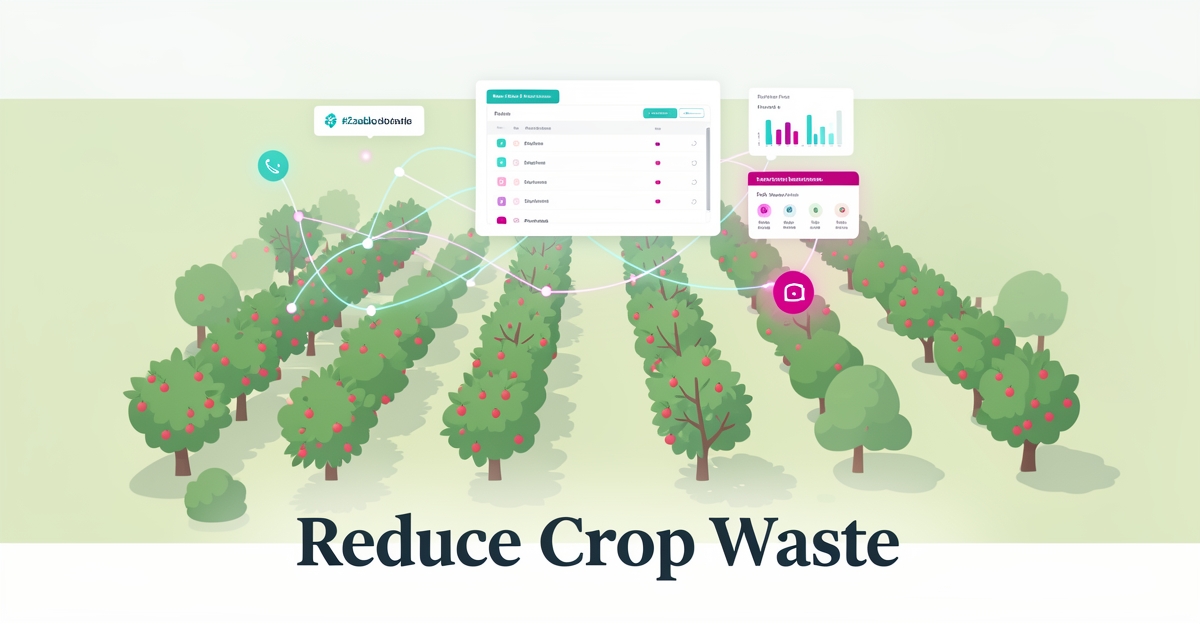
7 Ways AI Can Improve Pick-List Accuracy and Reduce Crop Waste at U-Pick Farms
Key Facts
- Order picking errors cost approximately $22 per mistake, and one company saved over $250,000 in one year using AI according to warehouse case studies.
- Predictive analytics improve inventory accuracy by 35%, directly reducing crop waste from over-ripening per AI order picking research.
- Computer vision achieves 99% precision in item identification, ensuring the correct crop variety is flagged for harvest based on warehouse automation benchmarks.
- Robot-human teams improve productivity by up to 85% while pick accuracy rates stay above 99.9% in documented AI implementations.
- Autonomous Mobile Robots increase picking rates by 70% through dynamic route optimization, a principle transferable to guiding U-Pick visitors per case study data.
- Integrating AI with labor management systems cuts logistics costs by 15% in comparable operations according to warehouse research.
- Amazon's AI-driven predictive inventory management reduced operational costs and improved timely deliveries per DigitalDefynd case studies.
Hire a team member that works 24/7 — for less than a part-time wage.
AI receptionists, SDRs, dispatchers and 99+ roles. Trained on your business, fully managed.
Not sure where to start? Ask our AI planner
The U-Pick Farm Challenge: Why Pick-List Accuracy and Crop Waste Matter
U-Pick farms run on timing, visibility, and trust. When a family drives out expecting ripe berries and finds empty rows, the loss is more than revenue — it is reputation, labor, and perishable crop left to waste.
Tracking crop availability across scattered fields is manual and reactive. Staff rely on memory, paper notes, and end-of-day reports to update what is ready, what is picked out, and where the next group should go. Picking schedules slip, duplicate harvests happen, and ripe produce sits too long while other blocks are over-picked.
The cost of those errors mirrors what warehouses see with order picking. Industry research shows order picking errors cost approximately $22 per mistake, and one company saved over $250,000 in one year using AI. For U-Pick operations, a single misdirected group can mean hours of lost labor, spoilage, and guest dissatisfaction.
Inventory visibility is the core problem. Without real-time data, farms cannot match supply to demand across the day. Case studies in AI order picking demonstrate that predictive analytics improve inventory accuracy by 35%, while computer vision achieves 99% precision in item handling. The same principles apply to fields: knowing exactly what is ripe, where it is, and how fast it is being harvested prevents both stockouts and waste.
Operational pain points compound quickly:
- Pick lists become outdated between morning walk-throughs and afternoon harvests
- Staff spend time searching for available blocks instead of guiding guests
- Harvest windows are missed, increasing crop waste after peak ripeness
- Seasonal volume swings make manual scheduling unreliable
These challenges are why AI workflow automation is a natural fit for farm operations. Farmers often face challenges in tracking picking schedules and crop availability, and AI can automate pick lists, predict harvest windows, and alert staff to real-time supply changes. Minimizing waste and maximizing yield becomes measurable when data replaces guesswork.
AIQ Labs helps build tailored workflows that integrate directly with farm management tools, turning field observations and sales data into automated pick guidance and alerts. The goal is not to replace farm staff but to give them real-time clarity so decisions are faster and more accurate.
When picking accuracy improves, waste falls and guest experience rises. That is the foundation for using AI to protect both crop value and farm reputation.
Automating Pick Lists and Predicting Harvest Windows with AI
Manual pick lists and gut-feel harvest estimates create a gap between what’s ripe and what gets picked, leaving profit rotting in the field. AI closes that gap by turning historical yield data, weather patterns, and real-time field scans into dynamic pick lists that update daily. Predictive analytics in inventory management leads to reduced waste and cost savings, a principle that translates directly from warehouse logistics to orchard rows.
- Automated list generation matches daily crew capacity to actual ripe inventory
- Harvest-window forecasts shift picking schedules ahead of weather events
- Real-time supply alerts prevent over-picking popular varieties and under-picking hidden gems
- Route optimization guides visitors through the most efficient paths, reducing fruit damage
Warehouse case studies show that robot-human teams can improve productivity by up to 85% while pick accuracy rates stay above 99.9%. Those same gains apply when AI-directed pick lists replace paper clipboards at U-pick operations. AIQ Labs builds tailored workflows that ingest farm management data, apply predictive models, and push optimized pick lists to staff tablets and customer-facing apps each morning. The system learns each variety’s ripening curve, adjusts for microclimate differences across blocks, and flags when a crop window is narrowing — so nothing misses its market moment.
Real-Time Supply Alerts and Dynamic Adjustments
Pick lists at U-Pick farms change by the hour as crops ripen, weather shifts, and visitors move through fields. Without immediate visibility, staff send families to empty rows and leave harvestable fruit to over-ripen.
AI systems monitor field conditions, picker movement, and inventory in real time, then push alerts before a problem compounds. This replaces end-of-day reconciliations with live course corrections that protect yield and guest experience.
Real-time alerting mirrors proven warehouse practices where autonomous systems reroute on the fly. AI in order picking case studies show Autonomous Mobile Robots can increase picking rates by 70% through dynamic route optimization. The same principle applies to farm staff navigating rows.
During peak congestion, live oversight prevents bottlenecks. As operations director Theresa Marsic describes, support teams can see congestion with 10 bots in an aisle and flag reroutes immediately, easing congestion instantly. Farms use the same logic for human pickers and crop zones.
Alerts cover three live signals that drive decisions:
- Supply change alerts when a variety is running low or a new patch is ready for harvest
- Crop readiness notifications based on predictive analytics that improve inventory accuracy by 35%
- Congestion warnings that suggest alternate rows to balance picker flow and reduce wait times
Dynamic adjustments keep pick lists accurate without manual radio calls. When a row is depleted, the system updates the active list for all devices and suggests the nearest equivalent crop. When ripeness models signal a window closing, staff receive priority picks to prevent waste.
Precision handling supports these adjustments. Computer vision and machine learning achieve 99% precision in item identification, ensuring the correct variety is flagged for harvest. Pick Assist Robots maintain picking accuracy above 99.9%, a benchmark transferable to guided U-Pick workflows.
The financial case is clear. Order picking errors cost approximately $22 per mistake, and one company saved over $250,000 in one year using AI. For U-Pick operations, each avoided misdirection protects revenue and reduces crop waste from overripe fruit left in the field.
Integration amplifies impact. AI efficiency is maximized when integrated with existing farm management systems and ERP tools, creating a single source of truth for availability and assignments. Farmers often face challenges tracking picking schedules and crop availability, and this guide outlines how AI can automate pick lists, predict harvest windows, and alert staff to real-time supply changes.
AIQ Labs helps build tailored workflows that integrate directly with farm management tools, automating pick lists and enabling immediate staff adjustments. The result is real-time supply visibility that minimizes waste and maximizes yield without adding headcount.
Integrating AI with Farm Management Tools for Seamless Operations
Integrating AI with Farm Management Tools for Seamless Operations
AI delivers its greatest value when deeply integrated with existing farm management systems, creating a unified operational flow that eliminates data silos and manual handoffs. According to research on warehouse automation, AI efficiency is maximized when connected to WMS and ERP tools, enabling real-time synchronization of pick lists, inventory levels, and harvest schedules. This integration allows U-pick farms to automate data exchange between field operations and back-office systems, reducing the risk of outdated information leading to over-picking or missed harvest windows.
When AI is embedded within core farm workflows, it transforms reactive processes into proactive, data-driven operations. Predictive analytics improve inventory accuracy by up to 35%, helping farms anticipate crop availability and align picking schedules with actual yield patterns. By connecting AI-driven forecasting directly to farm management platforms, growers can generate dynamic pick lists that adjust in real time based on ripeness, weather, and visitor demand—minimizing both waste and lost revenue.
AIQ Labs builds tailored workflows that bridge AI capabilities with the specific tools farms already use, ensuring seamless adoption without disrupting established routines. Through deep two-way API integrations, AI agents can pull data from scheduling software, push updates to inventory trackers, and trigger alerts in communication platforms—all while maintaining a single source of truth. This approach supports scalability, allowing farms to expand AI use across departments as needs evolve, from pick-list automation to labor forecasting and visitor management.
- Automated data synchronization between AI systems and farm management tools reduces manual entry by up to 95%
- Integrated AI and labor management systems have cut logistics costs by 15% in comparable operations
- Real-time route optimization increases picking productivity by up to 70% when connected to live inventory data
By treating AI not as a standalone tool but as an integrated component of the farm’s operational ecosystem, U-pick businesses achieve measurable improvements in accuracy, efficiency, and waste reduction—laying the foundation for sustainable growth.
Still paying for 10+ subscriptions that don’t talk to each other?
We build custom AI systems you own outright. No vendor lock-in. Full control.
Not sure where to start? Ask our AI planner
Frequently Asked Questions
How much do picking errors actually cost a farm operation?
Can AI really predict exactly when my crops will be ready to pick?
How does AI prevent guests from being sent to empty rows?
Will this require replacing my current farm management software?
How accurate are AI-guided picking systems compared to manual methods?
What kind of productivity improvements can U-Pick farms expect from AI?
From Guesswork to Growth: Turning Field Data into Farm Profit
This article has shown how AI transforms the core challenges of U-Pick farming—outdated pick lists, missed harvest windows, and costly crop waste—into opportunities for precision and profit. By automating pick lists with real-time inventory data, predicting harvest windows using weather and yield patterns, and alerting staff to supply changes as they happen, farms can match visitor demand to actual ripe inventory. The result is less spoilage, happier guests, and more efficient use of labor and land—directly protecting both yield and reputation. AIQ Labs helps farms achieve this shift by building tailored workflows that integrate with existing farm management tools, turning field observations into automated guidance without disrupting daily routines. If you're ready to replace guesswork with real-time clarity and see where AI can reduce waste and improve picking accuracy on your farm, start with a free, no-obligation strategy call. One company saved over $250,000 in a year using AI to reduce picking errors—discover what’s possible for your operation.
Make AI your competitive advantage — not just another tool.
Strategy, implementation and ongoing optimization. One partner, end to end.
Not sure where to start? Ask our AI planner