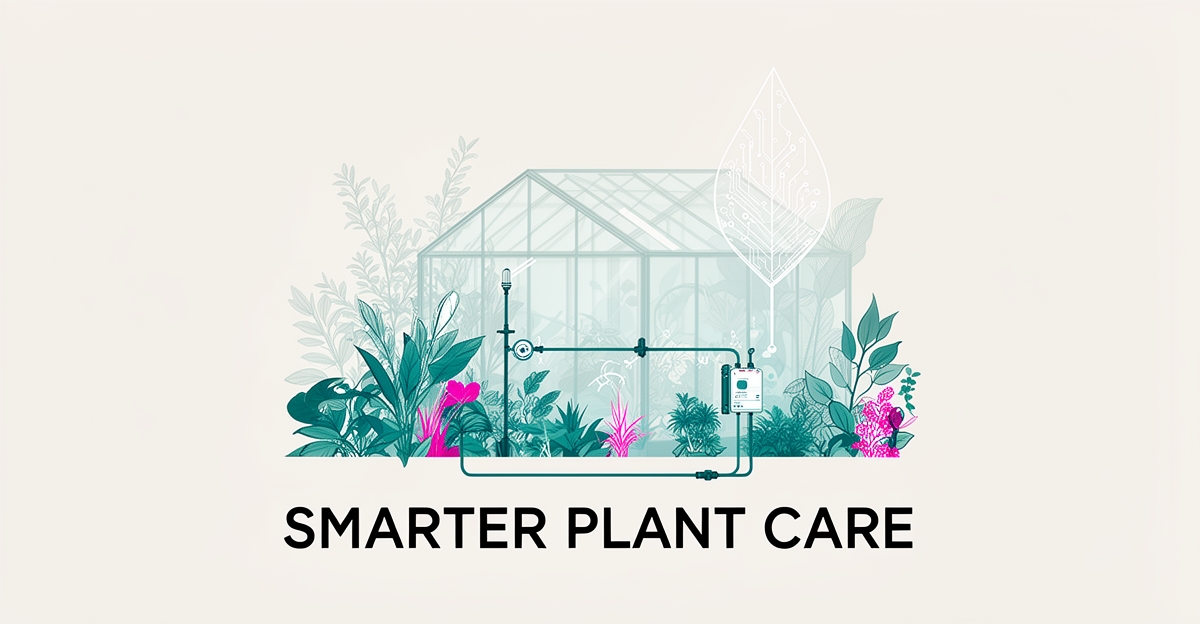
7 Ways AI Can Improve Plant Care Efficiency in Botanical Gardens
Key Facts
- Smart, sensor-driven irrigation is widely reported to cut water usage by 50–75% compared with timer-based systems, with corresponding drops in annual water costs
- Traditional sprinkler systems commonly overwater by 30–40%, driving up water bills and stressing root zones
- AI planning tools can generate detailed planting or restoration plans in minutes to hours, versus weeks or months with manual methods
- Modern AI platforms support many simultaneous projects or zones, enabling consistent care across large botanical collections
- Ongoing software costs for AI garden tools are typically far lower than traditional consulting and manual planning expenses, with routine labor savings often cited in the 75–85% range
- AI-powered computer vision enables near-continuous, garden-wide health monitoring, detecting stress before visible damage occurs
- AI recommends drought-resistant, frost-tolerant, and native species by analyzing microclimate data, reducing replanting costs and improving climate resilience
Hire a team member that works 24/7 — for less than a part-time wage.
AI receptionists, SDRs, dispatchers and 99+ roles. Trained on your business, fully managed.
Not sure where to start? Ask our AI planner
The Crisis of Scale in Botanical Garden Management
Botanical gardens face a quiet crisis: the methods that sustained living collections for centuries—fixed irrigation calendars, reactive pest scouting, and intuition-driven planting—are buckling under the weight of scale. Curators overseeing thousands of accessioned plants cannot be everywhere at once, and the gap between what a human team can monitor and what a collection demands widens with every climate anomaly.
Traditional sprinkler systems commonly overwater by 30–40%, inflating water bills and stressing root zones, while manual inspections catch disease outbreaks only after they have spread. Industry reports on smart, sensor-driven irrigation frequently cite water savings of 50–75% versus timer-based schedules, with proportional reductions in annual water costs. Labor costs compound the problem: skilled horticulturists spend hours on routine checks that generate no new insight, and seasonal peaks stretch thin budgets to the breaking point.
- Fixed schedules ignore real-time soil moisture and weather shifts
- Reactive pest control allows pathogens to establish before detection
- Intuition-based planting increases failure rates in volatile microclimates
- Inability to monitor thousands of plants simultaneously creates blind spots
- Climate volatility renders historical calendars unreliable
AIQ Labs works with institutions facing exactly this mismatch between capacity and complexity. Through AI Workflow Builds, gardens automate the routines that drain expert hours—watering schedules, pest-monitoring alerts, seasonal pruning plans—and reclaim that time for the nuanced work of heritage preservation, rare-species propagation, and strategic climate adaptation that no algorithm can replace. The shift is not about removing the gardener; it is about giving the gardener the visibility and leverage that scale demands.
Precision Resource Management Through AI Automation
Imagine a botanical garden where every plant receives the water and nutrients it needs at the precise moment it needs them, without manual intervention. This is the reality of AI-driven resource management, which transforms guesswork into data-driven precision.
Traditional sprinkler systems tend to overwater by 30–40%, leading to higher water bills and plant stress. In contrast, smart AI systems are widely reported to cut water usage by 50–75%, with proportional savings on annual water costs. This reduction eliminates the financial waste and ecological harm caused by conventional scheduling methods.
These intelligent systems rely on a network of real-time soil sensors that continuously monitor moisture levels and cross-reference this data with live weather forecasts and historical climate models. Rather than watering on a fixed timer, the AI activates irrigation only when specific conditions are met, ensuring each species receives hydration tailored to its biological requirements.
The technology extends beyond hydration to comprehensive nutrient management. Camera- and sensor-based systems can adjust nutrient delivery based on the specific needs of individual plant species. This precision approach supports optimal growth conditions without manual intervention, preventing the deficiencies or toxicities that often result from generalized fertilization schedules.
For gardens managing thousands of plants, the scalability of these automated workflows is transformative. AI tools can handle many projects or zones simultaneously, providing consistent, high-quality care across different locations so every area receives the same level of attention regardless of staff availability.
Implementing this level of automation requires more than installing sensors; it demands a custom workflow architecture that adapts to specific plant types and local microclimates. AIQ Labs builds these tailored systems—starting with the single workflow that costs your garden the most—to integrate seamlessly with existing operations, allowing horticultural teams to focus on conservation and curation rather than routine maintenance.
Key components of an AI-driven resource management system include:
- Real-time soil sensors that provide continuous moisture and nutrient data
- Weather forecast integration to anticipate rainfall and adjust schedules proactively
- Species-specific models that customize care for diverse botanical collections
- Automated alert systems that notify staff of anomalies before stress becomes visible
By removing the guesswork from irrigation and fertilization, botanical gardens can achieve significant cost savings while promoting healthier, more resilient plant collections. The shift from reactive to predictive care represents a fundamental advancement in how large-scale horticulture operates.
Proactive Health Monitoring at Enterprise Scale
Modern botanical gardens managing thousands of specimens face a critical challenge: by the time human teams notice disease symptoms or pest infestations, damage is often severe and costly to reverse. AI-powered computer vision systems now continuously scan entire collections, detecting early signs of stress that escape routine visual inspection. These systems analyze leaf discoloration, spotting patterns, and growth anomalies across thousands of plants simultaneously, triggering treatment protocols before issues escalate.
AIQ Labs builds custom monitoring systems that integrate computer vision with environmental sensors to create a proactive monitoring network. Unlike sequential manual inspections that take days or weeks to complete, AI systems provide near-real-time, garden-wide assessments every few hours. This capability allows gardens to address nutrient deficiencies or pest outbreaks at the earliest stage, significantly reducing treatment complexity and plant loss. The scalability of these systems means a single AI monitoring framework can oversee diverse plant types across multiple greenhouse zones or outdoor plots without increasing labor demands.
AI-driven monitoring transforms plant health management from reactive to preventive. Image recognition tools can identify diseases, pests, and nutrient deficiencies from leaf analysis, enabling intervention before infestations spread. These systems alert staff to subtle stress indicators that human observers typically miss until visible damage occurs. By deploying computer vision at enterprise scale, botanical gardens shift from sporadic spot-checks to continuous, data-driven surveillance that protects collections while freeing specialist time for complex restoration work.
Data-Driven Species Selection and Climate Resilience
AI transforms plant selection from guesswork to precision science by analyzing microclimate data, soil composition, and long-term climate forecasts to recommend species best suited for specific garden zones. This data-driven approach identifies drought-resistant, frost-tolerant, and native plants that are more likely to thrive, reducing replanting costs and strengthening collections against extreme weather. AI tools can generate detailed restoration plans in minutes to hours, incorporating environmental factors to guide planting decisions with scientific accuracy.
By processing satellite imagery and historical climate models, AI predicts how shifting weather patterns will affect different areas of a garden, enabling proactive adaptation. Gardens can future-proof their landscapes by selecting species with proven resilience to heatwaves, prolonged droughts, or unseasonal frosts—minimizing losses and avoiding costly replacements. When climate-resilient species are paired with smart irrigation that cuts water usage by 50–75%, the efficiency compounds, lowering both resource consumption and long-term maintenance expenses.
- Analyzes soil pH, drainage, and nutrient profiles to match plants with optimal growing conditions
- Recommends native species that support local biodiversity and require less intervention
- Identifies frost-tolerant varieties for colder microclimates within the garden
- Flags drought-resistant plants suited to areas with limited irrigation access
- Uses long-term climate projections to avoid species vulnerable to future extreme events
AIQ Labs supports botanical gardens in implementing these intelligent selection systems through custom workflow automation that integrates environmental data streams with planting schedules and maintenance protocols. By aligning species choice with real-time and forecasted conditions, gardens reduce trial-and-error planting, conserve resources, and build collections that endure seasonal volatility. This approach improves plant survival rates and ensures horticultural investments deliver lasting value amid changing environmental pressures.
The Hybrid Workflow: Augmenting Horticultural Expertise
The most successful botanical gardens aren't choosing between technology and tradition—they're building workflows where each amplifies the other. AI systems now handle the data-intensive routine that once consumed entire teams: generating planting schedules in minutes instead of weeks, monitoring thousands of plants simultaneously for pest pressure, and adjusting irrigation in real time based on soil sensors and weather forecasts. This frees senior horticulturists to focus on heritage preservation, complex restoration of historic landscapes, and the strategic decisions that require decades of institutional knowledge.
- Automated irrigation that cuts water usage by 50–75% while eliminating the 30–40% overwatering common with timer-based systems
- Pest and disease alerts delivered in real time across the entire collection, not just the beds a team can walk today
- Design generation for new exhibits completed in minutes to hours rather than the weeks traditional planning requires
- Multi-project management at scale, with consistent quality across every zone regardless of staff availability
The economics are compelling: ongoing costs for AI garden tools are typically a fraction of traditional consulting and manual planning expenses, and routine operations commonly see labor savings in the 75–85% range. But the real value isn't just savings—it's preservation. When algorithms handle the repetitive monitoring and scheduling, your experts can document propagation protocols for endangered cultivars, mentor the next generation, and make the nuanced judgment calls no model can replicate. Hybrid workflows outperform either approach alone: AI delivers speed, scalability, and resource optimization, while human expertise provides historical context, creative vision, and the ability to detect subtle stress signals that sensors miss.
AIQ Labs builds exactly this kind of hybrid workflow—custom automation that handles your garden's routine data processing and scheduling while integrating with the tools your team already uses. Whether you start with a single high-cost workflow or grow toward a full AI Operating System that connects monitoring, irrigation, and planning in one layer, the result is a system your institution owns outright—not a subscription you rent—designed to capture efficiency without erasing the expertise that makes your collection unique.
Still paying for 10+ subscriptions that don’t talk to each other?
We build custom AI systems you own outright. No vendor lock-in. Full control.
Not sure where to start? Ask our AI planner
Frequently Asked Questions
How much can AI actually reduce water usage in a botanical garden?
Will AI replace my horticulture staff?
How does AI detect plant diseases earlier than human inspections?
What does AI garden automation cost compared to traditional methods?
Can AI handle the specific microclimates in our garden?
How do we implement AI without losing our historical accuracy?
From Reactive Care to Resilient Collections
The scale crisis in botanical gardens won't be solved by working harder with the same calendars and walk-throughs. AI shifts care from reactive to predictive—automating irrigation that can cut water usage by 50–75%, enabling garden-wide computer vision for early disease and pest alerts, and using microclimate and climate forecast data to select resilient species before losses occur. The result is healthier collections, lower resource waste, and expert hours reclaimed for heritage preservation and propagation work that algorithms can't replace. The most durable gains come from a hybrid workflow where routine monitoring, scheduling, and multi-project coordination are automated, while horticulturists apply judgment to restoration and conservation. AIQ Labs builds custom workflow systems that adapt to each garden's plant types and climate, integrating with existing operations so teams focus on curation rather than manual checks. If you're mapping where automation can reduce labor and improve outcomes without eroding expertise, start with a focused assessment of your highest-cost routines. Take the 2-minute Fit Check at aiqlabs.ai/apply, then book a free 30-minute strategy call to identify high-ROI automation opportunities for your collection.
Make AI your competitive advantage — not just another tool.
Strategy, implementation and ongoing optimization. One partner, end to end.
Not sure where to start? Ask our AI planner