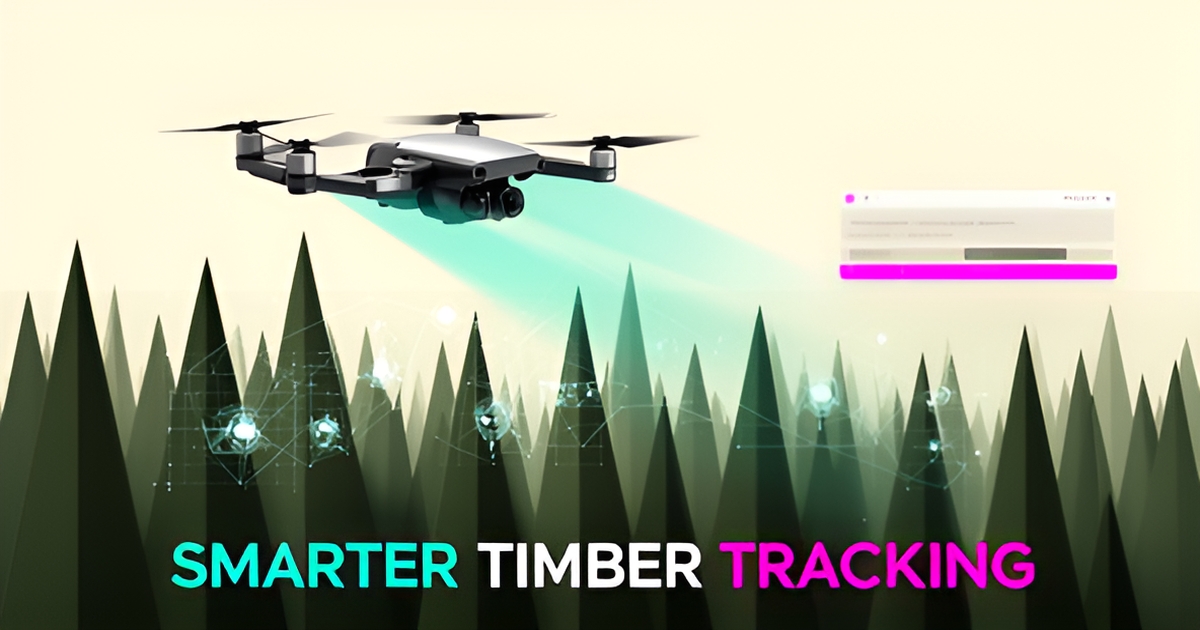
7 Ways AI Can Optimize Timber Inventory Tracking and Field Logging Operations
Key Facts
- Automated systems can collect inventory data dramatically faster than manual methods according to comparative analysis
- Deep Forestry reports processing large-scale tree counts with millimeter accuracy via autonomous drone surveys
- AI detection models can identify tree crowns with high accuracy in under 30 minutes in Agisoft testing
- Autonomous drone inventory can deliver individual tree insights within roughly 24 hours per Deep Forestry deployments
- Drone missions capture thousands of photos covering hundreds of hectares in hours per precision forestry research
- Leading timber inventory platforms win on API-driven ERP extensibility in current buyer's guides
Hire a team member that works 24/7 — for less than a part-time wage.
AI receptionists, SDRs, dispatchers and 99+ roles. Trained on your business, fully managed.
Not sure where to start? Ask our AI planner
The Crisis of Manual Timber Tracking: Errors, Delays, and Blind Spots
Manual timber tracking remains one of the most persistent bottlenecks in forestry operations, where paper-based scaling and siloed data systems create compounding delays. According to industry analysis, traditional manual measurement methods are not only time-consuming but inherently prone to human error, forcing operations to choose between speed and accuracy.
The operational drag extends far beyond the log deck. While enterprise resource planning systems like NetSuite, SAP S/4HANA, and Microsoft Dynamics offer robust inventory governance and API-driven automation, they were architected for warehouse workflows, not muddy logging sites. These platforms excel at audit-ready traceability and cost tracking, yet they cannot natively ingest field data without custom integration work. As a result, field crews often transcribe measurements twice—once on paper at the stump and again into the ERP days later—and every manual re-entry is a chance for error that cascades into inventory discrepancies and billing disputes.
The reporting lag compounds these errors. Research from forestry automation studies indicates that manual inventory cycles can stretch across weeks, delaying critical decisions about harvest scheduling and supply chain commitments. When data finally reaches the back office, it often lacks the spatial context needed for precision forestry, leaving managers with static snapshots rather than actionable intelligence. This delay creates blind spots in:
- Real-time inventory valuation and available supply
- Harvest progress against permit limits
- Chain-of-custody documentation for compliance
- Equipment and crew utilization across dispersed sites
The cost of these inefficiencies is measurable. A comparative analysis found that transitioning from manual methods to automated systems can deliver order-of-magnitude efficiency improvements, compressing data collection from weeks into hours. Meanwhile, drone-based surveys demonstrate that manual ground crews simply cannot match the centimeter-level precision and comprehensive coverage that automated sensors provide.
AIQ Labs helps timber companies bridge this divide with AI Workflow Builds that connect field tools directly to existing management systems, eliminating the double-entry trap without requiring wholesale ERP replacement. By automating the ingestion of GPS and drone data into inventory records, these integrations close the gap between stump and spreadsheet.
AI-Powered Field Data Capture: From Photos to Precision Metrics in Minutes
The clipboard-and-calipers era of timber measurement is ending. Computer vision systems now analyze a single smartphone photo of a log pile and return volume, diameter, and count data in minutes—work that once consumed hours of manual field labor.
The technology rests on neural networks trained on thousands of log images to recognize diameters, species, and stacking patterns regardless of angle or arrangement. According to Timbeter's forestry AI research, these systems process photos of log piles through image recognition algorithms that identify shapes, edges, and dimensions, eliminating much of the manual effort and minimizing human error while speeding up workflows.
Millimeter-level precision from autonomous drones represents the next tier of capability. Deep Forestry's autonomous systems fly below the canopy to scan every tree in a stand, measuring height, diameter, volume, species, and health with millimeter accuracy. Their platform reports delivering individual tree-level insights within roughly 24 hours and operating dramatically faster than traditional manual methods, having processed large-scale tree counts across production deployments.
Detection accuracy continues to climb as models mature. In benchmark testing documented by Agisoft Metashape, a YOLO-based detection model identified and counted tree crowns with high accuracy in under 30 minutes—a task that previously required days of fieldwork.
The operational advantages extend beyond raw speed:
- Real-time inventory updates flow directly from field capture to cloud dashboards, eliminating transcription delays
- Measurement disputes decline when photographic evidence backs every volume calculation
- Regulatory reporting accelerates through automated, audit-ready documentation
- Field crews redirect hours from measuring to higher-value tasks like quality assessment
Precision forestry research confirms that drones equipped with RGB cameras, multispectral imagers, and LiDAR capture centimeter-level detail on canopy height and tree density, accessing terrain too dangerous or remote for ground crews. A single flight captures thousands of images covering hundreds of hectares.
For timber operations running ERP platforms like NetSuite or SAP—systems that industry software rankings show dominate the market precisely because of their API-driven integration depth—the captured data can flow directly into existing inventory and accounting workflows. AIQ Labs builds these integration pipelines, connecting drone and smartphone capture tools with the management systems timber companies already use, so field measurements update inventory records without manual re-entry.
The shift from hours to minutes compounds across every load, every week. Operations that adopt AI-powered field capture gain not just speed, but a continuously verified, photographic record of every stick of timber that moves through their yards.
Autonomous Drone Fleets for Real-Time, Tree-Level Inventory
Fully autonomous below-canopy drone fleets are replacing weeks of ground cruising with tree-level inventory that lands in cloud dashboards within a day.
Autonomous systems operate below the canopy to scan every tree automatically across thousands of hectares. AI analyzes drone data to measure each tree's height, diameter, volume, species, and health with millimeter accuracy, eliminating guesswork in forest inventory. Deep Forestry's autonomous platform reports delivering individual tree-level insights within roughly 24 hours, a dramatic acceleration compared to traditional methods.
Speed gains are not incremental. Compared to manual methods, autonomous systems collect and analyze data dramatically faster. Production deployments have surveyed millions of trees through automated analysis, enabling large-scale forest mapping and inventory management.
The shift from manual to digital workflows changes how inventory is captured and used. Drone technology facilitates a transition from labor-intensive ground surveys to sophisticated digital forestry workflows, significantly improving speed and precision of forest inventory and mapping. Aerial missions can capture thousands of drone photos in a single flight, providing complete terrain and canopy coverage in hours rather than days required for manual surveys.
Field teams gain actionable, georeferenced data without GIS expertise. The system provides clear, actionable insights for forest management, biodiversity, and ESG reporting without requiring specialized technical knowledge. Real-time ESG and carbon tracking is enabled through live environmental, social, and governance monitoring capabilities for transparency and compliance.
Autonomous fleets also support sustainable operations. Drones can safely survey regions deemed too dangerous or inaccessible for human surveyors, including steep slopes, dense undergrowth, and post-disturbance landscapes. Utilizing drones reduces the need for vehicles and foot traffic in sensitive ecosystems, minimizing soil compaction and operational risks to field staff.
Integration is the critical step. Drone-derived tree data must flow into ERP-led inventory systems where traceability and governance are prioritized. Leading timber inventory software prioritizes deep integration with Enterprise Resource Planning systems to manage item, lot, and location data models, rather than standalone field logging tools. Top-ranked platforms emphasize API-driven extensibility and web services to automate inventory transaction integration.
For timber companies, this means field log entry, inventory updates, and real-time tracking using GPS and drone data can be automated end-to-end. AI can automate field log entry and inventory updates while reducing manual errors and speeding up reporting cycles. AIQ Labs helps timber companies build custom workflows that integrate with existing field tools and management systems, connecting autonomous drone data to cloud dashboards for ESG and carbon reporting.
Key operational outcomes include:
- Tree-level inventory delivered within roughly 24 hours with millimeter accuracy
- Dramatically faster surveys than ground crews across thousands of hectares
- Live GPS-tagged inventory feeding cloud dashboards for ESG and carbon reporting
- Reduced field risk and environmental impact in inaccessible terrain
Autonomous drone fleets turn forest inventory from a periodic estimate into a continuous, auditable asset.
Closing the Loop: AI Workflows That Sync Field Data to ERP & Operations
Field teams capture data, headquarters reconciles it days later. That lag creates duplicate entries, missed reorders, and stand records that never match the ERP.
Custom AI agents close the gap by treating drone imagery, mobile app logs, and GPS pings as live inventory events. Instead of manual transcription, images from log piles are processed with image recognition that identifies shape, edges, and dimensions to calculate volume AI-powered timber measurement. The resulting records flow directly into core systems such as Fishbowl, NetSuite, Odoo, and AcreValue, where item, lot, and location data models drive receiving, movement, and fulfillment timber inventory software evaluation.
The workflow automates the entire hand-off from capture to accounting:
- Drone and mobile captures trigger AI log entry and stand updates, replacing hours of manual measurement with minutes
- GPS-tagged inventory movements post to ERP via API-driven extensibility, keeping NetSuite, SAP, and Dynamics 365 synchronized
- Automated reorder rules fire from real-time stock levels, and stand records update without rekeying
- Audit-ready governance is maintained with traceable stock movements and goods receipt/issue processes
Speed compounds the gains. Autonomous drone systems deliver forest analysis at individual tree level within roughly 24 hours AI-driven timber inventory tracking, dramatically faster than traditional manual methods. In practice, a task that might take hours manually can now be completed in minutes with AI forestry AI time reduction.
Integration is what makes the loop closed. Leading timber inventory platforms prioritize deep ERP integration and API-driven automation for inventory transaction integration and movement ERP integration priorities. Fishbowl Inventory, for example, covers receiving, location-based moves, pick and pack, and shipment documentation so timber inventory updates stay close to the hands-on workflow timber inventory software features. AcreValue turns timber management records into map-based actions tied to parcels, supporting consistent field execution across properties map-driven stand tracking.
AIQ Labs builds these workflows through its AI Workflow Builds offering—rebuilding the one workflow that costs your operation the most, at a fixed price and in phases. The result is fewer manual errors and faster reporting cycles, with reconciliation work cut substantially as field data flows straight into your systems of record.
When field capture and ERP operations speak the same language, inventory becomes a live asset rather than a weekly spreadsheet chase.
From Pilot to Production: Deploying AI Without Ripping Out Your Stack
Many timber companies hesitate to adopt AI due to fears of costly rip-and-replace projects, but a phased approach eliminates that risk. Starting with a single workflow fix—like automated log scaling using AI-powered image recognition—lets teams validate value quickly without disrupting core operations. According to industry research, replacing manual log measurement with AI can reduce task time from hours to minutes while minimizing human error in volume calculations. This initial win builds confidence and provides immediate return through labor savings and faster reporting.
Once the first workflow proves successful, expansion to department-level automation becomes a natural next step. Integrating AI for inventory tracking and dispatch—using GPS and drone data for real-time updates—creates a unified system that connects field operations with back-office management. As noted in autonomous forestry surveys, drone-based AI processing delivers individual tree-level insights within roughly 24 hours at millimeter accuracy, enabling dramatic efficiency gains over manual methods. This phase eliminates silos between scaling crews, haulers, and inventory managers by establishing a single source of truth for log movements and stock levels.
The final stage is an AI Operating System: one connected operating layer built in phases and owned outright, covering the end-to-end timber workflow from stump to mill. Each phase is delivered as a milestone with clear, measurable outcomes before advancing, so there are no sunk costs if priorities shift. You retain full ownership of the custom-built system while gaining capabilities like predictive inventory forecasting and automated compliance reporting. Payment follows the same logic—start monthly, build in milestones, or own it outright. To map your specific automation journey, start with the two-minute Fit Check at https://aiqlabs.ai/apply, then schedule a free 30-minute strategy call at https://aiqlabs.ai/book.
Still paying for 10+ subscriptions that don’t talk to each other?
We build custom AI systems you own outright. No vendor lock-in. Full control.
Not sure where to start? Ask our AI planner
Frequently Asked Questions
How can AI automate field log entry and inventory updates for timber operations?
What accuracy and speed improvements can I expect from AI-powered timber tracking?
Will AI timber tracking integrate with my existing ERP or inventory management software?
Do I need to replace my current field tools and software to implement AI?
How do drones improve timber inventory compared to manual ground surveys?
Can AI help with ESG reporting and compliance documentation for timber operations?
Your Next Move: From Manual Mayhem to AI-Powered Precision
The shift from manual timber tracking to AI-driven operations isn't just an upgrade—it's how the industry is moving. By using computer vision for instant log measurements, deploying autonomous drones for near-real-time forest inventory, and integrating field data with your ERP systems, you eliminate errors and delays while building a foundation for operational intelligence. The evidence is consistent: autonomous systems deliver order-of-magnitude efficiency gains with millimeter-level measurement at tree scale. AIQ Labs builds the workflows that bridge field operations and back-office systems without ripping out your existing infrastructure—starting with one workflow, proving the value, then scaling in phases. Ready to map your automation journey? Take the two-minute Fit Check at https://aiqlabs.ai/apply to identify your highest-impact opportunity, then book a free 30-minute strategy call at https://aiqlabs.ai/book to see exactly how AI can transform your timber operations.
Make AI your competitive advantage — not just another tool.
Strategy, implementation and ongoing optimization. One partner, end to end.
Not sure where to start? Ask our AI planner