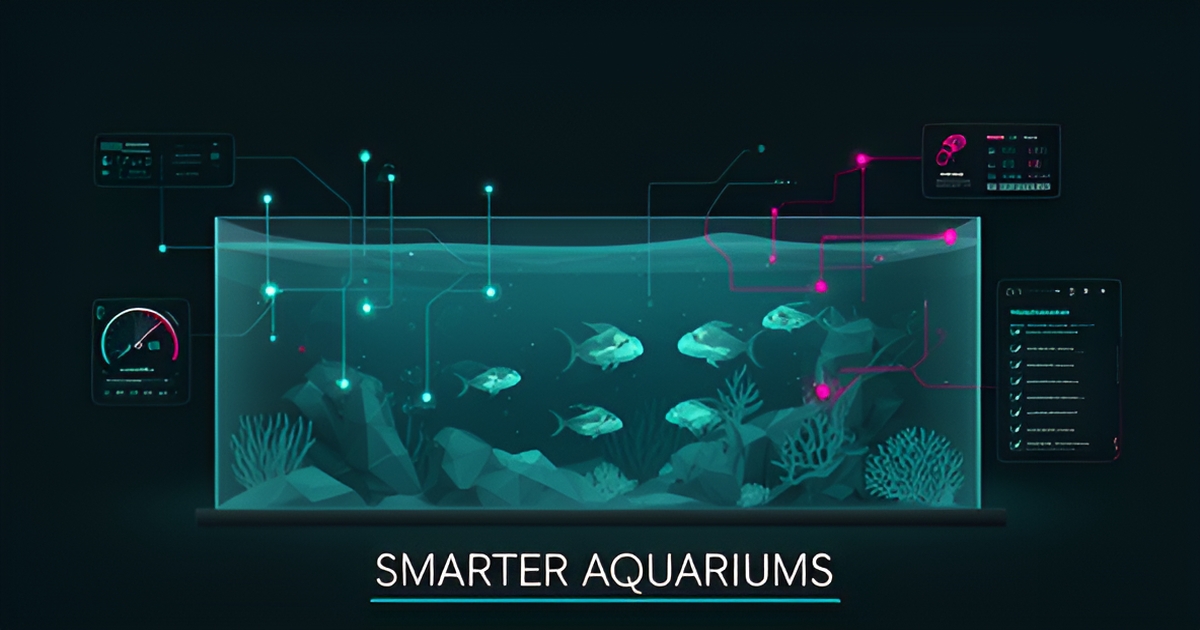
7 Ways AI Can Transform Aquarium Operations from Guest Experience to Maintenance
Key Facts
- Dedicated aquarium AI platforms like AquaticLog and Seneye are typically rated highly for water management intelligence in independent tool comparisons
- Aquaria AI tracks 16 water parameters including calcium, magnesium and alkalinity per its app specifications
- Ariel AI automatically extracts 13+ parameters from natural language like “pH 7.2, ammonia 0” according to Aquaria AI
- Trend-based water monitoring can catch problems days before parameters reach dangerous levels per aquarium AI research
- Fish stress is usually caused by interacting changes across parameters, not a single dramatic failure, which is why multi-parameter monitoring outperforms isolated readings
- AIQ Labs has deployed 200+ multi-agent systems and runs 4 live SaaS products daily
Hire a team member that works 24/7 — for less than a part-time wage.
AI receptionists, SDRs, dispatchers and 99+ roles. Trained on your business, fully managed.
Not sure where to start? Ask our AI planner
Why Aquariums Still Run on Reactive Guesswork
Aquariums rarely fail from a single dramatic event; they fail quietly, after hours of subtle stress that no one notices until it's too late. Dissolved oxygen can sag after overfeeding or a clogged air path, and disease cues often appear only after the tank has been stressed for days.
According to recent analysis of smart aquarium management, the core problem is that most operations treat each parameter as an isolated gadget metric rather than a connected life-support stack. Staff juggle disconnected logs for water quality, feeding, and guest flow, leaving them constantly reacting instead of predicting. Real-time monitoring works best when it watches temperature, pH, salinity, turbidity, and dissolved oxygen together, not as separate readings.
This fragmented approach creates predictable blind spots. Fish stress usually comes from interacting changes, not a single dramatic failure. Vision-based behavioral analysis is becoming one of the strongest AI use cases because movement patterns often reflect stress, feeding state, and water-quality problems earlier than manual observation does. Yet many facilities still rely on fixed feeding schedules and threshold-only alarms that trigger after the damage is done.
The result is a cycle of reactive guesswork. Teams chase symptoms instead of anticipating trends. As research in Aquaculture International notes, AI and computer vision now enable continuous water quality monitoring, health management, and behavioral analysis, but there is still no single generalized model that handles all essential activities across diverse systems. That gap forces aquariums to stitch together point solutions that don't talk to each other.
- Dissolved oxygen sags after overfeeding or equipment issues
- Disease and stress cues appear only after hours or days
- Water quality, feeding, and guest flow live in disconnected logs
- Threshold alarms trigger after problems become visible
- Staff spend more time reacting than preventing
The shift from reactive to predictive operations starts with treating the aquarium as a compact life-support stack. Modern AI aquarium platforms already track 16 water parameters and use natural language logging to reduce friction. AIQ Labs connects these dots through AI Workflow Builds — rebuilding the one workflow that costs your facility the most, at a fixed price and in phases — turning isolated data into a unified system that forecasts where water is heading, not just where it is now.
Predictive Water Quality: Forecasting Chemistry Before It Crashes
Traditional water testing reacts to problems after they appear; AI predicts them days before they crash a system. By continuously correlating shifts across temperature, pH, salinity, dissolved oxygen, and turbidity, predictive models spot the interacting stress signals that single-parameter alarms miss entirely. Research confirms that fish stress is usually produced by interacting changes rather than a single dramatic failure, making multi-parameter forecasting essential for proactive care.
Platforms like AquaticLog and Seneye score well for water management intelligence in independent comparisons by tracking trends across many parameters, from basic chemistry to advanced reef metrics like calcium, magnesium, and alkalinity. This granular visibility lets operators schedule precise dosing and water changes instead of scrambling through emergency interventions. Consistent data logging is essential for AI tools to provide accurate analysis and personalized recommendations, turning daily readings into a predictive engine rather than a historical record.
- Short-range forecasting replaces threshold-only alarms
- Multi-parameter correlation catches interacting stress signals early
- Proactive dosing schedules reduce emergency water changes
- Natural-language logging removes friction from data collection
AIQ Labs applies this same predictive philosophy to operational workflows, building custom AI systems that forecast bottlenecks across departments before they impact the guest experience. When water quality intelligence integrates with a unified AI workflow automation layer, maintenance teams receive prioritized task lists ranked by predicted urgency — freeing aquarists to focus on animal welfare and education instead of reactive firefighting.
Behavior-Aware Feeding and Health Monitoring
Fish don’t file incident reports, they change how they move. Vision-based AI reads those changes as an early warning system, spotting stress, hunger, or water-quality drift before probes trigger alarms.
Behavioral analysis turns swimming patterns into actionable signals. Smart aquarium research notes that movement patterns often reflect stress, feeding state, and water-quality problems earlier than manual observation does. Abnormal swimming, surface hanging, or feeding hesitation become detectable cues rather than missed details.
Feeding shifts from a fixed clock to a live response. Current directions show the best feeding systems tune timing and portion size to live fish behavior instead of treating every day as identical. Automated portion control prevents overfeeding that degrades water quality and creates waste spikes.
Multi-parameter context makes behavior interpretation reliable. Real-time monitoring is strongest when a tank watches temperature, pH, salinity, turbidity, and dissolved oxygen together instead of treating each reading as an isolated gadget metric. Interacting changes drive stress more than single failures.
In practice, behavior-aware workflows include:
- Vision models scoring activity levels and feeding approach to adjust portion size in real time
- Hesitation detection that pauses or reduces feed when appetite is low
- Trend correlation of behavior with water chemistry to forecast issues before visible symptoms
This approach aligns with how AI platforms are evaluated today. Independent tool comparisons consistently rate dedicated platforms like AquaticLog highly for water management, species compatibility, and health diagnosis. Consistent data logging is essential for AI tools to provide accurate analysis and personalized recommendations.
Proactive logging lowers staff burden. Aquaria AI demonstrates natural-language logging where Ariel automatically extracts 13+ parameters from descriptions like “pH 7.2, ammonia 0”. The app tracks 16 water parameters across freshwater, saltwater, and reef systems and flags problems early with specific instructions.
For aquarium operations, these capabilities map to AI Workflow Builds that reduce human error and free staff for care and education. AIQ Labs embeds behavior monitoring into daily operations, replacing rigid schedules with responsive, data-driven routines.
When feeding and health monitoring adapt to what fish are actually doing, maintenance becomes predictive rather than reactive, and water quality stays stable with less manual intervention.
Automating Guest Operations: Check-Ins, Scheduling, and Front Desk
Aquariums thrive when guest interactions flow smoothly, yet front-desk bottlenecks often disrupt both visitor experience and staff productivity. AI-powered automation transforms these touchpoints into seamless, always-on operations that elevate service while reducing manual workload.
By deploying AI Employees for check-ins, ticketing, and group scheduling, aquariums eliminate missed calls and queues through 24/7 availability. These managed AI staff — receptionists, dispatchers, and dozens of other roles — handle multilingual inquiries via voice and chat, integrating directly with CRM, calendar, and POS systems to unify guest data in real time. Because an AI Employee typically costs around 80% less than a human hire, the budget stays focused on educators and caretakers who deliver high-value interactions like exhibit talks and conservation education. Aquaria AI demonstrates how natural language processing streamlines data capture—users simply describe observations like "pH 7.2, ammonia 0"—and the AI extracts and logs parameters automatically, a principle directly applicable to guest inquiry handling where voice agents parse requests without rigid menus.
Custom workflows ensure every interaction feeds into a single operational dashboard, providing real-time visibility into booking trends, staff allocation, and visitor flow. This unified approach mirrors the multi-parameter sensing emphasized in smart aquarium management, where tracking temperature, pH, salinity, and dissolved oxygen together yields stronger insights than isolated metrics. Industry research confirms that anticipating needs—whether water parameter shifts or guest arrival patterns—outperforms reactive threshold-only systems. For aquariums, this means AI predicts peak visit times based on historical data, weather, and local events, dynamically adjusting staffing suggestions and exhibit readiness.
The result is a front desk that never sleeps, never misses a call, and continuously learns from interactions to improve response accuracy and personalization. Voice agents manage phone bookings with human-like cadence, while chat agents resolve digital inquiries instantly—all actions logged and analyzable for ongoing optimization. By automating routine tasks, aquariums reallocate human expertise toward meaningful engagement, turning operational efficiency into deeper visitor connection and educational impact. This shift from task management to experience design aligns with the broader AI transformation journey, where technology serves not just to cut costs, but to amplify mission-driven work in conservation and public engagement.
From Disconnected Tools to a Unified AI Operating System
Aquariums run on dozens of disconnected logs, and that fragmentation is where errors and stress build. When feeding records, water sensors, maintenance tickets, staff schedules and guest data stay in separate tools, staff spend hours reconciling instead of caring for animals.
A unified operating layer changes the dynamic from reactive firefighting to anticipatory control. Smart aquarium research emphasizes that systems are strongest when control logic behaves like short-range forecasting rather than threshold-only automation. Multi-parameter sensing is superior because fish stress is usually produced by interacting changes rather than a single dramatic failure.
Consistent data logging is essential for AI tools to provide accurate analysis and personalized recommendations, and trend-based water monitoring can catch developing problems days before they reach dangerous parameter levels. Comparative testing of aquarium platforms shows how comprehensive management is valued, with dedicated tools like AquaticLog scoring well for water management and species compatibility.
AIQ Labs builds this as an AI Operating System — one connected operating layer, built in phases and owned outright, replacing subscription chaos with infrastructure you keep. The approach mirrors how modern aquarium apps reduce friction: users can log parameters in plain English and the AI automatically extracts and logs the data, eliminating forms and dropdowns.
A custom platform can unify:
- Feeding logs and behavior-aware portioning tied to vision analysis
- Real-time water sensors for temperature, pH, salinity, dissolved oxygen and more
- Maintenance tickets, staff schedules and guest experience data in one source of truth
- Managed AI Employees for reception, dispatch and operations that work 24/7
The payoff is fewer manual errors and significant staff hours reclaimed each week, with teams focused on care and education. Aquaria AI demonstrates the power of context-aware logging, tracking 16 water parameters and automatically extracting 13+ parameters from natural language descriptions like “pH 7.2, ammonia 0”.
Behavior becomes an early warning system when vision models notice changing movement patterns before an aquarist notices a crisis. Predictive adjustment forecasts where water is heading, not only where the probe says it is right now, allowing interventions before fish show signs of stress.
With owned infrastructure and AI Employees handling routine intake, scheduling and monitoring, the aquarium gains a central intelligence hub that learns continuously and scales without adding headcount.
Still paying for 10+ subscriptions that don’t talk to each other?
We build custom AI systems you own outright. No vendor lock-in. Full control.
Not sure where to start? Ask our AI planner
Frequently Asked Questions
How can AI help prevent water quality problems before they become visible in my aquarium?
Can AI really detect fish stress or illness earlier than manual observation?
What are the benefits of using AI for feeding instead of fixed schedules?
How does AI improve guest operations like check-ins and scheduling at aquariums?
What does it mean to have a unified AI operating system for aquarium management?
Is natural language logging really effective for aquarium data entry, and how does it work?
From Reactive Guessing to Predictable Operations
Aquariums don’t fail in one dramatic moment; they drift into stress through interacting changes in water chemistry, feeding, behavior, and guest flow that threshold alarms miss until it’s too late. Moving from disconnected logs to a unified life-support stack lets teams forecast where parameters are heading, read fish behavior as an early warning system, automate guest operations around the clock, and turn maintenance into prioritized, predictive work. The result is fewer emergency interventions, more stable water quality, and staff freed to focus on animal welfare and education instead of firefighting. Dedicated platforms like AquaticLog show how comprehensive water management is valued in independent tool comparisons. If you’re ready to connect these dots without adding headcount, start with the two-minute Fit Check at aiqlabs.ai/apply, then book a free 30-minute strategy call at aiqlabs.ai/book to map your highest-ROI automation opportunity. Prefer email? Reach the team at [email protected].
Make AI your competitive advantage — not just another tool.
Strategy, implementation and ongoing optimization. One partner, end to end.
Not sure where to start? Ask our AI planner