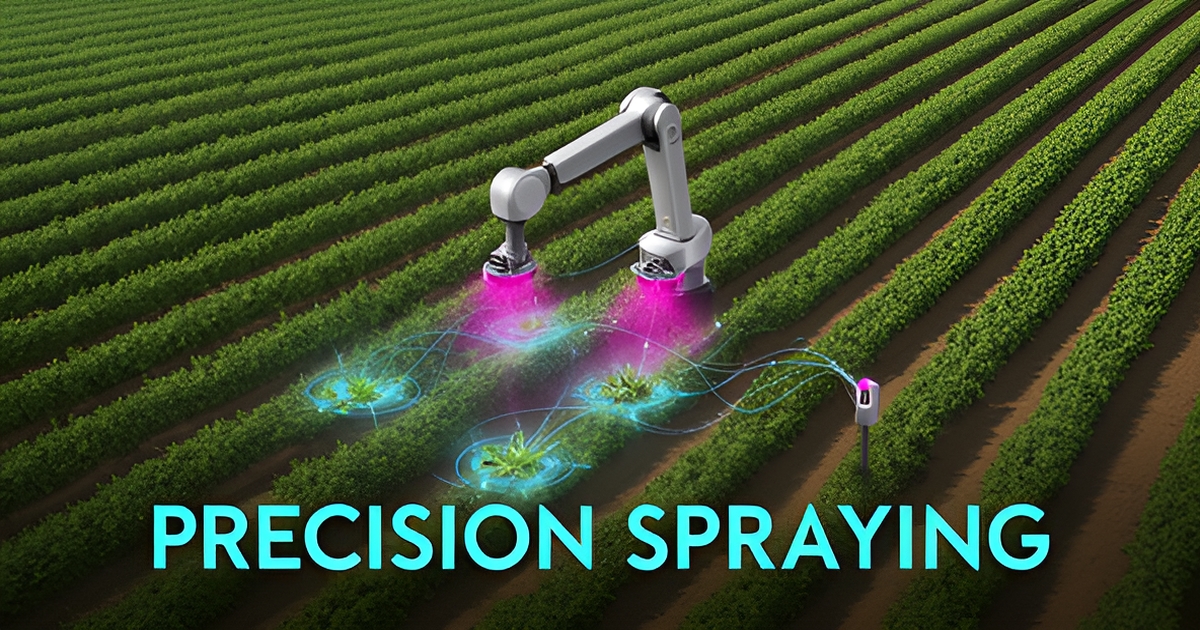
7 Ways AI Improves Accuracy in Herbicide Application Across Different Crops
Key Facts
- Traditional broadcast methods can waste the vast majority of applied chemicals through drift and non-target soil contact according to AI spray coverage research
- AI-powered systems have been reported to cut chemical use by 50-90% per AI spray coverage research
- YOLOv4-based models achieve roughly 93% indoor and 90.6% field effective spraying rates from AI spray coverage research
- Spot spraying was 97% as effective as broadcast in sugarcane trials in a real-world case study
- Herbicide use fell 35% overall and up to 65% in low-pressure zones per robotic spot-spraying trials
- Runoff herbicide concentration fell 39% and total load fell 54% with spot spraying per the real-world case study
Hire a team member that works 24/7 — for less than a part-time wage.
AI receptionists, SDRs, dispatchers and 99+ roles. Trained on your business, fully managed.
Not sure where to start? Ask our AI planner
The Hidden Cost of Imprecision: Why Broadcast Spraying Wastes Chemicals
Imagine spending $100 on herbicide and watching most of it drift into waterways or soak bare soil while weeds survive. That is the working reality of traditional broadcast spraying, where research suggests the large majority of applied chemicals can miss their target, contaminating water sources and inflating operational costs.
The financial bleed extends beyond wasted product. Farmers face growing regulatory pressure as environmental agencies scrutinize agricultural runoff, while input costs keep climbing. Every acre sprayed with blanket coverage represents preventable loss — money that vanishes through over-application, drift, and treating ground that never needed chemical intervention.
This inefficiency creates a cascade of operational failures that modern agriculture can no longer afford:
- Chemical waste: Traditional broadcast methods lose a large share of active ingredients to drift and non-target soil
- Regulatory exposure: Herbicide runoff into waterways triggers compliance risk as environmental scrutiny intensifies
- Cost inflation: Over-application drives up input expenses per acre, eroding already thin margins
- Resistance acceleration: Blanket spraying speeds up herbicide-resistant weed evolution, forcing stronger chemical cocktails in later seasons
The environmental math is equally sobering. When Kansas State researchers analyzed postemergence herbicide programs, they found uniform broadcast applications cost $22.89 per acre while delivering chemicals across entire fields regardless of actual weed presence. This "spray everything" approach loads ecosystems with unnecessary toxins precisely when trials show spot-spraying can reduce herbicide concentration in runoff by 39%.
For operations managing tight margins, these hidden costs compound quickly. On a 1,000-acre farm, even $20-35 of preventable loss per acre adds up to tens of thousands of dollars annually — capital that could fund equipment upgrades or soil health initiatives. Yet the solution requires more than simply spraying less; it demands precision application logic that distinguishes between crop and weed, bare soil and active growth, treatment zones and no-spray buffers.
AIQ Labs addresses this challenge through AI Workflow Builds that rebuild the one field workflow costing you the most — fixed price, delivered in phases. By replacing blanket coverage with targeted intervention, these AI-driven workflows prevent the dual failures of over-application and under-treatment, turning chemical waste into a controllable line item rather than an accepted loss.
From Blanket Coverage to Surgical Precision: How Machine Vision Distinguishes Crops from Weeds
From blanket boom passes to pixel-level decisions, the shift in herbicide accuracy starts with how a machine sees the field. Machine vision and deep learning models turn color, texture and morphology into actionable identity, letting sprayers treat only what needs treatment.
Machine vision systems can distinguish between weeds and crops using features like color, shape, and texture. Research on AI spray coverage explains that this foundation is built on machine vision, deep learning and autonomous sprayers working together. The models learn to separate broadleaf weeds, grasses and sedges from the crop canopy, even under variable light and overlapping foliage.
Deep learning fine-tunes those decisions in real time. The YOLOv4 model has proven effective for weed recognition, achieving an average effective spraying rate of 93.33% in indoor experiments and 90.6% in field experiments. A robotic sprayer using the MobileNetV2 model achieved 100% accuracy in plant classification in testing, while a system designed for weed identification in sugarcane fields reached 96.6% accuracy.
That precision enables surgical spot-spraying. In field trials on sugarcane farms, spot spraying was 97% as effective as broadcast spraying in weed control. Real-world case study results show herbicide usage was reduced by 35% with spot spraying, proportional to weed density, and up to 65% in low-pressure strips. The system differentiates weeds from crops using RGB cameras and deep learning for green-on-green detection.
Effective models also factor agronomic context, not just shape. Precision spraying analysis notes spray accuracy starts with what the model was trained to see, including crop type, growth stage and no-spray zones. This allows treatment logic to adapt to real field variability instead of static maps.
Key discrimination capabilities include:
- Weed categorization by morphology, such as broadleaf vs grass vs sedge, each with different treatment response
- Growth-stage awareness from early to mature phases to factor plant vulnerability and timing sensitivity
- Crop-specific identification for sugarcane, sorghum and specialty horticulture with irregular canopies
- No-spray zone detection for bare soil, fallow ground and non-target biology to skip unnecessary application
AI systems can adjust herbicide application rates and coverage based on crop type, size, and terrain, preventing over-application or under-treatment. Industry guides on AI spray decision tools highlight this capability — a function AIQ Labs delivers through custom field automation built as part of an AI Operating System you own outright. The result is spot-spraying that can reduce herbicide use by 50-90% while maintaining broadcast-level efficacy, cutting chemical spend and protecting yield economics.
Adapting to the Field: How AI Adjusts Application Rates for Crop Type, Growth Stage, and Terrain
The difference between a blanket application and a targeted one often comes down to whether the system actually understands what it's looking at. Traditional sprayers treat a field as a uniform block, but AI-driven precision spraying reads the field like an agronomist would — distinguishing crop from weed, bare soil from active canopy, and vulnerable seedlings from mature stands.
This contextual intelligence starts with the data. Drone-mounted multispectral cameras capture high-resolution imagery that reveals weed species, crop growth stage, and canopy density across every acre. AI models trained on BBCH-scale growth stage labeling and instance segmentation can then differentiate broadleaf weeds from grasses, identify fallow zones, and flag crop stress — all in real time. Research from Kansas State University shows drone imagery combined with AI analysis can distinguish Palmer amaranth from johnsongrass based on architecture, color, and spectral reflectance, enabling species-specific prescriptions. The result: herbicide applied only where it's needed, at the rate the growth stage demands.
- Crop-type logic adjusts droplet size and volume for row crops versus orchards
- Growth-stage gating reduces rates on early-stage canopies to prevent phytotoxicity
- Terrain and soil sensors modulate pressure and speed for slopes and variable soils
- Bare-soil detection skips application entirely on fallow ground
Field trials on 25 hectares of sugarcane in Australia demonstrated that spot-spraying systems achieve 97% of broadcast efficacy while cutting herbicide use by 35% overall — and up to 65% in low-pressure zones. Water quality monitoring confirmed a 39% reduction in mean herbicide concentration and a 54% drop in mean load in runoff. These systems don't just map weeds; they execute variable-rate prescriptions that adapt nozzle-by-nozzle as the sprayer moves through changing conditions. AIQ Labs builds this same adaptive logic into custom field automation, integrating drone imagery, soil sensors, and real-time growth-stage models so every pass matches the field's actual needs — not a static map.
Implementing Precision: A Phased Approach to AI-Driven Herbicide Management
Adopting AI-driven herbicide management begins with foundational steps like drone-based scouting to create accurate weed maps, which can reduce herbicide costs by limiting treatments to infested areas. Scouting with drones and AI-based image analysis improves mapping accuracy and enables targeted spraying, preserving crops while minimizing waste. This initial phase builds the data foundation needed for smarter application decisions.
The next step involves retrofitting existing equipment with spot-spraying capabilities using systems designed for green-on-green detection, such as those leveraging RGB cameras and deep learning. Field trials on sugarcane farms showed spot spraying reduced herbicide usage by 35% proportional to weed density, with up to 65% savings in low-pressure zones. These retrofit solutions integrate machine vision and deep learning to adjust spraying parameters in real time, ensuring precise application without replacing entire fleets.
For larger operations, deploying autonomous systems offers scalable precision, particularly when models are trained with high-quality, agronomically informed data. Spray accuracy starts with what the model was trained to see, requiring expert annotation of growth stages, weed types, and no-spray zones to handle complex morphologies like overlapping canopies. AIQ Labs supports this phased adoption through builds you own outright, with each milestone delivering usable capability before the next phase begins:
- Begin with drone scouting to generate prescription maps
- Retrofit equipment with vision-guided spot-sprayers
- Scale to autonomous systems with ongoing model refinement
Farmers retain full ownership of built systems, avoiding vendor lock-in while accessing precision tailored to their field variability and crop-specific needs. AI-powered systems have been reported to cut chemical use by 50-90%, translating directly to lower input costs and improved environmental outcomes. This structured progression aligns with AIQ Labs' build-in-milestones model — you fund one phase at a time and keep everything that's delivered.
Still paying for 10+ subscriptions that don’t talk to each other?
We build custom AI systems you own outright. No vendor lock-in. Full control.
Not sure where to start? Ask our AI planner
Frequently Asked Questions
How much herbicide do traditional spray methods actually waste?
Can AI spot-spraying match the weed control of blanket spraying?
How does AI tell weeds apart from crops in real time?
Do I need to buy all new equipment to start using AI herbicide application?
What environmental benefits does AI-driven spot-spraying actually deliver?
How does AI adjust spraying for different crops and field conditions?
Precision Is The New Profit Margin
Broadcast spraying was built for a different era — one where heavy chemical waste was accepted as normal. Today, machine vision, deep learning and adaptive spray logic make that waste optional. By distinguishing crop from weed, reading growth stage and terrain, and applying herbicide nozzle-by-nozzle only where needed, AI turns blanket coverage into surgical precision while maintaining broadcast-level efficacy. The result is less chemical in waterways, lower input costs per acre, slower resistance build-up, and a clear operational advantage for farms managing tight margins.
If you're evaluating how to move from maps to real-time decisions, start with a focused scouting and prescription pilot, then layer in vision-guided spot spraying that fits your existing equipment. AIQ Labs builds custom field automation that adjusts application rates based on crop type, size and terrain analysis, so each pass matches the field's actual needs rather than a static plan. Ready to find the highest-ROI automation opportunity on your operation? Take the 2-minute Fit Check at aiqlabs.ai/apply and book a free 30-minute strategy call.
Make AI your competitive advantage — not just another tool.
Strategy, implementation and ongoing optimization. One partner, end to end.
Not sure where to start? Ask our AI planner