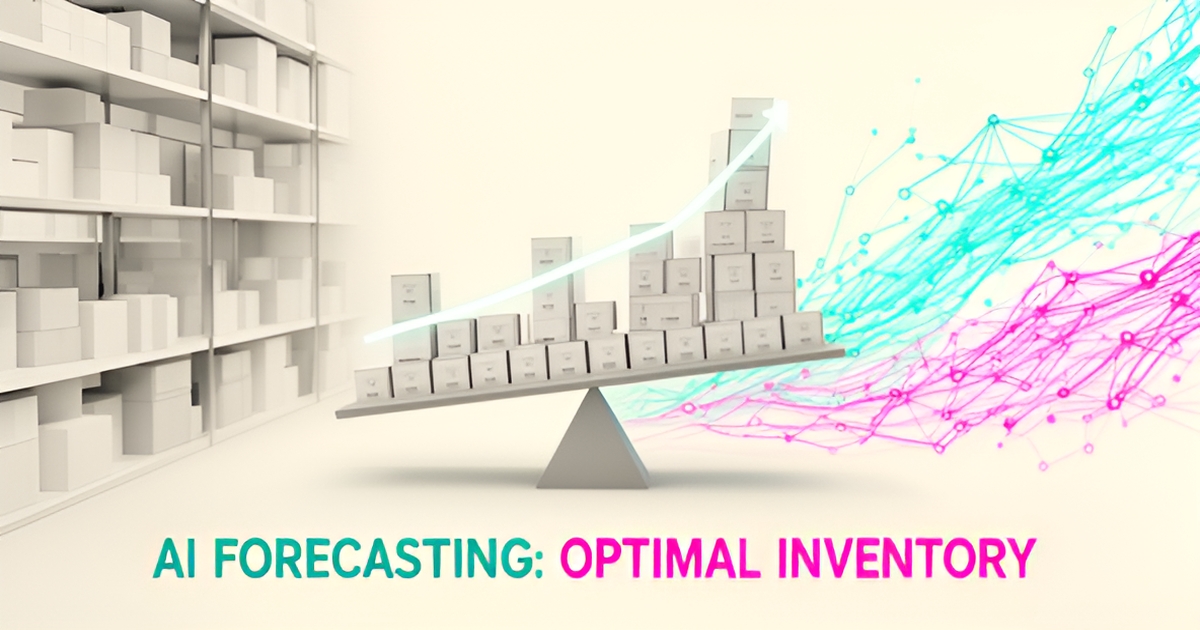
AI-Driven Inventory Management for Promotional Products: Avoiding Stockouts and Overstocking
Key Facts
- Organizations using AI-powered demand forecasting reduce stockouts by an average of 35% according to McKinsey 2024 research from McKinsey.
- Machine learning algorithms optimize reorder points and safety stock levels, reducing excess inventory by 20-50% per Gartner 2024 benchmarks.
- AI-driven systems achieve 95-99% stock accuracy compared to a 63% baseline with legacy tools per IBM and McKinsey benchmarks.
- Amazon reduced overstock by 32% and increased on-time delivery by 21% through AI forecasting as reported by LinkedIn.
- Snackzilla improved retail fill rates from 76% to 93% and achieved zero stockouts after implementing AI forecasting per LinkedIn case study.
- AI inventory MVP implementations start at $30K-$50K while enterprise builds with deep ERP integration can exceed $200K according to GeekyAnts.
- The global inventory management software market is projected to reach $1.4 trillion by 2030 per Grand View Research 2024.
Hire a team member that works 24/7 — for less than a part-time wage.
AI receptionists, SDRs, dispatchers and 99+ roles. Trained on your business, fully managed.
Not sure where to start? Ask our AI planner
Why Promotional Product Inventory Keeps Failing You
The shelf speaks before the data does. One day it sits empty, the next it overflows with branded merchandise nobody asked for—both scenarios quietly eroding margins and client trust.
Promotional product demand doesn't follow normal retail curves. It spikes around trade shows, product launches, and seasonal campaigns, then evaporates overnight. Traditional warehouse management systems rely on static reorder points and historical averages that cannot capture event-driven volatility or trend sensitivity. Research from McKinsey shows organizations using conventional forecasting methods face a 35% stockout rate, while Gartner benchmarks indicate 20–50% excess inventory across promotional SKUs.
The mismatch creates a cascade of failures:
- Marketing teams launch campaigns without visibility into real-time stock levels
- Procurement orders safety stock based on last year's event calendar, not this year's pipeline
- Warehouse teams manage 63% baseline stock accuracy compared to the 95–99% achievable with predictive systems
Legacy tools treat inventory as a counting exercise rather than a cash-flow discipline. They lack the ability to ingest external signals—conference schedules, social trend velocity, regional campaign calendars—that drive promotional demand. As Microsoft notes, poor visibility leads directly to stockouts, excess holding costs, and missed revenue opportunities.
AIQ Labs builds AI systems that sync with ERP tools to optimize inventory in real time, replacing static rules with models that learn from historical sales patterns, seasonality, and external event data. The shift moves promotional product businesses from reactive firefighting to predictive control—where reorders happen automatically and stock levels align with actual demand signals.
How AI Forecasting Turns Chaos into Predictable Demand Signals
Traditional inventory management often feels like navigating a storm without a compass—reacting to stockouts after they happen or drowning in excess inventory that ties up capital. AI forecasting changes this dynamic by turning chaotic demand patterns into predictable signals through continuous learning from diverse data streams.
Machine learning models ingest historical sales data, seasonal trends, and external events like trade shows or holidays to build nuanced demand profiles. They also incorporate real-time trend data from social media, news, and market shifts to adjust forecasts as conditions evolve. This multi-layered approach allows businesses to anticipate promotional spikes and lulls with far greater accuracy than static planning methods. AI-driven market forecasting uses these interconnected data points to proactively adjust stock levels, directly improving inventory management outcomes.
The impact is measurable: Amazon reduced overstock by 32% through AI forecasting, while Snackzilla jumped from 76% to 93% fill rates with zero stockouts after implementing similar models. These results stem from AI’s ability to detect subtle demand influencers—such as weather patterns or regional events—that traditional systems overlook. By continuously retraining on new data, these models maintain accuracy even as market conditions shift, ensuring inventory aligns with actual customer demand rather than outdated assumptions. Agentic AI for inventory further enhances this by automating procurement and warehouse actions based on forecasted needs.
- Historical sales and seasonality form the foundation of demand prediction
- External events and real-time trends refine forecasts for promotional volatility
- Continuous learning prevents forecast drift as market conditions change
AIQ Labs builds custom forecasting systems that sync with ERP tools to turn these predictive insights into automated reorder decisions. By grounding forecasts in real-world data streams—rather than guesswork—businesses gain the visibility needed to avoid both stockouts and overstocking. This transforms inventory from a persistent liability into a strategic lever for cash flow and customer satisfaction.
Real-Time Optimization: Syncing AI with Your ERP for Autonomous Replenishment
Real-time inventory optimization transforms how promotional product businesses manage supply chains by connecting AI directly to ERP systems. This integration enables dynamic adjustments to safety stock levels based on real-time demand signals, supplier lead times, and promotional campaign schedules. Rather than relying on static reorder points, AI continuously recalculates optimal inventory thresholds, reducing the risk of both stockouts during peak demand and overstocking during lulls.
AIQ Labs implements this through Model Context Protocol (MCP) connections that sync AI forecasting engines with platforms like NetSuite, SAP, and QuickBooks. These integrations allow autonomous purchase order generation when predicted demand exceeds current stock plus safety buffer, triggering replenishment without manual intervention. For multi-warehouse operations, the system analyzes regional demand patterns and transfer costs to recommend optimal stock rebalancing, ensuring inventory is positioned where it's needed most.
The impact is measurable: AI-driven systems achieve 95-99% stock accuracy compared to the 63% baseline of legacy tools, according to industry benchmarks from IBM and McKinsey. This precision stems from continuous learning—AI models refine forecasts using actual sales data, returns, and promotional performance, adapting faster than rule-based systems to sudden demand shifts. By eliminating guesswork in replenishment, businesses maintain higher service levels while minimizing capital tied up in excess inventory.
Implementation Path: From Pilot to Full AI Inventory Control
A phased implementation minimizes risk while delivering early wins. Begin with a pilot focused on a single high-SKU category—such as seasonal apparel or event-driven merchandise—where demand volatility creates the clearest opportunity for improvement. AIQ Labs structures this initial phase using their Build in Milestones model, allowing businesses to validate results before expanding investment. This approach aligns with industry best practices for AI adoption, where incremental rollout builds organizational confidence and technical readiness.
Validate the pilot against ABC/XYZ classification to ensure the AI model correctly prioritizes high-value, unpredictable items. Items classified as A (high value) and Z (erratic demand) typically benefit most from AI-driven forecasting, as they drive the greatest risk of stockouts or overstock. Research shows AI systems improve stock accuracy from a legacy baseline of 63% to 95–99%, directly addressing the core challenges in promotional inventory. This validation step confirms the model’s ability to adapt to real-time signals like trends, events, and historical sales—critical for promotional products where demand can shift overnight.
Scale the solution across departments only after demonstrating measurable reductions in stockouts and excess inventory. Enterprise implementations with advanced AI features and deep ERP integration typically exceed $200K, but the MVP phase starts at $30K–$50K, making entry accessible for SMBs. As the system expands, AIQ Labs’ AI Transformation Partner framework ensures governance, change management, and continuous optimization keep pace with growth. Real-time sync with ERP tools enables dynamic reorder adjustments, turning inventory from a cost center into a responsive, profit-protecting function. Businesses using AI-powered demand forecasting reduce stockouts by an average of 35%, while machine learning cuts excess inventory by 20–50%, freeing working capital and improving service levels. This structured path turns AI inventory control from a pilot into a scalable competitive advantage.
Still paying for 10+ subscriptions that don’t talk to each other?
We build custom AI systems you own outright. No vendor lock-in. Full control.
Not sure where to start? Ask our AI planner
Frequently Asked Questions
How much can AI-driven inventory management reduce stockouts for promotional products?
What percentage of excess inventory can AI systems help eliminate in promotional product management?
How accurate are AI inventory systems compared to legacy tools for promotional products?
What kind of ROI can businesses expect from implementing AI inventory optimization software?
How does AI handle sudden demand changes for event-driven promotional products?
What is the typical cost range for starting an AI inventory management pilot for promotional products?
From Stock Chaos to Strategic Control
Promotional product inventory doesn’t have to be a guessing game. By shifting from static reorder points to AI-driven forecasting that learns from historical data, seasonality, and real-time event signals, businesses can transform chaotic demand into predictable signals—cutting stockouts by an average of 35% and reducing excess inventory by 20–50%. This isn’t just about better stock accuracy; it’s about freeing up working capital, improving campaign execution, and building trust with clients who expect the right product at the right time. The path forward starts small: pilot AI forecasting on a high-volatility SKU category, validate results against your ABC/XYZ classification, then scale with confidence. When inventory stops being a liability and starts protecting your margins, you’re not just managing stock—you’re enabling smarter growth. To see how this works in your business, start with a free strategy call to map your biggest bottleneck and identify where AI can deliver the clearest win—no obligation, just clarity.
Make AI your competitive advantage — not just another tool.
Strategy, implementation and ongoing optimization. One partner, end to end.
Not sure where to start? Ask our AI planner