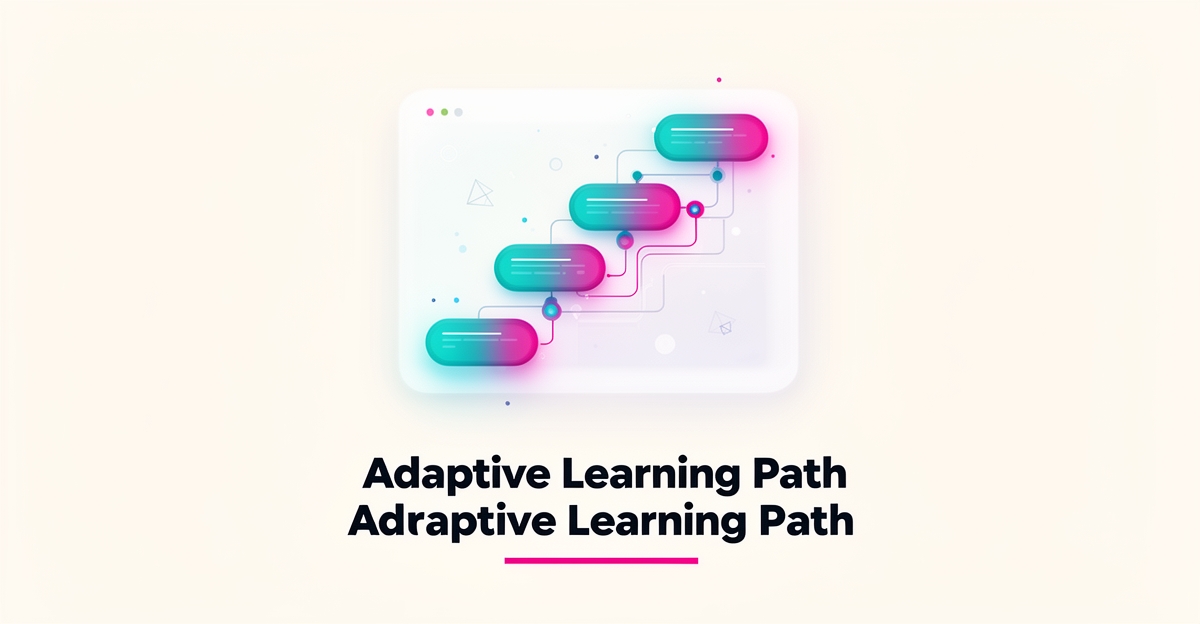
AI-Driven Personalized Lesson Recommendations: How to Boost Student Retention
Key Facts
- Surveys as of late 2026 suggest a majority of teachers have integrated AI into daily teaching practices in some form
- Adaptive learning adjusts difficulty and pacing; true personalized learning incorporates goals, interests, and self-regulation
- Training gaps remain a leading barrier: many educators, particularly in under-resourced schools, have received little or no AI training
- Multi-agent architectures — behavioral analysis, objective mapping, and progress prediction working together — are the most sustainable foundation for recommendation engines
- AIQ Labs has deployed 200+ multi-agent systems and runs 4 live SaaS products daily
Hire a team member that works 24/7 — for less than a part-time wage.
AI receptionists, SDRs, dispatchers and 99+ roles. Trained on your business, fully managed.
Not sure where to start? Ask our AI planner
The Student Retention Crisis in Modern Education
Student disengagement is no longer a quiet problem in classrooms — it is a measurable retention crisis driven by instruction that cannot keep pace with individual needs.
Traditional one-size-fits-all teaching assumes a uniform pace, interest and ability. When lessons miss the mark, learners disengage, attendance slips and dropout risk rises. The gap is widening as students encounter AI tools outside school without guidance from educators.
Communication around AI remains limited in many institutions. Recent surveys as of late 2026 suggest a majority of schools still have not spoken to students about using AI in schoolwork or homework, leaving norms undefined and trust eroded. At the same time, a growing share of teachers report using AI in their daily practice — adoption is outpacing aligned policies and student dialogue.
Academic integrity concerns compound the problem. Reported incidents of AI-assisted cheating vary widely across school types and settings, pointing to inconsistent expectations and supervision rather than a single shared standard.
Without personalized engagement strategies, students self-select out. Generic curricula cannot adapt to learning patterns, prior knowledge or motivation triggers. The result is a cycle of boredom for advanced learners and frustration for those needing support, both of which drive attrition.
AI Customer Journey Optimization offers a practical response by analyzing student behavior to recommend personalized lesson plans, such as beginner to advanced levels or specific techniques. This approach mirrors how personalized learning moves beyond one-size-fits-all instruction to create differentiated pathways that support individual needs, goals, abilities and interests.
Early signals show demand for relevance. A substantial share of students already engage with generative AI tools on their own, yet institutions lag in framing constructive use. The opportunity is to channel that engagement into retention-focused design.
Key pressure points driving retention loss today include:
- Undefined AI policies that leave students navigating tools without guidance
- Static pacing that fails to adapt to individual mastery and motivation
- Limited teacher training for responsible AI integration and personalized feedback
- Inconsistent communication with families about AI use in learning
AIQ Labs builds intelligent systems that learn from customer interactions, a capability directly applicable to education where behavior signals can inform next-best lesson recommendations. By pairing real-time data analysis with human oversight, institutions can preserve the human element of teaching while delivering adaptive sequencing and dynamic learning pathways that keep students progressing and returning.
Retention improves when learners feel seen and supported. Personalized engagement replaces generic delivery with relevance, and relevance sustains enrollment.
How AI Transforms Personalized Learning at Scale
AI is reshaping personalized learning by moving beyond simple algorithmic pacing to truly learner-centered experiences. While adaptive learning adjusts difficulty and sequencing based on performance, true personalized learning integrates student goals, interests, and self-regulation into the educational journey. This distinction is critical as educators seek solutions that support holistic development, not just skill progression.
Adoption is broad and accelerating. As of late 2026, a majority of teachers report using AI in some form in their classrooms, with interactive and game-based learning tools among the most common entry points. These systems go beyond basic automation to analyze behavioral patterns and recommend lessons that align with individual learning pathways, such as progressing from foundational techniques to advanced applications based on demonstrated mastery and engagement.
At scale, AI enables consistent personalization without overwhelming educators. By processing large volumes of interaction data — time spent on concepts, retry patterns, and topic preferences — AI systems can dynamically suggest next steps that match both cognitive readiness and motivational drivers. This approach supports long-term retention by keeping learners in their optimal challenge zone while honoring their unique interests and aspirations.
- Recommends lesson sequences tailored to individual skill levels and learning goals
- Adapts content delivery based on real-time engagement and performance signals
- Supports self-regulated learning by offering choice within structured pathways
- Scales personalized instruction without increasing teacher workload
AIQ Labs applies this same intelligence to customer journey optimization, using behavioral analytics to recommend personalized learning paths — whether guiding beginners through core concepts or advancing experienced learners to specialized techniques — driving satisfaction and repeat engagement in educational services. For institutions that want a single connected layer rather than point tools, an [AI Operating System](/ai-operating-systems) approach ties recommendations, communications, and reporting together.
Implementing AI Lesson Recommendation Systems That Work
Building an effective AI lesson recommendation system starts with understanding that successful implementation requires more than just deploying algorithms — it demands a sophisticated multi-agent architecture that mirrors how human educators assess and respond to student needs.
The most effective systems deploy specialized agents that each handle distinct analytical tasks: one agent processes behavioral clickstream data to identify engagement patterns, another evaluates assessment results against learning objectives, while a third monitors progression velocity to recommend optimal next lessons. Research on AI in education consistently points to real-time feedback, adaptive sequencing, and dynamic learning pathways as the mechanisms that fundamentally reshape how personalization operates in educational contexts.
At AIQ Labs, our production experience deploying 200+ multi-agent systems — and running 4 live SaaS products daily — shows that successful lesson recommendation engines require three core components working in concert:
- Behavioral analysis agents that track interaction patterns, time-on-task metrics, and navigation choices to build comprehensive learner profiles
- Objective mapping agents that align current performance against curriculum standards and individual learning goals
- Progress prediction agents that identify optimal difficulty curves and content sequencing based on historical success patterns
The distinction between adaptive and personalized learning proves critical here. While adaptive systems simply adjust difficulty algorithmically, true personalization incorporates broader learner attributes including goals, interests, and self-regulatory processes. Personalized learning represents a learner-centered paradigm that extends far beyond system-centered adaptive adjustments.
Implementation success also depends on addressing the training gap. As of late 2026, a large share of educators — particularly in urban and under-resourced schools — have received little or no formal AI training. Without proper educator preparation, even the most sophisticated recommendation engine fails to deliver results.
The technical foundation matters equally. Machine learning and deep learning approaches are expected to dominate the AI education market through the coming decade, suggesting that multi-agent architectures built on these frameworks offer the most sustainable path forward. These systems excel at analyzing student data to personalize learning tasks and provide adaptive feedback that caters to individual needs and learning paces.
When designed correctly, these systems don't replace instructor judgment — they augment it, providing data-driven insights that help educators guide students toward appropriate lesson progressions while maintaining the human connection essential to effective education.
Overcoming Implementation Barriers: Training, Equity & Ethics
AI-driven lesson recommendations promise higher retention, but the promise stalls where teachers, schools, and families are left behind.
Training gaps are the first barrier. A majority of primary teachers report receiving no meaningful AI training since joining the profession, and many say they never used AI at all during their own training. Without foundational literacy, even powerful personalization tools remain underused or misapplied.
Equity widens the gap further. AI training opportunities are unevenly distributed by school resourcing: high-poverty schools typically provide far fewer training opportunities than low-poverty schools, and suburban schools tend to receive more support than urban or rural ones. When access to training is stratified, personalized learning risks amplifying existing inequities rather than closing them.
Ethics and communication compound the problem. Many schools have not spoken to students about using AI in schoolwork, and parent surveys consistently find that most families have not been informed about plans to use generative AI tools. That silence fuels mistrust — especially where educator optimism about AI coexists with a meaningful minority holding negative views.
Responsible deployment requires deliberate design, not just deployment. In the context of AI Customer Journey Optimization, analyzing student behavior to recommend personalized lesson plans works only when the human system around it is supported.
Actionable steps for responsible rollout include:
- Embed role-specific AI training into onboarding and ongoing professional development, prioritizing under-resourced schools where training gaps are widest
- Create transparent parent and student communication protocols about how AI is used, what data is collected, and how recommendations are made
- Establish governance with human-in-the-loop oversight, clear privacy safeguards, and bias audits before scaling adaptive systems
AIQ Labs approaches these challenges through systems that learn from customer interactions while keeping ownership and control with the client. Building intelligent systems that analyze behavior to recommend personalized pathways works best when paired with training, equity planning, and ethical guardrails from the start.
Measuring ROI: From Retention Metrics to Revenue Impact
When students receive lesson recommendations that match their current skill level and learning goals, they are more likely to stay engaged and continue their education journey. AI-powered personalization helps learners progress at their own pace while receiving targeted support based on performance data, which directly supports higher retention rates. This connection between personalized experiences and sustained participation creates measurable business value for education providers through increased repeat bookings and reduced churn. Strong student appetite for intelligent learning tools that adapt to individual needs is well established.
- Higher retention translates to predictable revenue streams as students return for advanced courses or specialized techniques
- Reduced churn lowers customer acquisition costs and improves lifetime value of each learner
- Consistent engagement builds word-of-mouth referrals and strengthens market positioning
- Data from recommendation systems informs curriculum development and resource allocation
For education providers working with AIQ Labs, these retention improvements compound over time. With [Start Monthly](/pricing), institutions can deploy personalized recommendation systems with minimal upfront investment. [Build in Milestones](/workflow-builds) enables phased implementation that proves ROI at each stage, and Own It Outright means the system you build is a system you own. By connecting AI-driven personalization to tangible business outcomes — such as increased course completion rates and higher referral rates — education providers can justify ongoing investment in intelligent learning systems. Growing institutional readiness for AI means solutions that deliver both educational and financial returns are increasingly within reach. This alignment creates sustainable competitive advantages where improved student outcomes directly support business growth and long-term viability.
Still paying for 10+ subscriptions that don’t talk to each other?
We build custom AI systems you own outright. No vendor lock-in. Full control.
Not sure where to start? Ask our AI planner
Frequently Asked Questions
How does AI-powered personalized learning actually improve student retention?
What’s the difference between adaptive learning and true personalized learning in AI education tools?
Are teachers actually using AI in classrooms, and what tools are most common?
What are the biggest barriers to implementing AI lesson recommendations in schools?
Can AI lesson recommendation systems work without replacing teachers?
What kind of ROI can education providers expect from investing in AI-driven lesson recommendations?
Retention Starts With Relevance, Not Just Content
Student retention will not improve by adding more content, it improves when lessons match how each learner actually learns. AI-driven personalized recommendations address the core drivers of attrition — static pacing, undefined AI norms, and limited teacher support — by analyzing behavior signals to suggest the right next step at the right time, while keeping human oversight in place. The shift from adaptive difficulty to true personalization also requires responsible rollout: role-specific training, transparent communication with families, and governance for privacy and bias. When designed with multi-agent analysis and educator judgment working together, these systems keep learners in their optimal challenge zone and sustain enrollment over time. For education providers ready to test this approach, mapping current behavior data to next-best lesson pathways is a practical first step. Start the 2-minute Fit Check at [aiqlabs.ai/apply](/apply) for a free 30-minute strategy call to map your biggest bottleneck and identify high-ROI AI automation opportunities with AIQ Labs.
Make AI your competitive advantage — not just another tool.
Strategy, implementation and ongoing optimization. One partner, end to end.
Not sure where to start? Ask our AI planner