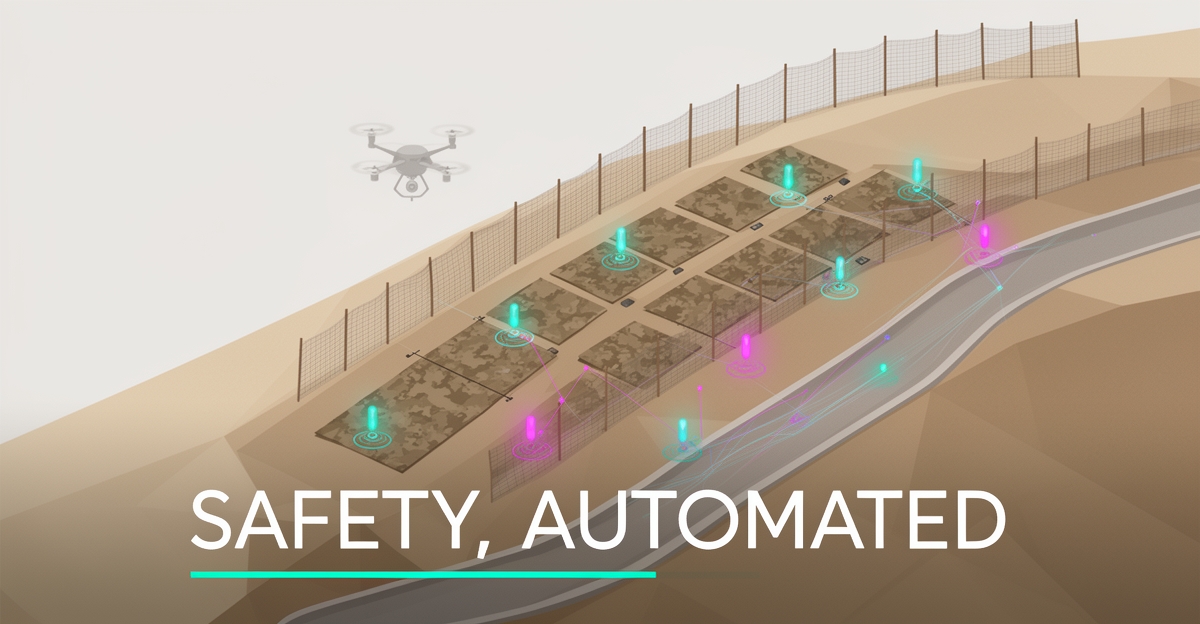
AI Employee for Site Safety Compliance: A Must-Have for Erosion Control Firms
Key Facts
- AI-powered smart routing reduces per-appointment coordination from 30+ minutes to under 2 minutes according to occupational health automation analysis
- Traditional occupational health coordination consumes 4-8 hours per week for multi-site employers per industry research
- AI systems reduce reschedules by an estimated 35% through predictive capacity modeling per occupational health automation analysis
- BlueHive connects employers to 20,000+ occupational health providers across all 50 states per occupational health automation analysis
- Enterprise EHS platforms like Cority require $50K+ annual software contracts per occupational health automation analysis
- Marketplace models like BlueHive can be operational in days versus 3-6 months for enterprise platforms per occupational health automation analysis
- BlueHive integrates with 240+ HR platforms including ADP, Workday, BambooHR, Gusto, and Paychex per occupational health automation analysis
Hire a team member that works 24/7 — for less than a part-time wage.
AI receptionists, SDRs, dispatchers and 99+ roles. Trained on your business, fully managed.
Not sure where to start? Ask our AI planner
The Hidden Cost of Manual Safety Compliance in Erosion Control
Every week, erosion control firms lose productive hours to a compliance process that never ends. According to industry analysis, traditional occupational health coordination consumes 4-8 hours per week for multi-site employers — time spent finding clinics, verifying services, checking availability, and chasing appointments instead of running field operations.
The math gets worse at scale. A single per-appointment coordination cycle takes 30+ minutes of phone calls and email chains, and that's before reschedules, which AI-driven scheduling systems are shown to reduce by an estimated 35%. Multiply that across crews spread over multiple job sites, and manual coordination quietly becomes one of the largest hidden labor costs in the business.
Then there's the documentation problem. OSHA requirements are specific and unforgiving — wrong forms, missing fields, or late submissions can result in citations. Yet most firms still rely on manual data entry for OSHA 300/300A logs, exposure assessments, and medical surveillance questionnaires, where a single inconsistency can surface during an audit.
The real challenge, however, is tracking overlapping requirements that operate on different clocks. A single erosion control crew member may need:
- An annual audiogram under hearing conservation rules
- A biennial respirator fit test
- Quarterly silica exposure monitoring
- Random drug testing at a 25% annual rate
Managing these concurrent deadlines manually across dozens of employees is precisely where compliance gaps emerge. A missed expiration on one requirement doesn't announce itself — it surfaces as a citation, a liability exposure, or a work stoppage. Spreadsheets and memory simply weren't built to track this volume of intersecting deadlines across shifting field crews.
The unsustainability of this model is why the industry is undergoing what analysts describe as its biggest technology shift in decades. AI safety systems can now monitor site conditions, verify protective measures, and flag unsafe practices in real time — capabilities that matter enormously in erosion control, where hazards can emerge suddenly across dispersed field operations. Companies like AIQ Labs build AI employees that act as continuous safety compliance monitors, tracking expirations and documentation requirements so nothing slips through between site visits.
The alternative — hoping no one misses a fit test deadline or files a form late — isn't a strategy. It's a liability waiting to be priced.
How AI Safety Officers Transform Erosion Control Compliance
Erosion control crews operate in environments where conditions shift by the hour, and a missed respirator check or undocumented silica exposure can trigger costly citations. AI safety officers now function as always-on compliance monitors that verify protective measures, flag unsafe practices instantly, and automate the documentation trail OSHA expects.
The coordination burden is staggering. Traditional occupational health scheduling consumes 4–8 hours per week for multi-site employers, according to BlueHive's analysis. Smart routing algorithms collapse that workload by matching each worker to the nearest of 20,000+ providers across all 50 states based on real-time availability, required services, and even traffic patterns. The result: per-appointment coordination drops from 30+ minutes to under 2 minutes.
- Automated compliance calendars track overlapping requirements — annual audiograms, biennial respirator fit tests, quarterly silica monitoring — and trigger scheduling workflows before deadlines lapse
- OSHA 300/300A logs, exposure assessment reports, and medical surveillance questionnaires auto-populate from incident and monitoring data
- Predictive analytics flag locations with high certification expiration rates or departments likely to miss random testing windows
- HRIS integration with 240+ platforms including ADP, Workday, and BambooHR onboards employees into compliance programs automatically
AIQ Labs trains AI employees to act as safety compliance monitors that connect these capabilities into a single, managed workflow — reducing liability while raising on-site safety standards. The system learns from scheduling patterns to cut reschedules by an estimated 35%, and intelligent alerts surface gaps before they become violations. For firms juggling multiple job sites, this shifts safety management from reactive paperwork to proactive oversight.
Real-Time Site Monitoring and Automated OSHA Documentation
Erosion control sites change by the hour, and a missing silt fence or an unprotected crew can turn into an OSHA citation before the end of shift. Continuous visibility and airtight documentation are the two gaps that keep safety managers up at night.
Real-time monitoring closes the field visibility gap. An AI safety officer can watch site conditions, verify protective measures, and flag unsafe practices in real time. This capability directly addresses the need for continuous compliance monitoring in field operations where safety hazards can emerge suddenly. AIQ Labs trains AI employees to act as safety compliance monitors, reducing liability and improving on-site safety standards.
The system works by ingesting live feeds from wearables, site cameras, and field reports to confirm silt fence integrity, slope stabilization, and PPE use. When a deviation is detected, the AI issues immediate alerts to supervisors and logs the event with location, time, and photographic evidence. That instant feedback loop replaces end-of-day walkthroughs with continuous field monitoring that catches risks before exposure occurs.
Automated OSHA documentation removes the manual burden that creates audit risk. Traditional occupational health coordination consumes 4-8 hours per week for multi-site employers according to industry research. AI tools now assist with auto-populating OSHA 300/300A logs from incident data, generating exposure assessment reports from monitoring results, and pre-filling medical surveillance questionnaires.
The documentation engine flags inconsistencies before audits by cross-checking incident narratives against exposure logs, PPE records, and training certifications. It also predicts where compliance gaps are likely to emerge, such as locations with high certification expiration rates.
Key automated outputs include:
- Auto-populated OSHA 300/300A logs from incident data with field-verified details
- Exposure assessment reports generated from monitoring data and wearable inputs
- Predictive alerts for upcoming respirator fit tests, audiograms, and silica monitoring deadlines
- Audit-ready documentation packages with complete traceability
Smart routing and automation also compress coordination time. AI-powered smart routing reduces per-appointment coordination from 30+ minutes to under 2 minutes per recent analysis, while AI systems reduce reschedules by an estimated 35% through predictive capacity modeling. For erosion control firms, that means medical surveillance and training appointments stay on schedule without manual phone tag.
By combining real-time site awareness with AI-assisted OSHA documentation, teams move from reactive reporting to proactive compliance. The result is fewer missed controls, faster incident closure, and documentation that holds up under inspection.
Integrating AI Safety Systems with Your Existing Operations
Field operations move fast, and safety compliance cannot wait for manual checklists. Integrating AI safety systems means connecting monitoring, data, and people into one responsive workflow that works alongside crews, not on top of them.
HRIS integration forms the backbone of scalable compliance. Connecting to 240+ HR platforms including ADP, Workday, BambooHR, Gusto, and Paychex allows automatic employee onboarding into surveillance programs and real-time roster sync. This eliminates the 4-8 hours per week multi-site employers traditionally spend on manual coordination and reduces per-appointment coordination from 30+ minutes to under 2 minutes.
Wearable device connectivity adds a live layer to site safety. Real-time biometric monitoring from worker wearables can feed occupational health platforms for continuous monitoring, a trend emerging in late 2026. For erosion control firms, this means an AI safety officer can observe site conditions, verify protective measures, and flag unsafe practices as they happen rather than after an incident report.
Automated compliance calendars handle overlapping requirements without spreadsheet tracking. AI-driven systems track annual audiograms, biennial respirator fit tests, quarterly silica exposure monitoring, and random drug testing, then predict expirations and trigger scheduling workflows before deadlines are missed.
Change management remains the practical hurdle. Teams accustomed to phone-tag scheduling need training on automated decision-making, and leadership must define escalation paths for AI-flagged hazards. Data quality also determines outcomes; predictive analytics depend on accurate historical data, and organizations with poor data hygiene see limited benefits.
Privacy and security require explicit protocols in field operations. Continuous monitoring through wearables and real-time data feeds raises employee consent and data governance questions that must be addressed before deployment.
Platform choice shapes implementation speed and cost. Research shows marketplace models can be operational in days versus 3-6 months for enterprise platforms. Enterprise EHS platforms like Cority require $50K+ annual software contracts and suit 1,000+ employee organizations, while mobile-first tools like SafetyCulture focus on inspections for field-heavy operations.
Practical integration steps include:
- Map existing HRIS, payroll, and safety management systems for pre-built connectors instead of API-only links
- Pilot wearable connectivity on one site with clear consent protocols and data retention rules
- Build automated compliance calendars for the highest-risk surveillance requirements first
- Establish human-in-the-loop escalation for AI safety alerts and near-miss flags
When these layers work together, AI shifts from documentation support to proactive risk reduction. AIQ Labs trains AI employees to act as safety compliance monitors that monitor site conditions and verify protective measures in real time, reducing liability and improving on-site safety standards for field teams.
Deploying Your AI Safety Officer: From Pilot to Full Compliance
Moving from a pilot to full compliance requires a structured rollout that proves value fast and scales without adding headcount.
Start with a high-risk workflow where manual coordination is heaviest. Silica exposure monitoring is a common entry point for erosion control firms because it involves quarterly testing, overlapping medical surveillance, and field scheduling that traditionally consumes 4-8 hours per week for multi-site employers industry research. A pilot lets you map the process, integrate with existing HR and safety tools, and measure time saved before expanding.
A focused pilot typically runs 4 to 8 weeks. In that window the AI safety officer learns site-specific protective measures, verifies controls in real time, and begins flagging unsafe practices. The goal is to demonstrate reduced coordination time and eliminated citations with clear before-and-after metrics.
Scaling follows the same workflow pattern across sites. Once the silica monitoring pilot is stable, add audiograms, respirator fit tests, and random drug testing to the automated compliance calendar. The system tracks complex, overlapping requirements and predicts upcoming expirations so scheduling happens before deadlines are missed.
Measure ROI with operational metrics that matter to field operations:
- Per-appointment coordination time drops from 30+ minutes to under 2 minutes with smart routing according to occupational health automation analysis
- Reschedules fall by an estimated 35% through predictive capacity modeling
- Weekly manual tracking hours are reclaimed for proactive safety work
AIQ Labs trains AI employees to act as safety compliance monitors that work alongside human teams, handling verification, documentation, and alerts 24/7. The model fits erosion control operations where site conditions change quickly and continuous monitoring reduces liability.
Deployment timelines stay realistic when using a managed AI employee approach. A single workflow pilot can be live in weeks, with department-wide automation following in phases. The Start Monthly payment approach covers build, training on your business, tool integrations, monitoring, and improvements with the ability to pause or adjust anytime.
Full compliance becomes sustainable when the AI safety officer is embedded in daily operations, not treated as a project. It monitors site conditions, verifies protective measures, and flags unsafe practices in real time while maintaining OSHA-ready documentation automatically.
Still paying for 10+ subscriptions that don’t talk to each other?
We build custom AI systems you own outright. No vendor lock-in. Full control.
Not sure where to start? Ask our AI planner
Frequently Asked Questions
How much time does manual safety compliance actually take for erosion control firms?
Can an AI safety officer really track all the overlapping compliance deadlines for crews?
How fast can AI scheduling reduce appointment coordination?
Will an AI safety system work with our existing HR and payroll tools?
Is AI compliance software expensive and slow to implement?
What real-time site monitoring can AI do for erosion control jobs?
Turning Safety Compliance from a Liability into a Competitive Advantage
Erosion control firms no longer need to choose between safety and efficiency. By replacing manual coordination with AI-powered monitoring, automated documentation, and predictive scheduling, companies reclaim 4-8 hours per week previously lost to administrative overhead while eliminating costly compliance gaps. AI safety officers from providers like AIQ Labs don’t just reduce reschedules by an estimated 35% — they transform safety management from a reactive burden into a continuous, audit-ready process that protects both workers and the bottom line. The path forward starts with a focused pilot on high-risk workflows like silica monitoring, where measurable time savings and reduced liability can be demonstrated in weeks. To explore how an AI safety officer can integrate with your existing operations and deliver tangible ROI, start with a free strategy call to map your biggest bottleneck and identify the highest-impact automation opportunities.
Make AI your competitive advantage — not just another tool.
Strategy, implementation and ongoing optimization. One partner, end to end.
Not sure where to start? Ask our AI planner