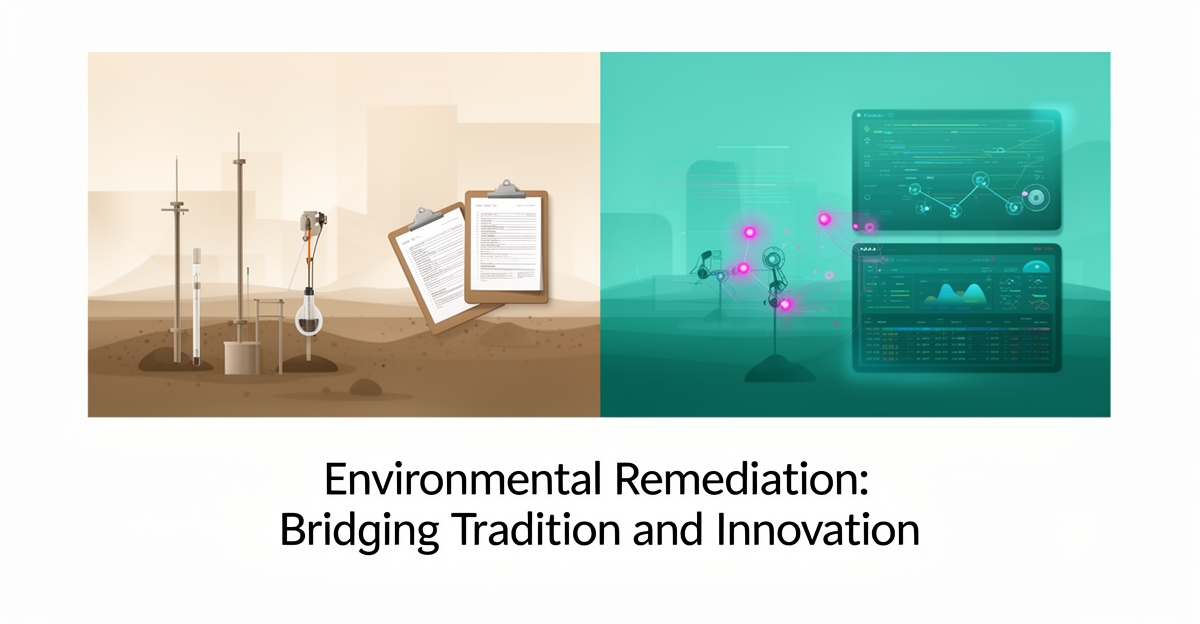
AI Employee vs. In-House Staff: Which Is Better for Environmental Remediation Site Management?
Key Facts
- Environmental Compliance Managers commonly spend a large share of their week—often cited at 15-20 hours—on manual data transfers according to industry research
- Specialized monitoring AI has been reported to cut field operations data processing time by 40-60% per industry comparisons
- Waste management AI deployments have reported fuel cost reductions in the 12-18% range and route efficiency improvements of 20-25% per best-tools analyses
- AI works best when paired with human judgment, not as a replacement for it per GHD insights
- AIQ Labs AI employees typically run at roughly 80% less cost than an equivalent human hire, across 99+ roles
- AI employees can operate continuously without shift limits, fatigue, or geographic constraints for multi-site monitoring
Hire a team member that works 24/7 — for less than a part-time wage.
AI receptionists, SDRs, dispatchers and 99+ roles. Trained on your business, fully managed.
Not sure where to start? Ask our AI planner
The Site Management Bottleneck: Manual Data and Compliance Pressure
Environmental remediation contractors face a perfect storm of operational inefficiency that threatens both profitability and compliance. Manual data transfers commonly consume 15 to 20 hours per week for Environmental Compliance Managers—time that could otherwise drive strategic oversight or site optimization. This administrative burden represents just the tip of the iceberg in an industry where siloed systems and fragmented workflows create costly bottlenecks.
The complexity extends beyond mere data entry. Field Operations Supervisors, Waste Management Directors, and compliance teams operate across disconnected platforms that rarely communicate effectively. This fragmentation forces personnel to manually bridge gaps between monitoring systems, regulatory databases, and reporting tools. The result? Increased error rates, delayed reporting, and heightened compliance risk at a time when regulatory scrutiny continues to intensify.
Modern remediation projects generate massive volumes of data from monitoring wells, sampling events, and remediation systems. Yet many contractors still rely on manual processes to transfer this information between field instruments, laboratory systems, and compliance reports. This creates multiple points of failure where transcription errors can compromise data integrity and trigger regulatory violations.
The operational impact cascades across the organization:
- Compliance managers spend up to half their workweek on manual data transfers rather than analysis
- Field supervisors lack real-time visibility into site conditions and remediation progress
- Waste management operations miss optimization opportunities due to disconnected logistics systems
- Knowledge retention suffers as experienced staff depart, taking institutional expertise with them
- Scaling operations requires proportional increases in administrative headcount
These inefficiencies carry substantial hidden costs. Beyond the immediate labor expense, manual processes introduce compliance risks that can result in penalties, project delays, and reputational damage. Specialized AI platforms have reported reductions in data processing time of 40 to 60 percent for field operations, while waste management applications have shown fuel cost reductions in the 12 to 18 percent range and route efficiency improvements of 20 to 25 percent.
The challenge isn't simply replacing human workers with technology. As industry experts emphasize, human judgment remains essential for complex decision-making and problem-solving in remediation contexts. The question facing contractors is how to strategically deploy AI to handle repetitive, data-intensive tasks while empowering human experts to focus on high-value activities. This requires careful consideration of integration complexity, data quality requirements, and the organizational changes needed to support AI-enhanced workflows that respect both regulatory requirements and operational realities.
AI Employee vs In-House Staff: Cost, Scale and Accuracy Compared
Managing environmental remediation sites demands precision, efficiency, and adaptability—qualities increasingly tested by evolving regulations and operational complexity. When weighing AI employees against traditional field staff, long-term cost, scalability, and accuracy become decisive factors in determining the optimal approach for sustained site performance.
On cost, the gap is stark: a managed AI employee from AIQ Labs' AI Employees service typically runs at roughly 80% less than an equivalent human hire, with no recruiting, onboarding, benefits, or turnover. In data-intensive tasks, specialized monitoring platforms have reported 40-60% reductions in data processing time for field operations supervisors, directly cutting labor hours spent on the manual data transfers that typically consume 15-20 hours per week for environmental compliance managers. These time savings translate into lower operational overhead and faster response cycles for site monitoring and reporting. In logistics and field deployment, AI-driven route optimization has delivered fuel cost reductions in the 12-18% range and route efficiency improvements of 20-25% for waste management directors, minimizing vehicle wear and emissions while maximizing coverage. Such gains are particularly valuable in large-scale remediation projects where fuel and labor represent significant recurring expenses.
Scalability favors AI employees due to their ability to operate continuously without shift limitations, fatigue, or geographic constraints, enabling consistent monitoring across multiple sites or extended operational hours without proportional cost increases. Unlike human teams requiring additional hires, training, and supervision to scale, AI employees can be deployed incrementally through managed service models that adjust capacity based on project phase or seasonal demand. This flexibility supports contractors managing variable workloads—from initial site assessments to long-term monitoring—without the fixed overhead of maintaining a full-time field team year-round.
Accuracy improvements stem from AI's capacity to process vast datasets with consistent precision, reducing human error in repetitive tasks like sensor data logging, compliance tracking, and sample documentation. However, AI systems face limitations in contextual interpretation, unexpected field conditions, and nuanced decision-making that rely on experiential judgment—such as assessing subsurface contamination patterns or adapting to sudden weather-related site access changes. Integration complexity remains a notable challenge, particularly when connecting AI tools to legacy dispatch systems, environmental databases, or regulatory reporting platforms, often requiring middleware or custom API development. Organizational barriers like siloed workflows and compliance protocols can further delay realization of full benefits, underscoring the need for phased implementation and human-in-the-loop oversight.
For environmental remediation firms evaluating long-term site management strategies, the choice between AI employees and in-house staff isn't about replacement but strategic augmentation. AIQ Labs supports this balance by pairing managed AI employees with human expertise—ensuring efficiency gains don't come at the cost of oversight or adaptability. By combining AI's scalability and consistency with human judgment in complex scenarios, contractors can achieve more resilient, cost-effective site operations across project lifecycles. To explore how this approach fits your specific workflow, start with the two-minute Fit Check and a free 30-minute strategy call to assess your readiness and identify high-impact automation opportunities.
When to Use AI Employees, Specialized Tools or Hybrid Teams
There's no single "right" way to bring AI into remediation site management — the best approach depends on your workflows, budget, and how much integration complexity you can absorb. In practice there are three distinct paths, each with clear trade-offs worth understanding before you commit.
Comprehensive AI operating systems offer the broadest value: integrated workflows, advanced AI algorithms, and real-time monitoring and analysis across an entire operation. The trade-off is significant — these systems carry higher upfront costs, complex implementation, and require dedicated IT resources. They suit contractors managing multiple sites who want a unified intelligence hub rather than a patchwork of tools. AIQ Labs' AI Operating Systems service takes this path, built in phases so you're never betting the whole operation on one big deployment.
Specialized compliance and monitoring AI tools take a narrower aim. They deliver deep integration with regulatory databases, automated permit tracking, and AI-powered report generation — and the results can be substantial. Field Operations Supervisors using these platforms have reported 40-60% reductions in data processing time, a meaningful gain for teams where Environmental Compliance Managers typically lose 15-20 hours per week to manual data transfers. The limitation: they offer limited project management and client billing capabilities, so additional integrations are often needed.
Waste management and logistics AI targets fleet and haulage operations specifically. These solutions deliver real-time route optimization, automated compliance tracking, and predictive maintenance scheduling — with fuel cost reductions in the 12-18% range and route efficiency improvements of 20-25% reported by Waste Management Directors. Their narrow scope, however, means they may not integrate with existing fleet management systems or customer databases.
So which path fits your operation? Consider these questions:
- Is the pain point isolated to one workflow, or spread across departments?
- Can your current systems absorb another integration, or are siloed tools already slowing adoption?
- Do you need ongoing monitoring capacity, or periodic reporting automation?
- Would a phased rollout reduce risk better than a full deployment?
For many remediation contractors, the answer is a hybrid approach — starting with a single high-ROI workflow, proving value, then expanding. This aligns with how AIQ Labs structures engagements: a Start Monthly model deploys one AI employee at a flat monthly cost, Build in Milestones lets you pay per phase of a department-level system while keeping everything shipped so far, and Own It Outright delivers a full AI operating system with complete code, agent, and data ownership. Full payment-model details are on the pricing page.
The evidence is clear that human judgment remains essential for complex decision-making, and that compliance rules and siloed systems can slow adoption regardless of which tool you choose. A phased implementation roadmap — one that assesses your existing systems, prioritizes high-value automation targets, and includes training and support — is what separates pilots that stall from AI that scales. That's precisely the planning work behind AIQ Labs' Workflow Builds, which rebuild the one workflow that costs you the most at a fixed price, in phases—whether a contractor operates one site or fifty.
Implementation Roadmap for Remediation Contractors
Moving from AI theory to field deployment doesn't require a rip-and-replace overhaul—it requires a deliberate sequence that respects the operational realities of remediation work. For contractors managing active sites, the path forward involves four phases: pinpointing high-ROI workflows, auditing your existing systems, establishing governance, and creating feedback loops for continuous improvement.
Start with high-ROI workflows where manual data handling creates immediate bottlenecks. Environmental Compliance Managers commonly lose 15-20 hours weekly to manual data transfers, while Field Operations Supervisors have achieved 40-60% reductions in data processing time by deploying specialized monitoring AI. Target these repetitive, rule-based tasks first—regulatory reporting, compliance tracking, and routine data entry—where AI delivers measurable relief without disrupting core field operations.
Next, conduct a thorough systems assessment before writing a single line of code. Many remediation contractors struggle with siloed databases and legacy platforms that weren't designed to communicate. Map your current technology stack to identify integration points and data quality gaps, ensuring your AI architecture can access the information it needs without creating new compliance risks.
Governance frameworks must come before go-live. Establish clear protocols for human oversight, data security, and regulatory alignment—particularly critical when handling sensitive environmental data. Industry experts emphasize that AI works best when paired with human judgment, not as a replacement for it. Define escalation paths for complex decisions and maintain audit trails that satisfy environmental regulations.
Finally, implement structured change management. Train your field teams to work alongside AI employees, emphasizing that these tools handle administrative burden so staff can focus on site safety and technical problem-solving. Monitor performance metrics closely during the first 90 days, adjusting workflows based on real-time feedback from the field.
AIQ Labs structures this journey around assessment, integration, governance, and change management—the four pillars that prevent pilot purgatory. With 200+ multi-agent systems deployed and four live SaaS products the company runs daily, this phased approach ensures technology serves operational goals rather than complicating them.
Ready to map your implementation strategy? Start the Fit Check—a two-minute assessment leading to a free 30-minute strategy call where we'll identify your highest-ROI automation opportunities. We'll tell you honestly if AI isn't the right fit yet.
Still paying for 10+ subscriptions that don’t talk to each other?
We build custom AI systems you own outright. No vendor lock-in. Full control.
Not sure where to start? Ask our AI planner
Frequently Asked Questions
Will AI employees replace my field staff in environmental remediation?
How much does an AI employee cost compared to a human hire?
How much time can AI actually save on compliance and data tasks?
Is AI worth it for waste hauling and fleet logistics on remediation sites?
What's the biggest risk or downside of bringing AI into site management?
Should I start with a full AI operating system or a single specialized tool?
How do I implement AI without stalling out like so many pilot projects do?
Turning Site Management Challenges into Strategic Advantages
Environmental remediation contractors face mounting pressure from manual data transfers, siloed systems, and compliance complexity—costing teams 15-20 hours weekly on repetitive tasks that could drive strategic oversight. This article explored how AI employees and specialized tools deliver measurable gains: 40-60% faster data processing for compliance managers, fuel savings in the 12-18% range in waste logistics, and scalable monitoring without proportional headcount increases. Crucially, success isn't about replacing human expertise but strategically augmenting it—using AI for rule-based tasks while empowering teams to focus on complex decision-making and site optimization. The path forward requires assessing high-ROI workflows, auditing existing systems, establishing governance, and implementing phased change management. For contractors ready to move beyond pilot purgatory, AIQ Labs offers three clear entry points—AI Employees, Workflow Builds, and AI Operating Systems—with payment models that let you start monthly, build in milestones, or own the system outright. To explore where AI could unlock efficiency in your specific workflow, start with the two-minute Fit Check and a free 30-minute strategy call—no obligation, just clarity on your path forward.
Make AI your competitive advantage — not just another tool.
Strategy, implementation and ongoing optimization. One partner, end to end.
Not sure where to start? Ask our AI planner