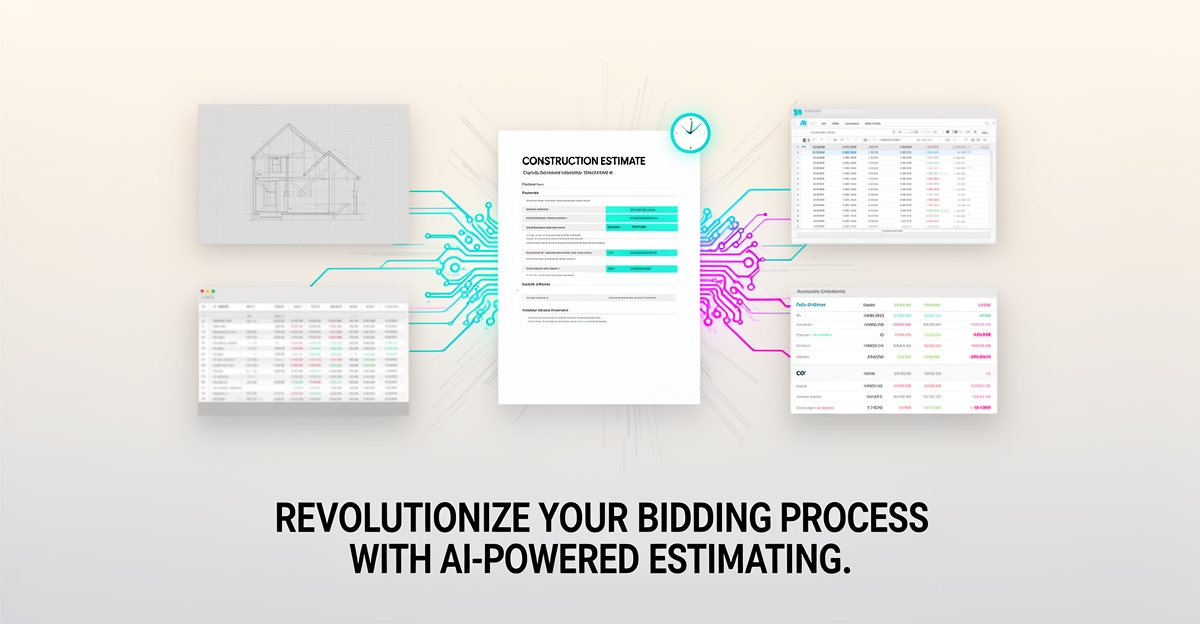
AI Estimating That Works with Your Existing Software (No Custom Tech Needed)
Key Facts
- AI estimating can layer onto AutoCAD, ProEst, and QuickBooks via API integration—no rip-and-replace needed
- Estimators using AI support commonly report saving several hours per estimate on takeoffs and drafting
- AI-generated estimates create a consistent baseline across estimators and projects
- Accuracy depends on clean historical project data—past bids, actual costs, and labor hours
- Adoption of AI in construction estimating has grown steadily since 2023, with most firms planning further investment
- A phased rollout—pilot one workflow, measure, then scale—reduces risk and builds team trust
Hire a team member that works 24/7 — for less than a part-time wage.
AI receptionists, SDRs, dispatchers and 99+ roles. Trained on your business, fully managed.
Not sure where to start? Ask our AI planner
Why Manual Estimating Is Costing You Bids (And Why You Don't Need New Software)
Manual takeoffs under aggressive schedules are burning estimator hours and bids. Large drawing sets, multi-discipline coordination, and tight deadlines expose the limits of spreadsheets and copy-paste workflows.
Traditional estimating struggles most when drawing sets grow, schedules compress, and risk is high. Estimators spend hours hunting for quantities, reconciling versions, and rechecking math that should be repeatable. Industry comparisons of AI-assisted versus manual estimating consistently show meaningful time savings per estimate when AI handles extraction and drafting.
The error risk compounds with speed. Manual review under pressure creates avoidable variance and lost opportunities. Firms adopting AI-assisted estimating typically report better accuracy and faster completion, along with improved coordination across teams.
Fear of ripping out AutoCAD, ProEst, or QuickBooks keeps many firms stuck. The real constraint is not the software, it is how data moves between tools. Estimators need AI that layers onto familiar systems via API integration, not a full tech overhaul.
AI can sit on top of legacy estimating stacks and unify workflows without disruption. This approach preserves existing licenses, training, and processes while adding intelligent assistance where manual work hurts most.
Manual estimating costs show up in three repeatable ways:
- Slow takeoffs that miss submission windows on fast-track projects
- Inconsistent quantities and pricing across estimators and projects
- Rework from errors found late in review, eroding margin
A phased integration model reduces risk and builds trust. Start with contained use cases like quantity extraction and historical cost matching, then scale based on proven results. Clean historical project data remains the foundation for reliable predictions.
AIQ Labs specializes in seamless API integrations that connect AI to AutoCAD, ProEst, and QuickBooks without forcing teams into new platforms. Estimators keep their daily tools while AI handles repetitive extraction, comparison, and drafting of estimate components. If the bigger win is rebuilding the estimating workflow itself, AIQ Labs' AI Workflow Builds target exactly that—one workflow, fixed price, delivered in phases.
The promise is not human versus machine. It is human expertise supported by intelligent systems that surface what matters before it is too late. Judgment, negotiation, and pricing strategy stay with the estimator. AI accelerates the work that slows bids down.
Adoption of AI in construction estimating has grown steadily since 2023, and most firms that start using it plan to increase their investment. Firms that integrate AI with existing software capture speed and accuracy gains without the cost and disruption of replacement.
The Numbers: What AI Estimating Actually Delivers
Firms using AI-enhanced estimating tools typically report better accuracy compared to traditional manual methods, directly reducing costly estimation errors that erode project profitability. The precision gain comes from AI's ability to analyze historical data patterns and surface insights humans might overlook during high-volume bid cycles.
Beyond accuracy, AI estimating delivers speed improvements—completing estimates meaningfully faster than manual approaches. For individual estimators, this commonly translates to several hours saved per estimate, freeing up critical time for strategic tasks like risk assessment and client consultation rather than repetitive data entry. Teams working with AI inside familiar software environments report that bids that once took hours can shrink dramatically when AI handles quantity takeoffs and cost calculations.
The consistency of AI-generated estimates also stands out. Because the same AI applies the same rules to every project, output variance across estimators shrinks compared to purely human-driven processes. This reliability creates a shared baseline across teams, making it easier to align on pricing strategies and reduce disputes during project handoffs. These gains are driving rapid adoption: a growing share of construction firms now use AI estimating, and most plan to increase their AI investment in the coming year.
AIQ Labs enables this transition by embedding AI capabilities directly into existing estimating workflows through seamless API integrations with platforms like AutoCAD, ProEst, and QuickBooks. Rather than requiring firms to abandon trusted tools, our approach layers intelligent automation onto current systems—delivering measurable accuracy, speed, and consistency improvements without disruption to established processes. Estimators gain the advantages of AI while working in the interfaces they already know, ensuring adoption happens naturally as part of their daily estimating routine.
How API Integration Brings AI Into AutoCAD, ProEst, and QuickBooks
Here's the good news for estimators still working in legacy software: you don't need to replace AutoCAD, ProEst, or QuickBooks to benefit from AI. The connection happens through APIs—the same technology that lets your existing tools talk to each other today.
An API (Application Programming Interface) is simply a structured doorway between two software systems. AI agents use these doorways to read data from one platform and write results into another, without anyone exporting spreadsheets or re-keying numbers. In an estimating workflow, that means an AI agent can pull drawing files and project data from your CAD environment, analyze them, and push a draft estimate directly back into ProEst. The same integration logic connects estimates to QuickBooks for cost tracking, so actuals flow back and inform future bids.
This approach is gaining traction fast. A growing share of architecture, engineering, and construction firms now use AI-assisted estimating, and adoption has climbed steadily year over year since 2023. Firms adopting it report better accuracy and faster completion of estimates. The results are real, and the barrier to entry is lower than most firms assume.
What makes API integration work isn't the software you own—it's the data you feed it. AI estimating accuracy depends entirely on the quality of historical project data. Before layering AI on top, firms need clean data foundations: past bids, actual costs, time tracking, and project outcomes organized and connected. Firms that skip this step get unreliable output, no matter how sophisticated the AI.
What clean historical data typically includes:
- Completed bids with final priced quantities and line items
- Actual project costs reconciled against original estimates
- Labor hours and productivity data tied to specific scopes
- Consistent naming and categorization across past projects
The practical payoff of integrating rather than replacing is significant. Firms using AI estimating commonly save several hours per estimate, with bids that once took hours completed in a fraction of the time. Because the AI works inside familiar tools, estimators don't need to learn an entirely new platform—the software aligns with how teams actually work rather than forcing rigid new processes.
Implementation doesn't require a rip-and-replace project either. A phased approach works best: document current processes, assess data readiness, start with contained use cases that show results within the first billing cycle, then scale based on proven results. Human review protocols—documented procedures for data input, output interpretation, and quality control—stay in place throughout, because AI surfaces the numbers while estimators retain judgment on pricing strategy.
AIQ Labs specializes in exactly this kind of deep, two-way API integration, connecting AI agents to the estimating, CAD, and accounting platforms construction teams already rely on. The result: AI capabilities layered onto your existing stack, with no custom tech overhaul and no disruption to the workflow your team knows.
A Phased Rollout: From First Estimate to Firm-Wide AI
The firms that win with AI estimating don't flip a switch—they follow a deliberate, four-phase path that builds confidence at every step. Rushing straight to firm-wide deployment is how pilots stall and teams lose trust in the technology.
Phase one is groundwork, not software. Document your current estimating workflows and assess whether your historical project data is clean enough to support accurate predictions. AI estimating accuracy depends entirely on the quality of that data, so firms must establish clean data foundations before layering AI capabilities on top.
Phase two is where momentum builds. Start with contained use cases—administrative workflows or a single estimate type—that can show measurable results within the first billing cycle. Industry comparisons consistently show AI estimating saves estimators hours per estimate, which means even a narrow pilot produces visible time savings fast.
Phase three adds the guardrails. Introduce human review protocols with documented procedures covering:
- Data input standards so the AI works from consistent information
- Output interpretation guidelines for estimators reviewing AI-generated figures
- Oversight checkpoints for high-risk or unusual scopes
- Quality control sign-offs before any estimate reaches a client
This phase matters because AI supports judgment—it never replaces it. AI does not negotiate with clients, understand market volatility, or decide how aggressively to price work. Those responsibilities remain firmly human.
Phase four is scaling, but only on evidence. Expand based on proven results and firm-specific metrics—your own accuracy rates, turnaround times, and win ratios—not vendor promises. Benchmark gains reported across the industry only hold when the rollout matches how your team actually works.
This phased structure mirrors how AIQ Labs approaches implementation generally—milestone-based builds where each phase ships, proves value, and earns the next investment. With most firms planning to increase AI investment, the competitive risk isn't moving too slowly; it's scaling on assumptions instead of your own numbers.
Getting Started Without Disruption
The firms winning with AI estimating didn't rip out their software and start over—they started small, with one workflow and one estimate type. A phased approach works best, beginning with contained use cases that show results within the first billing cycle before scaling based on proven results.
Here's a practical starting sequence:
- Identify one bottleneck workflow. Traditional estimating struggles most with large drawing sets, multi-discipline coordination, aggressive schedules, and high-risk scopes—pick the estimate type where manual review exposes you to the most avoidable risk.
- Verify your existing tools have API access. AI can integrate with platforms like AutoCAD, ProEst, and QuickBooks without a full tech overhaul, so check what your current stack can connect to before buying anything new.
- Pilot AI on a single estimate type. Document your current process first, then layer in AI with human review protocols for data input, output interpretation, and quality control.
- Measure against firm-specific metrics before expanding. Comparative analyses of AI versus manual estimating consistently show hours saved per estimate—your pilot should confirm what that looks like for your bid types and margins.
The results justify the measured approach. Firms using AI estimating report better accuracy and faster completion, and with adoption climbing year over year, the competitive gap is widening quickly.
One caveat matters: AI estimating accuracy depends entirely on the quality of your historical project data. Clean data foundations come before AI capabilities, so your pilot should include a data-readiness assessment, not just a tool evaluation.
This is exactly how AIQ Labs approaches integration—deep two-way API connections into the tools estimators already use, built around a single critical workflow first. The entry point is deliberately low-risk: a two-minute Fit Check followed by a free 30-minute strategy call to map your biggest bottleneck and identify high-ROI opportunities. If there isn't a clear win, they'll tell you that too.
From there, flexible payment models let you prove value before scaling—Start Monthly with the ability to pause anytime, Build in Milestones where you pay per phase and keep everything built, or Own It Outright with full ownership of code, agents, and data. You never have to bet the business on a hunch.
The future is not human versus machine—it's human expertise supported by intelligent systems that surface what matters before it's too late. Getting started is simply a matter of choosing where that support begins.
Still paying for 10+ subscriptions that don’t talk to each other?
We build custom AI systems you own outright. No vendor lock-in. Full control.
Not sure where to start? Ask our AI planner
Frequently Asked Questions
Do I have to replace AutoCAD, ProEst, or QuickBooks to use AI estimating?
How much faster and more accurate is AI estimating really?
Will AI estimating make my bids inconsistent across estimators?
What data do I need before adding AI to estimating?
Is this just a pilot trend or are firms actually adopting AI estimating?
Does AI replace estimator judgment on pricing and risk?
Your Estimating Workflow, Smarter—Not Replaced
Manual estimating is costing you time, accuracy, and bids—but you don't need to abandon your existing tools to fix it. By layering AI onto AutoCAD, ProEst, or QuickBooks through seamless API integration, estimators gain speed and consistency without disrupting familiar workflows. The real advantage comes from starting small: pilot AI on one high-friction workflow, validate results with clean historical data, and scale based on your own metrics. This phased approach builds trust, reduces risk, and delivers measurable gains while keeping judgment firmly in human hands. If you're ready to see where AI can support your team without overhauling your stack, start with a free Fit Check to map your biggest bottleneck and identify high-ROI opportunities. Take the two-minute Fit Check and let's explore what's possible—no obligation, just clarity.
Make AI your competitive advantage — not just another tool.
Strategy, implementation and ongoing optimization. One partner, end to end.
Not sure where to start? Ask our AI planner