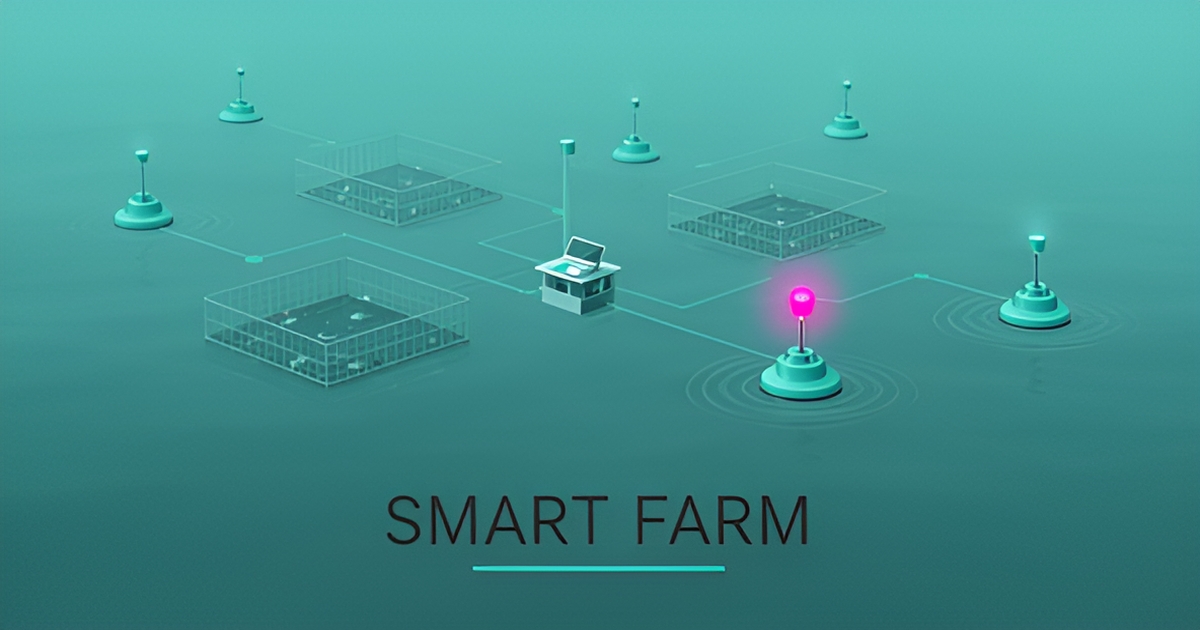
AI for Aquaculture: What to Look for in a Smart Farm System
Key Facts
- Power failures in aquaculture immediately stop aeration, circulation, and temperature control, exposing fish stock to rapid stress and mortality according to Aggreko's sector analysis.
- Aggreko's rental-based deployment model eliminates capital expenditure and enables immediate implementation of newer, cleaner, and more efficient temperature control technology as noted in their aquaculture overview.
- Manual monitoring creates dangerous delays in detecting power or temperature excursions, inconsistent data collection across sites, and compliance exposure from incomplete environmental logs per Aggreko's operational analysis.
- AIQ Labs builds complete AI ecosystems with real-time alerts, predictive modeling, automated compliance tracking, and integrated feed and health management designed for farm-scale operations.
- AIQ Labs delivers AI systems through three payment models: Start Monthly, Build in Milestones, or Own It Outright — all transferring full code, agent, and data ownership to clients.
- AIQ Labs has deployed 200+ multi-agent systems and runs 4 live SaaS products daily, giving its farm-scale builds a production-proven foundation.
- AIQ Labs' AI Employees typically cost around 80% less than a human hire in equivalent roles while providing 24/7/365 availability with zero missed calls or days off.
Hire a team member that works 24/7 — for less than a part-time wage.
AI receptionists, SDRs, dispatchers and 99+ roles. Trained on your business, fully managed.
Not sure where to start? Ask our AI planner
The Critical Gaps in Traditional Aquaculture Monitoring
Manual checks cannot keep pace with the environment fish live in. When power or temperature drifts, the window to act is minutes, not hours, and traditional farms are often reacting after loss has already started.
Ensuring the optimum environment for fish throughout their lifecycle is paramount, and relies on a stable power supply and control of water temperatures according to aquaculture infrastructure guidance. That dependency creates a single point of failure that manual rounds and spot readings rarely prevent.
If your site's power fails then your processes fail, resulting in a loss in production and revenue as noted in sector-specific operational analysis. Power interruptions stop aeration, circulation and temperature control simultaneously, exposing stock to rapid stress and mortality.
Temperature control is not a one-time setpoint. Hatchery cooling, IPN tank heating, close temperature control and bio media sterilization all require continuous stability across life stages. Aggreko’s aquaculture overview highlights these processes as core applications where disruption is costly.
Manual monitoring compounds the risk in several ways:
- Delayed detection of power or temperature excursions between rounds
- Inconsistent data collection across tanks, sites and shifts
- Reactive response only after visible stress or equipment alarms
- Compliance exposure when environmental logs are incomplete
The result is a reactive operating model. Farms add resilience with backup power and modular temperature solutions that can be scaled up or down to specific requirements. Rental-based deployment eliminates capital expenditure and enables immediate implementation of newer, cleaner and more efficient technology.
Business benefits cited for this approach include added resilience, improved efficiency through reduced energy usage and emissions, and enhanced productivity by supplementing on-site power with full expert support. Stable power and precise temperature control remain the foundation for preventing disruption.
This is why farm-scale AI systems are being evaluated for real-time alerts, environmental modeling and compliance tracking. AIQ Labs builds full AI ecosystems with these capabilities designed specifically for farm-scale operations, moving monitoring from manual spot checks to continuous, data-driven prevention.
Core Capabilities That Define Effective AI Aquaculture Systems
Effective AI aquaculture systems must address the same fundamental challenge that has always defined fish farming: maintaining the precise environmental conditions that keep stock alive and growing. As Aggreko notes, "ensuring the optimum environment for fish throughout their lifecycle is paramount, and relies on a stable power supply and control of water temperatures" — a reality that makes real-time monitoring non-negotiable rather than optional. When power fails, processes fail, resulting in immediate production and revenue loss.
The core capabilities that separate basic monitoring from intelligent farm management fall into four interconnected categories:
- Real-time alerts for oxygen and temperature spikes that trigger automated responses before conditions become lethal
- Predictive environmental modeling that forecasts water quality trends 24–72 hours ahead
- Automated compliance tracking that generates audit-ready reports for regulatory bodies
- Integration with feeding and health monitoring systems to optimize conversion ratios
Each capability targets a specific operational pain point. Real-time alerts eliminate the dangerous lag between sensor readings and human intervention — critical when dissolved oxygen can crash in minutes during warm-water events. Predictive modeling transforms reactive management into proactive planning, allowing operators to adjust aeration, feeding, or treatment schedules before stress signals appear in the stock. Automated compliance tracking removes the manual documentation burden that consumes hours of skilled labor each week while reducing reporting errors that trigger inspections.
The integration layer is where yield optimization happens. When feeding systems receive real-time environmental data, they adjust ration sizes to match metabolic rates — preventing both underfeeding that slows growth and overfeeding that degrades water quality. Health monitoring correlation reveals patterns invisible to isolated datasets: a subtle temperature drift combined with feeding behavior changes often precedes disease outbreaks by days.
AIQ Labs builds these capabilities into full AI ecosystems designed for farm-scale operations, drawing on the same multi-agent architecture behind 200+ deployed systems and 4 live SaaS products the company runs daily. The engineering approach mirrors what makes infrastructure resilient: modular, scalable, and designed for continuous operation without the capital expenditure of traditional automation.
The difference between data collection and intelligence is the difference between knowing your farm had a problem and preventing the next one.
How AIQ Labs Delivers Ownable, Farm-Scale AI Ecosystems
You can buy a water quality sensor off the shelf. You can subscribe to a monitoring dashboard. What you cannot buy is a system that thinks, acts, and improves alongside your farm — unless you build one.
That's the gap most aquaculture technology vendors leave open. They sell you a tool; you're left to integrate it, maintain it, and figure out what happens when conditions change. AIQ Labs takes a different approach: we design and build complete AI ecosystems tailored to farm-scale operations, then hand you the keys.
The infrastructure side of aquaculture already understands this logic. Companies like Aggreko have built their entire aquaculture offering around modular, scalable systems that adapt to specific farm requirements — because no two operations face identical power, temperature, or biological constraints. The same principle applies to AI: a recirculating hatchery and an open-net salmon farm need fundamentally different monitoring logic, alert thresholds, and automation workflows.
Here's what an ownable AI ecosystem looks like in practice:
- Real-time environmental monitoring — continuous tracking of dissolved oxygen, temperature, pH, and ammonia with intelligent alerts that escalate based on severity, not just threshold breaches
- Predictive modeling — AI agents that learn your farm's seasonal patterns and flag anomalies before they become mortality events
- Automated compliance logging — every sensor reading, intervention, and system action recorded in audit-ready formats without manual data entry
- Integrated feed and health management — AI Employees that adjust feeding schedules, flag behavioral changes, and coordinate with your existing farm management tools
The critical distinction is ownership. When AIQ Labs builds your system, you own the code, the agents, and the data. There's no vendor lock-in, no platform dependency, no subscription that holds your operational intelligence hostage. If you want to modify the system in two years, you can — because it's yours.
This matters more in aquaculture than in most industries. As industry operators note, a power failure doesn't just inconvenience a farm — it can wipe out production and revenue in hours. Your AI system needs to be infrastructure you control, not a service you rent.
AIQ Labs structures these builds through three entry points. You can start monthly with AI Employees handling monitoring and alerts. You can build in milestones, rebuilding the one workflow that costs the most — say, feeding optimization — at a fixed price before expanding. Or you can commission a complete AI Operating System for your farm, built in phases and owned outright.
Every system runs on production-grade multi-agent architecture: specialized AI agents for sensor analysis, another for compliance documentation, another for inventory and supply coordination. They work 24/7, integrate with your existing tools via API, and improve continuously based on performance data.
The result isn't a dashboard you check. It's an intelligent operational layer that works while you sleep — and that you own outright. Ready to see if it fits your operation? Take the 2-minute Fit Check to find out.
Still paying for 10+ subscriptions that don’t talk to each other?
We build custom AI systems you own outright. No vendor lock-in. Full control.
Not sure where to start? Ask our AI planner
Frequently Asked Questions
Why is manual monitoring risky for fish farms?
What happens if power fails on an aquaculture site?
Is stable power and temperature really that critical for fish?
What core capabilities should a smart farm AI system have?
Do I have to rent AI software or can I own it?
How does backup power fit with AI monitoring?
Key Takeaways
Your farm's future depends on moving from reactive to intelligent. Manual monitoring can no longer keep pace with the speed of environmental change. Effective AI systems deliver four core capabilities: real-time alerts that trigger automated responses before conditions become lethal, predictive modeling that forecasts water quality 24–72 hours ahead, automated compliance tracking that produces audit-ready reports, and integration with feeding and health systems to optimize conversion ratios. AIQ Labs builds these as complete, ownable AI ecosystems — start monthly with AI Employees, rebuild your costliest workflow in milestones, or commission a full farm AI operating system you own outright. Take the 2-minute Fit Check to see which entry point fits your operation.
Make AI your competitive advantage — not just another tool.
Strategy, implementation and ongoing optimization. One partner, end to end.
Not sure where to start? Ask our AI planner