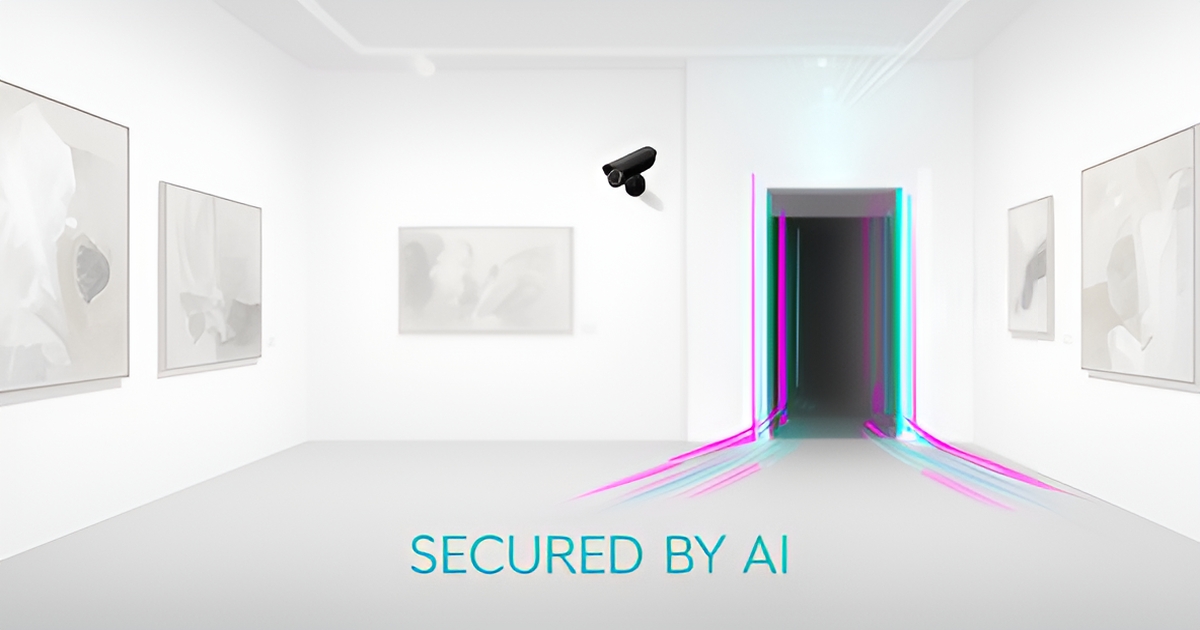
AI for Art Gallery Security: How It Can Monitor Access and Prevent Unauthorized Entry
Key Facts
- Artwork thefts cost the global art market an estimated $4-5 billion annually according to Art Sentry industry analysis.
- A single security guard can effectively cover zero galleries due to spatial complexity and blind spots per Art Sentry research.
- Over 100 million artworks are currently protected through AI-enabled security platforms as reported by Art Sentry.
- 84% of galleries now utilize AI in some capacity for their operations according to an Observer investigation.
- 63% of galleries using AI operate without any guidance or guardrails for implementation per the same industry survey.
- 67% of galleries express concern about AI accuracy in security applications based on Observer reporting.
- AI-powered security systems can significantly improve detection speed and provide real-time threat alerts as demonstrated by Ambient.ai museum deployments.
Hire a team member that works 24/7 — for less than a part-time wage.
AI receptionists, SDRs, dispatchers and 99+ roles. Trained on your business, fully managed.
Not sure where to start? Ask our AI planner
The Security Gap in High-Value Art Spaces
The art world faces a stark security paradox: while galleries safeguard billions in cultural assets, their protection methods remain dangerously antiquated. According to industry analysis by Art Sentry, artwork thefts amount to an estimated $4-5 billion annually, yet the fundamental infrastructure protecting these investments hasn't evolved to meet modern threats.
The mathematics of human surveillance reveal an impossible equation. The same research indicates that a single security guard can effectively cover zero galleries when accounting for the spatial complexity, blind spots, and constant attention required in high-value art spaces. This isn't a failure of personnel but a structural limitation of human perception—guards cannot maintain continuous vigilance across multiple entry points, monitor subtle behavioral patterns, and track environmental changes simultaneously.
Legacy access control systems compound these vulnerabilities through:
- Static credentialing that cannot distinguish between authorized entry and tailgating attempts
- Reactive alarm systems that trigger only after perimeter breaches occur
- Inability to correlate access events with real-time behavioral analysis
- Limited audit trails that complicate forensic investigations after incidents
The scale of exposure is staggering. With over 100 million protected artworks globally, traditional keycard systems and CCTV cameras create fragmented security postures. These tools record events but lack the contextual intelligence to prevent them, leaving galleries vulnerable to sophisticated theft operations that exploit timing gaps and human oversight limitations.
Perhaps most concerning is the governance vacuum surrounding emerging security technologies. An Observer investigation reveals that while 84% of galleries now utilize AI in some capacity, 63% operate without any guidance or guardrails for its implementation. This regulatory gap creates liability exposures and operational inconsistencies that undermine security efficacy.
The financial and reputational stakes demand a paradigm shift. As the American Alliance of Museums notes, institutions must carefully evaluate solutions that balance innovation with accountability. AIQ Labs approaches these challenges by architecting compliant, integrated security infrastructures that transform legacy access control into intelligent monitoring ecosystems—without sacrificing the transparency that high-value art spaces require.
How AI Transforms Access Monitoring and Anomaly Detection
With an estimated $4-5 billion in artwork thefts each year according to Art Sentry market data, entry points remain the most vulnerable moment in a gallery’s security chain. AI shifts monitoring from reactive patrols to continuous, intelligent observation.
Computer vision at entry points identifies what human guards cannot sustain across hours of low activity. Platforms like Ambient.ai use computer vision intelligence to detect threats and anomalies in real-time as described in museum security analysis, enabling security teams to respond quickly and effectively. The system analyzes movement patterns, loitering, tailgating and unattended objects without manual review.
Behavioral analytics reduce false alarms by learning normal visitor flow and flagging deviations. Instead of motion-only triggers, AI correlates posture, speed, trajectory and dwell time to distinguish staff, patrons and suspicious behavior. This context-aware filtering cuts nuisance alerts while preserving sensitivity to real risks.
Real-time alert trails create auditable records for compliance and post-incident review. Every detection is timestamped, video-tagged and linked to a confidence score, supporting transparency and accountability. Auditable alert trails are essential for high-value art spaces where decisions must be explainable.
Proven adoption shows scale. Art Sentry notes over 100 million artworks are protected through AI-enabled platforms in its gallery security overview, while 84% of galleries report using AI in a recent industry survey. The same survey finds 63% still lack guidance or guardrails for AI use.
AI transforms access monitoring through:
- Real-time entry point detection for tailgating, unauthorized access and loitering
- Behavioral analytics that learn normal patterns and flag anomalies with low false positives
- Automated alert routing with video evidence and auditable logs for compliance
- Continuous monitoring that scales across galleries a single guard cannot cover
For galleries evaluating infrastructure, AI integration must balance detection speed with data accuracy and bias controls. AIQ Labs works within AI Security & Compliance to help high-value art spaces design access control and anomaly detection that fits existing infrastructure while maintaining governance. The outcome is faster threat detection, fewer false alarms and a clear record of who entered, when and why.
Navigating Accuracy, Bias, and Governance Risks
Adopting AI for gallery security promises faster detection, but trust breaks down when decisions cannot be explained or audited. Accuracy concerns and missing guardrails are now the central risk for institutions protecting high-value collections.
According to recent industry reporting, 67% of galleries are concerned about AI accuracy. That worry is amplified by governance gaps, with the same survey finding 63% of galleries operating without guidance or guardrails for AI use. With 84% of galleries already using AI, the exposure is widespread.
Accuracy risk is not theoretical. AI systems can perpetuate biases if trained on biased data, which can lead to inaccurate or unfair decisions. In a security context, false positives create alarm fatigue for guards, while false negatives leave artworks vulnerable. Museums and galleries must carefully evaluate AI solutions, considering their unique needs and challenges.
A compliance-first framework shifts the conversation from capability to accountability. Transparent, explainable AI decisions are essential for insurance reviews and regulatory requirements. Terentia's AI use policy prioritizes transparency and accountability, ensuring that AI decisions are explainable and auditable.
Practical governance starts with design choices that make risk visible and controllable:
- Data validation and bias testing before deployment, with documented performance on gallery-specific scenarios
- Explainable outputs for every alert, including the why behind access denials or anomaly flags
- Human-in-the-loop controls for critical decisions and configurable escalation thresholds
- Complete audit trails for access events, model versions, and overrides to satisfy insurers and regulators
These controls align with how AI-powered security solutions are evaluated today. Ambient.ai's platform uses computer vision intelligence to detect threats and anomalies in real-time, enabling security teams to respond quickly and effectively. The value holds only when the system can show its reasoning.
AIQ Labs approaches AI Integration & Infrastructure with this compliance lens, focusing on AI Security & Compliance for high-value art spaces. Building explainable access control and anomaly detection into gallery infrastructure from the start reduces downstream risk and supports adoption.
Governance is also operational. Phased pilots, continuous monitoring, and clear AI use policies that prioritize transparency and accountability help institutions scale confidently. Without guardrails, even high-accuracy models create liability. With them, AI strengthens both safety and compliance.
Phased Implementation: From Pilot to Integrated Protection
Galleries face mounting pressure to protect collections worth billions while staffing remains constrained. With estimated artwork thefts reaching $4-5 billion per year, a phased approach reduces risk without overwhelming limited teams.
Start with a needs assessment mapped to physical constraints. Document entry points, visitor flow, and high-value zones, then define what “suspicious behavior” means for your space. This clarity prevents over-alerting and aligns AI monitoring with real security priorities rather than generic defaults.
Vendor evaluation should prioritize accuracy and transparency. 67% of galleries are concerned about AI accuracy, and 63% report having no guidance or guardrails for AI use. Request explainable detections, audit trails, and bias testing on gallery-specific data before committing.
Policy development comes before deployment. A clear AI use policy sets thresholds for alerts, human-in-the-loop escalation, privacy handling for visitors, and data retention. Terentia’s approach shows how transparency and accountability make decisions explainable and auditable.
Phased deployment lets you prove value inside real infrastructure limits. Pilot at a single entrance or gallery wing, integrate with existing access control, and measure detection speed, false positives, and staff response time. AI-powered systems can significantly improve detection speed, automate routine tasks, and provide real-time alerts, but only when tuned to your layout and staffing realities.
Continuous optimization closes the loop. Review incident logs weekly, refine behavior models, and expand coverage as confidence grows. This iterative model mirrors how AIQ Labs approaches AI security and compliance for high-value art spaces, building systems that adapt to gallery infrastructure constraints.
A practical five-step roadmap for galleries:
- Needs assessment: map entry points, collection risk tiers, and staffing coverage gaps
- Vendor evaluation: test data accuracy, bias controls, and integration with existing access systems
- Policy development: define alert thresholds, escalation paths, privacy, and audit requirements
- Phased deployment: pilot one zone, measure performance, then scale across the venue
- Continuous optimization: monitor alerts, retrain models, and expand use cases over time
With 84% of galleries already using AI in some form, the differentiator is disciplined rollout. Phased implementation protects collections, respects visitor experience, and builds staff trust in AI-augmented protection.
Why Galleries Partner With AIQ Labs for Security AI
With an estimated $4-5 billion in artwork stolen each year, galleries can no longer rely on human coverage alone. Art gallery security systems research shows the scale of risk facing high-value spaces, and why access control is moving from reactive to predictive.
84% of galleries are already using AI, according to industry reporting on gallery AI adoption, yet 63% report having no guidance or guardrails for its use. That gap creates both opportunity and compliance exposure for institutions that want secure, explainable monitoring.
AIQ Labs partners with galleries to close that gap by building custom, owned access-control systems rather than renting point solutions. Integration with existing cameras, doors, and CRM is designed for secure, compliant AI solutions that fit gallery infrastructure without vendor lock-in.
The approach is built around ownership and operational fit. Galleries receive systems they control, with workflows mapped to entry points, collection movements, and visitor patterns. True ownership means no platform dependencies and full control over customization and future development.
Implementation is delivered through milestone-based builds or managed AI employees for 24/7 monitoring. This mirrors the AI Development Services and AI Employees pillars, where custom code is built for production and managed agents work alongside human teams.
Key capabilities galleries gain include:
- Computer vision anomaly detection at entry points with real-time alerts for suspicious behavior
- Seamless integration with existing cameras, door access systems, and gallery CRM for unified audit trails
- Custom access-control workflows built to gallery-specific policies, not generic templates
- Managed AI monitoring that operates 24/7/365 with human-in-the-loop escalation
Accuracy concerns are real. Observer reporting on gallery AI use found 67% of galleries are concerned about AI accuracy. That is why systems are architected with validation layers, guardrails, and audit trails for compliance.
AI-powered security can significantly improve detection speed, automate routine tasks, and provide real-time alerts for potential threats. The focus is on augmenting, not replacing, human judgment with explainable decisions that meet museum-grade standards.
For institutions ready to move from pilots to owned infrastructure, the first step is a fit check. Start the Fit Check at https://aiqlabs.ai/apply for a free 30-minute strategy call to map bottlenecks and identify high-ROI automation opportunities.
Still paying for 10+ subscriptions that don’t talk to each other?
We build custom AI systems you own outright. No vendor lock-in. Full control.
Not sure where to start? Ask our AI planner
Frequently Asked Questions
How many artworks are estimated to be stolen from galleries each year, and what is the financial impact?
Can a single security guard effectively monitor multiple galleries at once?
What percentage of galleries are using AI for security, and how many lack proper guidance or guardrails?
How does AI improve access monitoring in art galleries compared to traditional systems?
What are the main concerns galleries have about using AI for security, and how can they be addressed?
What is a recommended approach for galleries looking to implement AI security without overwhelming their teams?
Securing the Future of Art: From Risk to Resilience
As we’ve seen, the $4-5 billion annual threat to cultural heritage demands more than vigilance—it requires intelligent, auditable systems that augment human judgment without compromising transparency. AI-powered access monitoring transforms security from reactive patrols into continuous, explainable protection, addressing critical gaps in tailgating detection, behavioral analysis, and audit readiness. Yet technology alone isn’t enough; success hinges on phased implementation, bias controls, and governance frameworks that align with institutional values. For galleries ready to move beyond fragmented tools toward owned, compliant infrastructure, the path forward begins with clarity. Start the Fit Check at https://aiqlabs.ai/apply for a free 30-minute strategy call to assess your unique risks, map high-ROI opportunities, and explore how custom AI integration can strengthen both safety and accountability—without vendor lock-in or guesswork.
Make AI your competitive advantage — not just another tool.
Strategy, implementation and ongoing optimization. One partner, end to end.
Not sure where to start? Ask our AI planner