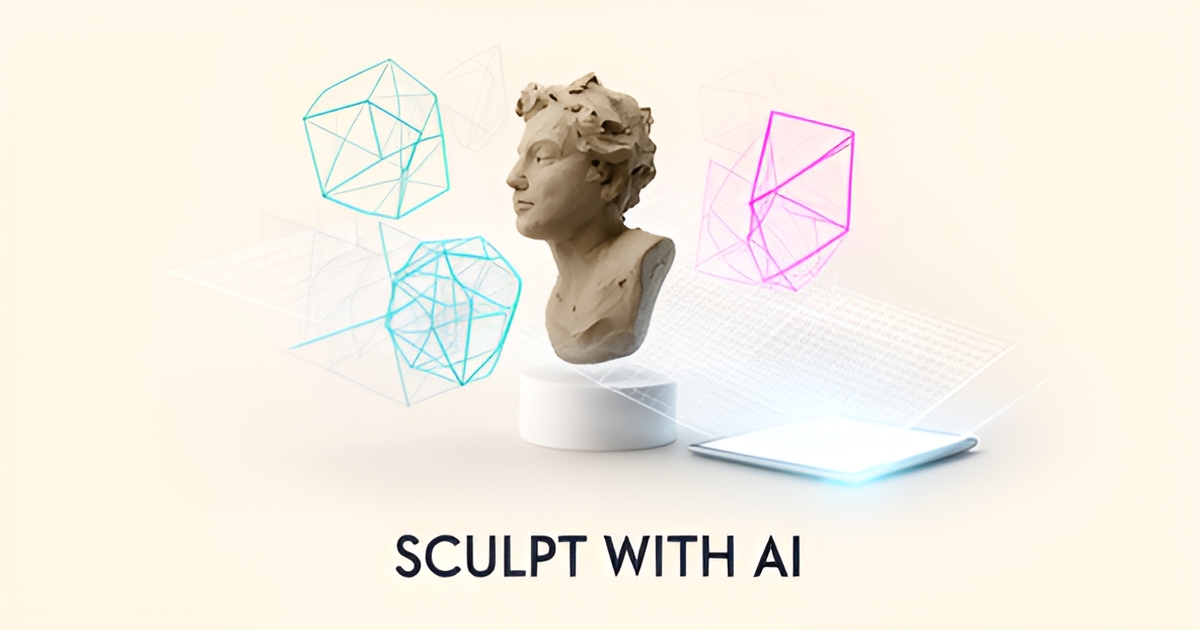
The Creative Block Problem: Why Sculpture Studios Struggle with Ideation
Every sculptor knows the feeling: staring at a block of clay or stone, waiting for inspiration that refuses to come. Creative block isn't a personal failing—it's a structural challenge baked into the artistic process, and it costs studios time, commissions, and creative momentum.
The pressure to produce original work never lets up. Clients expect fresh concepts. Galleries want pieces that push boundaries. Yet the well of ideas runs dry, and sculptors find themselves recycling familiar forms or abandoning projects midway through. This ideation bottleneck affects everyone from solo artists to established studios juggling multiple commissions.
Surveys in recent years suggest that a meaningful and growing share of artists now incorporate AI tools into their creative process—not as a replacement for skill, but as a way to break through conceptual barriers. Many of those creatives use AI specifically for ideation and concept generation, signaling a shift in how artistic work begins. As of late 2026, generative assistants like ChatGPT and Google Gemini have made this kind of experimentation cheap and immediate.
Traditional brainstorming methods often fall short when sculptors need to visualize complex three-dimensional forms. Sketching helps, but it can't capture spatial relationships or structural possibilities. Physical maquettes take time and materials. This is where many studios hit a wall—caught between the idea in their mind and the technical constraints of bringing it into being.
The challenge intensifies with client work. A corporate commission might demand something "innovative but accessible." A public art project needs to balance artistic vision with community expectations. These constraints can paralyze the creative process, leaving sculptors second-guessing every direction before they've even begun.
AI tools are changing this dynamic by offering a new starting point. Rather than replacing artistic vision, they expand the range of possibilities a sculptor can explore. Generative tools can produce dozens of conceptual variations in minutes, letting artists react to unexpected forms and combinations they wouldn't have considered otherwise.
This shift matters because it addresses the core problem: getting unstuck. When a sculptor can generate multiple directions quickly, the pressure to have the "perfect idea" diminishes. The creative process becomes more iterative and exploratory, less precious and blocked.
The sculpture studios adapting fastest are those treating AI as a collaborative partner in the ideation phase. They're using these tools to:
- Generate unexpected form combinations that spark new directions
- Visualize concepts in three dimensions before committing materials
- Explore variations on a theme without starting from scratch each time
- Break habitual patterns by introducing algorithmic randomness
At AIQ Labs, we've seen how custom AI systems can be trained on a studio's existing body of work, learning its aesthetic language while suggesting novel directions. This isn't about generating finished sculptures—it's about expanding the possibility space at the moment when artists need it most.
The creative block problem isn't disappearing, but the tools for working through it are evolving rapidly. Sculptors who understand AI as an ideation partner rather than a threat are discovering new creative freedom—and producing work that surprises even themselves.
How AI Transforms Sculpture Design: From Concept to 3D Model
The journey from a sculptor's initial concept to a tangible 3D model has traditionally been a time-consuming process, often limited by manual techniques and physical constraints. Today, AI tools are transforming this workflow by enabling artists to generate, visualize, and refine complex digital forms before any material is touched. This shift allows sculptors to explore intricate geometries and structural possibilities that would be difficult or impossible to conceive through hand-drawn sketches or clay maquettes alone.
Many creatives now use AI for ideation and concept generation, a trend that has steadily gained traction in sculpture studios seeking to expand their creative horizons. These tools empower artists to rapidly iterate on designs, testing variations in form, balance, and proportion within a virtual environment. By leveraging AI-driven 3D modeling, sculptors can identify potential structural weaknesses or aesthetic imbalances early, reducing costly revisions during physical fabrication.
- Rapid prototyping of complex forms
- Virtual stress and balance testing
- Iterative design refinement
- Material efficiency planning
- Scale and proportion experimentation
AI's ability to manipulate 3D models also streamlines the initial design phase, allowing artists to focus more on creative expression than technical execution. For sculpture studios, this means shorter concept-to-model timelines and greater freedom to pursue ambitious, detail-rich projects.
Beyond ideation, AI-enhanced visualization helps bridge the gap between imagination and realization. Artists can now view their designs from every angle, simulate lighting conditions, and even envision how a piece will interact with its intended space—all within a digital sandbox. This capability is particularly valuable for public installations or commissioned works where spatial dynamics and viewer engagement are critical. By grounding these explorations in data-driven insights, studios can make informed decisions that align with both artistic vision and practical constraints.
AIQ Labs supports this evolution through AI Workflow Builds—rebuilding the one workflow that costs your studio the most, at a fixed price and in clear phases. For a design studio, that workflow is often concept exploration itself. These solutions are designed to complement—not replace—the sculptor's hand, ensuring that technology serves as an extension of human creativity rather than a substitute for it. The opportunity for sculpture studios to harness these tools isn't just emerging—it's already here.
Balancing Innovation with Tradition: AI's Impact on Sculptural Techniques
AI is reshaping how sculptors approach their craft, not by replacing tradition but by expanding what's possible within it. The prevailing view among practitioners is that AI serves as a tool to enhance and expand creativity rather than supplant it. This perspective is especially relevant for studios navigating the balance between time-honored techniques and emerging digital workflows.
The integration of AI has already demonstrated tangible benefits in pushing the boundaries of detail and complexity in sculpture. Artists using AI-assisted design report the ability to generate and manipulate intricate 3D models that would be extraordinarily difficult to achieve through manual methods alone. This capability allows for greater experimentation with form, texture, and structural innovation during the conceptual phase.
At the same time, the rise of AI in sculptural practice introduces important ethical considerations that studios must thoughtfully address. Questions around authorship and artistic intent become particularly salient when algorithms contribute significantly to the generative phase of a piece. These concerns don't diminish AI's value but underscore the need for transparent, intentional use.
For sculpture studios seeking to adopt these tools responsibly, AI can also support auxiliary aspects of the artistic process—such as generating rich, context-aware descriptions for finished works that aid in presentation and marketability. AIQ Labs helps studios build tailored systems for tasks like description generation, ensuring technology serves the artist's voice rather than overrides it. By grounding AI use in both technical precision and artistic integrity, studios can innovate while honoring the soul of their craft.
Practical Steps to Integrate AI Tools into Your Sculpture Studio
Adopting AI in a sculpture studio is less about replacing craft and more about expanding the idea-generation phase—where many artists already experiment. A growing share of artists now incorporate AI tools into their creative process, and ideation is the most common use case.
Start by mapping AI to the right stage of your workflow. Use image generators for early concept exploration—tools like ChatGPT and Google Gemini excel at stylized references and precise prompt matching. This helps you rapidly iterate on mood, form, and composition before committing to materials.
Next, move into 3D-focused tools when the idea needs structure. AI can generate and manipulate 3D models, letting you test proportions and variations digitally before touching clay, stone, or metal. This capability can streamline the early stages of sculpture creation and help artists visualize complex forms more efficiently.
As you integrate these tools, keep a clear boundary between assistance and authorship. Ethical concerns around AI-generated work—especially authorship and artistic intent—are well documented in academic and industry discussions of AI and art. Treat outputs as raw material: sketch over them, alter proportions, and combine multiple references so the final piece remains unmistakably yours.
A practical way to begin is with a small, repeatable workflow:
- Generate 10–20 concept images from varied prompts
- Select 2–3 directions and refine with more specific prompts
- Translate the strongest concept into a rough 3D model
- Adjust scale, structure, and details manually
- Document what worked for future pieces
Finally, don't overlook the business side of the studio. AI-generated descriptions can help articulate materials, influences, and emotional tone in a way that resonates with collectors and galleries. This is where AIQ Labs fits naturally—an AI Employee trained on your studio's context can produce polished, professional copy without flattening the work's meaning, at a fraction of the cost of a human hire.
The studios that benefit most will be the ones that adopt deliberately—using AI to widen possibility while keeping artistic judgment firmly in human hands.
The Future of Sculpture: AI as a Collaborative Creative Partner
Sculpture studios stand at the edge of a creative shift where generative tools move from experiment to essential studio partner. The conversation is no longer about whether AI belongs in the studio, but how it amplifies the artist's hand.
The signals are clear. Most creatives expect AI to have a significant impact on their work in the coming years, and adoption is already well underway. For sculptors, that means faster ideation and more room to explore form.
AI is becoming a collaborative creative partner rather than a replacement. As industry voices consistently put it, AI is not a replacement for creativity, but a tool to enhance and expand it. Studios are using generative systems to generate and manipulate 3D models, test structural variations, and visualize scale before clay or stone is touched.
That collaboration extends into fabrication. The future points to AI-powered robotics in sculpture creation, with the potential to reshape traditional methods of fabrication and assembly. Robotic arms can translate digital models into precise carving, milling, or additive builds, while AI guides toolpaths and material optimization.
Creative workflows are shifting in predictable ways:
- Ideation at scale, with generative tools producing dozens of directions in minutes
- Digital prototyping that lets artists experiment with forms impossible to sketch by hand
- Fabrication assistance that preserves hand-finishing while automating repetitive labor
- Market readiness through AI-generated descriptions that capture style, tone, and emotional context for each piece
The business side of sculpture benefits as well. Studios need compelling descriptions for sculptures to market pieces effectively, and AI tools that understand art context, style, and emotional tone can produce professional, engaging copy without adding overhead. AIQ Labs integrates these capabilities for studios looking to present work consistently across galleries and online—whether as a single workflow build or as part of a broader AI Operating System that connects the whole studio.
Studios that treat AI as a partner are better positioned to stay competitive as expectations change. The studios that experiment now will define the next generation of sculptural practice. Human intent remains central; AI simply widens the field of what can be imagined and made.
Still paying for 10+ subscriptions that don’t talk to each other?
We build custom AI systems you own outright. No vendor lock-in. Full control.
Not sure where to start? Ask our AI planner
Frequently Asked Questions
Will AI replace sculptors or just help with ideas?
AI is used as a collaborative partner for ideation, not a replacement for craft. Industry voices consistently frame it as a tool to enhance and expand creativity, not substitute for it. Studios use it to generate variations and visualize forms before touching materials.
How many artists are actually using AI for sculpture work right now?
Adoption is growing quickly. Surveys in recent years suggest roughly one in five artists incorporate AI tools into their creative process, with ideation and concept generation among the most common uses.
Can AI help with 3D modeling and structural testing for sculptures?
Yes. AI can generate and manipulate 3D models to test proportions, balance and structural weaknesses virtually before fabrication. This streamlines prototyping and reduces costly physical revisions.
Is AI only for digital artists, or does it work for traditional sculpture studios?
AI supports traditional techniques by expanding what's possible within them. Artists report generating intricate 3D models that would be difficult to achieve manually, streamlining the early stages of sculpture creation.
What are the ethical concerns when using AI in sculpture?
Key concerns center on authorship and artistic intent when algorithms contribute to the generative phase. Studios address this by treating AI outputs as raw material to be sketched over, altered and combined so the final piece remains unmistakably theirs.
Will AI become a standard part of sculpture studios in the next few years?
Industry expectations are high. Most creatives surveyed expect AI to significantly impact their work within the next five years, and adoption has continued to climb through 2026.
Where Sculpture Meets Strategy: Turning Creative Blocks into Competitive Advantage
The sculpture studio of tomorrow doesn't choose between tradition and technology—it uses both to expand what's possible. AI isn't replacing the sculptor's hand; it's clearing the fog of ideation, accelerating 3D exploration, and freeing artists to focus on the expressive details that define their work. From breaking creative blocks with generative concept tools to refining forms in virtual space before touching clay, the studios gaining an edge are those treating AI as a collaborative partner in the earliest, most fragile stages of creation. For studios ready to move beyond experimentation, the next step is intentional integration—starting with a clear look at where idea generation stalls and how AI can widen the field of possibility without overriding artistic judgment. Start with the 2-minute Fit Check, then book a free 30-minute strategy call to map your studio's biggest bottleneck and uncover where AI can pay for itself fastest.
Make AI your competitive advantage — not just another tool.
Strategy, implementation and ongoing optimization. One partner, end to end.
Not sure where to start? Ask our AI planner