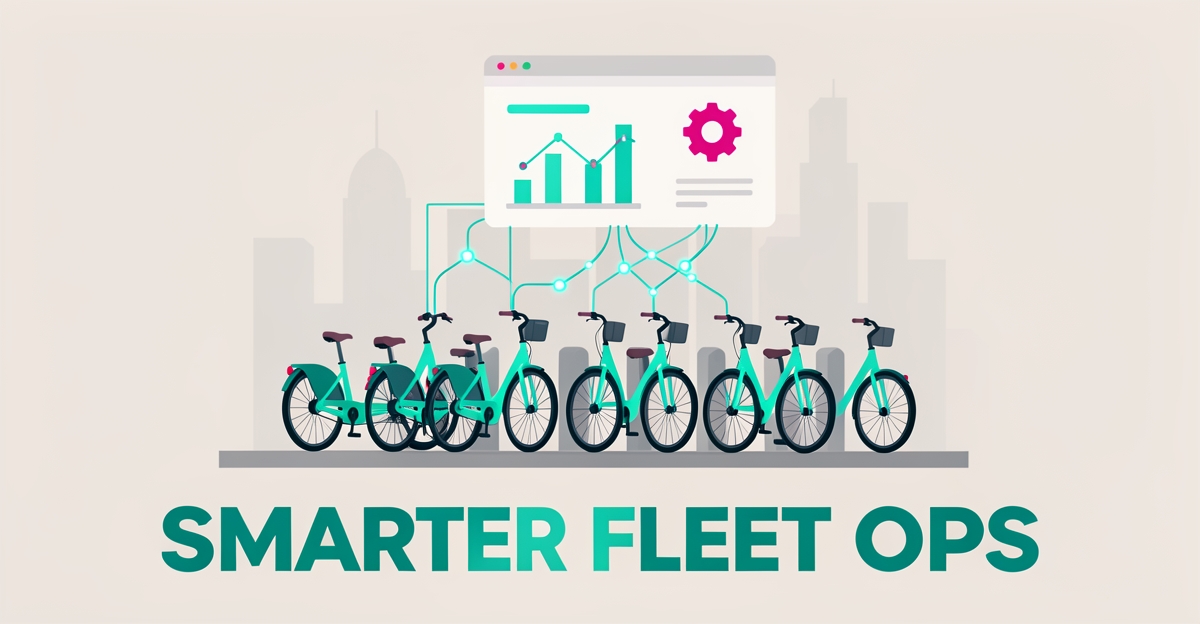
AI for Bike Rental Operations: A Step-by-Step Guide to Implementation
Key Facts
- The global bike-sharing market, valued at roughly $9 billion in 2024, is projected to nearly double to about $18.8 billion by 2034 growing at a 7.6% CAGR.
- Industry vendors report that AI implementation can deliver significantly higher fleet uptime and multiple-times-faster customer response times according to Converiqo AI—treat vendor figures as directional, not guaranteed.
- Bike rental operators using AI report fewer support calls and higher repeat bookings per Converiqo AI data; your results depend on data quality and rollout discipline.
- The US and Canada recorded 157 million bike and scooter trips in 2023, surpassing the 2019 pre-pandemic record of 147 million reports GM Insights.
- Conventional bikes hold over 80% market share in bike sharing and are expected to cross $14 billion in value by 2034 according to GM Insights.
- Free-floating bike sharing captured 49% market share in 2024, with the dockless segment exceeding $5 billion in value per GM Insights analysis.
- Franchise models like Hopp publish unit-economics assumptions (e.g., rides per vehicle per day) that show how sensitive rental revenue is to utilization—exactly what AI-driven dispatch improves.
Hire a team member that works 24/7 — for less than a part-time wage.
AI receptionists, SDRs, dispatchers and 99+ roles. Trained on your business, fully managed.
Not sure where to start? Ask our AI planner
Why Manual Bike Rental Operations Are Breaking Down
The bike rental industry is at a critical juncture, with traditional operational models struggling to keep pace with a rapidly expanding market. Valued at roughly $9 billion in 2024, the global bike-sharing market is projected to nearly double to about $18.8 billion by 2034, growing at a 7.6% CAGR. This growth exposes the limits of manual management, which is increasingly unable to handle the scale and complexity of modern rental operations.
Manual processes create bottlenecks that directly impact revenue and customer satisfaction. According to Abacus Technologies, businesses relying on traditional methods face persistent challenges that hinder their ability to compete effectively.
- Inconsistent bookings from manual reservation systems that fail to sync across channels
- Inventory mismanagement leading to underutilized fleets and maintenance backlogs
- Pricing inefficiencies where static rates fail to capture dynamic demand fluctuations
- Retention issues stemming from poor customer experiences and lack of personalization
These operational gaps become especially costly as market dynamics shift. With 157 million bike and scooter trips recorded in the US and Canada alone in 2023, the volume of transactions overwhelms manual tracking systems. Vendors like Converiqo AI report that businesses implementing AI solutions see materially higher uptime and much faster response times—directional evidence of the efficiency gap between manual and automated operations.
The strain is particularly evident in fleet management and customer service. Manual systems struggle to track bike availability in real-time, predict maintenance needs, or adjust pricing based on demand signals like weather or local events. This results in lost revenue opportunities and frustrated customers who expect instant, seamless booking experiences. As Abacus Technologies notes, the industry has evolved from simple tourist services into sophisticated mobility ecosystems, yet many operators still rely on outdated manual workflows.
For SMBs in the bike rental space, these challenges represent both a risk and an opportunity. While manual operations create friction, they also provide clear targets for AI-driven improvement. AIQ Labs helps businesses identify these operational pain points and implement phased AI solutions—starting with rebuilding the one workflow that costs the most—without overwhelming existing operations.
How AI Transforms Booking, Fleet and Support Workflows
AI-powered systems are reshaping how bike rental businesses manage daily operations, turning reactive processes into proactive, data-driven workflows. By integrating intelligent automation across booking, fleet, and support functions, companies can significantly improve service reliability and customer satisfaction while reducing manual effort. Industry vendors report gains in uptime, response times, and support-call reduction from AI adoption—treat these as directional benchmarks and validate against your own baseline.
These improvements stem from targeted AI applications that address specific pain points in bike rental operations. Intelligent personalization engines analyze user behavior, booking history, and preferences to recommend relevant bikes, routes, or subscription packages, increasing engagement and repeat bookings. Dynamic pricing systems continuously adjust rates based on demand, weather, local events, and competitor activity, optimizing revenue without manual intervention. Predictive demand forecasting uses historical patterns, holidays, and tourism trends to anticipate peak usage, enabling smarter fleet allocation and reducing instances of overstocking or shortages.
In fleet management, predictive maintenance monitors usage, wear patterns, GPS data, and component health to service bikes before failures occur, minimizing downtime and extending asset life. Smart redistribution algorithms proactively move bikes to high-demand areas based on predicted usage, ensuring availability where and when customers need it most. For customer support, 24/7 AI agents handle inquiries, process bookings, manage cancellations, and provide multilingual assistance, drastically reducing the volume of routine calls handled by human staff. Smart search engines further enhance the booking experience by helping users quickly find bikes matching their terrain, budget, and ride purpose.
Together, these capabilities create a seamless, intelligent operation where bookings are faster, fleets are more reliable, and support is consistently available—laying the foundation for scalable, customer-centric growth. AIQ Labs supports this transformation through AI Employees for booking and support roles, and phased implementation roadmaps that align AI deployment with business readiness and measurable outcomes at each stage.
Phased Implementation Roadmap from Pilot to Scale
The difference between AI projects that transform operations and those that stall in perpetual pilot mode comes down to structure. Most bike rental businesses fail not because the technology underperforms, but because they attempt too much too fast or lack clear success metrics at each stage.
A phased implementation roadmap prevents this by proving value incrementally before scaling. Structured rollouts—versus ad-hoc implementations—let you measure real gains at each step rather than betting the whole operation on one big launch.
Start with a single high-impact workflow: booking automation or customer support. Deploy AI agents to handle FAQs, process payments, and manage cancellations—tasks that consume staff hours but follow predictable patterns. According to Abacus Technologies, these systems provide 24/7 instant assistance with multilingual capabilities, immediately reducing call volume.
Key pilot metrics:
- Response time to customer inquiries
- Percentage of bookings completed without human intervention
- Reduction in support call volume (set your own target from your baseline)
- Customer satisfaction scores
AIQ Labs structures pilot engagements through the Build in Milestones model—you approve and pay for each phase as it ships, keeping everything built so far if you pause. This de-risks the initial investment while proving ROI before expansion.
Once the pilot demonstrates value, expand into dispatch and maintenance. Implement predictive demand forecasting that analyzes weather, holidays, and booking patterns to optimize inventory allocation. Deploy predictive maintenance systems that monitor usage frequency, wear patterns, and GPS movement to schedule repairs before breakdowns occur.
This phase adds smart redistribution algorithms that predict where bikes will be needed and proactively move inventory to high-demand locations. Track fleet utilization rates, maintenance downtime, and redistribution efficiency as your expansion KPIs.
Connect all systems into a unified platform where booking, fleet management, and financials share data seamlessly. Establish dashboards tracking booking conversion rates, return time accuracy, and customer lifetime value. Operators reaching this stage typically see gains in repeat bookings through personalized retention campaigns.
This is what an AI Operating System is designed for: one connected operating layer, built in phases and owned outright. Each phase maps to specific business outcomes, so you scale only when metrics justify the investment. The result is a measurable transformation from manual operations to predictive, automated workflows—without the chaos of unstructured implementation.
Choosing the Right Build Model and Avoiding Common Pitfalls
Even the best AI strategy fails when the foundations aren't in place. Before committing budget to a pilot, bike rental operators need an honest assessment of five factors that determine whether AI delivers measurable returns or becomes shelfware.
Data quality comes first. AI systems depend heavily on accurate booking history, ride duration, customer preferences, location data, payment patterns, and seasonal demand. If those records live in spreadsheets or disconnected tools, cleaning them up is the real first project — the AI is only as good as the data feeding it.
System integration is the second hurdle. Connecting AI to existing booking engines, IoT devices, smart locks, and legacy systems requires careful planning, and applications like dynamic pricing and predictive maintenance demand real-time data processing that can strain older infrastructure. This is why a phased rollout — starting with a booking or support pilot before expanding to dispatch and maintenance — de-risks the process. Operators using unified AI systems typically report higher fleet uptime and faster response times once data flows properly.
Staff change management is often underestimated. Teams need training on new processes, and customers accustomed to traditional rentals may resist AI-driven systems without clear communication about the benefits. Regulatory compliance adds another layer — AI handling customer verification and payments must align with data protection regulations like GDPR and CCPA.
Finally, ROI measurement requires discipline. Establish baseline metrics — booking conversion, fleet utilization, maintenance downtime, support volume — before launch, then track improvements against them. Vendor-reported gains in support-call reduction and repeat bookings show what's achievable, but your numbers are the ones that matter—so measure from day one.
For small and medium-sized operators, the financial structure of implementation matters as much as the technology. Large upfront investments are a genuine barrier, which is why flexible build models make adoption realistic:
- Start Monthly — a flat monthly plan covering the build, training, integrations, monitoring, and improvements, with the ability to pause or adjust anytime. Ideal for a first AI employee in booking or support.
- Build in Milestones — one workflow or department system split into phases, where you approve and pay per phase as it ships. Stop anytime and keep everything built so far — a natural fit for de-risked pilots.
- Own It Outright — a full AI operating system with one project price, and full ownership of the code, agents, and data when complete. No vendor lock-in, no subscription dependency.
This is the approach AIQ Labs takes with SMB clients: real numbers provided in writing after a free 30-minute strategy call, structured so each phase proves its value before the next begins. If there isn't a clear win for your operation, a good partner will tell you that too — before you spend a dollar on technology you don't need. Start with the 2-minute Fit Check to see where AI fits your operation.
Still paying for 10+ subscriptions that don’t talk to each other?
We build custom AI systems you own outright. No vendor lock-in. Full control.
Not sure where to start? Ask our AI planner
Frequently Asked Questions
Is manual bike rental management really breaking down with the current market growth?
What kind of operational improvements can AI actually deliver for bike rentals?
Where should I start with AI if I don't want to overhaul everything at once?
How does AI help with fleet management and maintenance specifically?
What are the biggest risks or prerequisites before implementing AI?
Can small bike rental businesses afford AI implementation?
From Manual Processes to Predictive Operations: Your Bike Rental AI Roadmap
The bike rental industry's rapid growth exposes the limits of manual operations, where inconsistent bookings, inventory mismanagement, and static pricing erode revenue and customer satisfaction. AI transforms these workflows—starting with booking automation or support agents—and a phased implementation, beginning with a high-impact pilot and expanding into predictive maintenance and smart redistribution, ensures measurable ROI at every stage. AIQ Labs guides SMBs through this transformation with structured roadmaps, flexible payment models, and full ownership when you build outright, turning operational friction into scalable advantage. To map your specific opportunity and see whether AI delivers a clear win for your bike rental business, start with the 2-minute Fit Check, then book a free 30-minute strategy call—no obligation, just clarity on your path forward.
Make AI your competitive advantage — not just another tool.
Strategy, implementation and ongoing optimization. One partner, end to end.
Not sure where to start? Ask our AI planner