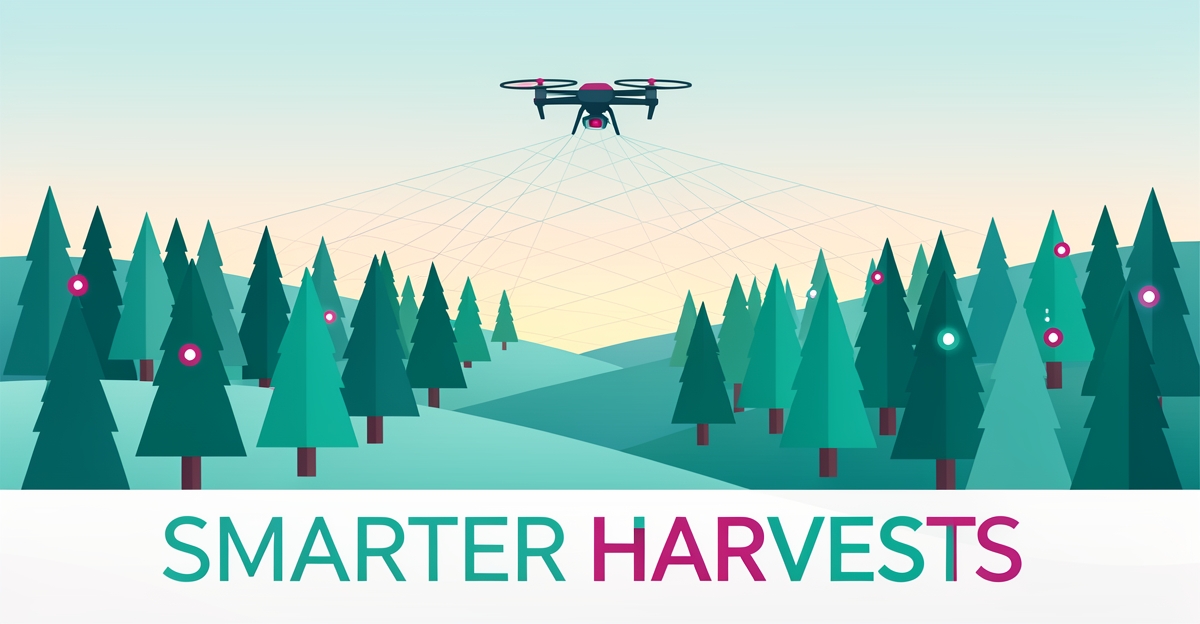
AI for Christmas Tree Farms: A Practical Guide for Small Business Owners
Key Facts
- AI-driven drones can map 100 hectares in roughly 30 minutes with accuracy rates as high as 98%, replacing days of manual field walking according to Danish research.
- The number of U.S. Christmas tree farms fell nearly 30% between 2002 and 2022, with acreage dropping by over 150,000 per American Farm Bureau data.
- A single inventory error in year three compounds silently for seven seasons before anyone realizes the forecast was wrong.
- Fraser's platform tracks every tree through its 10-year journey using a three-tier structure of fields, plantings, and individual trees built specifically for Fraser fir growers.
- AI systems assign unique digital IDs to each tree, enabling health tracking with accuracy rates as high as 98% across the decade-long production cycle according to Digital Watch Observatory.
- Approximately 10,000 farms harvested 14.5 million Christmas trees on 293,000 acres in 2022 per Census of Agriculture data.
- Automated October email campaigns with personalized reservation links secure customer commitments before the first tag hits the field using Fraser's retention system.
Hire a team member that works 24/7 — for less than a part-time wage.
AI receptionists, SDRs, dispatchers and 99+ roles. Trained on your business, fully managed.
Not sure where to start? Ask our AI planner
The 10-Year Cycle Problem Small Farms Can't Ignore
The math of Christmas tree farming doesn't forgive mistakes. A single inventory error in year three compounds silently for seven more seasons before anyone realizes the harvest forecast was wrong. That's the reality of a 7-10 year production cycle where decisions made today won't be validated until a decade later.
According to the American Farm Bureau Federation, the number of farms harvesting Christmas trees fell nearly 30% between 2002 and 2022, while acreage dropped by more than 150,000 acres. This contraction reflects sustained economic pressure that small operations feel most acutely. Weather volatility, biological threats, and labor shortages stack risk across every growing season — risks that most specialty crops never face because they don't take a decade to mature.
Traditional counting methods accelerate the problem. Walking fields to manually count and measure tens of thousands of trees is time-consuming and prone to error, especially on the steep slopes common in North Carolina's Fraser fir country. Research from Denmark shows AI-driven drone analysis can map 100 hectares in roughly 30 minutes with accuracy rates as high as 98% — a task that would take workers days to complete with far less precision.
The operational gaps extend beyond the field:
- Seasonal demand spikes compress an entire year's revenue into 4-6 weeks
- Wholesale buyers need commitments before trees are even tagged
- Customer retention relies on manual follow-up that falls through the cracks
- Equipment maintenance and shearing windows follow rigid biological calendars
At AIQ Labs, we've seen this pattern across seasonal industries: the businesses that survive long production cycles are the ones that systematize what they can control. The technology exists to replace guesswork with data — the question is whether it's accessible at a scale that makes sense for a 50-acre operation rather than a 5,000-acre one.
How AI Is Replacing Manual Counting and Field Work
For generations, counting Christmas trees meant workers walking rows for days, notebook in hand, hoping the tally was close enough. That era is ending as drones equipped with AI-driven image analysis map entire plantations in a fraction of the time.
In Denmark, a major global producer, these systems can map 100 hectares in approximately 30 minutes and count trees with accuracy rates as high as 98 percent. The technology assigns a unique digital ID to each tree, enabling growers to track individual health and growth across the decade-long production cycle. This level of granularity is especially valuable on steep slopes in regions like North Carolina, where terrain makes manual inspection dangerous and machinery impractical.
- Drone and AI analysis replaces days of manual field walking with 30-minute mapping flights
- Individual tree IDs enable precise health monitoring and growth tracking over 10 years
- Laser-scanning drones navigate steep terrain where traditional equipment cannot operate safely
- Automated inventory data feeds directly into harvest forecasting and sales planning
Beyond the field, platforms like Fraser translate that field data into operational intelligence. Built specifically for Fraser fir growers, the system structures inventory across three tiers — fields, plantings, and individual trees — while maintaining size class, harvest status, and history for every unit. Its five-year harvest forecast factors in wholesale commitments, and the Choose-and-Cut POS captures customer emails for automated re-engagement campaigns. Barrier Tree Farms in Jonas Ridge, NC, currently uses the platform to manage their operation from seedling to sale.
AIQ Labs helps small agricultural businesses evaluate where automation delivers the clearest return, whether that's deploying an AI Employee to handle seasonal customer inquiries or building a custom workflow that connects field data to sales forecasting. The Fit Check takes two minutes and leads to a free strategy session with an AI engineer who understands the seasonal rhythms of your operation.
Customer Retention and Revenue Tools Built for the Holiday Season
The holiday rush doesn't start in November—it starts the moment last season's customers decide whether to return. For farms operating on a 10-year growth cycle, losing a repeat buyer means losing a decade of relationship equity. Fraser's platform addresses this with automated October campaigns that deliver personalized reservation links directly to returning customers, securing commitments before the first tag hits the field.
That same system extends into the field with a Choose-and-Cut POS built for the realities of weekend traffic. Barcode scanning and integrated Stripe payments keep lines moving while capturing customer emails for next year's outreach. On the wholesale side, real-time availability forecasts factor in existing commitments so growers never oversell inventory they can't deliver. The result is a 5-Year Harvest Forecast that aligns planting decisions with actual demand signals rather than guesswork.
- Automated October email campaigns with personalized reservation links
- Choose-and-Cut POS with barcode scanning and Stripe payments
- Wholesale order management with real-time availability forecasting
- Inventory allocation that reduces stockouts and improves cash flow
Barrier Tree Farms in Jonas Ridge, NC uses this system to manage their full cycle from seedling to sale. The platform also includes 11 pre-loaded task templates covering shearing windows, harvest readiness, and equipment maintenance—operational guardrails that keep seasonal work on schedule. For farms ready to modernize without heavy investment, AIQ Labs builds similar custom workflows that integrate with existing tools and transfer full ownership to the business. Start the Fit Check at aiqlabs.ai/apply to map your highest-impact automation opportunity.
Implementing AI Without Heavy Investment or Complexity
Small farms can’t afford a full AI overhaul, but they can’t afford to keep losing margin to manual work either. Seasonal demand, a 7 to 10 year production cycle, and tight labor windows make Christmas tree operations a perfect fit for targeted automation.
Start with one critical workflow that hurts every year. For most tree farms that means inventory forecasting, appointment setting, or phone coverage during peak cut season. Fraser Farm Management shows how tracking every tree through its 10-year journey with a three-tier structure of fields, plantings and individual trees can replace spreadsheets and guesswork. The same principle applies to AI: fix the bottleneck first, then expand.
Managed AI Employees let you add 24/7 coverage without hiring. An AI Receptionist can answer calls, route inquiries, take messages and schedule appointments while you’re in the field. An AI Lead Qualifier can screen inquiries, confirm dates, and book choose-and-cut slots directly into your calendar. Because the build, training, tool integrations and monitoring are included in a flat monthly plan, it typically costs around 80% less than a human hire and can be paused or adjusted anytime.
Ownership matters when you’ve invested years in the crop. Custom-built systems mean you own the code, agents and data, with no vendor lock-in. That aligns with how AIQ Labs approaches SMB AI — architecting systems that integrate with existing tools like CRMs, scheduling software and payment systems rather than replacing them.
A practical first-step roadmap for a small farm looks like this:
- Pick one pain point, such as next-year reservations or wholesale order allocation, and map the current manual steps.
- Deploy a managed AI Employee for phone coverage and lead qualification during peak season to capture demand you’re currently missing.
- Connect the AI to your existing calendar, POS and email so customer data stays in one place.
- Choose a payment model that matches your risk tolerance — Start Monthly for an AI Employee, Build in Milestones for a single workflow rebuild, or Own It Outright if you want the full system in your hands.
The industry pressure is real. The number of U.S. farms harvesting Christmas trees fell nearly 30% from 2002 to 2022, and acreage dropped by over 150,000 acres, or 35%, reflecting sustained economic pressure. With approximately 10,000 farms harvesting on about 293,000 acres nationwide in 2022, efficiency gains are not optional.
Technology is already proving value in the field. AI-driven image analysis can recognize and measure each tree, assign digital IDs and track health over time, with systems achieving accuracy rates as high as 98 percent. In Denmark, drone- and AI-driven analysis can map 100 hectares in approximately 30 minutes, a speed impossible with manual walks.
By starting small, keeping ownership, and integrating with tools you already use, a tree farm can add enterprise-grade capabilities at SMB-appropriate investment without heavy complexity.
Still paying for 10+ subscriptions that don’t talk to each other?
We build custom AI systems you own outright. No vendor lock-in. Full control.
Not sure where to start? Ask our AI planner
Frequently Asked Questions
How accurate is AI for counting and measuring Christmas trees?
Can drones really replace manual field inspections on steep terrain?
Is AI affordable for small Christmas tree farms, or is it just for large operations?
How does AI help with the 7-10 year production cycle of Christmas trees?
What specific farm management tasks can AI handle beyond counting trees?
Why should I invest in AI now if my farm has survived without it?
From Seedling to Strategy: Building Your Tree Farm's Future
Christmas tree farming operates on a timeline where today's decisions echo for a decade, making precision not just helpful but essential for survival. As we've seen, AI-driven tools are transforming how small farms manage everything from steep-slope inventory counts to year-round customer engagement—replacing guesswork with data that aligns planting with demand and secures repeat business before the first tag hits the field. The technology exists to systematize what you can control, whether through platforms like Fraser Farm Management that track individual trees through their 10-year journey or targeted AI Employees handling seasonal inquiry surges without adding payroll. For farms ready to move beyond manual spreadsheets and missed opportunities, the first step is identifying where automation delivers the clearest return. Start your Fit Check at aiqlabs.ai/apply to map your highest-impact opportunity in just two minutes, then schedule a free strategy call to see how enterprise-grade capabilities can fit your SMB reality.
Make AI your competitive advantage — not just another tool.
Strategy, implementation and ongoing optimization. One partner, end to end.
Not sure where to start? Ask our AI planner