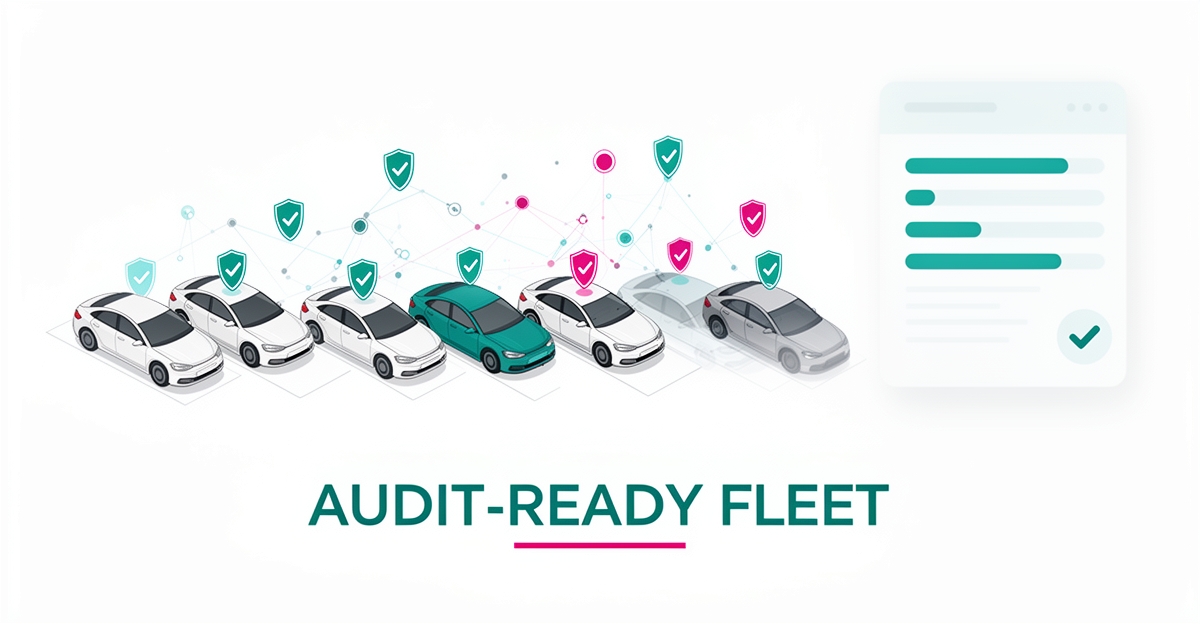
AI for Compliance in Car Rental: How to Automatically Track and Report Insurance and Safety Logs
Key Facts
- AI-driven predictive maintenance typically reduces maintenance costs and fleet downtime substantially by catching failure patterns before breakdowns occur.
- AI risk scoring evaluates hundreds of signals—including payment patterns and geographic anomalies—to flag high-risk bookings for human review before handover.
- OCR and biometric verification extract and validate driver data in seconds at the counter, before keys are handed over.
- Computer vision damage detection creates timestamped, photo-backed records that eliminate "he-said-she-said" disputes.
- Automated audit trails log every user action, system change, and transaction with timestamps and before/after values—exportable instantly for regulators.
- Centralized policy tracking monitors coverage types, limits, and expiration dates for every vehicle, preventing missed renewals and coverage gaps.
Hire a team member that works 24/7 — for less than a part-time wage.
AI receptionists, SDRs, dispatchers and 99+ roles. Trained on your business, fully managed.
Not sure where to start? Ask our AI planner
The Cost of Manual Compliance: Why Car Rental Businesses Are Losing Time and Money
Car rental businesses that rely on manual processes for insurance and safety tracking face mounting financial and operational risks. Without automated systems, coverage gaps, fraud, and maintenance inefficiencies go undetected until they result in costly claims, regulatory penalties, or vehicle downtime. These reactive workflows create avoidable liability and drain resources that could otherwise support fleet growth or customer service.
Manual insurance tracking often leads to missed renewals and expired policies, leaving vehicles underinsured during rentals. A single lapse in coverage can trigger denied claims, legal disputes, and reputational damage, especially when third-party liability is involved. Similarly, paper-based or fragmented safety logs make it difficult to prove vehicle condition at pickup and return, increasing the likelihood of "he-said-she-said" disputes over damage responsibility. These gaps aren't just theoretical—they directly impact the bottom line.
Operators using AI-driven predictive maintenance typically report meaningful reductions in maintenance costs and fleet downtime, based on industry analysis as of late 2026. In contrast, manual maintenance scheduling—whether reactive or based on fixed intervals—results in unnecessary repairs, missed failure warnings, and vehicles sitting idle during peak demand. Without real-time telematics integration, rental companies lose visibility into engine health, brake wear, and tire pressure until a breakdown occurs, leading to towing fees, replacement vehicle costs, and lost rental revenue.
Fraud detection also suffers under manual oversight. Reliance on visual ID checks and basic verification leaves businesses vulnerable to synthetic identities, stolen licenses, and false damage claims. AI risk scoring cross-references booking patterns, payment risks, and identity verification confidence, and operators adopting it have reported substantial reductions in fraud losses. Manual processes simply cannot match the speed or depth of AI-powered validation, which scans hundreds of risk signals in seconds before keys are handed over.
Audit preparation further strains manual systems. When regulators request compliance records, staff must compile paper logs, spreadsheet entries, and fragmented digital files—a process that can take days and still miss critical details. This delay increases the risk of non-compliance findings and fines, especially as regulators pay growing attention to how businesses govern automated decisions. Without automated audit trails that timestamp every user action, system change, and transaction, proving due diligence becomes a reactive scramble rather than a routine demonstration of control.
These inefficiencies aren't isolated—they compound across departments. Time spent chasing missing insurance documents, verifying licenses by phone, or reconciling maintenance logs pulls employees away from higher-value tasks like customer engagement or fleet optimization. The result is a hidden revenue leak: labor hours consumed by preventable administrative work, increased exposure to legal risk, and missed opportunities to improve utilization or reduce operating costs.
For car rental businesses still dependent on manual compliance tracking, the cost of inaction isn't just measured in dollars—it's measured in preventable losses, avoidable delays, and eroded trust. Automating these workflows isn't about replacing human judgment; it's about eliminating the guesswork that puts both the business and its customers at risk. AIQ Labs helps rental operators rebuild the compliance workflow that costs the most—fixed price, phased delivery, and owned outright with no vendor lock-in.
How AI Automates Compliance: From Document Scanning to Real-Time Audit Trails
Compliance gaps in car rental rarely come from bad intent. They come from manual logs, missed renewals, and inspections that rely on memory.
AI replaces that fragility with continuous, verifiable documentation that regulators can audit in seconds. The system captures every rental event, validates documents at check-in, and records vehicle condition with timestamped evidence.
Document scanning and verification happen at the counter. Optical Character Recognition extracts data from driver licenses and insurance cards, then validates it in real time. AI-powered scanners ensure secure, compliant rental processing before keys are handed over, while policy data is centralized to track coverage types, limits, and expiration dates for each vehicle.
Predictive maintenance shifts safety from reactive to preemptive. Telematics feeds engine diagnostics, tire pressure, brake wear, and battery health into models that identify failure patterns before breakdowns occur. Operators using AI-driven predictive maintenance typically report significant reductions in maintenance costs and fleet downtime. Component-level wear tracking informs purchasing and auto-generates work orders when thresholds are approached.
Computer vision removes subjectivity from damage inspection. High-resolution cameras or smartphone-based tools scan vehicles at pickup and return, compare conditions against baselines, and map new damage with precise location and photo evidence. This creates an immutable record that reduces disputes and supports insurance claims.
Audit trails become automatic and complete. Every login, data change, transaction, and system configuration update is logged with timestamps, user information, and before/after values. Comprehensive audit logs can be filtered and exported instantly for regulatory inquiries.
Risk scoring adds a proactive compliance layer. Reservations are evaluated against hundreds of signals including booking patterns, payment risk indicators, identity verification confidence, and geographic anomalies. High-risk bookings are flagged for human review before handover, so staff—not the model—make the final call.
Together these capabilities form a compliance-by-design workflow:
- OCR and biometric verification of licenses and insurance at arrival
- Telematics-driven predictive maintenance with automated work orders
- Computer vision damage detection with pickup-return comparison
- Immutable audit trails with timestamped user and system actions
For car rental businesses facing strict insurance, safety, and policy tracking requirements, this automation reduces legal risk and audit time. AIQ Labs builds AI systems that ensure accurate, audit-ready documentation for every rental, aligning document management and compliance logging with operational reality. If you'd rather start with a single high-cost workflow than a full system, AI employees can handle document verification and compliance logging as managed roles from day one.
Implementation Roadmap: Deploying AI Compliance Systems Without Disrupting Operations
Implementing AI compliance systems requires a phased approach that protects daily operations while building audit-ready capabilities. Car rental businesses can start by assessing current gaps in insurance tracking and safety logging, then prioritize high-impact areas like document verification or predictive maintenance. This initial assessment ensures resources target the most critical compliance risks without disrupting core rental workflows, and a structured gap analysis prevents costly rework during deployment.Next, integrate AI-powered document scanning at pickup locations to automatically verify driver licenses and insurance documents using OCR and real-time database checks. Simultaneously, connect vehicle telematics to an AI analytics engine that monitors engine diagnostics, tire pressure, and brake wear to predict maintenance needs before failures occur. These dual implementations create immediate compliance value—reducing coverage gaps and unexpected breakdowns—while operating in parallel with existing processes. Fleets using predictive maintenance typically see meaningful reductions in maintenance costs and downtime.
Enable comprehensive activity logging to capture all user actions, system changes, and vehicle inspections with timestamps and before/after values for audit readiness. Establish risk scoring protocols that flag high-risk bookings for human review, maintaining oversight for critical decisions like damage billing or fraud alerts. Finally, deploy computer vision tools for damage inspection at pickup and return, generating precise location-mapped evidence to prevent disputes. Throughout deployment, maintain human-in-the-loop reviews for compliance-critical decisions to balance automation with judgment. Audit trail capabilities ensure every action is traceable, supporting regulatory reporting without manual compilation. AIQ Labs' milestone-based delivery lets you refine models and update controls as risks evolve while sustaining audit readiness—start monthly, build in milestones, or own the system outright. The quickest way to scope this is the two-minute Fit Check.
Still paying for 10+ subscriptions that don’t talk to each other?
We build custom AI systems you own outright. No vendor lock-in. Full control.
Not sure where to start? Ask our AI planner
Frequently Asked Questions
How does AI help car rental companies avoid insurance coverage gaps and missed renewals?
What kind of savings can car rental businesses expect from AI-powered predictive maintenance?
Can AI really reduce fraud losses in car rental operations?
How does AI improve damage inspection and reduce disputes at pickup and return?
What makes AI-generated audit trails better than manual logs for regulatory compliance?
Turning Compliance from Risk to Advantage
Manual compliance tracking in car rental isn't just inefficient—it's a silent drain on profitability, exposing businesses to avoidable fraud, coverage gaps, and audit delays. AI transforms these pain points into verifiable, automated workflows: real-time insurance verification, predictive maintenance that cuts costs and downtime, computer-verified damage inspections, and immutable audit trails that satisfy regulators in seconds. For operators ready to replace guesswork with control, the path forward starts with understanding where AI delivers the highest immediate impact. Take the first step with a free, no-obligation strategy call to map your biggest compliance bottleneck and see exactly how AI can turn it into a measurable advantage—built in phases, owned outright, with no vendor lock-in.
Make AI your competitive advantage — not just another tool.
Strategy, implementation and ongoing optimization. One partner, end to end.
Not sure where to start? Ask our AI planner