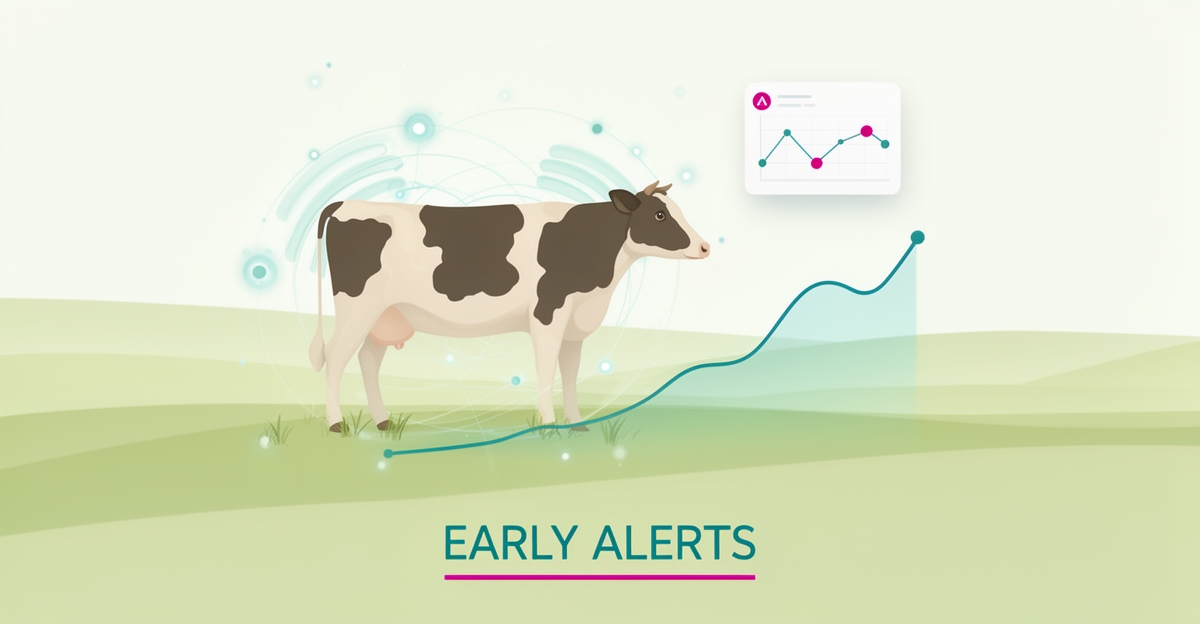
AI for Dairy Farm Health: How Predictive Analytics Can Prevent Disease Outbreaks
Key Facts
- Industry analyses of dairy operations suggest manual errors and delayed detection can consume a meaningful share of annual revenue—often cited in the 20-30% range
- Production uncertainty and milk spoilage are frequently reported as drivers of 30-35% wastage in dairy processes
- Poor traceability can reduce revenue by roughly 8% due to lost product batches, according to industry estimates
- Small, unnoticed losses such as equipment leakages can quietly drain 2-4% of profits over time
- Activity monitoring systems typically detect illness 24 to 48 hours before clinical symptoms appear, based on findings reported across dairy research
- AIQ Labs has deployed 200+ multi-agent systems and runs 4 live SaaS products daily
Hire a team member that works 24/7 — for less than a part-time wage.
AI receptionists, SDRs, dispatchers and 99+ roles. Trained on your business, fully managed.
Not sure where to start? Ask our AI planner
The Hidden Cost of Delayed Disease Detection in Dairy Operations
A single missed fever can ripple through an entire herd before a farmer notices. In dairy operations, delayed disease detection is rarely a single event — it is a compounding loss of milk, fertility, and animal welfare that manual monitoring struggles to contain.
Manual monitoring limits speed and coverage. Visual checks and periodic milk testing leave gaps between observations, allowing subclinical illness to progress undetected. Industry analyses of dairy operations suggest manual errors can consume a meaningful share of annual revenue — figures in the 20-30% range are commonly cited — reflecting the cumulative impact of late interventions and inconsistent data capture across the farm.
Production losses accelerate quickly once illness takes hold. When health issues go undiagnosed, yield drops and milk quality deteriorates, contributing to production uncertainty that industry research frequently ties to 30-35% wastage in dairy processes. Small, invisible inefficiencies — equipment leakages, unnoticed yield losses — can quietly drain another 2-4% of profits over time.
Traceability and response speed also suffer. Poor traceability can reduce revenue by roughly 8% due to lost product batches, a risk that grows when the root cause — a sick animal or contaminated milk supply — is identified too late. AI-driven quality control and predictive alerts help close these gaps, but on-farm health monitoring remains largely reactive in many operations.
The hidden costs show up across the operation:
- Reduced milk volume and components from prolonged subclinical mastitis and metabolic disorders
- Increased culling rates and replacement costs when chronic illness weakens herd longevity
- Labor hours spent on emergency treatments instead of preventive care
- Reputational and compliance risk from inconsistent milk quality and food safety events
These pressures are amplified by the scale of modern dairy. Feed, forage, water, mold, and mycotoxin variation must all be quantified to protect herd health, which is why systematic, data-driven testing has become standard practice across agricultural stakeholders. The same logic applies to animal-level health data: the more continuously you measure, the earlier you can intervene.
Proactive health monitoring changes the economics. Continuous analysis of animal behavior, temperature, and milk composition enables earlier intervention before clinical signs appear. Early detection preserves production and reduces treatment costs, while custom AI models that continuously learn from farm data support proactive health management rather than crisis response.
AIQ Labs approaches this challenge through AI Workflow Builds — rebuilding the one workflow that costs the most, at a fixed price and in phases — or, for larger operations, an AI Operating System that connects health monitoring into one operating layer. The shift from manual spot checks to continuous, data-informed monitoring is what makes disease prevention operationally and financially viable.
How AI Analyzes Behavioral and Physiological Signals for Early Illness Detection
Dairy cows are creatures of habit, and the slightest deviation in their daily rhythm often signals illness days before clinical symptoms appear. Modern sensor networks now capture these subtle shifts continuously, feeding streams of behavioral and physiological data into predictive models that learn each animal's unique baseline.
Activity monitoring systems track rumination time, lying bouts, and feeding frequency with precision impossible for human observation alone. A drop in rumination minutes or a change in lying patterns frequently precedes a fever or metabolic disorder by 24 to 48 hours, based on findings reported across dairy research. Early nutritional and physiological markers correlate strongly with subsequent health events.
Milk composition analysis adds another critical layer. Automated inline sensors measure fat, protein, lactose, and somatic cell counts at every milking. A rising somatic cell count or a shifting fat-to-protein ratio can flag subclinical mastitis or ketosis before the cow shows visible distress. Real-time composition data feeds directly into herd health dashboards, so quality testing and health monitoring become the same workflow.
Core data streams powering early detection:
- Continuous rumination and activity sensors detecting behavioral anomalies
- Real-time milk spectroscopy identifying composition shifts
- Reticular temperature boluses catching fever spikes early
- Feed intake monitoring revealing metabolic imbalances
- Gait and weight distribution analytics spotting lameness onset
These streams converge in predictive engines that separate normal variation from genuine risk. When a model flags a cow, the intervention window opens while treatment is still inexpensive and recovery is likely. AIQ Labs builds custom AI models that continuously learn from farm-specific data, turning these raw signals into actionable health alerts tailored to each operation's unique patterns and challenges.
From Data to Action: Implementing a Custom Health Monitoring System on Dairy Farms
Early disease signs are invisible until losses are already compounding. On dairy farms, subtle shifts in behavior, temperature, and milk composition precede visible illness by days, and catching them early is the difference between a quick intervention and a herd-wide outbreak.
AIQ Labs builds owned AI systems that continuously learn from farm-specific data and translate it into daily actions. The approach starts with integration, not replacement. Existing IoT sensors, milk meters, and farm management tools feed into a custom model that is trained on the farm's own history, not generic benchmarks.
The system is designed for SMB operations that need enterprise-grade monitoring without vendor lock-in. Models are built to run on-premise or in a private cloud the client controls, with full ownership of code, agents, and data transferred at completion — the Own It Outright payment model. For teams that prefer to start smaller, the Build in Milestones approach lets you prove value one phase at a time, and Start Monthly keeps the commitment low. Full payment details are on the pricing page — no fake prices, no invented case-study numbers.
Deployment follows a practical workflow tailored to dairy health:
- Connect sensors and records for continuous ingestion of behavior, temperature, and milk composition
- Train multi-agent models on farm-specific baselines to detect subtle deviations
- Generate prioritized alerts with recommended actions for staff
- Close the loop with farm management tools for logging, follow-up, and learning
Continuous learning is central to accuracy. As new cases are confirmed, the model updates its thresholds for that herd, improving early detection over time. Alerts are actionable, not noisy, and delivered where staff already work.
The business case for this precision is clear. Industry analyses of dairy operations suggest manual errors can consume 20-30% of annual revenue, while production uncertainty and spoilage are frequently tied to 30-35% wastage. Early health detection reduces both categories by preventing drops in yield and quality before they spread.
Laboratory-grade context supports the model. Systematic testing of feeds, forages, water, molds, and mycotoxins — using wet chemistry and near-infrared methods — has long been the standard for protecting herd health. Integrating that level of analytical rigor with real-time on-farm data strengthens predictive signals.
For farms ready to move from reactive treatment to proactive prevention, the 2-minute Fit Check maps your current data sources and identifies the highest-ROI health monitoring workflows. From there, a free 30-minute strategy call sets the plan.
Still paying for 10+ subscriptions that don’t talk to each other?
We build custom AI systems you own outright. No vendor lock-in. Full control.
Not sure where to start? Ask our AI planner
Frequently Asked Questions
How much money are dairy farms losing from manual monitoring and delayed disease detection?
What specific data does AI monitor to catch illness before cows show clinical symptoms?
Do I need to replace my existing sensors and farm management software to use an AI health monitoring system?
Who owns the AI model and data once the system is deployed on my farm?
How does the system avoid alert fatigue and ensure staff actually act on the notifications?
How is the system paid for — is it a subscription?
From Reactive Treatment to Predictive Prevention: The Future of Dairy Health
The transition from manual observation to AI-driven surveillance represents more than a technological upgrade—it is a fundamental shift in how dairy operations protect their margins and their herds. By continuously analyzing subtle shifts in rumination, temperature, and milk composition, predictive systems catch illness during the critical 24-to-48-hour window when treatment remains simple and inexpensive, rather than after production losses have compounded. The business case is compelling: industry analyses indicate that manual errors and delayed detection can drain a significant share of annual revenue, while production uncertainty and spoilage contribute to substantial wastage. AIQ Labs builds custom health monitoring systems that learn from your specific herd data, transforming these invisible risks into actionable alerts delivered where your staff already work — with 200+ multi-agent systems deployed and payment models that fit how you want to buy. For operations ready to move from crisis response to proactive prevention, the path forward begins with the 2-minute Fit Check at https://aiqlabs.ai/apply, followed by a free 30-minute strategy call to map your current data streams and identify the highest-value monitoring workflows.
Make AI your competitive advantage — not just another tool.
Strategy, implementation and ongoing optimization. One partner, end to end.
Not sure where to start? Ask our AI planner