AI for Damage Estimation: How Rebuild Firms Can Use AI to Speed Up Claims Processing
Key Facts
- AI-powered damage detection tools can identify vehicle damage from photos with high accuracy, typically in the 95%+ range in controlled conditions according to industry research
- The market for AI-powered vehicle damage detection is projected to grow strongly through the early 2030s, with analysts citing double-digit annual growth as reported by Inspektlabs
- A meaningful share of collision customers—roughly a third in J.D. Power research—prefer working with people over digital contact per industry reporting
- Established claims-technology providers like CCC Intelligent Solutions have made AI a core, profitable part of the auto claims and repair business
- AI can analyze damage photos and generate preliminary estimates in seconds, significantly reducing delays in claims processing per industry research
- AI-powered damage detection performs best when trained on diverse, geographically relevant datasets, improving reliability in complex scenarios noted by Inspektlabs
Hire a team member that works 24/7 — for less than a part-time wage.
AI receptionists, SDRs, dispatchers and 99+ roles. Trained on your business, fully managed.
Not sure where to start? Ask our AI planner
The Bottleneck in Claims Processing: Why Manual Damage Estimation Slows Down Rebuild Firms
Manual damage estimation remains a significant bottleneck for rebuild firms, creating delays that ripple through the entire claims process. Adjusters often spend hours or even days reviewing photos, cross-referencing repair guides, and coordinating with multiple parties before generating an estimate. This slows down claim resolution, frustrates customers eager to get their vehicles or properties restored, and ties up cash flow as payments await final approval. The inefficiency is compounded by inconsistent assessments, where different estimators may interpret the same damage differently, leading to disputes and rework.
Research shows that a meaningful share of collision customers—roughly a third in J.D. Power findings—prefer working with people over digital contact, highlighting the enduring value of human interaction in sensitive situations like property damage claims. Yet, even with this preference, the manual process itself introduces avoidable delays—estimators are bogged down by repetitive tasks that could be automated, such as measuring damage from photos or matching findings to local repair cost databases. When adjusters are stuck in these low-value activities, they have less time for the empathetic communication and complex judgment calls that customers actually value.
The operational toll extends beyond customer satisfaction. Inconsistent estimates force rebuild firms into lengthy negotiations with insurers, increasing administrative overhead and delaying project starts. Cash flow suffers as revenue is held up in pending claims, limiting the firm’s ability to take on new work or invest in growth. These bottlenecks aren’t just inconvenient—they directly impact profitability and scalability in an industry where speed and accuracy are competitive differentiators.
This is exactly the kind of single, high-cost workflow that [AI Workflow Builds](/workflow-builds) targets: rebuild the estimation process with AI-powered image recognition and natural language processing, enabling rapid preliminary estimates from damage photos while preserving the role of human experts for final review and customer engagement. This approach reduces processing time without eliminating the personal touch that many customers still prefer. By automating the mechanical aspects of estimation, rebuild firms can redirect their skilled staff toward higher-value tasks—like negotiating with insurers, advising clients, and managing complex rebuilds—ultimately accelerating claims, improving satisfaction, and unlocking trapped cash flow.
How AI-Powered Image Recognition and NLP Transform Damage Estimation Accuracy and Speed
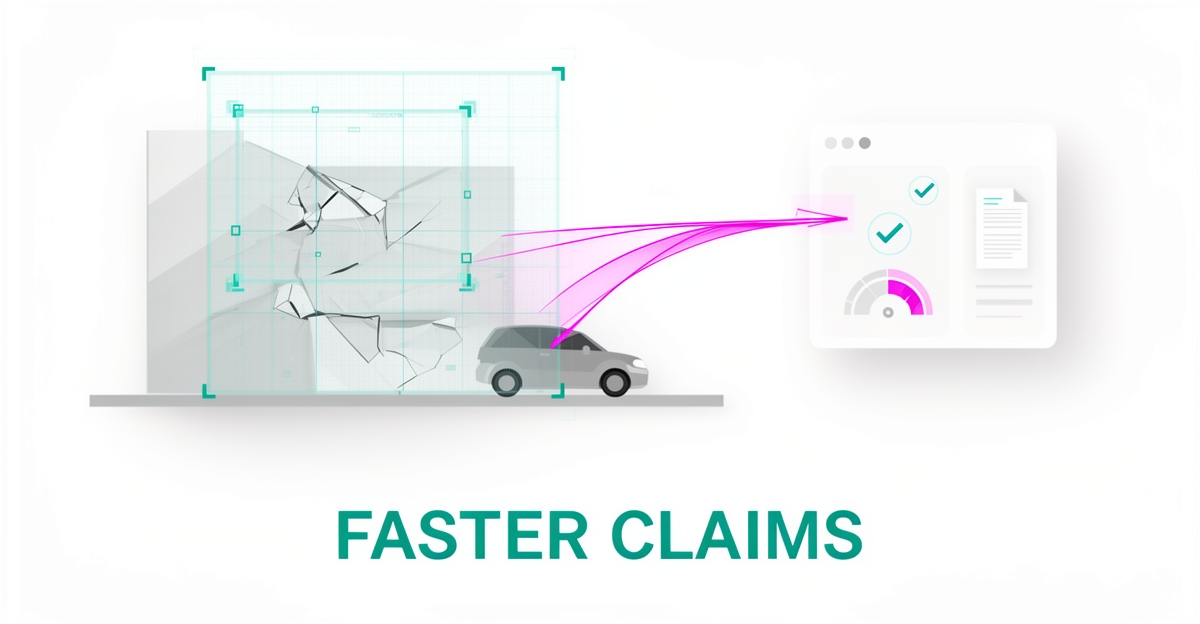
A damage photo that once sat in an adjuster's queue for days can now produce a preliminary estimate in seconds. That shift is the core promise of AI-powered damage estimation, and as of late 2026 it's already reshaping how rebuild firms and insurers handle claims.
The technology behind this speed comes down to two capabilities working in tandem. Computer vision models scan photos and video to identify dents, scratches, and structural damage, while natural language processing interprets claim descriptions, repair notes, and policy documents to assemble a coherent preliminary estimate. Together, they compress a workflow that traditionally required manual review into an automated first pass.
The accuracy numbers are compelling. According to industry research, AI-powered damage detection solutions like Inspektlabs can achieve 95%+ accuracy in identifying vehicle damage under favorable conditions, and the market for this technology is projected to grow at a double-digit annual rate through the early 2030s. These aren't experimental tools—they're production systems deployed across insurance, fleet management, and rental companies.
Established players have validated the approach at scale. CCC Intelligent Solutions describes AI as "a strategic lever for progress in the increasingly complex world of auto claims and repair," and has built AI-driven claims technology into a durable, profitable line of business. Meanwhile, Tractable and Mitchell International have applied AI to writing and verifying estimates, predicting damage costs, automating total loss predictions, and analyzing photos to speed up decisions.
For rebuild firms, the practical applications are straightforward:
- Use computer vision to detect dents, scratches, and structural damage directly from field photos
- Generate preliminary estimates in seconds rather than days, accelerating claim cycles
- Automate total loss predictions and subrogation claims to reduce manual review burden
- Analyze photos and videos to surface insights that inform faster repair decisions
It's worth noting the technology's limits. Detection accuracy can drop when identifying micro damage on dark or heavily textured paint surfaces, and hardware-based systems carry high upfront costs. There's also a human element: J.D. Power research has found that roughly a third of collision customers still prefer working with people over digital contact, which is why the smartest deployments position AI as an augmenting tool. As Mitchell International puts it, AI "is not about replacing humans, but about augmenting their capabilities and freeing them up to focus on higher-value tasks."
That augmentation mindset matters most when the AI is built to fit the firm rather than forced onto it. Off-the-shelf tools often miss local rebuild standards and insurer-specific protocols, which is why firms like AIQ Labs build custom AI systems that adapt to those standards, ensuring reliable, scalable output that estimators can actually trust.
Implementation: Integrating AI Damage Estimation into Your Rebuild Firm’s Workflow
Rebuild firms looking to accelerate claims processing can start by integrating AI-powered image recognition and natural language processing directly into their existing workflows. According to industry research, AI can analyze damage photos and generate preliminary estimates in seconds, significantly reducing delays in claims processing. This speed-to-insight allows adjusters and estimators to focus on validation and customer communication rather than manual data entry.
Successful integration begins with assessing current claims systems and identifying where AI can plug in—whether through API connections to photo intake portals or embedding AI analysis into estimating software. Firms should prioritize solutions that adapt to local rebuild standards and insurance protocols, ensuring estimates align with regional labor rates, material costs, and permitting requirements. AIQ Labs builds these systems as fixed-price, phased [workflow builds](/workflow-builds) that meet specific operational needs without requiring firms to overhaul their entire tech stack.
Training the AI on local rebuild standards is critical for accuracy and acceptance. While generic models may perform well in controlled environments, real-world effectiveness depends on contextual understanding—such as recognizing hurricane-related water damage in coastal regions or freeze-thaw structural issues in colder climates. Inspektlabs notes that AI-powered damage detection excels when trained on diverse, geographically relevant datasets, which improves reliability in complex scenarios like micro-damage detection on textured surfaces.
To maintain trust and quality, firms should implement human-in-the-loop oversight where AI-generated estimates are reviewed by experienced estimators before final submission. This approach aligns with Mitchell International’s perspective that AI augments rather than replaces human expertise, freeing professionals to focus on higher-value tasks like customer negotiation and complex repair planning. Industry experts emphasize that this collaborative model increases efficiency while preserving accountability.
Finally, firms should establish feedback loops where estimator corrections retrain the AI model over time, improving accuracy and reducing review burden. By combining custom development, localized training, and balanced automation, rebuild firms can transform damage estimation from a bottleneck into a streamlined, scalable process—and, over time, connect it to the rest of the operation as part of a broader [AI operating system](/ai-operating-systems). For firms ready to explore this transformation, AIQ Labs offers a free 30-minute strategy call to map bottlenecks and identify high-ROI automation opportunities—starting with the two-minute Fit Check at aiqlabs.ai/apply.
Still paying for 10+ subscriptions that don’t talk to each other?
We build custom AI systems you own outright. No vendor lock-in. Full control.
Not sure where to start? Ask our AI planner
Frequently Asked Questions
How accurate is AI at detecting vehicle damage, and can it really replace human estimators?
Will using AI for damage estimation make our rebuild firm less personal or hurt customer satisfaction?
What kinds of damage can AI detect from photos, and are there any limitations we should know about?
How fast can AI generate a preliminary estimate compared to the current manual process?
Is AI-powered damage estimation only useful for large companies, or can small rebuild firms benefit too?
What kind of return on investment can we expect from implementing AI for damage estimation?
Turning Damage Estimates into Competitive Advantage
Rebuild firms face a clear bottleneck in manual damage estimation—slowing claims, frustrating customers, and tying up cash flow. AI-powered image recognition and natural language processing now deliver preliminary estimates in seconds, freeing adjusters to focus on what truly matters: empathetic communication and complex judgment calls. The technology isn’t about replacing people but augmenting their expertise, which matters given how many customers still prefer human interaction. By automating repetitive tasks, firms can accelerate claims, improve satisfaction, and unlock trapped revenue. The path forward starts with assessing where AI fits your workflow—whether through a fixed-price workflow build, localized training, or human-in-the-loop oversight. To explore how AI can transform your specific claims process without overhauling your systems, take the two-minute Fit Check at aiqlabs.ai/apply and schedule a free 30-minute strategy call with AIQ Labs to identify your highest-ROI automation opportunities.
Make AI your competitive advantage — not just another tool.
Strategy, implementation and ongoing optimization. One partner, end to end.
Not sure where to start? Ask our AI planner