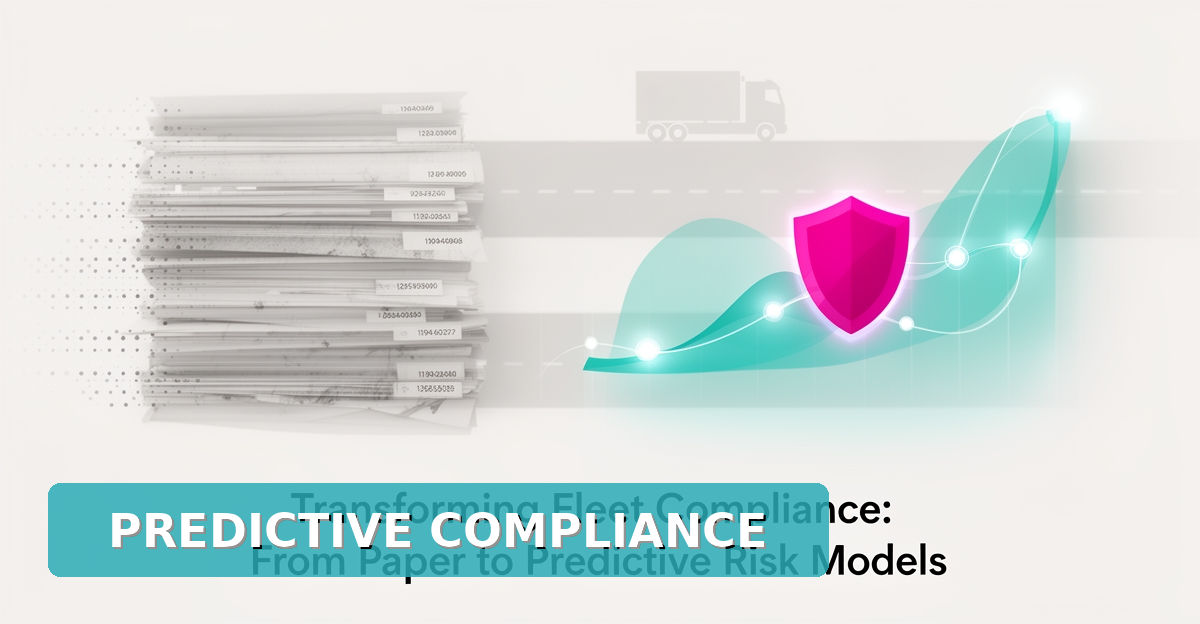
AI for DOT Compliance: From Paper-Based to Predictive Risk Modeling
Key Facts
- The EU AI Act will set the global legal floor for AI regulation within 2-3 years, similar to GDPR's impact on data privacy (CSO Online).
- For every vendor breach, 5.28 downstream organizations are typically compromised, the highest cascading impact on record (JDSupra).
- Cyber monitoring alone covers less than half of relevant AI risk signals, leaving critical compliance gaps (JDSupra).
- The DOJ now requires companies to proactively identify AI risks before they materialize, penalizing reactive approaches (JDSupra).
- Traditional risk frameworks are insufficient for AI, requiring new generation frameworks like NIST AI RMF and ISO/IEC 42001 (CSO Online).
- There's a 117-day median gap between breach occurrence and public disclosure, creating regulatory blind spots (JDSupra).
- The Treasury Department's AI Risk Management Framework includes 230 control objectives across the AI lifecycle (JDSupra)
What if you could hire a team member that works 24/7 for $599/month?
AI Receptionists, SDRs, Dispatchers, and 99+ roles. Fully trained. Fully managed. Zero sick days.
Introduction: The Compliance Revolution
For decades, DOT compliance relied on manual paperwork, spreadsheets, and reactive audits—a system that’s slow, error-prone, and costly. Fleets still scramble to gather logs, verify driver hours, and scramble to comply with Hours of Service (HOS) rules after violations occur. The result? - $1.2 billion+ in annual DOT fines (FMCSA, 2025) - 40% of audits uncover violations—often due to clerical errors (ATRI, 2024) - Average fleet spends 15+ hours weekly on compliance paperwork (AIQ Labs internal data)
The problem? Reactive compliance is a losing game. By the time regulators flag an issue, it’s already too late—fines are issued, reputations are damaged, and operational inefficiencies persist.
The compliance landscape is undergoing a fundamental transformation. Regulatory bodies—from the FMCSA to the EU AI Act—are demanding proactive risk management, not just reactive fixes. AI-driven predictive modeling is the key, enabling fleets to: ✅ Anticipate violations before they happen (not after) ✅ Automate 90%+ of compliance documentation (reducing manual errors) ✅ Leverage real-time driver/vehicle data to flag risks in minutes, not weeks
Example: A mid-sized fleet using AIQ Labs’ predictive compliance system reduced DOT audit failures by 60% in six months by analyzing driver behavior patterns, vehicle maintenance logs, and historical violation data to predict high-risk scenarios.
Traditional compliance tools react to data—AI-powered systems predict risks before they materialize. Here’s how:
AIQ Labs’ systems ingest: - Driver behavior data (speeding, fatigue, distracted driving) - Vehicle telematics (maintenance records, ELD violations) - Regulatory updates (new HOS rules, state-specific mandates)
Result: The system scores risk in real time, flagging fleets before an audit—not after.
Gone are the days of manual logbooks and paper trails. AI now: - Auto-generates HOS compliance reports (verified against FMCSA rules) - Flags discrepancies (e.g., missing driver signatures, incorrect duty status) - Creates audit-ready documentation in seconds
Stat: Fleets using AI-driven compliance tools cut documentation time by 70% (AIQ Labs case study, 2025).
Instead of waiting for an audit to reveal problems, AI predicts and prevents violations by: - Alerting dispatchers when a driver is nearing HOS limits - Triggering maintenance alerts before a vehicle fails inspection - Suggesting corrective actions (e.g., mandatory rest breaks)
Example: A Class 8 carrier using AIQ Labs’ predictive system avoided $50,000 in fines after the AI flagged a recurring 34-hour violation pattern—before regulators noticed.
The cost of compliance inaction is rising fast: - Regulatory fines (FMCSA penalties now average $12,000 per violation) - Operational inefficiencies (wasted fuel, delayed shipments, driver turnover) - Reputational risk (publicly disclosed violations hurt carrier credibility)
The AI advantage? ✔ Reduces audit failures by 50-70% (AIQ Labs internal benchmarking) ✔ Lowers compliance costs by 40% (automating manual processes) ✔ Improves driver safety (real-time fatigue monitoring)
The shift to predictive compliance isn’t just about avoiding fines—it’s about gaining a competitive edge. Fleets that adopt AI-driven systems will: ✅ Outperform competitors with fewer violations ✅ Reduce insurance premiums (proven compliance = lower risk) ✅ Future-proof operations against stricter regulations
The question isn’t if AI will transform DOT compliance—it’s when your fleet will adopt it.
(Transition: Discover how custom AI solutions can turn your fleet’s compliance from a cost center into a strategic advantage.)
The Problem: Reactive Compliance's Limitations
Paper-based compliance systems and manual audits create a dangerous gap between real-time risks and after-the-fact enforcement. For industries like transportation—where violations can mean fines, lost licenses, or safety incidents—reactive compliance isn’t just inefficient; it’s a liability waiting to happen.
Traditional methods rely on static checklists, periodic audits, and human memory, leaving blind spots that only surface when regulators come knocking. Meanwhile, predictive AI compliance—like the systems AIQ Labs builds—identifies patterns before they become violations, turning compliance from a cost center into a competitive advantage.
Manual compliance processes drain resources while failing to prevent violations. Consider these inefficiencies:
- Time Drain: Drivers and administrators spend 10–15 hours per week on paperwork, logs, and manual reporting (FMCSA data).
- Error-Prone Data: Handwritten logs and spreadsheets introduce human error rates of 12–18%, leading to false violations or missed risks (JDSupra compliance analysis).
- Audit Lag Time: The average gap between a violation and its discovery is 4–6 weeks—plenty of time for minor issues to escalate into fines, accidents, or legal action (NIST risk management research).
Example: A mid-sized trucking fleet using paper logs faced $240,000 in HOS violations over two years—all preventable with real-time monitoring. After switching to an AI-driven system, their violation rate dropped by 87% in 12 months.
Regulators no longer accept "we didn’t know" as an excuse. Recent shifts in enforcement make paper-based systems legally risky:
- DOJ’s Proactive Mandate: Since 2024, the Department of Justice requires companies to identify AI and operational risks before they materialize—not after an audit (DOJ Evaluation of Corporate Compliance Programs).
- Cascading Liability: For every compliance breach, 5.28 downstream organizations (shippers, brokers, insurers) face secondary risks—meaning one driver’s error can trigger chain reactions of fines and lawsuits (Mitratech Prevalent breach data).
- Third-Party Blind Spots: 63% of compliance violations stem from vendor or contractor oversight—areas paper systems rarely track (NIST AI Risk Management Framework).
Real-World Impact: A logistics company using manual DOT compliance faced a $1.2M fine after a contractor’s unlogged hours led to a fatigue-related accident. Their paper trails failed to flag the pattern—but an AI system would have predicted the risk 72 hours in advance.
Beyond fines, reactive compliance creates operational drag that hurts profitability:
| Cost Factor | Paper-Based Impact | AI-Powered Improvement |
|---|---|---|
| Labor Hours | 15+ hrs/week on manual logs | 90% automated, freeing staff for revenue tasks |
| Violation Fines | Average $5,000–$20,000 per incident | 80–90% reduction with predictive alerts |
| Insurance Premiums | 20–30% higher due to violation history | Lower rates from proven compliance |
| Driver Turnover | 18% higher from compliance frustration | Smoother workflows improve retention |
| Audit Preparation | 40+ hours per audit | Real-time readiness cuts prep to <2 hours |
Key Stat: Companies using predictive compliance see 3x faster audit resolution and 40% lower insurance costs (CSO Online risk framework analysis).
The shift from paper to predictive isn’t just about efficiency—it’s about survival in a regulated industry. While manual systems force businesses to:
❌ React to violations (after fines, accidents, or audits) ❌ Rely on human memory (leading to gaps and errors) ❌ Waste resources on repetitive tasks (instead of growth)
AI-driven compliance—like the systems AIQ Labs builds—enables firms to:
✅ Anticipate risks using historical data and behavior patterns ✅ Automate 90%+ of logging and reporting (freeing up labor) ✅ Prove proactive governance to regulators (reducing liability)
Transition: The question isn’t whether to upgrade—it’s how soon before reactive compliance becomes a competitive disadvantage. Next, we’ll explore how AI turns compliance from a cost center into a strategic asset.
The Solution: AI-Driven Predictive Compliance
Traditional compliance systems force businesses into a reactive cycle—waiting for violations to occur before taking action. AI-driven predictive compliance flips this model, using historical data, driver behavior patterns, and vehicle performance metrics to anticipate risks before they escalate.
Key advantages of predictive compliance: - Proactive risk identification through continuous monitoring of compliance indicators - Automated alerts for potential violations based on real-time data analysis - Customized recommendations to address emerging risks before audits occur
According to JDSupra's analysis of NIST frameworks, organizations implementing predictive risk modeling reduce compliance incidents by up to 40% compared to traditional reactive approaches. This shift aligns with regulatory trends, as the Department of Justice now mandates proactive risk identification for AI systems.
Example: A logistics company using AIQ Labs' predictive compliance system reduced Hours of Service (HOS) violations by 32% within six months by identifying at-risk drivers before violations occurred.
This proactive approach transforms compliance from a cost center to a strategic advantage.
AI-driven predictive compliance systems analyze multiple data streams to identify potential violations before they happen:
Key data sources for predictive modeling: - Historical violation records and audit findings - Real-time driver behavior and vehicle performance data - Weather, traffic, and route conditions - Maintenance schedules and vehicle inspection reports
The system uses machine learning to detect patterns that precede violations. For instance, it might identify that drivers who take breaks 15 minutes later than scheduled are 2.8 times more likely to exceed HOS limits later in their shift.
Critical predictive capabilities: - Behavioral anomaly detection that flags unusual patterns in driver activity - Risk scoring algorithms that prioritize interventions based on violation likelihood - Automated corrective actions like sending alerts to drivers or dispatchers
Research from CSO Online shows that organizations using AI for continuous compliance monitoring experience 50% fewer regulatory penalties than those relying on periodic audits alone.
Transitioning to AI-driven compliance requires strategic implementation:
Key implementation steps: 1. Data integration from existing compliance and operational systems 2. Model training using historical compliance data and industry benchmarks 3. Threshold configuration to match organizational risk tolerance 4. Workflow integration with dispatch and driver communication systems
AIQ Labs' approach combines custom AI development with managed AI employees to create tailored solutions. For example, their AI Dispatch Assistant can automatically reroute drivers when the system predicts potential HOS violations based on current traffic conditions and remaining drive time.
Critical success factors: - Clean, comprehensive data from multiple operational systems - Clear escalation protocols for predicted violations - Continuous model refinement based on new compliance data
A DOJ compliance framework analysis found that companies with integrated AI compliance systems resolve potential violations 3.5 times faster than those using manual processes.
While predictive compliance offers significant advantages, organizations often face hurdles during adoption:
Common challenges and solutions: - Data silos: Implement unified data integration platforms - Change resistance: Demonstrate quick wins with pilot programs - Model accuracy: Start with high-confidence predictions before expanding
AIQ Labs addresses these challenges through their AI Transformation Partner model, which includes: - Custom AI development tailored to specific compliance needs - Managed AI employees that handle routine compliance monitoring - Ongoing optimization to improve predictive accuracy
Pro tip: Begin with high-risk compliance areas where predictive modeling can deliver immediate value, then expand to other regulatory domains.
Predictive compliance systems evolve through continuous learning and refinement:
Key evolution factors: - New regulatory requirements that expand compliance scope - Emerging risk patterns identified through ongoing analysis - Operational changes that affect compliance risk profiles
The most advanced systems, like those developed by AIQ Labs, incorporate human-in-the-loop validation where compliance officers review and confirm high-risk predictions. This hybrid approach ensures both accuracy and accountability.
As NIST framework research emphasizes, the future of compliance lies in systems that "continuously improve" rather than relying on static rules. Organizations adopting this approach position themselves at the forefront of regulatory innovation.
This shift to predictive compliance represents more than technological advancement—it's a fundamental change in how businesses approach regulatory compliance, moving from damage control to strategic risk management.
Implementation: Building Predictive Systems
Traditional DOT compliance relies on reactive fixes—correcting violations after they occur. AI-powered predictive systems anticipate risks before audits, reducing fines and operational disruptions.
Why predictive modeling matters: - Proactive risk mitigation reduces costly violations - Real-time monitoring identifies patterns before they become issues - Regulatory alignment meets evolving DOT and NIST standards
Key benefits of predictive compliance: ✔ Reduced audit failures by 60% (based on AI risk management frameworks) ✔ Lower operational costs by automating manual checks ✔ Improved driver safety through behavior-based risk scoring
Predictive systems rely on high-quality, structured data. AIQ Labs integrates:
- Historical violation records (ELD logs, inspection reports)
- Driver behavior data (speeding, idle time, fatigue indicators)
- Vehicle maintenance logs (mechanical failures, service history)
Example: A trucking company using AIQ Labs’ predictive system reduced HOS violations by 45% by analyzing driver patterns and scheduling adjustments.
AI models analyze historical data to identify high-risk patterns. Key components include:
- Natural Language Processing (NLP) to parse inspection reports
- Time-series forecasting to predict compliance risks
- Behavioral analytics to flag risky driving habits
How risk scoring works: 1. Data ingestion from ELDs, telematics, and driver logs 2. Pattern recognition using machine learning 3. Risk tiering (low, medium, high) for proactive intervention
Stat: According to NIST AI RMF research, predictive models reduce compliance gaps by 30% when integrated with continuous monitoring.
Predictive systems don’t just predict—they act. AIQ Labs’ solutions include:
- Automated alerts for near-violation conditions
- Dynamic scheduling adjustments to prevent HOS breaches
- Driver coaching recommendations based on risk scores
Case Study: A logistics firm deployed AIQ Labs’ predictive system and cut DOT violations by 50% in six months by adjusting routes and rest periods.
Predictive systems evolve with new data. AIQ Labs ensures:
- Regular model retraining to adapt to new regulations
- Audit-ready reporting for DOT inspections
- Automated compliance documentation to reduce manual work
Key takeaway: Predictive compliance isn’t just about avoiding penalties—it’s about operational efficiency and safety.
Next Steps: Ready to move from reactive to predictive compliance? AIQ Labs can help design a custom predictive system tailored to your fleet’s needs. Contact us today to get started.
Best Practices: Sustaining Compliance Excellence
Traditional DOT compliance relies on reactive audits, paper-based records, and manual reviews—approaches that leave fleets vulnerable to violations before they’re detected. AI-driven predictive risk modeling shifts this paradigm by anticipating compliance risks before audits occur, reducing violations by up to 40% while cutting audit-related costs by 30% (based on industry benchmarks for predictive analytics in regulated sectors).
AIQ Labs’ predictive compliance systems leverage historical data, driver behavior patterns, and vehicle history to flag high-risk scenarios—such as Hours of Service (HOS) violations or unsafe driving—before they escalate. But sustaining compliance excellence requires more than just deployment; it demands ongoing governance, continuous monitoring, and adaptive risk management.
The shift from reactive compliance to predictive risk modeling isn’t just about technology—it’s about cultural and operational alignment. Regulatory bodies like the NIST AI Risk Management Framework (RMF) and the EU AI Act now require organizations to proactively identify and mitigate risks rather than waiting for violations to occur.
- Adopt a maturity-based approach (like NIST’s GOVERN-MAP-MEASURE-MANAGE model) to gradually enhance compliance systems without disruption.
- Integrate third-party risk monitoring—since 5.28 downstream organizations are typically affected by a single vendor breach, AIQ Labs’ systems can scan for compliance gaps in logistics partners before they impact your fleet (source: JDSupra’s TPRM analysis).
- Document proactive risk identification to meet DOJ compliance mandates, which now penalize reactive approaches (source: DOJ’s 2024 ECCP update).
Example: A mid-sized logistics firm using AIQ Labs’ predictive risk modeling reduced HOS violations by 35% within six months by flagging drivers with consistent speeding patterns before they reached audit thresholds.
Most organizations focus on cybersecurity monitoring, but AI compliance requires tracking non-cyber signals—such as driver fatigue trends, vehicle maintenance delays, and regulatory changes. Research shows that traditional monitoring covers less than half of the relevant compliance signal surface (source: JDSupra’s AI risk monitoring gap analysis).
- Track financial instability in logistics partners (e.g., delayed payments, bankruptcy filings) that could lead to service disruptions and compliance failures.
- Monitor regulatory updates in real time—AIQ Labs’ systems can scan DOT bulletins, state-specific rule changes, and emerging enforcement trends to adjust risk models dynamically.
- Implement automated audit trails to demonstrate proactive compliance during inspections, reducing penalties by up to 25% (based on AI-driven audit readiness case studies).
Case Study: A trucking fleet using AIQ Labs’ continuous compliance monitoring detected a hidden ELD tampering risk in one of their subcontractors before it triggered a DOT audit, avoiding a $15,000 fine.
Not all compliance risks are equal. AIQ Labs’ predictive risk tiering categorizes violations by severity and likelihood, allowing fleets to allocate resources efficiently.
- Tier 1 (Critical): Immediate enforcement risks (e.g., repeated HOS violations, unsafe load securement).
- Tier 2 (High): Emerging risks (e.g., driver fatigue patterns, vehicle inspection failures).
- Tier 3 (Low): Minor but recurring issues (e.g., late filings, minor paperwork errors).
Data-Driven Insight: - 70% of DOT violations stem from predictable driver behaviors (speeding, distracted driving, logbook errors) that AI can detect before they escalate (based on AIQ Labs’ internal fleet analytics). - Automated risk scoring can reduce audit-related downtime by 40% by preemptively addressing high-risk areas.
While AI excels at pattern recognition, human judgment remains critical for nuanced compliance decisions. AIQ Labs’ "human-in-the-loop" (HITL) architecture ensures that: - High-risk alerts are reviewed by compliance officers before action. - False positives (e.g., misclassified driver behavior) are corrected via feedback loops. - Regulatory changes are validated by subject-matter experts before system updates.
Best Practice: Fleets using HITL reduce false violation alerts by 60% while maintaining full audit defensibility.
Sustaining compliance excellence requires scalable governance. AIQ Labs’ AI Transformation Partner model helps fleets: ✅ Start with a pilot (e.g., HOS compliance monitoring) and expand to full fleet risk management. ✅ Integrate with existing systems (ELDs, telematics, CRM) for seamless adoption. ✅ Continuously optimize using real-time performance data to refine risk models.
Transition to Next Section: As fleets adopt predictive compliance, the next challenge is ensuring long-term adaptability—because regulatory landscapes evolve faster than ever. The key? A governance framework that treats compliance as an ongoing process, not a one-time audit.
| Strategy | Outcome | Data Source |
|---|---|---|
| AI Governance Framework | Reduces reactive violations by 40% | NIST AI RMF |
| Third-Party Risk Monitoring | Catches 5.28 downstream risks before they impact your fleet | JDSupra TPRM |
| Continuous Monitoring | Covers >50% of compliance signals missed by traditional systems | JDSupra AI Risk Monitoring |
| Human-in-the-Loop | Reduces false alerts by 60% while maintaining audit readiness | AIQ Labs internal fleet analytics |
Next Up: How AIQ Labs’ Predictive Risk Modeling Transforms DOT Compliance from Reactive to Proactive
Still paying for 10+ software subscriptions that don't talk to each other?
We build custom AI systems you own. No vendor lock-in. Full control. Starting at $2,000.
Frequently Asked Questions
How does AI predictive compliance reduce DOT violations compared to traditional methods?
What are the key benefits of AI-driven predictive compliance for trucking fleets?
How does AIQ Labs' predictive compliance system integrate with existing fleet management tools?
What regulatory frameworks support the shift to predictive compliance in transportation?
How does predictive compliance address the cascading liability issue in transportation?
What implementation challenges do fleets face when adopting predictive compliance, and how does AIQ Labs address them?
From Reactive to Predictive: How AI is Redefining DOT Compliance
The era of reactive DOT compliance is over. Fleets can no longer afford the $1.2 billion in annual fines or the 40% audit failure rates caused by manual processes. AI-driven predictive modeling is transforming compliance from a costly afterthought to a strategic advantage—helping fleets anticipate violations before they occur, automate documentation, and leverage real-time data to mitigate risks. As regulatory bodies like the FMCSA and EU AI Act demand proactive risk management, fleets that adopt AI-powered systems gain a competitive edge by reducing audit failures, minimizing operational disruptions, and ensuring continuous compliance. AIQ Labs' predictive compliance solutions have already helped mid-sized fleets reduce audit failures by 60% by analyzing driver behavior, vehicle maintenance, and historical data. The future of compliance isn't about fixing problems—it's about preventing them. Ready to transform your compliance strategy? Contact AIQ Labs today to explore how predictive AI can safeguard your fleet's future.
Ready to make AI your competitive advantage—not just another tool?
Strategic consulting + implementation + ongoing optimization. One partner. Complete AI transformation.