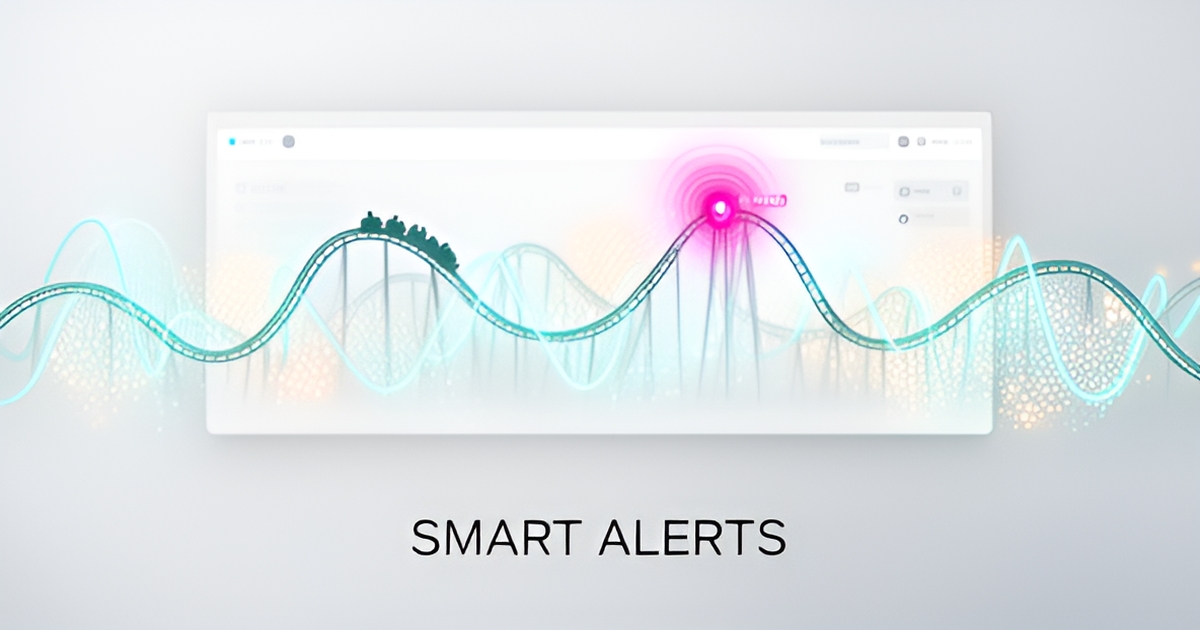
AI for Emergency Response: How Theme Parks Can Use Smart Alerts and Monitoring
Key Facts
- AIQ Labs deploys AI employees trained to monitor safety sensors and trigger real-time alerts for emergencies like crowd congestion or equipment failure.
- AI-powered monitoring continuously analyzes sensor data and operational patterns to detect anomalies the moment they occur.
- AI agents trained on real-time inputs from ride sensors, crowd density cameras, and environmental monitors can perceive subtle deviations that human operators might miss.
- Predictive maintenance further strengthens this proactive approach by forecasting equipment failures before they happen.
- AI can analyze real-time data from ride sensors to detect anomalies indicative of equipment failure, or process crowd analytics to identify unusual congestion patterns.
- AI employees integrate with existing park infrastructure—including access control systems, communication platforms, and maintenance databases—to ensure alerts reach the right personnel with actionable details.
- AI Employees typically cost roughly 80% less than a human hire in an equivalent role—and work around the clock.
Hire a team member that works 24/7 — for less than a part-time wage.
AI receptionists, SDRs, dispatchers and 99+ roles. Trained on your business, fully managed.
Not sure where to start? Ask our AI planner
The Hidden Safety Gaps in Modern Theme Park Operations
Theme parks are built on the illusion of carefree fun, but behind the scenes, safety teams are managing an increasingly complex web of risks. From surging crowds to aging ride infrastructure, the margin for error is shrinking—and traditional monitoring systems are struggling to keep pace.
Consider the pressure on frontline staff. Industry discussion of data-driven emergency support in amusement parks points out that parks can use data analytics to monitor environmental and operational data, identify patterns, and predict potential emergencies. Yet many parks still rely on fragmented systems where crowd density, equipment status, and incident reports live in separate silos—leaving attendants to connect the dots manually during critical moments.
The consequences of delayed response are real. As of late 2026, AI is widely described as a key player in modern amusement park operations—not just an attraction gimmick but a core part of how parks safeguard guests, underscoring how deeply safety and experience are intertwined. When a ride sensor flags an anomaly or a walkway hits dangerous congestion levels, every second between detection and action matters.
Here’s where traditional systems fall short:
- Reactive, not predictive: Most legacy monitoring tools alert staff only after a threshold is breached, offering no lead time to intervene.
- Siloed data streams: Crowd cameras, ride sensors, and communication radios rarely feed into a unified dashboard, forcing responders to piece together incomplete pictures.
- Human bottleneck: Even well-trained teams can only monitor so many feeds at once, and fatigue or distraction can delay recognition of a developing emergency.
These gaps explain why parks are turning to smarter infrastructure. AI-driven predictive maintenance can anticipate mechanical issues before they occur, keeping rides safe and operational, while real-time analytics help staff react to evolving emergency dynamics rather than static reports. The goal isn’t to replace human judgment—it’s to give teams the visibility they need to act decisively when seconds count.
AIQ Labs addresses this challenge through its AI Employees—managed AI staff trained to monitor safety sensors and trigger real-time alerts for emergencies like crowd congestion or equipment failure. These systems notify staff immediately, improving safety without adding human staff—a model that aligns with the broader shift toward goal-based AI agents capable of perceiving information, reasoning, and acting toward specific safety outcomes.
How AI Agents Enable Real-Time Incident Detection and Response
Theme parks face constant pressure to maintain safety while managing high visitor volumes and complex ride operations. Traditional monitoring systems often react too slowly to emerging risks, allowing small issues to escalate into serious incidents before staff can intervene. AI-powered monitoring changes this dynamic by continuously analyzing sensor data and operational patterns to detect anomalies the moment they occur.
AI agents trained on real-time inputs from ride sensors, crowd density cameras, and environmental monitors can perceive subtle deviations that human operators might miss. These systems reason about the implications of each anomaly—such as sudden crowd buildup near a ride exit or unusual vibration patterns on a roller coaster track—and determine whether it poses an immediate risk. When thresholds are crossed, the AI triggers instant alerts to dispatch teams, enabling response before situations become critical. This capability reflects the general pattern of AI agents that perceive information, reason about goals, and act autonomously in complex environments.
Predictive maintenance further strengthens this proactive approach by forecasting equipment failures before they happen. By analyzing historical performance data alongside real-time sensor feeds, AI models identify early signs of wear or malfunction in ride mechanisms, braking systems, or structural components. Addressing these issues during scheduled maintenance windows prevents unexpected breakdowns that could strand riders or create hazardous conditions. AI-driven predictive maintenance typically minimizes downtime and enhances visitor safety by keeping rides operational and reliable.
The integration of AI monitoring with automated alert systems creates a closed-loop safety net where detection, analysis, and notification happen in seconds rather than minutes. For example, if congestion sensors detect unsafe crowd levels in a queue area, the system can simultaneously alert nearby staff, adjust ride dispatch rates, and trigger directional signage to redistribute flow—all without human intervention. This level of automation reduces reliance on constant manual oversight while improving response consistency and speed.
AIQ Labs implements these capabilities through managed AI employees that function as virtual safety monitors, continuously analyzing data streams and initiating protocols when anomalies arise. These AI employees integrate with existing park infrastructure—including access control systems, communication platforms, and maintenance databases—to ensure alerts reach the right personnel with actionable details. By handling routine surveillance and initial response triggering, they allow human teams to focus on complex decision-making and direct visitor assistance during actual emergencies.
The result is a safer, more resilient operation where potential threats are identified and mitigated at their earliest stages. Rather than waiting for incidents to unfold, theme parks can use AI to maintain constant vigilance across vast areas, turning reactive safety protocols into proactive risk prevention. This approach not only protects visitors but also preserves operational continuity by avoiding the disruptions and reputational damage that follow preventable accidents.
Deploying AI Employees for Safety Monitoring Without Adding Headcount
Deploying AI employees for safety monitoring offers a practical approach for theme parks, enabling robust emergency response without the need to expand human headcount. This model leverages advanced AI to maintain constant vigilance over critical park systems, ensuring immediate action when incidents arise.
AIQ Labs' managed AI Employees are trained as virtual safety dispatchers, integrating with existing ride sensors, crowd analytics, and communication tools. This integration allows for 24/7 incident detection and staff notification, providing a continuous layer of safety oversight that human teams alone cannot match. These AI employees are designed to perceive information, reason, and act towards specific safety goals, much like human dispatchers but with consistent speed and accuracy.
The operational benefits are substantial. For instance, AI can analyze real-time data from ride sensors to detect anomalies indicative of equipment failure, or process crowd analytics to identify unusual congestion patterns. When a predefined threshold is crossed or an anomaly is detected, the AI employee instantly triggers alerts, notifying relevant staff members through their preferred communication channels. This proactive capability is increasingly recognized across the industry as AI takes a central role in park safety and guest experience alike.
This approach aligns with AIQ Labs' AI Employee model, which provides production-grade AI agents with defined roles, real task performance, and continuous learning capabilities. These virtual dispatchers are not merely alert systems; they are integral team members that can manage the initial stages of an incident, from detection to notification, freeing human staff to focus on direct intervention and guest safety. The implementation framework ensures seamless adoption, allowing parks to integrate these advanced safety measures without significant operational overhaul.
Key advantages of deploying AI safety dispatchers include:
- Continuous monitoring of all safety-critical systems, eliminating human fatigue.
- Instantaneous detection and alerting for anomalies, reducing response times.
- Automated initial incident assessment, providing critical data to human responders.
- Scalable safety coverage that adapts to park size and visitor volume without additional hiring.
The ability of AI to monitor safety sensors and trigger real-time alerts for emergencies, such as crowd congestion or equipment failure, is a significant step forward for theme park safety. This proactive stance, supported by AIQ Labs' comprehensive implementation framework, ensures that parks can enhance their safety protocols efficiently and effectively, providing peace of mind for both operators and visitors. For parks that want to go further and connect safety monitoring into a single operating layer, AIQ Labs also offers AI Operating Systems built in phases and owned outright.
Still paying for 10+ subscriptions that don’t talk to each other?
We build custom AI systems you own outright. No vendor lock-in. Full control.
Not sure where to start? Ask our AI planner
Frequently Asked Questions
How does AI actually improve emergency response times at theme parks compared to traditional monitoring?
Can AI predictive maintenance really prevent ride breakdowns, or is it just detecting problems after they start?
What happens when an AI safety dispatcher detects crowd congestion — does it just send an alert, or can it take action?
How do AI employees integrate with our existing park systems without requiring a complete infrastructure overhaul?
Is replacing human safety monitors with AI risky — what if the AI misses something a person would catch?
What type of AI agents are used for theme park safety — are they just simple alert bots or something more advanced?
From Reactive Protocols to Proactive Peace of Mind
Theme parks have always balanced the illusion of carefree fun with the reality of complex risk management. As this article explored, the gap between traditional monitoring — siloed, reactive, and human-limited — and what modern safety demands is no longer sustainable. AI-driven predictive maintenance, real-time crowd analytics, and automated alerting don't just close that gap; they invert the model, turning seconds of delayed reaction into moments of proactive intervention. The result is a safer operation that protects both visitors and the park's reputation, without expanding headcount. AIQ Labs delivers this capability through managed AI employees that integrate with existing sensors and communication systems, functioning as virtual safety dispatchers that never fatigue and never miss a signal. For parks ready to move beyond pilot projects and embed AI into their safety operating model, the next step is a clear-eyed assessment of where current monitoring falls short. Start the 2-minute Fit Check at aiqlabs.ai/apply to map your highest-risk blind spots and identify the fastest path to proactive protection.
Make AI your competitive advantage — not just another tool.
Strategy, implementation and ongoing optimization. One partner, end to end.
Not sure where to start? Ask our AI planner