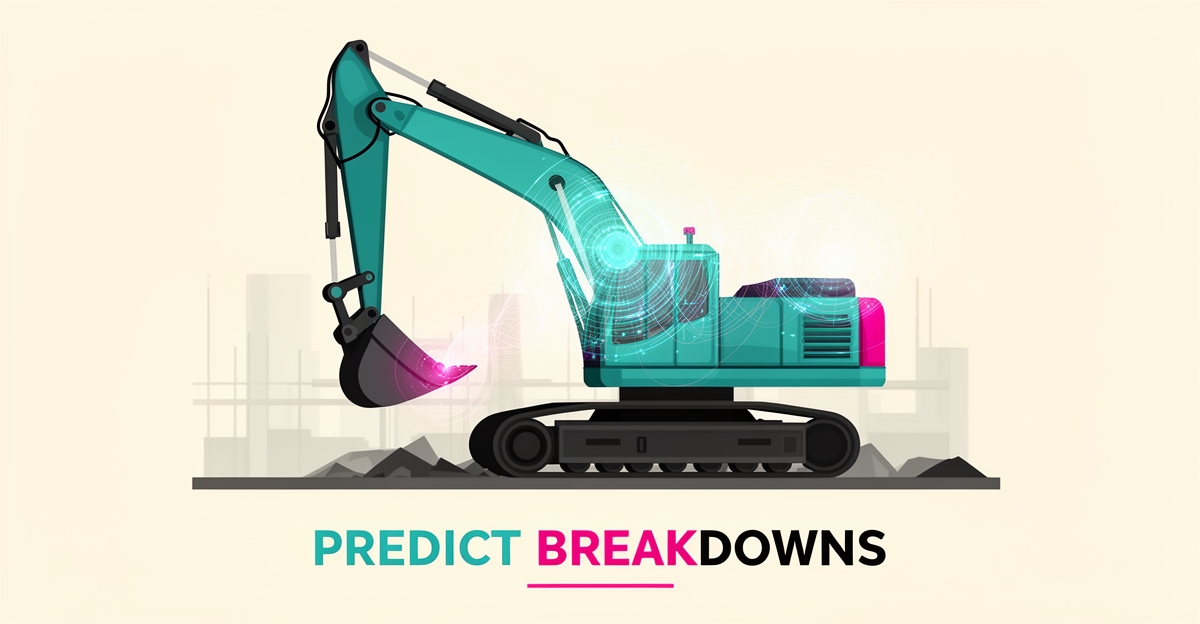
AI for Equipment Maintenance: How Excavation Firms Can Predict Breakdowns
Key Facts
- Unplanned downtime costs industries an estimated $50 billion annually across sectors according to Deloitte research
- Poor maintenance strategies reduce an asset's productive capacity by 5% to 20% over time per Deloitte analysis
- Predictive maintenance typically cuts unplanned downtime by 30-50% and lowers maintenance costs by 10-15% per industry analysis
- Condition-based maintenance improves capital efficiency by 15-30% compared to calendar-based schedules per infrastructure monitoring research
- Trench collapses kill an average of two workers every month in excavation work per construction risk research
- Predictive maintenance eliminates 15-25% of unnecessary preventive work while preventing failures per industry research
- Starting with a pilot machine allows firms to validate predictive models before scaling across the fleet per industry best practices
Hire a team member that works 24/7 — for less than a part-time wage.
AI receptionists, SDRs, dispatchers and 99+ roles. Trained on your business, fully managed.
Not sure where to start? Ask our AI planner
The Real Cost of Waiting for Your Excavator to Break
When an excavator dies mid-job, the meter is already running. Across industries, unplanned downtime costs an estimated $50 billion every year, according to Deloitte research, and heavy equipment-intensive businesses like excavation firms feel that number in their bones every time a machine goes dark on a critical dig.
The hidden damage runs deeper than a single stalled project. Poor maintenance strategies can quietly strip 5% to 20% of an asset's productive capacity, the same Deloitte analysis found. That means a fleet might be underperforming long before anything actually breaks, burning fuel, hours, and bid margins on machines operating below their potential.
Most excavation firms still rely on one of two strategies, and both leave money on the table:
- Reactive maintenance waits for failure, which research consistently identifies as the most disruptive and expensive outcome, catastrophic damage, emergency repairs, and jobs sitting idle.
- Calendar-based maintenance services machines on fixed intervals regardless of condition, replacing components that are still healthy while others fail between service dates.
- Neither approach uses the data your equipment is already generating, engine hours, load patterns, and hydraulic behavior that signal trouble weeks in advance.
The stakes aren't purely financial. Excavation remains one of construction's most dangerous trades, with trench collapses killing an average of two workers every month, according to construction risk research. Equipment integrity is a frontline safety control, a hydraulic failure or unexpected machine fault near an open trench can turn a maintenance problem into a human tragedy.
This is why guessing is no longer a viable maintenance strategy. Predictive maintenance, powered by AI models that analyze engine hours, usage patterns, and service history, shifts the question from "when will it break?" to "what is this machine telling us today?" Firms that implement it properly typically see 30-50% less unplanned downtime and 10-15% lower maintenance costs, per industry analysis, with condition-based servicing also delivering 15-30% better capital efficiency than calendar-based schedules, according to infrastructure monitoring research.
The gap between firms that predict failures and firms that react to them is widening. The right build starts with the one workflow that costs you the most, for most excavation contractors, that's equipment maintenance and dispatch, and rebuilds it around models trained on your machines, your job sites, and your service records, so predictions reflect how your fleet actually works, not an industry average. For excavation contractors bidding against tighter margins and tighter schedules, knowing which excavator needs attention next week isn't a luxury anymore. It's the difference between a planned service visit and a crane sitting idle while the crew waits.
How AI Predicts Failures From Engine Hours, Sensors, and Service History
Predictive maintenance transforms how excavation firms manage equipment health by turning raw data into actionable insights. Rather than waiting for breakdowns or replacing parts on fixed schedules, AI models analyze continuous streams of sensor data, vibration, temperature, pressure, alongside engine hours, control system logs, and historical service records to detect early signs of deterioration. This approach distinguishes normal operational variation from genuine wear, enabling maintenance only when truly needed. Industry research shows this method typically reduces unplanned downtime by 30-50% while cutting maintenance costs by 10-15% and eliminating 15-25% of unnecessary preventive work.
The effectiveness of predictive maintenance hinges on integrating diverse data streams into a unified analytical framework. Real-time sensor inputs provide immediate feedback on equipment stress, while machine data from PLCs and control systems contextualize readings under specific loads or operating modes. Historical failure patterns and maintenance logs train ML models to recognize precursors to failure, such as abnormal vibration signatures preceding bearing wear or pressure drops indicating hydraulic leaks. By fusing these sources, AI systems build a dynamic picture of asset health that evolves with usage, far surpassing the limitations of calendar-based or hour-based schedules. Deloitte notes that poor maintenance strategies can reduce an asset’s productive capacity by 5% to 20%, making condition-based monitoring essential for maximizing uptime in high-utilization fleets.
Compared to reactive or scheduled approaches, predictive maintenance delivers superior reliability and cost efficiency. Reactive maintenance invites catastrophic failures and expensive emergency repairs, while preventive maintenance often replaces components still in serviceable condition, increasing labor and parts costs without reducing risk. Condition-based strategies, by contrast, optimize intervention timing, addressing issues just before failure likelihood rises, but not so early that usable life is wasted. Infrastructure-focused studies confirm that shifting from calendar-based to condition-based maintenance improves capital efficiency by 15-30%, directly benefiting excavation firms where equipment utilization drives project timelines and profitability. If maintenance is the workflow bleeding the most cash in your operation, a fixed-price AI Workflow Build rebuilds it in phases around your actual telematics and service data, so predictions reflect real-world operating conditions, not generic averages.
Making the Data Work: Integration With Your CMMS, ERP, and Telematics
For excavation firms, the real challenge isn't collecting equipment data, it's making that data actionable within existing operational workflows. Most contractors already capture critical inputs like engine hours, hydraulic pressure readings, undercarriage wear metrics, and service logs through telematics and maintenance records. The gap lies in structuring this operational technology (OT) data so it flows seamlessly into CMMS and ERP systems where maintenance decisions are actually made.
Without proper integration, predictive models remain isolated experiments rather than operational tools. According to industry research, successful predictive maintenance requires aligning data sources with enterprise platforms to support maintenance planning instead of creating parallel workflows. This means transforming raw sensor feeds into standardized formats that trigger work orders in systems like IBM Maximo or SAP PM when failure probabilities exceed thresholds.
The make-or-break factor is establishing robust MLOps practices that keep models accurate as equipment ages and operating conditions change. Firms need continuous monitoring of prediction accuracy, automated retraining pipelines using new failure data, and governance frameworks that validate model outputs before they influence maintenance schedules. As noted by implementation guides, starting with a pilot asset allows teams to refine data integration and model tuning before scaling across the fleet, turning existing maintenance logs and telematics into a foundation that prevents a large share of unplanned downtime when executed properly. Deloitte analysis confirms this approach delivers 10-15% lower maintenance costs by ensuring models adapt to real-world wear patterns rather than degrading in accuracy over time. When maintenance, dispatch, parts ordering, and crew scheduling all need to share the same picture of fleet health, that's where an AI Operating System earns its keep: one connected layer built in phases, owned outright, connecting OT data to your enterprise systems so predictive insights drive maintenance actions without disrupting established workflows.
A Practical Rollout: Start With One Pilot Machine, Then Scale the Fleet
Excavation firms can begin their predictive maintenance journey by focusing on a single pilot machine rather than attempting a fleet-wide rollout from the start. This approach allows teams to validate data collection methods, refine analytics models, and build internal confidence without overwhelming resources. Starting small also reduces risk while providing tangible insights into how AI-driven forecasts align with real-world maintenance schedules and dispatch workflows. Industry best practices recommend this phased strategy to ensure scalability and long-term success.
The first step involves assessing current maintenance practices and identifying what data is already being collected, such as engine hours, service logs, and usage patterns, from the chosen asset. Many excavation firms already track basic operational metrics through telematics or manual logs, which can serve as a foundation for predictive modeling. Gaps in data quality or frequency should be addressed early, as predictive maintenance systems depend on consistent, reliable inputs to accurately forecast failure timing. Once data streams are stabilized, machine learning analytics can be deployed to analyze trends and predict when components are likely to fail.
After validating the pilot, measured by reduced unplanned downtime and more efficient maintenance scheduling, firms can scale the system across their fleet. This expansion should prioritize assets with similar usage profiles or critical path roles in ongoing projects. Importantly, building custom forecasting models on field-specific data, rather than relying on generic software outputs, ensures predictions reflect real excavation conditions and integrate seamlessly with existing workflows. As noted in industry analyses, this approach avoids vendor lock-in while delivering maintenance insights that directly support crew scheduling, parts ordering, and job planning, ultimately increasing asset productive capacity by up to 15-30%. Infrastructure-focused implementations have shown similar gains when predictive systems are tailored to local operating environments and integrated with enterprise platforms like CMMS and ERP tools. AIQ Labs builds these systems so you own them outright, built in milestones, no ongoing subscription dependencies, with payment models laid out plainly at aiqlabs.ai/pricing.
Still paying for 10+ subscriptions that don’t talk to each other?
We build custom AI systems you own outright. No vendor lock-in. Full control.
Not sure where to start? Ask our AI planner
Frequently Asked Questions
What is predictive maintenance and how does it differ from reactive or scheduled maintenance?
How much can predictive maintenance reduce unplanned downtime for excavation firms?
What cost savings can excavation firms expect from implementing AI-powered predictive maintenance?
Is predictive maintenance only about saving money, or does it improve safety on excavation sites?
Do I need to replace my existing telematics or CMMS systems to use predictive maintenance?
How should an excavation firm get started with predictive maintenance without overwhelming resources?
Stop Guessing, Start Digging: Your Fleet Is Already Talking
Your excavators have been telling you everything you need to know, engine hours, hydraulic behavior, service history, you just haven't had a system listening. As we've covered, predictive maintenance turns that existing data into early warnings, typically cutting unplanned downtime by 30-50% and maintenance costs by 10-15%, while condition-based servicing improves capital efficiency by 15-30% over calendar-based schedules. The path forward doesn't require a fleet-wide overhaul: start with one pilot machine, stabilize your data streams, validate the model against real-world results, then scale to the assets that matter most on critical-path jobs. The key is building forecasting models trained on your machines and your job sites, not generic industry averages, and integrating them with the CMMS and ERP systems where maintenance decisions actually happen. AIQ Labs builds these systems so you own them outright, in milestones, with no subscription lock-in. Want to know what your data could predict next week? Take the two-minute Fit Check at aiqlabs.ai/apply, then book a free 30-minute strategy call, a real working session with an AI engineer to map your biggest downtime risks. If there's no clear win, we'll tell you that too.
Make AI your competitive advantage — not just another tool.
Strategy, implementation and ongoing optimization. One partner, end to end.
Not sure where to start? Ask our AI planner