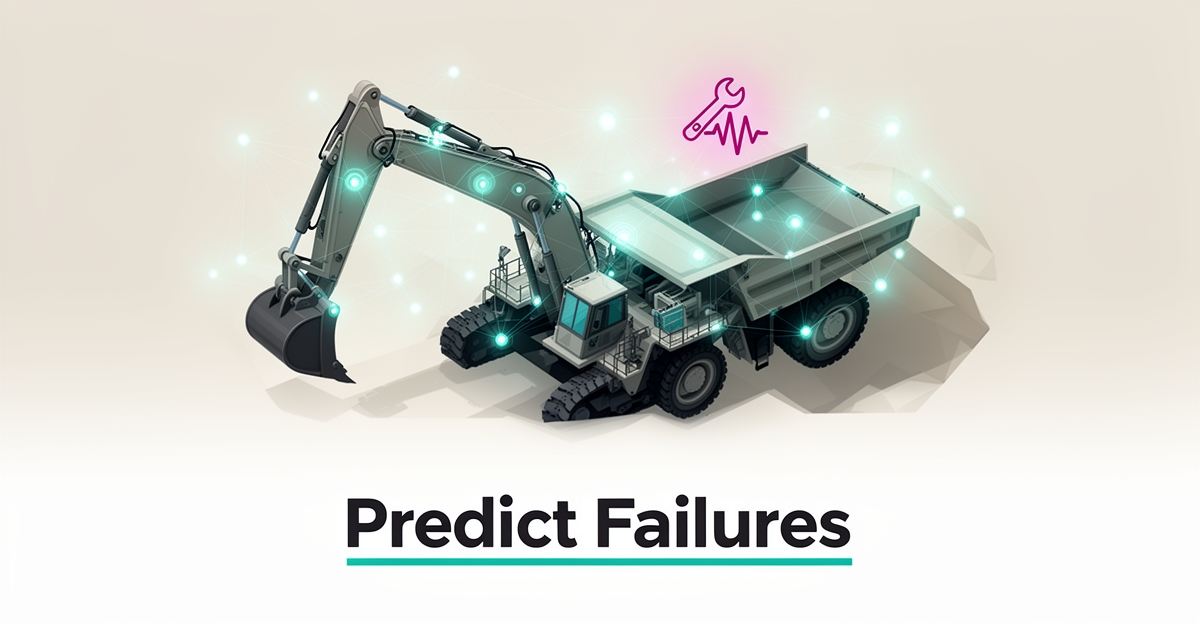
AI for Equipment Maintenance: How Quarry Operators Can Predict Failures Before They Happen
Key Facts
- Industry research consistently finds predictive maintenance delivers large reductions in downtime and meaningful cost savings versus reactive strategies
- AI models can often predict equipment failures well before they become critical, though accuracy varies by asset and data quality
- Aggregates operations using predictive systems typically report less idle time and higher production output
- Predictive maintenance shifts operations from cost control to uptime assurance
- AI detects subtle degradation signs humans miss, enabling planned work windows instead of emergency repairs
Hire a team member that works 24/7 — for less than a part-time wage.
AI receptionists, SDRs, dispatchers and 99+ roles. Trained on your business, fully managed.
Not sure where to start? Ask our AI planner
The Cost of Unplanned Downtime in Quarry Operations
An unexpected crusher failure at 2 a.m. doesn't just stop one machine, it stops the entire quarry. When loaders, haul trucks and conveyors sit idle, the financial bleed starts immediately and compounds with every hour.
Unplanned downtime forces reactive maintenance that is expensive by design. Operators wait for failure, dispatch crews on emergency calls, and pay premium rates for parts and labor. That reactive cycle also creates safety risks and accelerates wear on aging assets.
The cost gap between reactive and predictive approaches is stark. Industry research on predictive maintenance consistently finds that organizations using these approaches see dramatically less downtime and meaningful cost savings compared with reactive strategies — with AI models often predicting equipment failures well in advance of critical failure. Exact figures vary by asset type and data quality, but the direction is consistent across studies.
In aggregates and quarry operations, the production impact is even more visible. Aggregates industry data shows meaningful reductions in idle time and increases in production output when predictive systems are applied. Studies of AI in equipment reliability similarly report substantial reductions in unplanned downtime alongside gains in asset uptime.
The losses from a single failure cascade across the operation:
- Lost tonnage and missed customer deliveries that erode revenue and reputation
- Emergency repair premiums, expedited parts shipping, and overtime labor
- Secondary damage to downstream equipment from abnormal loads or debris
- Idle crews and haul trucks that continue to burn cost while producing nothing
Predictive maintenance shifts the conversation from cost control to uptime assurance. By analyzing sensor data and historical patterns, AI helps organizations extend asset life and avoid costly emergency repairs.
That shift requires treating predictive maintenance as a data discipline, not a dashboard feature. As AI analyzes equipment performance data to predict maintenance needs, the system can flag subtle degradation humans miss and trigger planned work during scheduled windows.
AIQ Labs builds automated monitoring systems that integrate with existing machinery logs and generate alerts, reducing unplanned downtime and repair expenses. For operators who want to start with the single workflow that bleeds the most, an AI Workflow Build rebuilds it at a fixed price, in phases. The approach aligns with how modern quarries are moving toward autonomous reliability that optimizes uptime while reducing energy waste.
How AI-Powered Predictive Maintenance Works in Heavy Equipment
Imagine your quarry's heavy machinery alerting you to potential failures before they disrupt operations. That is the promise of AI-powered predictive maintenance, a technology that is transforming how industries manage equipment health. By leveraging machine learning and real-time data, AI can surface failure risks early enough to act on them — often days or weeks before a component would fail.
At the core of this technology are sensors embedded in machinery, continuously collecting data on performance metrics such as temperature, vibration, and pressure. This data is then analyzed using machine learning algorithms that identify patterns and anomalies indicative of potential failures. AI can detect subtle signs of wear that traditional inspections often miss, leading to meaningful reductions in unplanned downtime and gains in asset uptime.
The process begins with the collection of sensor data, which is then fed into a machine learning model. This model learns from historical data to recognize the early signs of equipment degradation. For instance, a slight increase in vibration frequency might signal a bearing issue long before it becomes critical. By addressing these issues proactively, companies can avoid the high costs and safety risks associated with reactive maintenance.
AI-powered predictive maintenance is not limited to a single industry. It has found applications in manufacturing, mining, and quarrying, where it helps optimize operations and improve safety. Studies in the aggregates industry have found that predictive maintenance can lead to notable reductions in idle time and significant increases in production output.
Implementing AI-driven predictive maintenance involves several key steps:
- Collect and analyze sensor data from equipment.
- Use machine learning algorithms to predict equipment failures.
- Implement predictive maintenance strategies to prevent failures.
- Monitor and evaluate the effectiveness of predictive maintenance.
AIQ Labs specializes in building automated monitoring systems that integrate with existing machinery logs. These systems generate alerts and provide actionable insights, helping businesses reduce unplanned downtime and repair expenses. For operations that need monitoring running as a managed service from day one, AI Employees can handle dispatch, alerting, and follow-up around the clock at a fraction of the cost of a human hire. By leveraging this kind of expertise, companies can transform their maintenance strategies and achieve significant operational efficiencies.
In conclusion, AI-powered predictive maintenance offers a proactive approach to equipment management, enabling businesses to predict and prevent failures before they occur. With its ability to analyze vast amounts of data and detect early signs of wear, AI is changing the way industries maintain their critical assets.
Implementing AI Monitoring Systems in Quarry Environments
Rolling out an AI monitoring system doesn't require shutting down your quarry operations or replacing your existing machinery. With a phased approach, operators can layer predictive intelligence onto current workflows and start seeing results within weeks.
The first step is establishing a reliable data foundation. Modern systems ingest sensor readings from crushers, conveyors, and screening equipment, then combine those inputs with historical maintenance logs to identify patterns humans might miss. Organizations that implement these systems typically see substantial reductions in downtime and reliable early warning of developing failures.
Once data flows consistently, the focus shifts to integration and alert configuration. A well-designed system connects directly to your existing machinery logs and ERP platforms without disrupting daily operations. This creates a continuous feedback loop where AI analyzes performance metrics and generates actionable alerts when thresholds are breached. The guiding principle: predictive maintenance works when AI, sensors, and operations are designed as one loop.
Successful deployment typically follows these phases:
- Audit current sensor coverage and data collection points across critical assets
- Integrate AI monitoring with existing maintenance management systems
- Configure alert thresholds based on equipment-specific failure patterns
- Train maintenance teams on interpreting AI-generated insights
- Establish feedback loops to refine prediction accuracy over time
The operational impact extends beyond preventing breakdowns. Data from aggregate operations shows that AI-driven monitoring delivers meaningful reductions in idle time and increases in production output, while asset reliability studies report substantial cuts in unplanned downtime when these systems are properly implemented.
AIQ Labs builds these monitoring systems to integrate with your current machinery logs and operational software. Rather than forcing you to rip and replace existing infrastructure, we architect solutions that pull data from your current sensors and maintenance records, then layer predictive analytics on top. For operators ready to connect monitoring, scheduling, dispatch, and reporting into one system, an AI Operating System provides that connected layer — built in phases and owned outright.
The key is starting with your highest-value assets—typically primary crushers and critical conveyance systems—then expanding coverage as the system proves its value. With the right integration strategy, you gain predictive intelligence without the operational chaos of a complete system overhaul.
Still paying for 10+ subscriptions that don’t talk to each other?
We build custom AI systems you own outright. No vendor lock-in. Full control.
Not sure where to start? Ask our AI planner
Frequently Asked Questions
How much downtime can AI predictive maintenance actually save in a quarry?
Do I need to replace all my existing crusher and conveyor equipment to use AI monitoring?
What kind of data does AI need to predict failures before they happen?
Is predictive maintenance really better than just fixing things when they break?
How quickly can we see results after implementing an AI monitoring system?
What should the first steps be to get AI predictive maintenance running?
From Reactive Repairs to Autonomous Reliability
The math is clear: quarries running predictive maintenance see far less downtime and meaningful cost savings compared to reactive strategies, while aggregates operators report significant gains in production output. But the real shift isn't in the numbers — it's in the mindset. Moving from emergency repairs to planned interventions transforms maintenance from a cost center into an uptime guarantee. AIQ Labs builds automated monitoring systems that layer onto your existing sensors and machinery logs, delivering alerts without the rip-and-replace disruption. The phased approach means your highest-value assets — primary crushers, critical conveyors — start generating predictive intelligence within weeks, not quarters. Your maintenance crews stop chasing breakdowns and start optimizing asset life. The technology is proven, the integration path is clear, and the first win is closer than you think. Take the two-minute Fit Check at aiqlabs.ai/apply and book a free 30-minute strategy call to map exactly where predictive monitoring pays off fastest in your operation.
Make AI your competitive advantage — not just another tool.
Strategy, implementation and ongoing optimization. One partner, end to end.
Not sure where to start? Ask our AI planner