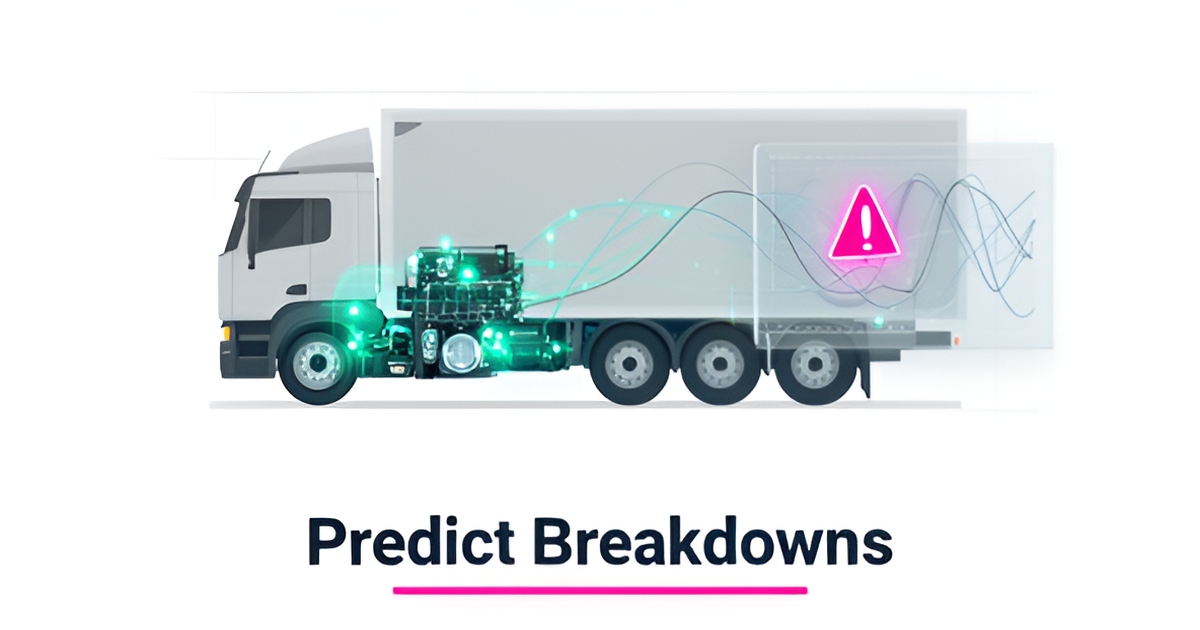
AI for Fleet Maintenance: How Repair Shops Can Use AI to Predict Breakdowns in Commercial Vehicles
Key Facts
- Industry reporting on AI predictive maintenance commonly cites meaningful reductions in unplanned outages and maintenance costs as AI adoption in industrial operations matures
- Fleets using AI-powered predictive maintenance typically report fewer unplanned failures and longer asset lifespans, though exact figures vary by fleet and implementation
- Proactive servicing shifts work from emergency repairs to scheduled maintenance, which costs less and keeps service bays predictable
- AI models analyze sensor data, maintenance logs, and usage patterns to flag failure points before they occur—enabling repairs on the shop's terms rather than the road's
- Unplanned mechanical failures raise safety and liability risks for drivers, cargo, and other road users
Hire a team member that works 24/7 — for less than a part-time wage.
AI receptionists, SDRs, dispatchers and 99+ roles. Trained on your business, fully managed.
Not sure where to start? Ask our AI planner
The Cost of Reactive Maintenance in Commercial Fleets
Every unplanned breakdown on a commercial vehicle sets off a chain reaction: a towed truck, a missed delivery, a scramble for parts, and a repair bill that dwarfs what scheduled service would have cost. For repair shops and fleet operators, reactive maintenance isn't just inconvenient—it's one of the most expensive ways to run a fleet.
The financial case against waiting for failure is well documented. Industry reporting on AI-driven predictive maintenance consistently points to fewer unplanned outages and lower maintenance costs, with commonly cited figures in the range of a 20% reduction in unplanned outages and a 25% cut in maintenance spend. Those gains come from catching failure points early—before a worn component takes an entire vehicle out of service.
The contrast between the two approaches is stark:
- Predictive maintenance delivers improved vehicle uptime, reduced maintenance costs, and enhanced safety
- Reactive maintenance carries higher long-term repair costs and reduced vehicle uptime
- Unplanned failures increase safety risks for drivers and other road users
- Reactive approaches offer lower upfront costs but compound expenses over the asset's life
Downtime is only part of the damage. When equipment fails unexpectedly, the consequences extend far beyond the repair invoice—missed delivery windows, regulatory exposure, and liability concerns that a proactive service schedule would have prevented. For heavy-duty commercial vehicles, a breakdown on the road is rarely just a mechanical event.
The compounding effect on asset value is equally significant. Fleets using AI-powered predictive maintenance commonly report substantially fewer unplanned failures and asset lifespans extended by roughly 30%, meaning each vehicle stays productive longer before replacement is needed. Exact numbers vary by fleet and implementation, but the direction is consistent: predicting failure is cheaper than absorbing it.
The root problem with reactive maintenance is that it treats every vehicle the same until something breaks. AI changes that equation by analyzing vehicle usage, maintenance logs, and sensor data to flag failure points before they occur. Predictive systems built specifically for heavy-duty fleets—like those AIQ Labs builds for repair shops—turn historical and real-time data into actionable service schedules, letting shops fix problems on their terms rather than the road's.
As practitioners in the field often put it, the real value of predictive maintenance is not in predicting failures, but in making the fix easy. For shops still absorbing the cost of every surprise breakdown, that shift—from reacting to anticipating—is where the savings begin.
How AI Predicts Vehicle Failures Before They Happen
Picture a truck that tells you its water pump will fail in three weeks—before it leaves you stranded on the highway. That's the promise of AI-driven predictive maintenance, and as of late 2026 it's becoming a competitive necessity for repair shops serving commercial fleets.
The process starts with data. Modern commercial vehicles generate a constant stream of information from onboard sensors tracking engine temperature, vibration, brake wear, and fluid conditions. Machine learning models also ingest maintenance logs and vehicle usage patterns, cross-referencing today's readings against thousands of historical failure scenarios. When the system detects a pattern that preceded a breakdown in the past, it flags the component for inspection—often weeks before a human technician would notice anything wrong.
The results are consistent across industry reporting: fleets using AI predictive maintenance typically report substantially fewer unplanned failures, with asset lifespans extending by roughly 30%—meaning vehicles stay productive longer before replacement. Exact figures depend on data quality and fleet composition, but the pattern holds.
Additional findings reinforce the financial case:
- Industry reviews of fleet management software commonly document meaningful reductions in unplanned outages alongside lower maintenance costs.
- Separate fleet budgeting analyses report even larger failure reductions in some deployments, though results vary widely by implementation.
- Proactive servicing shifts work from emergency repairs to scheduled maintenance, which costs less and keeps bays predictable.
For repair shops, this changes the service model entirely. Instead of waiting for a breakdown call, shops can reach out to fleet customers with a specific recommendation: this vehicle's brake system shows early degradation patterns, and scheduling service now avoids a roadside failure next month. That proactive posture builds loyalty and smooths shop workload.
The prediction is only half the equation—the other half is turning that insight into a scheduled, efficient repair. As experts in the field have observed, AI is not a replacement for human judgment but a tool to augment it: the technician still makes the call, but now with data-backed foresight.
This is where specialized expertise matters. AIQ Labs builds predictive systems tailored specifically for heavy-duty fleets—whether as a standalone workflow build that rebuilds your highest-cost maintenance process, or as part of a broader AI operating system connecting scheduling, parts, and customer communication in one layer you own outright.
The shops that adopt this approach first will be the ones fleet managers trust with their most critical assets.
Implementing AI Predictive Maintenance in Repair Shops
Implementing AI predictive maintenance in repair shops begins with consolidating data from vehicle sensors, maintenance logs, and usage patterns into a unified system. This foundational step enables AI models to identify subtle patterns that precede mechanical failures, turning reactive repairs into proactive interventions. Shops must ensure data accuracy and consistency, as poor-quality inputs directly undermine prediction reliability—a challenge frequently highlighted in industry discussions on implementation.
Once data is integrated, repair shops can develop or deploy machine learning models trained to recognize failure precursors specific to commercial vehicle components like engines, brakes, and transmissions. These models analyze historical and real-time data to forecast issues with measurable impact: fleets using AI predictive maintenance typically report substantially fewer unplanned failures and longer asset lifespans, alongside lower overall maintenance costs and improved shop efficiency.
To operationalize predictions, shops should establish proactive service scheduling triggered by AI-generated risk scores. This involves creating workflows where high-risk vehicles are prioritized for inspection, parts are pre-stocked based on predicted needs, and technicians receive detailed failure mode insights. Continuous monitoring and model retraining ensure the system adapts to evolving vehicle conditions and maintenance practices. Overcoming integration challenges with existing shop management software is best handled through phased implementation with a partner who understands both the technical and operational realities.
- Centralize sensor, maintenance, and usage data
- Train or deploy AI models for failure prediction
- Schedule services based on AI risk scores
- Monitor performance and refine models regularly
- Address integration challenges through phased adoption
AIQ Labs supports repair shops through this transformation with a straightforward path: start monthly to prove value, build in milestones, and own the system outright when it's core to the business—no vendor lock-in. By focusing on practical implementation—from data preparation to actionable maintenance triggers—shops can harness AI to minimize breakdowns, extend vehicle life, and deliver more reliable service to fleet operators. If that sounds like your shop, the two-minute Fit Check is the fastest way to find out.
Still paying for 10+ subscriptions that don’t talk to each other?
We build custom AI systems you own outright. No vendor lock-in. Full control.
Not sure where to start? Ask our AI planner
Frequently Asked Questions
How much money can AI predictive maintenance actually save a commercial fleet?
How does AI know a truck part is going to fail before it breaks down?
Is predictive maintenance really better than just fixing trucks when they break?
What do repair shops need to do to start using AI predictive maintenance?
Will AI replace the technicians in my shop?
How long do vehicles last with AI-powered predictive maintenance?
Turning Breakdowns into Business Advantage
The evidence is consistent: AI-driven predictive maintenance helps fleets cut unplanned failures, extend asset lifespans, and reduce maintenance costs through proactive servicing. For repair shops, this shift from reactive firefighting to scheduled interventions means smoother workflows, stronger customer trust, and measurable improvements in uptime and safety—all rooted in data already flowing from modern vehicles. The real opportunity lies in acting on these insights before the next breakdown disrupts a delivery or strains a budget. To explore how predictive maintenance can be tailored to your shop's specific workflows and fleet partners, take the two-minute Fit Check and book a free 30-minute strategy call to map your highest-impact opportunity. Shops that move first don't just reduce costly surprises—they build the reliability that keeps fleets coming back.
Make AI your competitive advantage — not just another tool.
Strategy, implementation and ongoing optimization. One partner, end to end.
Not sure where to start? Ask our AI planner