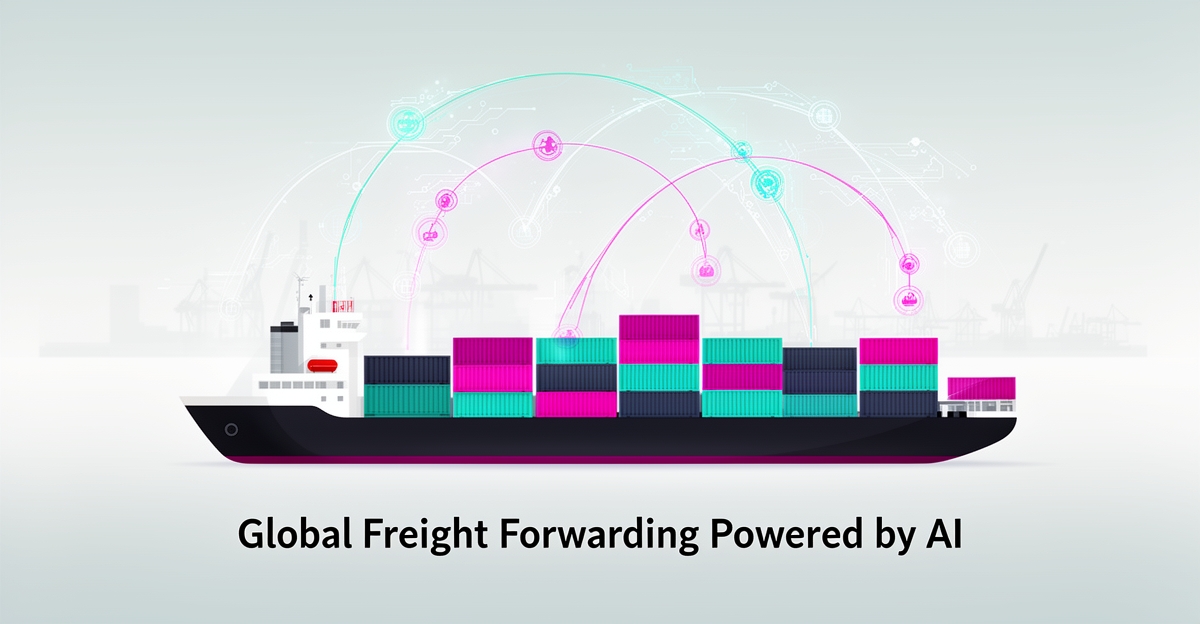
AI for Freight Forwarding: A Complete Guide for SMBs
Key Facts
- Early AI adopters cut logistics costs by 15% and boost service levels by 65% (Sedna).
- 60% of freight forwarder emails are irrelevant—AI filters them out (Sedna).
- AI document extraction achieves 97.3% accuracy in just 5–15 days (Mirage Metrics).
- AI quoting tools double win rates and cut cycle times by 80% (Tely.ai).
- Project44 predicts final-mile ETAs with 85%+ accuracy (Mirage Metrics).
- Raft.ai users report $150M+ in savings from AI automation (Raft.ai).
- SMBs can reduce manual document processing by 50% with AI tools (Tely.ai).
What if you could hire a team member that works 24/7 for $599/month?
AI Receptionists, SDRs, Dispatchers, and 99+ roles. Fully trained. Fully managed. Zero sick days.
Introduction: The AI Imperative in Modern Freight Forwarding
Freight forwarding is no longer just about moving goods—it’s about predicting disruptions before they happen, eliminating manual bottlenecks, and turning data into competitive advantage. For small and mid-sized freight forwarders (SMBs), AI isn’t optional—it’s the difference between surviving and thriving in an industry where 65% of early adopters report a 65% increase in service levels while cutting logistics costs by 15% (source: Sedna’s AI in Freight Forwarding report).
The problem? Many SMBs still treat AI as a "nice-to-have" rather than a strategic necessity. They underestimate how quickly document processing, email overload, and quoting inefficiencies erode profitability—costing them $50 billion annually in avoidable losses by 2026 (source: Tely.ai’s AI in Logistics report).
This guide cuts through the hype to show how SMB freight forwarders can adopt AI without overhauling their operations—starting with low-risk pilots, scaling to full automation, and ultimately outmaneuvering larger competitors with smarter data and faster execution.
Freight forwarders process 8–15 pages of documentation per shipment, with manual entry taking 5–15 minutes per file—and 2–5% error rates leading to customs holds, carrier disputes, and delayed payments (source: Mirage Metrics).
- Example: A mid-sized forwarder handling 500 shipments/month spends 25–75 hours weekly on document processing alone.
- AI fix: Document extraction tools (like CargoScribe) achieve 97.3% first-pass accuracy in 5–15 days—zero coding required.
The math is brutal: ✅ $150M+ in savings reported by Raft.ai users (source: Raft.ai) ✅ 80% faster quoting with AI-driven tools (source: Tely.ai) ✅ 60% of freight emails are irrelevant—AI filters them out (source: Sedna)
Without AI, you’re paying for: ❌ Manual labor that could be redirected to high-value tasks ❌ Missed SLAs due to data errors and delays ❌ Lost revenue from inefficient quoting and routing
AI isn’t just about automating tasks—it’s about turning freight forwarding into a strategic service.
What separates leaders today? ✔ Visibility – Knowing where shipments are before delays happen ✔ Insight – Predicting port congestion, fuel surges, or carrier reliability ✔ Foresight – Helping customers avoid disruptions before they occur
"Moving freight efficiently will always matter. That’s the price of admission. What separates leaders today is their ability to provide visibility, insight, and foresight." — Adrian Gonzalez, Adelante SCM (source: TMCnet)
Example: Project44 uses AI to predict final-mile ETAs with 85%+ accuracy, giving forwarders 24–48 hours’ notice of exceptions—preventing last-minute customer panic (source: Mirage Metrics).
While enterprise forwarders invest in full-stack automation, SMBs risk being left in the dust because they: ✅ Assume AI is too complex (it’s not—document extraction takes 5–15 days) ✅ Don’t see ROI fast enough (but email management alone cuts irrelevant emails by 80%) ✅ Fear vendor lock-in (but custom-built AI systems—like those from AIQ Labs—eliminate this risk)
The reality? - 75% of SMBs still rely on manual processes for document handling and quoting (source: Wisor.ai). - AI-driven quoting tools double win rates and cut cycle times by 80% (source: Tely.ai).
The good news? You don’t need a $1M budget to start. Single-function AI tools (like CargoScribe for documents or Sedna for emails) deliver immediate ROI before scaling.
This isn’t just another AI sales pitch. We’ll show you exactly how to: 1. Assess your AI readiness (without jargon or overpromising) 2. Start with a 5–15-day pilot (document extraction or email management) 3. Scale to full automation (agentic AI for quoting, routing, and visibility) 4. Avoid vendor traps (how to own your AI systems, not rent them) 5. Measure real ROI (not just "savings"—actual revenue growth)
By the end, you’ll have a clear roadmap—whether you’re a 5-person freight forwarder or a mid-sized operation with 500+ shipments/month.
Most SMBs overcomplicate AI adoption. The fastest wins come from two high-impact, low-effort pilots: 1. AI Document Extraction (eliminates 2–5% errors and 5–15 min/file processing) 2. AI Email Management (cuts 60% irrelevant emails, freeing up staff for high-value work)
We’ll dive into both in the next section—plus real-world examples of SMBs who’ve cut costs by 50% in under 30 days.
Transition: Before jumping into tools, let’s clarify: Not all AI is created equal. Some solutions are point tools (good for quick fixes), while others are full-stack platforms (built for scaling). We’ll help you pick the right entry point based on your shipment volume and pain points.
Core Challenges: Where SMB Freight Forwarders Struggle Most
Key Operational Pain Points
- Manual Document Processing: Time-consuming (5-15 min/file) and error-prone (2-5% error rates)
- Irrelevant Email Volume: 60% of emails are not relevant, leading to inefficiencies and missed critical communications
- Lack of Real-Time Visibility: Delays in tracking shipments and anticipating exceptions
- Inefficient Quoting Processes: Time-consuming and prone to human error, leading to slower turnaround and reduced win rates
AI Solutions for SMB Freight Forwarders
- AI Document Extraction
- Automates manual data entry, reducing errors and processing time (5-15 days deployment)
- Handles 30+ freight-specific fields with 97.3% first-pass accuracy (CargoScribe by Mirage Metrics)
- AI Email Management
- Tags, triages, and extracts data from irrelevant emails, preventing missed SLAs and ensuring compliance
- Reduces internal operations emails by up to 80% (NORDEN)
- AI Visibility & Predictive Analytics
- Predicts final mile ETA with 85%+ accuracy and flags exceptions 24-48 hours in advance (project44)
- Optimizes routes in real-time based on weather, traffic, and other dynamic factors
- AI Quoting & Sales Performance
- Generates competitive quotes in seconds by analyzing over 100 parameters (AI-driven quoting tools)
- Doubles quote win rates and reduces cycle time from bid to agreement by 80%
AI Implementation Strategy for SMB Freight Forwarders
- Prioritize Document Extraction as the Initial Pilot Project
- Offers the fastest ROI with deployments taking only 5-15 days
- Reduces manual processing time and errors, improving overall operational efficiency
- Implement AI Email Management to Recover Productivity
- Addresses the high volume of irrelevant emails, preventing missed critical communications
- Allows staff to refocus on core tasks and improve customer service
- Adopt Agentic AI for Complex Operational Workflows
- Handles complex tasks like navigating customer SOPs and tracking missing ETAs
- Requires a centralized data foundation and supports the shift from reactive to predictive operations
- Select Tools Based on Volume and Integration Needs
- Evaluate tools based on shipment volume and assess integration needs with existing TMS/ERP/CRM systems
- Calculate ROI based on reduced manual entry and faster quotes to ensure a positive impact on the bottom line
By addressing these core challenges and implementing AI solutions strategically, SMB freight forwarders can significantly improve operational efficiency, reduce costs, and enhance customer satisfaction.
AI Solutions: Transforming Key Freight Forwarding Workflows
Freight forwarding is no longer just about moving goods—it’s about visibility, insight, and foresight. AI is reshaping how SMBs operate, turning manual bottlenecks into automated efficiencies and reactive logistics into predictive, data-driven decision-making.
For freight forwarders, AI isn’t just a nice-to-have—it’s a competitive necessity. Early adopters report 15% lower logistics costs, 65% higher service levels, and 80% faster quoting cycles—all while reducing errors and freeing up staff for high-value tasks. The question isn’t if you should adopt AI, but where to start and how to scale.
Here’s how AI is transforming five critical freight forwarding workflows, with actionable implementation guidance for SMBs.
Freight documents are a major productivity killer. Each shipment generates 8–15 pages of paperwork, with manual processing taking 5–15 minutes per file—and a 2–5% error rate that leads to customs holds and carrier disputes.
AI-powered document extraction automates the capture, validation, and routing of freight documents, including: - Bill of Lading (BOL) - Commercial Invoices - Packing Lists - Customs Declarations - Insurance Certificates
Key AI Tools in Action: - CargoScribe (Mirage Metrics) achieves 97.3% first-pass accuracy on freight documents, cutting processing time by 50%. - Depot Plus & ENABILL reduced Balmer Lawrie’s manual document handling by 50%. - Deployment time: Just 5–15 days—no custom coding required.
✅ Start with high-volume documents (e.g., BOLs, commercial invoices). ✅ Integrate with your TMS/ERP to auto-populate data into workflows. ✅ Train staff on error handling (AI isn’t perfect—human oversight remains critical). ✅ Scale to customs & compliance docs once the basics are automated.
Result: Fewer delays, fewer disputes, and 20+ hours saved per week on manual data entry.
Freight forwarders receive hundreds of emails daily, but 60% are irrelevant—cluttering inboxes and delaying critical responses.
AI triages, tags, and extracts key data from emails, ensuring: - Relevant messages are flagged for immediate action. - Automated responses handle routine queries (e.g., shipment status updates). - Data extraction pulls shipping details, ETAs, and carrier updates into your systems.
Real-World Impact: - NORDEN reduced internal operations emails by 80% using AI triage. - Sedna customers report 84% higher productivity by eliminating irrelevant messages.
✅ Deploy an AI email organizer (e.g., Sedna, Superhuman AI). ✅ Set up automated responses for common queries (e.g., "Where’s my shipment?"). ✅ Integrate with CRM to log customer interactions and follow-ups. ✅ Use AI to flag exceptions (e.g., delayed shipments, customs issues).
Result: Staff spend less time sifting through emails and more time solving problems.
Manual quoting is time-consuming and error-prone. AI instantly generates competitive quotes by analyzing: - Carrier rates - Lane performance - Fuel costs - Regulatory requirements
- 80% faster cycle time from bid to agreement (vs. manual processes).
- Doubles quote win rates by surfacing hidden discounts and carrier options.
- Analyzes 100+ parameters in seconds (vs. hours for humans).
Example: - Wisor.ai helps forwarders cut quoting time from 30 minutes to 2 minutes. - Raft.ai users report 90% faster task turnaround on complex requests.
âś… Start with a quoting automation tool (e.g., Wisor.ai, Freightos). âś… Integrate with your CRM to track quote history and customer preferences. âś… Use AI to suggest upsells (e.g., insurance, expedited shipping). âś… Monitor win rates to refine pricing strategies.
Result: More quotes sent, more deals closed, and happier customers.
Reactive logistics lead to delays, lost shipments, and unhappy customers. AI predicts disruptions before they occur, enabling: - Real-time ETA adjustments (with 85%+ accuracy). - Automated alerts for delays (24–48 hours in advance). - Optimized routing based on weather, traffic, and carrier performance.
- Project44 predicts final-mile ETAs with 85%+ accuracy.
- FourKites analyzes 400+ carriers to flag congestion risks.
- Starboard integrates 75+ shipping lines for real-time updates.
âś… Start with a visibility platform (e.g., project44, FourKites). âś… Set up automated alerts for delays, customs issues, or route changes. âś… Use predictive analytics to adjust quotes dynamically. âś… Share real-time updates with customers to build trust.
Result: Fewer surprises, happier customers, and higher retention.
Inefficient routing leads to empty miles, higher fuel costs, and delayed deliveries. AI optimizes dispatch and routing by: - Matching loads with carriers in real time. - Predicting delays before they happen. - Reducing "empty miles" by 20–30%.
- E2open optimizes loads to cut empty miles and improve profitability.
- AI freight matching reduces inventory levels by 20–30%.
- Dynamic rerouting adjusts for traffic, weather, and carrier availability.
âś… Start with a dispatch optimization tool (e.g., E2open, Loadsmart). âś… Integrate with GPS tracking for real-time route adjustments. âś… Use AI to suggest carrier alternatives if delays are predicted. âś… Monitor fuel savings to justify ROI.
Result: Lower costs, faster deliveries, and a greener footprint.
| Step | Action | Expected Outcome |
|---|---|---|
| 1. Assess Pain Points | Identify biggest bottlenecks (docs, emails, quoting, visibility). | Clear priorities for AI investment. |
| 2. Start Small | Pilot document extraction or email management (fastest ROI). | Quick wins to build confidence. |
| 3. Scale Strategically | Add quoting automation, then visibility tools. | Faster quotes, fewer delays. |
| 4. Optimize Dispatch | Implement route optimization and freight matching. | Lower costs, happier carriers. |
| 5. Predict & Proact | Use AI analytics for proactive issue resolution. | Higher customer satisfaction. |
🔹 Start with document extraction—it’s the fastest ROI with 5–15 days deployment. 🔹 AI email management recovers 80% of lost productivity from irrelevant messages. 🔹 Automated quoting cuts cycle time by 80% and doubles win rates. 🔹 Visibility tools predict delays 24–48 hours in advance, saving shipments. 🔹 Dispatch optimization reduces fuel costs by 20–30% and cuts empty miles.
The future of freight forwarding isn’t just about moving goods—it’s about moving smarter. AI transforms manual work into automation, guesswork into predictions, and chaos into control.
Next Steps: ✅ Audit your workflows—where is AI most needed? ✅ Pilot a single tool (e.g., document extraction or email triage). ✅ Scale strategically—build on quick wins to full automation.
Ready to transform your operations? Book a free AI audit with AIQ Labs to map your AI roadmap.
Sources: - Sedna: How AI in Freight Forwarding Drives Efficiency - Mirage Metrics: Best AI Tools for Freight Forwarders - Raft.ai: Agentic AI for Freight Forwarding - Wisor.ai: AI Quoting & Visibility
Implementation Roadmap: From Pilot to Full Deployment
AI adoption isn’t a one-size-fits-all process—especially for SMB freight forwarders. While enterprise logistics giants invest millions in AI, small and mid-sized forwarders need a scalable, cost-effective roadmap that starts small, proves value fast, and grows with their business. The key? Pilot first, scale smart.
Here’s how to move from initial experimentation to full-scale AI deployment—without the risk, complexity, or vendor lock-in.
Before building anything, identify where AI will move the needle fastest.
Freight forwarding is drowning in manual, repetitive tasks—document processing, email triage, quoting, and tracking. But not all inefficiencies are created equal. Start with the pain points that cost the most time and money.
- Audit your workflows – Map out your most time-consuming processes (e.g., document handling, email management, quoting).
- Identify high-ROI opportunities – Focus on tasks that:
- Take 5+ hours/week of manual effort
- Have high error rates (e.g., data entry mistakes leading to customs delays)
- Directly impact revenue or customer satisfaction (e.g., slow quoting, missed ETAs)
- Assess data readiness – Do you have structured data (e.g., past shipments, carrier rates) to train AI models? If not, start with document extraction—the fastest way to digitize unstructured data.
According to Mirage Metrics, the top three AI use cases with the fastest ROI for freight forwarders are:
✅ Document extraction (5–15 days to deploy, 97.3% accuracy) ✅ AI email management (80% reduction in irrelevant emails) ✅ Automated quoting (80% faster bid-to-agreement cycle time)
Example: A mid-sized forwarder processing 200 shipments/month could save 10+ hours/week by automating document extraction alone—without hiring new staff or overhauling systems.
Transition: Once you’ve identified your high-impact starting point, the next step is proving AI’s value with a controlled pilot.
Test AI in a single workflow before scaling—minimize risk, maximize learning.
A pilot project should prove AI’s value quickly while keeping costs and complexity low. The goal? Generate measurable results in 30 days or less.
- Pick one workflow – Start with document extraction or email management (lowest barrier to entry).
- Set clear KPIs – Define success before launch:
- Document processing: Reduce manual entry time by 50%+
- Email management: Cut irrelevant emails by 60%+ (as reported by Sedna)
- Quoting: Speed up bid-to-agreement cycle by 80%+ (per Tely.ai)
- Choose the right tool – For SMBs, specialized AI platforms (e.g., CargoScribe, Sedna) work better than enterprise suites (too complex, expensive).
- Train your team – AI augments humans—it doesn’t replace them. Ensure staff knows how to review AI outputs and escalate exceptions.
- Measure & iterate – Track KPIs weekly. Adjust prompts, workflows, or integrations based on real-world performance.
NORDEN, a global shipping company, used AI email management to eliminate 80% of irrelevant internal operations emails—freeing staff to focus on fleet management and customer service instead of inbox triage (Sedna case study).
Key Takeaway: A single AI tool can transform a bottleneck into a competitive advantage—without a massive upfront investment.
Transition: Once your pilot succeeds, the next challenge is scaling AI across departments—without creating new silos.
Expand AI from one workflow to multiple departments—without chaos.
Scaling AI isn’t just about adding more tools—it’s about integrating systems, centralizing data, and ensuring adoption. The biggest risk? Fragmentation. Too many point solutions create new inefficiencies instead of solving them.
- Centralize your data – AI needs a single source of truth (e.g., a unified TMS, ERP, or CRM). Without it, agents can’t make accurate decisions.
- Example: Raft.ai’s "agentic" AI requires structured data to navigate customer SOPs and track missing ETAs (Raft.ai).
- Integrate AI with existing tools – Avoid "AI islands." Ensure new systems sync with your TMS, accounting software, and communication platforms.
- Expand in phases – After document extraction, add:
- Email management (e.g., Sedna)
- Predictive tracking (e.g., project44 for ETAs)
- Automated quoting (e.g., Wisor.ai)
- Train & upskill teams – AI adoption fails without human buy-in. Provide:
- Role-specific training (e.g., ops teams learn document AI, sales teams learn quoting tools)
- Clear escalation paths (when AI can’t handle a task, who takes over?)
- Monitor & optimize – Track:
- Time saved (e.g., hours/week per employee)
- Error reduction (e.g., customs holds, missed deadlines)
- Revenue impact (e.g., faster quotes = more wins)
❌ Too many tools too fast – Start with 1–2 AI solutions, then expand. ❌ Ignoring data quality – Garbage in, garbage out. Clean data = better AI. ❌ Skipping team training – AI won’t work if employees don’t trust it. ❌ No governance – Define who owns AI (IT? Operations?) and how decisions are made.
Example: A forwarder using CargoScribe for documents + project44 for tracking could reduce customs delays by 70% while cutting manual data entry by 50%—but only if the systems talk to each other.
Transition: Once AI is embedded in daily operations, the final step is optimizing for long-term success.
AI isn’t a one-time project—it’s a competitive advantage that evolves with your business.
The freight forwarding industry is shifting from reactive to predictive—and AI is the engine. According to Adelante SCM, the real competitive edge comes from foresight, not just efficiency.
- Continuous improvement – AI models degrade over time if not updated. Schedule quarterly reviews to:
- Retrain models on new data
- Adjust workflows based on changing regulations
- Remove outdated rules
- Expand to new use cases – Once core workflows are automated, explore:
- Predictive analytics (e.g., route optimization, demand forecasting)
- Customer-facing AI (e.g., chatbots for tracking, automated updates)
- Compliance automation (e.g., AI that flags regulatory changes)
- Measure ROI consistently – Track:
- Cost savings (e.g., reduced labor, fewer errors)
- Revenue growth (e.g., faster quotes = more wins)
- Customer satisfaction (e.g., fewer missed ETAs, better communication)
- Stay ahead of industry shifts – AI in logistics is evolving fast. Keep an eye on:
- New regulations (e.g., customs AI compliance)
- Emerging tech (e.g., blockchain + AI for smart contracts)
- Competitor moves (are rivals using AI for dynamic pricing?)
Early AI adopters in logistics are already outperforming competitors by: - 15% lower costs (McKinsey, cited by Sedna) - 65% higher service levels (same source) - 35% less inventory (fewer stockouts, better cash flow)
Example: A forwarder using AI for dynamic pricing could increase margins by 10–15% by adjusting quotes in real-time based on carrier capacity, fuel costs, and demand.
Final Thought: AI isn’t just about doing the same things faster—it’s about doing new things better. The forwarders who master AI early will dominate the next decade of logistics.
Ready to start? AIQ Labs helps SMB freight forwarders build, deploy, and scale AI—without the complexity. Book a free AI audit to map your roadmap.
Conclusion: Building Your AI-Powered Future
AI is no longer optional—it’s the competitive advantage that separates leading freight forwarders from those struggling to keep up. The research is clear:
- Early AI adopters reduce logistics costs by 15% and boost service levels by 65% (Sedna).
- Document extraction and email management offer the fastest ROI, with deployments in 5–15 days (Mirage Metrics).
- Agentic AI is transforming reactive operations into predictive, data-driven decision-making (Raft.ai).
The shift from efficiency to foresight is real. Forwarders who leverage AI for visibility, insight, and predictive analytics will dominate the market.
- Pilot AI document extraction to eliminate manual data entry (2–5% error rates) and reduce processing time by 50% (Mirage Metrics).
-
Implement AI email management to cut irrelevant emails by 60% and recover lost productivity (Sedna).
-
AI quoting tools can double win rates and reduce bid-to-agreement time by 80% (Tely.ai).
-
Predictive tracking improves ETA accuracy to 85%+, reducing delays and customer complaints (Mirage Metrics).
-
Centralize data to enable agentic AI for complex workflows like SOP navigation and ETA tracking (Raft.ai).
- Integrate AI with existing systems (TMS, ERP, CRM) to avoid silos and ensure seamless operations.
AI adoption isn’t a one-time project—it’s an ongoing transformation. AIQ Labs provides: - Custom AI development (owned systems, no vendor lock-in) - Managed AI employees (24/7 operations at 75–85% lower costs than human staff) - Strategic consulting to scale AI across your business
Example: A mid-sized freight forwarder automated document processing, quoting, and email management—reducing costs by 30% and freeing staff for high-value customer interactions.
The freight industry is evolving. Manual processes are the new liability. Forwarders who act now will outperform competitors, reduce costs, and deliver superior service.
Ready to start? AIQ Labs offers a free AI audit to assess your business and map a custom AI roadmap. Contact us today to build your competitive advantage.
Next Steps: âś… Book a free AI audit to identify high-impact automation opportunities. âś… Pilot a single AI workflow (document extraction, email management, or quoting). âś… Scale with a full AI transformation strategy tailored to your business size and goals.
The future of freight forwarding is AI-powered. Will you lead—or be left behind?
Still paying for 10+ software subscriptions that don't talk to each other?
We build custom AI systems you own. No vendor lock-in. Full control. Starting at $2,000.
Frequently Asked Questions
How do I know if AI document extraction is worth it for my small freight forwarding business?
What's the fastest ROI I can expect from implementing AI in my freight operations?
How much does it really cost to implement AI for a small freight forwarder?
Can AI really handle complex freight forwarding tasks like quoting and visibility?
How do I avoid getting locked into a vendor's platform when implementing AI?
What's the best way to start with AI if I'm completely new to this technology?
The AI Advantage: How Freight Forwarders Can Compete and Win
Freight forwarding is evolving—those who embrace AI will dominate, while others risk falling behind. The data is clear: AI-driven document processing alone can slash manual entry time by 97.3%, eliminate costly errors, and free up critical hours for strategic work. For SMB freight forwarders, the choice isn't about whether to adopt AI, but how to implement it strategically—starting with low-risk pilots and scaling to full automation. At AIQ Labs, we specialize in helping businesses like yours navigate this transformation. Our AI development services, managed AI employees, and strategic consulting ensure you gain a competitive edge without the complexity. Ready to turn data into your greatest asset? Contact us today for a free AI audit and discover how we can architect your competitive advantage.
Ready to make AI your competitive advantage—not just another tool?
Strategic consulting + implementation + ongoing optimization. One partner. Complete AI transformation.