AI for Greenhouse Inventory: How to Automate Seed, Potted Plant, and Growing Medium Tracking
Key Facts
- Manual and spreadsheet-based tracking typically can't keep up with perishable, fast-changing greenhouse inventory, driving waste and stockouts.
- Computer vision systems analyze plant health and density through regular imaging for near-real-time inventory monitoring.
- Multi-agent networks coordinate tracking across seeds, potted plants, and growing media so no item goes unrecorded.
- Predictive analytics forecast inventory needs based on growth cycles, seasonal demand, and historical usage patterns.
- AIQ Labs has deployed 200+ multi-agent systems and runs four live SaaS products daily — this is production work, not theory.
Hire a team member that works 24/7 — for less than a part-time wage.
AI receptionists, SDRs, dispatchers and 99+ roles. Trained on your business, fully managed.
Not sure where to start? Ask our AI planner
The Hidden Cost of Manual Greenhouse Inventory
Manual inventory tracking in greenhouse operations creates a cascading series of inefficiencies that directly impact profitability. Seeds, potted plants, and growing media are living or perishable assets with constantly changing values and requirements — and when your counts are wrong, the cost shows up as spoilage, missed sales, and wasted labor.
The core challenge lies in the dynamic nature of greenhouse inventory. Manual tracking methods, such as spreadsheets or paper logs, cannot keep pace with these fluctuations, resulting in a distorted view of actual stock levels. This inaccuracy leads to critical business challenges:
- Overstocking and Waste: Purchasing excess seeds or growing mediums based on inaccurate counts leads to spoilage and tied-up capital.
- Stockouts and Lost Sales: Underestimating the number of viable potted plants can result in missed sales opportunities during peak seasons.
- Inefficient Labor Allocation: Staff spend valuable time manually counting inventory instead of focusing on plant care and customer service.
- Poor Purchasing Decisions: Without real-time data, procurement becomes guesswork, often leading to either excess inventory or critical shortages.
Every season you run on stale counts, those losses compound — and peak-season stockouts are the ones customers remember. As of late 2026, AI adoption across agriculture and logistics is accelerating precisely because these systems automate the tracking tasks humans do worst: repetitive counting, reconciliation, and reorder timing.
Implementing a robust AI system requires a foundation of trust and governance. At AIQ Labs, we build custom inventory management solutions on this principle, creating production-ready systems that provide a single source of truth. By integrating real-time data from imaging, sensors, and your existing records, our forecasting helps greenhouse operators catch shortages before they happen and cut the excess inventory that quietly ties up capital — transforming a major cost center into a streamlined, efficient operation.
AI-Powered Inventory Automation: Beyond Basic Tracking
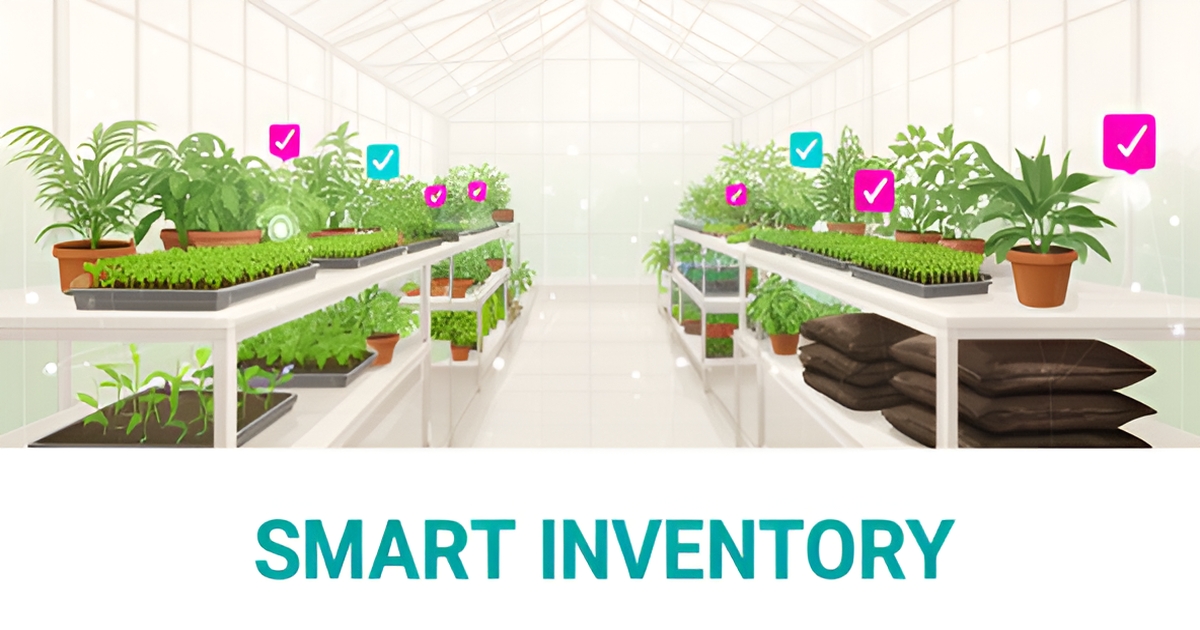
AI-powered inventory automation transforms greenhouse operations by moving beyond simple counting to intelligent, real-time monitoring of seed batches, plant growth stages, and soil usage. Computer vision systems analyze plant health and density through regular imaging, while multi-agent networks coordinate tracking across different inventory types — seeds, potted plants, and growing media — ensuring no item goes unrecorded. These systems integrate with existing greenhouse management tools to create a unified view of stock levels, reducing reliance on manual counts that are prone to human error and time-consuming to perform.
Predictive analytics further enhance accuracy by forecasting inventory needs based on growth cycles, seasonal demand, and historical usage patterns. For example, AI models can anticipate when specific seed varieties will be needed for planting schedules or when soil stocks will require replenishment, triggering automatic reorder points before shortages occur. This proactive approach minimizes stockouts and overstocking, directly addressing common pain points in greenhouse supply chains where delays in material availability can disrupt entire production cycles. The result is a self-regulating inventory system that adapts to changing conditions without constant human oversight.
The impact on operational efficiency is substantial: automating routine monitoring frees staff to focus on higher-value activities such as crop optimization, pest management, and customer engagement. This shift not only lowers labor costs but also improves data consistency — AI systems maintain continuous, audit-ready records that support compliance and improve decision-making. As greenhouse operations scale, this level of automation becomes essential for maintaining accuracy and responsiveness across expanding inventories. AIQ Labs designs such systems to integrate seamlessly with existing workflows — whether as managed AI Employees that handle tracking and reordering day to day, or as a custom build around your single costliest workflow — ensuring that advanced capabilities enhance rather than disrupt current processes.
Implementation Framework for Greenhouse Operations
Greenhouse inventory management faces unique challenges with perishable items like seeds, potted plants, and growing media requiring precise tracking to prevent waste and stockouts. A phased implementation approach ensures AI systems integrate smoothly with existing operations while delivering measurable improvements from day one.
The process begins with a comprehensive workflow assessment to map current inventory processes, identify pain points, and establish baseline metrics for waste reduction and accuracy improvements. This discovery phase examines seed storage conditions, potting schedules, and medium usage patterns to pinpoint where AI automation will yield the highest ROI. During this stage, AIQ Labs evaluates technology readiness and designs a solution architecture that aligns with greenhouse operational rhythms and seasonal demands.
Custom agent development follows, creating specialized AI tools for visual seed counting via image processing, potted plant health monitoring, and growing medium level tracking. These agents integrate with existing greenhouse management software through secure APIs, enabling real-time data synchronization across planting cycles. The development phase includes rigorous testing with actual inventory samples to ensure accuracy rates meet operational requirements before full deployment.
Staff training and continuous optimization complete the implementation, focusing on change management and performance refinement. Teams receive role-specific training on interpreting AI-generated inventory alerts and adjusting reorder points based on predictive insights. Ongoing monitoring tracks key metrics like stockout reduction and waste minimization, with regular optimization reviews to adapt the system to changing seasonal patterns and new inventory varieties. This structured approach transforms inventory management from a reactive task into a proactive, data-driven operation that supports sustainable greenhouse practices.
Still paying for 10+ subscriptions that don’t talk to each other?
We build custom AI systems you own outright. No vendor lock-in. Full control.
Not sure where to start? Ask our AI planner
Frequently Asked Questions
How much manual effort can AI inventory automation save in greenhouse operations?
What specific improvements can AI bring to greenhouse seed and plant inventory accuracy?
Is AI inventory tracking reliable for perishable greenhouse items like seeds and growing mediums?
What kind of ROI can greenhouse operations expect from implementing AI inventory management?
Do I need to replace my existing greenhouse management software to use AI inventory tracking?
How does AI handle the changing values and requirements of living greenhouse inventory?
From Manual Counts to Self-Regulating Growth
Manual greenhouse inventory is costing more than time — it drives overstocking and waste, stockouts during peak demand, misallocated labor, and guesswork purchasing. AI changes that equation by moving beyond simple counting to real-time, intelligent monitoring of seeds, potted plants, and growing media through computer vision, multi-agent coordination, and predictive analytics that anticipate needs from growth cycles and seasonal demand. A phased implementation — workflow assessment, custom agent development for visual seed counting and plant health monitoring, integration with existing greenhouse management software, and role-specific training — ensures the system adapts to your rhythms rather than disrupting them. If you're ready to replace spreadsheets with a single source of truth, start the 2-minute Fit Check at aiqlabs.ai/apply and book a free 30-minute strategy call to map your biggest bottleneck and identify high-ROI automation opportunities. You can also explore how our fixed-price workflow builds rebuild the one process that costs you the most.
Make AI your competitive advantage — not just another tool.
Strategy, implementation and ongoing optimization. One partner, end to end.
Not sure where to start? Ask our AI planner