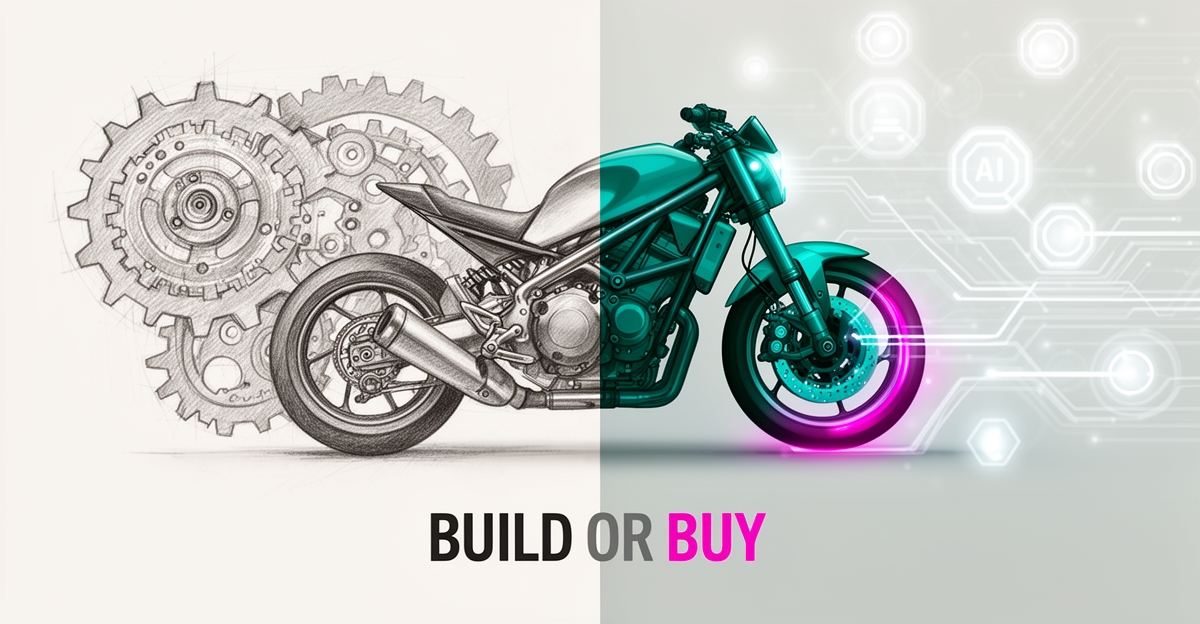
AI for Motorcycle Repair Shops: A Comparison of In-House vs. AI Automation
Key Facts
- In-house AI development typically demands significant upfront capital, technical hires, and months of build time before a shop sees any return
- Ready-made tools deploy in days or weeks, with subscription pricing that keeps entry costs low and predictable
- Diagnostic data services like Autodata's motorcycle database provide verified OEM data covering thousands of models from dozens of manufacturers, as of late 2026
- AI scheduling, inventory, and communication tools free technicians to focus on complex repairs by cutting administrative delays and stockouts
- AIQ Labs has deployed 200+ multi-agent systems and runs four live SaaS products daily — proof this is operational work, not theory
- The fastest way to decide between build and buy is a structured readiness assessment that maps your shop's actual bottlenecks first
Hire a team member that works 24/7 — for less than a part-time wage.
AI receptionists, SDRs, dispatchers and 99+ roles. Trained on your business, fully managed.
Not sure where to start? Ask our AI planner
Why Repair Shops Are Racing Toward AI Now
Walk into most motorcycle repair shops today and you'll find the same story: a skilled technician doing paperwork between jobs, a phone ringing unanswered, and margins getting thinner by the month. That squeeze is exactly why AI has moved from curiosity to priority for shop owners across the country.
The shift is real. As of late 2026, small service businesses — repair shops included — are adopting AI tools at an accelerating pace, and the shops doing it well aren't chasing hype. They're targeting specific, measurable pain points: missed calls, scheduling bottlenecks, and hours lost to admin work.
So what's driving the rush? Three pressures are converging at once:
- Margin pressure — rising parts and labor costs mean every wasted hour on admin directly erodes the bottom line.
- Administrative overload — scheduling, repair orders, parts ordering, and missed calls consume time that should be spent on wrenches, not paperwork.
- Rising customer expectations — riders now expect the same transparency and speed they get from every other service business they deal with.
That said, industry voices urge caution. The promise of "everything being absolutely automated" is a dangerous narrative — the same kind of unfulfilled hype the advertising world saw with programmatic. The lesson: AI works best when it targets specific pain points, not when it's sold as a magic bullet.
This is where the strategic question of the article comes in — build in-house automation or adopt existing AI solutions. For a small shop, the calculus matters: in-house development demands significant capital, time, and technical expertise, while existing tools and platforms offer immediate scalability. This is precisely the kind of decision a readiness assessment can clarify, and it's why AIQ Labs starts every engagement by mapping a shop's actual bottlenecks before recommending any technology.
The race toward AI isn't about keeping up with hype. It's about protecting margins, reclaiming hours, and meeting customers where they already are — and the shops that move deliberately are pulling ahead.
In-House Development vs Ready-Made AI Automation
Motorcycle repair shops face a pivotal decision when adopting AI: build custom systems in-house or deploy ready-made automation tools. This choice impacts not only immediate operational gains but also long-term flexibility and investment strategy. Understanding the trade-offs between time, cost, scalability, and customization is essential for shops aiming to modernize without overextending resources.
In-house AI development demands significant upfront investment in time and expertise, often stretching implementation over months or even years. Shops must allocate internal technical teams or hire specialists to design, test, and maintain custom solutions, which can delay tangible benefits. In contrast, ready-made AI automation tools like Autodata provide immediate access to verified OEM data covering thousands of motorcycle models from dozens of manufacturers, enabling accurate diagnostics from day one. Subscription models keep entry costs low and predictable — a stark contrast to the high capital outlay of custom builds.
Scalability also favors off-the-shelf AI platforms, which allow shops to adjust usage as they grow. Subscription tools typically support multiple simultaneous users, letting teams expand access without renegotiating contracts or rebuilding infrastructure. Meanwhile, AI content creation tools empower a single staff member to produce marketing materials that previously required a dedicated team. These solutions eliminate the need for continuous internal maintenance, as providers handle updates, data accuracy, and system reliability.
While in-house development offers deeper customization for unique workflows — such as integrating AI with legacy shop management systems or creating proprietary diagnostic logic — it comes with ongoing maintenance burdens and dependency on internal technical capacity. Ready-made tools, though standardized, deliver proven reliability and rapid deployment, making them ideal for shops prioritizing speed and consistency.
There's also a middle path worth knowing about. AIQ Labs offers three entry points that sit between "buy generic software" and "hire a dev team": AI Employees (managed AI staff like receptionists, SDRs, and dispatchers at roughly 80% less cost than a human hire), Workflow Builds (rebuilding the one workflow that costs you the most, at a fixed price, in phases), and AI Operating Systems (one connected operating layer, built in phases and owned outright). Payment models are straightforward: start monthly, build in milestones, or own it outright — no invented prices, no surprise numbers.
Where AI Delivers Immediate Wins for Shops
AI is already delivering measurable results for motorcycle repair shops by targeting the workflows that consume the most time and create the most friction. Shops that implement AI-driven scheduling and inventory systems report real gains in wrench time, as automated appointment booking and real-time parts tracking reduce administrative delays and prevent costly stockouts or overstocking. These tools allow technicians to spend less time on paperwork and more time on complex repairs, directly improving shop throughput and customer satisfaction.
Diagnostic accuracy is another area where AI provides immediate value, particularly through specialized OEM databases like Autodata. These platforms offer instant access to verified service guides, technical specifications, and diagnostic trouble code procedures covering thousands of motorcycle models, eliminating guesswork and reducing the risk of misdiagnosis. This level of precision is critical for protecting a shop's reputation and avoiding costly rework, especially as motorcycle technology becomes increasingly complex.
Beyond operations, AI-powered content creation is helping shops build trust and authority with customers. By generating high-quality explainer videos — such as step-by-step maintenance guides or common DIY mistake warnings — shops can demystify repair processes and position themselves as local experts. These wins are most effective when AI serves as a force multiplier for skilled technicians, not a replacement, ensuring that human expertise remains at the core of every repair.
From Pilot to Production: A Practical Adoption Path
Starting an AI journey in a motorcycle repair shop doesn't require a complete overhaul; it begins with a clear-eyed look at daily friction points. For many owners, the path forward starts by pinpointing where manual processes drain time — whether it's missed calls during peak hours, repetitive customer questions about service times, or delays in parts ordering that stall repairs. This assessment phase ensures any subsequent technology investment targets real, measurable inefficiencies rather than chasing trends.
Once pain points are identified, the next practical move is selecting tools designed for seamless integration with existing shop management systems. Rather than building complex in-house solutions from scratch — which demands significant upfront capital and technical expertise — small shops benefit from existing AI automation platforms that offer immediate scalability. Starting small with high-impact areas like automated appointment scheduling or an AI receptionist lets shops test value quickly, cut administrative load, and free technicians to focus on complex repairs where human expertise is irreplaceable.
Successful adoption hinges on preparing the team to work alongside new AI tools, not against them. Scheduling brief, hands-on training sessions ensures staff understand how automated workflows simplify their tasks — like how AI scheduling protects "wrench time" or how chatbots handle routine inquiries around the clock — building confidence and reducing resistance. After implementation, continuous evaluation using performance data and customer feedback is vital. This iterative approach — assess, integrate, train, evaluate — creates a sustainable path from initial pilot to full production.
To explore your shop's specific readiness and identify the highest-impact starting point, take the two-minute Fit Check at https://aiqlabs.ai/apply, then schedule a free 30-minute strategy call at https://aiqlabs.ai/book. You can also reach the team directly at [email protected].
Still paying for 10+ subscriptions that don’t talk to each other?
We build custom AI systems you own outright. No vendor lock-in. Full control.
Not sure where to start? Ask our AI planner
Frequently Asked Questions
Should my motorcycle repair shop build its own AI system or use ready-made tools?
How much does AI software for a motorcycle repair shop actually cost?
Is AI adoption in repair shops just hype, or are shops really using it?
Where does AI deliver the fastest wins for a repair shop?
Can AI help with motorcycle diagnostics, or is it just for admin work?
How do I get started with AI without disrupting my whole shop?
The Right Tool for the Job: Building Your Shop's AI Future
The choice between building in-house systems and adopting ready-made AI automation ultimately comes down to protecting your margins without stalling your growth. While custom development offers deep customization, the immediate value of existing platforms is hard to ignore — especially when diagnostic data subscriptions deliver verified OEM specs without months of technical debt. The most successful shops aren't chasing total automation; they're strategically targeting specific friction points — whether that's missed calls, scheduling bottlenecks, or parts inventory — that drain technician time and erode profitability. Your next step isn't a massive capital investment; it's clarity. Start by mapping where manual processes actually cost you money, then determine whether an AI Employee, a targeted Workflow Build, or a full AI Operating System aligns with your operational reality. If you're ready to cut through the hype and identify your highest-impact opportunity, take the two-minute Fit Check at https://aiqlabs.ai/apply, then book a free 30-minute strategy call at https://aiqlabs.ai/book. No sales pitch — just a working session to find the right tool for your specific job.
Make AI your competitive advantage — not just another tool.
Strategy, implementation and ongoing optimization. One partner, end to end.
Not sure where to start? Ask our AI planner