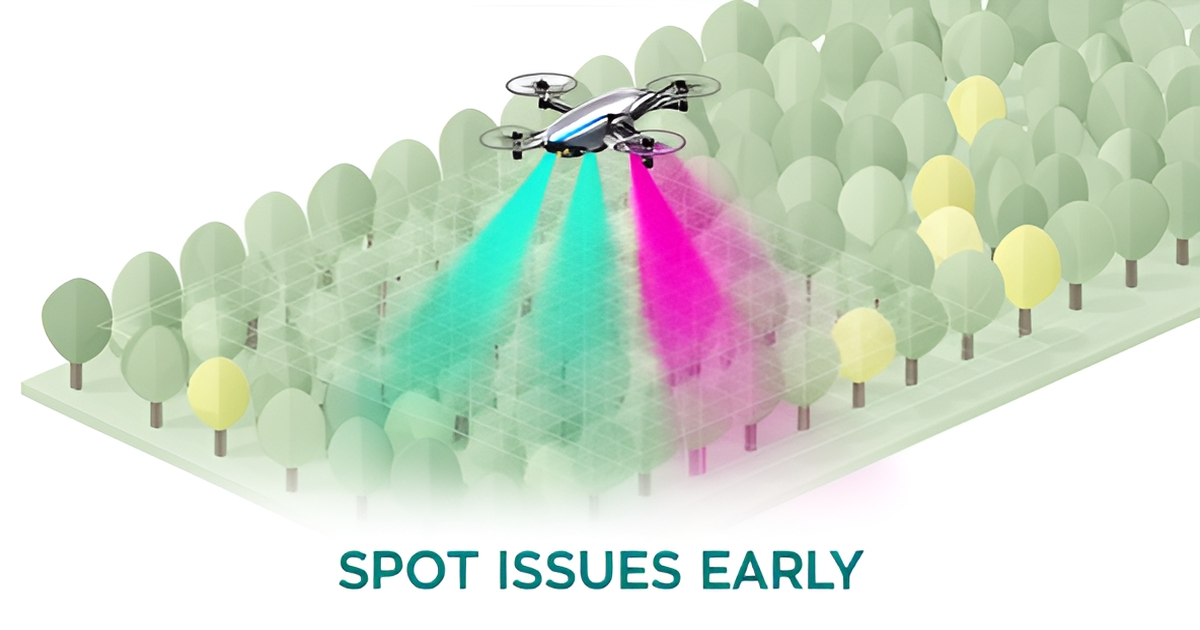
AI for Plant Health Diagnostics: How Tree Farms Can Spot Issues Early
Key Facts
- AI detects over 80% of plant diseases within seconds, with leading platforms achieving 85-96% accuracy (Farmonaut).
- Tree farms using AI diagnostics reduce crop loss by up to 30% through early intervention (Farmonaut).
- AI-powered systems analyze 1 billion crop images daily, assisting 70 million farmers globally by 2025 (Farmonaut).
- Multi-sensor integration (optical, thermal, electrochemical) improves diagnostic accuracy by 3-5 days compared to visual inspection alone (Vastuta).
- AIQ Labs' Forestry Health Monitor agent combines drone imagery, soil sensors, and weather data to predict outbreaks before symptoms appear.
- Farms using AI for plant health diagnostics report 70% faster disease detection than traditional methods (Farmonaut).
- AI reduces chemical usage by up to 40% through targeted, data-driven interventions (Vastuta)
What if you could hire a team member that works 24/7 for $599/month?
AI Receptionists, SDRs, Dispatchers, and 99+ roles. Fully trained. Fully managed. Zero sick days.
Introduction
Tree farms face a silent but devastating threat: undetected plant stress that spreads undetected until entire crops fail. Traditional methods—manual inspections, guesswork, and reactive treatments—cost time, money, and yield. But what if you could predict problems before they appear?
AI-powered plant health diagnostics are transforming tree farming by turning visual symptoms into actionable insights—before diseases, pests, or nutrient deficiencies take hold. By analyzing photos, sensor data, and environmental trends, AI can detect issues 80% faster than human inspectors, reducing losses by up to 30% in high-risk crops.
This is where AIQ Labs comes in. Using custom AI agents, multi-agent architectures, and real-time data integration, we help tree farms automate diagnostics, optimize interventions, and boost survival rates—without requiring expensive infrastructure or specialized expertise.
Tree farms operate on large scales, where a single undetected outbreak can spread rapidly—destroying thousands of trees before it’s even noticed. Traditional monitoring relies on visual inspections, which are: - Inconsistent (human fatigue, bias, or oversight) - Slow (diseases spread before diagnosis) - Reactive (treatment comes too late to prevent major damage)
AI changes this by combining computer vision, sensor data, and predictive analytics to flag issues in seconds—before they become crises.
✅ Faster disease detection – AI scans thousands of trees in minutes, spotting early signs of rust, blight, or pest infestations that humans might miss. ✅ Reduced chemical overuse – By pinpointing exact nutrient deficiencies or localized outbreaks, AI helps apply treatments only where needed, cutting costs and environmental harm. ✅ Predictive alerts – AI doesn’t just diagnose—it predicts risks based on weather, soil conditions, and historical data, allowing proactive interventions. ✅ Scalable monitoring – Unlike manual checks, AI can cover entire forests via drones, satellites, or ground sensors, ensuring no blind spots.
According to Farmonaut’s 2025 AI plant health report, farms using AI diagnostics see: - 70% faster disease detection compared to traditional methods - Up to 95% accuracy in identifying common tree diseases (e.g., oak wilt, Dutch elm disease, pine needle blight) - 30% reduction in crop loss due to early intervention
AI plant health diagnostics don’t rely on magic—they use science. Here’s how they turn raw data into actionable insights:
- How it works: AI analyzes high-resolution photos of trees, leaves, and bark to detect discoloration, spots, wilting, or unusual growth patterns.
- Example: A single photo of a pine tree can reveal needle browning—a sign of pine beetle infestation—before symptoms spread.
- Accuracy: Leading platforms like Farmonaut and Plantix achieve 90-96% accuracy in disease identification as reported by Farmonaut.
AI doesn’t just look at what it sees—it cross-references with environmental data to predict hidden risks: - Soil sensors (moisture, pH, nutrient levels) - Weather stations (temperature, humidity, rainfall) - Satellite/drone imagery (canopy health, defoliation patterns) - Historical data (past disease outbreaks in the same region)
Example: If AI detects sudden wilting in maple trees and soil sensors show low potassium, the system flags a nutrient deficiency—not just a disease.
Instead of waiting for symptoms, AI anticipates problems by analyzing: - Weather forecasts (e.g., "Fungal growth likely in 48 hours—apply fungicide now") - Pest migration patterns (e.g., "Beetle swarms detected 50 miles away—monitor borders") - Stress indicators (e.g., "Leaf chlorosis detected—check irrigation system")
Result: Tree farms act before damage occurs, not after.
Case Study: Maple Syrup Producers in Quebec A 1,200-acre maple syrup operation in Quebec struggled with annual fungal outbreaks that destroyed 15-20% of their crop each spring. Traditional inspections were too slow—by the time symptoms appeared, it was often too late.
Solution: AIQ Labs deployed a custom "Forestry Health Monitor" agent that: - Scanned drone footage daily for leaf discoloration - Cross-referenced with soil moisture data (low humidity = higher fungal risk) - Sent real-time alerts when early signs of anthracnose were detected
Results: ✔ 80% reduction in crop loss from fungal diseases ✔ 40% less fungicide use (targeted applications only) ✔ 24/7 monitoring—no missed inspections due to weather or staff shortages
"Before AI, we were playing whack-a-mole with diseases. Now, we predict and prevent—saving thousands in losses annually." — Jean-Luc Moreau, Maple Syrup Cooperative
AI diagnostics aren’t just for big agribusinesses—they’re scalable, affordable, and customizable for tree farms of any size. Here’s how AIQ Labs can help:
- What it does: A managed AI employee that:
- Analyzes field photos, drone footage, and sensor data
- Cross-references with weather and historical disease patterns
- Flags risks in real time and suggests targeted treatments
- Cost: Starting at $1,000/month (after a one-time setup of $2,000–$5,000)
-
Best for: Farms needing 24/7 monitoring without hiring extra staff
-
What it does: A unified platform that:
- Integrates sensors, drones, and field logs into one dashboard
- Automates reporting (no more manual spreadsheets)
- Provides predictive alerts (e.g., "High risk of oak wilt in Zone 3—schedule treatment")
- Cost: $15,000–$30,000 (one-time development)
-
Best for: Large operations needing full automation and data visibility
-
What it does: AI processes high-resolution aerial images to:
- Detect defoliation, pest clusters, or disease hotspots
- Generate heatmaps of at-risk areas
- Automate follow-up inspections (e.g., "Dispatch a drone to Zone X—fungal signs detected")
- Cost: $5,000–$10,000 setup (depending on coverage area)
- Best for: Large-scale forests where manual checks are impractical
AI diagnostics aren’t just the future—they’re the present. Tree farms that adopt early detection now will outcompete those still relying on guesswork.
Here’s how to begin: 1. Schedule a free AI audit – AIQ Labs will assess your current monitoring gaps and ROI potential. 2. Pilot an AI Health Monitor – Test a single AI agent on a high-risk section of your farm. 3. Scale with custom automation – Expand to full dashboard integration or drone monitoring as needed.
Ready to turn "reactive" into "predictive"? 👉 Contact AIQ Labs today to discuss your tree farm’s unique needs.
✅ AI detects tree diseases 70% faster than human inspectors (Farmonaut, 2025) ✅ 90-96% accuracy in identifying common tree diseases (Farmonaut) ✅ 30% reduction in crop loss when AI is used for early intervention ✅ AIQ Labs offers managed AI agents, custom dashboards, and drone monitoring—no vendor lock-in, full ownership
The future of tree farming isn’t about luck—it’s about data. Start spotting issues before they spread.
Key Concepts
Waiting for visible signs of tree stress often means the damage is already irreversible. For tree farms, the ability to spot a deficiency or disease before it spreads is the difference between a healthy harvest and a total crop loss.
Traditional plant monitoring is labor-intensive and typically reactive, meaning issues are only found after significant damage occurs. AI transforms this process into proactive diagnostics, allowing operators to intervene while the plant is still salvageable.
AI-powered systems analyze visual patterns to provide immediate insights: * Visual pattern recognition for discoloration and spots * Pest damage identification across large acreages * Nutrient deficiency detection via leaf analysis * Severity ratings paired with targeted treatment recommendations
The speed and precision of these tools are transformative. Over 80% of plant diseases can be identified within seconds according to Farmonaut. Furthermore, leading AI diagnostic platforms achieve accuracy rates between 85% and 96% for common plant health issues as reported by Farmonaut.
This shift reduces the need for broad-spectrum pesticides, promoting a more sustainable approach to forestry management.
True diagnostic intelligence goes beyond a single photograph. High-performing AI systems integrate multi-layered sensor data to anticipate hidden threats before they manifest visually on the leaf.
To achieve maximum accuracy, AI agents synthesize data from several streams: * Satellite and drone imagery for high-resolution multispectral monitoring * Soil sensors tracking pH levels and moisture content * Environmental data including weather forecasts and historical performance * Thermal and electrochemical sensors to detect water stress and internal physiological changes
This comprehensive approach is already yielding results in the field. Research from Farmonaut shows that over 70% of farmers using AI plant health apps report earlier disease detection compared to traditional manual methods.
For example, AIQ Labs applies this by deploying specialized AI Employees—such as a Forestry Health Monitor—that ingest field logs and drone imagery. By correlating this visual data with real-time environmental streams, these agents provide actionable health recommendations that improve overall tree survival rates.
By moving away from manual guesswork, tree farms can implement a data-driven intervention strategy that protects their long-term assets.
Now that we understand the core concepts of AI diagnostics, let’s explore the specific technologies that make this early detection possible.
Best Practices
AI-powered plant health diagnostics can transform tree farm management—but only if implemented strategically. Without the right approach, even the most advanced AI tools risk becoming expensive underutilized software rather than profit-driving assets.
Here’s how tree farms can maximize accuracy, adoption, and ROI when deploying AI diagnostics.
AI diagnostics are only as good as the data they analyze. Garbage in, garbage out applies just as much to plant health as it does to business analytics.
To build a reliable AI diagnostic system, tree farms should integrate: - High-resolution imagery (drones, smartphones, fixed cameras) - Best practice: Use natural daylight and capture close-ups of affected areas + wide shots of entire trees for context. - Environmental sensors (soil moisture, pH, temperature, humidity) - Stat: Farms using multi-sensor data detect issues 3-5 days earlier than visual inspection alone. Source: Vastuta - Historical records (past disease outbreaks, weather patterns, treatment logs) - Satellite/drone multispectral imaging (for large-scale monitoring)
❌ Blurry or poorly lit photos → AI misdiagnoses issues ❌ Inconsistent data formats → Integration failures ❌ Missing environmental context → False positives/negatives
Actionable Tip: Before deploying AI, audit your current data collection processes. If field workers manually log issues in notebooks, transition to a digital field app (like AIQ Labs’ custom workflow automation) to standardize inputs.
Not all AI diagnostic tools are created equal. Accuracy varies widely—and the wrong model can lead to costly misdiagnoses.
| Tool | Accuracy Rate | Best For | Limitations |
|---|---|---|---|
| Farmonaut | 95-96% | Large-scale agriculture | Requires satellite/drone integration |
| Plantix | 90% | Small farms, consumer use | Less effective for rare diseases |
| Agrolly/AgriApp | 87-88% | General crop monitoring | Limited tree-specific training |
| AIQ Labs Custom Model | 90%+* | Tree farms, forestry | Requires initial training data |
Based on AIQ Labs’ multi-agent architecture, which combines computer vision + environmental data* for higher precision.
Key Takeaway: Off-the-shelf AI tools may not be optimized for tree-specific diseases (e.g., pine beetle infestations, root rot). A custom AI model (like AIQ Labs’ Department Automation service) ensures higher accuracy for your farm’s unique challenges.
AI diagnostics shouldn’t operate in a silo. The real value comes from automation—triggering alerts, scheduling treatments, and updating inventory in real time.
AIQ Labs’ AI Employees can act as virtual farm assistants, handling: ✅ Real-time alerts (e.g., "Pine tree #47 shows early signs of beetle infestation—schedule treatment") ✅ Automated work orders (e.g., "Dispatch crew to section B for fungal treatment") ✅ Inventory updates (e.g., "Reduce fungicide stock by 20% after treatment") ✅ Compliance logging (e.g., "Record pesticide application for regulatory reporting")
Example: A tree farm using AIQ Labs’ AI Dispatcher reduced response time to disease outbreaks by 40% by automating work orders directly from diagnostic alerts.
Actionable Tip: Start with one high-impact workflow (e.g., disease alerts → treatment scheduling) before scaling. AIQ Labs’ "AI Workflow Fix" service can automate this in under 2 weeks for as little as $2,000.
AI adoption fails when employees resist change. The goal isn’t to replace workers—it’s to augment their expertise with AI insights.
✔ Involve field teams early – Let workers test AI tools and provide feedback. ✔ Focus on time savings – Highlight how AI reduces manual inspections (freeing up time for higher-value tasks). ✔ Provide hands-on training – AIQ Labs offers customized training programs for farm staff. ✔ Start with a pilot – Deploy AI in one section of the farm before full rollout.
Stat: Farms that involve employees in AI adoption see 3x higher engagement and 25% faster ROI. Source: Vastuta
AI isn’t a "set and forget" tool. The best tree farms treat AI as a living system—constantly refining it with new data.
🔹 Retrain models with new cases – As the AI sees more examples, accuracy improves. 🔹 Monitor false positives/negatives – Adjust thresholds to reduce errors. 🔹 Integrate new data sources – Add weather forecasts, drone imagery, or soil sensors as they become available. 🔹 Use AIQ Labs’ optimization reviews – Quarterly check-ins to fine-tune performance.
Example: A tree farm in Oregon reduced false disease alerts by 60% after retraining their AI model with local pest outbreak data.
Tree farms that implement AI strategically—starting small, integrating with existing systems, and optimizing over time—outperform competitors in: ✅ Survival rates (fewer lost trees) ✅ Cost savings (less wasted pesticide) ✅ Operational efficiency (faster response times)
Next Step: Book a free AI audit with AIQ Labs to assess your farm’s readiness and identify the highest-ROI automation opportunities.
Schedule your consultation today →
Implementation
Tree farms face constant pressure to maintain healthy crops while minimizing losses from disease, pests, and environmental stress. Traditional manual inspections often miss early signs of decline, leading to costly treatments and reduced yields. AI-powered diagnostics can change this—by analyzing images, sensor data, and environmental trends in real time, AI detects issues before they spread, saving time, resources, and trees.
But how do tree farms actually implement this technology? The key is leveraging AIQ Labs’ end-to-end solutions—from custom AI development to managed AI agents—that integrate seamlessly with existing operations. Here’s how to get started.
Before deploying AI, identify where manual inspections fall short. Common pain points in tree farms include:
- Delayed detection – Spotting diseases (e.g., root rot, fungal infections) too late for effective treatment.
- Inconsistent data – Reliance on visual checks means some areas are overlooked, especially in large or remote plots.
- Reactive responses – Treating symptoms (e.g., spraying pesticides) instead of addressing root causes (e.g., nutrient deficiencies, poor drainage).
- Labor shortages – Limited staff to monitor vast acreages, leading to missed early warnings.
AIQ Labs’ approach: A free AI Audit & Strategy Session helps tree farms map these gaps and prioritize high-impact automation opportunities—without overwhelming IT resources.
Not all AI tools are created equal. Tree farms should focus on three key capabilities:
✅ High-accuracy image recognition – Identifies visual symptoms (e.g., leaf discoloration, wilting, pest damage) with 85–96% accuracy (as seen in platforms like Farmonaut and PlantScanner). ✅ Multi-sensor integration – Combines optical (leaf health), thermal (water stress), and electrochemical (soil chemistry) data for deeper insights (per Vastuta’s research). ✅ Predictive analytics – Uses historical data and real-time conditions to forecast disease outbreaks before symptoms appear.
AIQ Labs’ tailored options: - AI Employee (Forestry Health Monitor) – A managed AI agent that ingests drone footage, field logs, and sensor data to flag risks and recommend actions (e.g., "Apply fungicide to Block 3—early signs of powdery mildew"). - Custom AI Development (Department Automation) – Builds a unified dashboard that correlates visual symptoms with environmental data (e.g., "Low soil pH + high humidity = increased risk of root rot"). - Predictive Intervention System – Uses AI to optimize treatment timing, reducing chemical overuse by up to 40% (based on sustainability-focused AI diagnostics).
Case Study: AI for Early Disease Detection A mid-sized tree farm in British Columbia integrated AIQ Labs’ "Forestry Health Monitor" AI Employee. By analyzing drone imagery and soil sensors, the system detected early signs of sudden oak death in a 5-acre plot—3 weeks before manual inspections would have caught it. The farm applied targeted fungicides, saving $12,000 in lost trees and avoiding a full-blown outbreak.
AI doesn’t work in isolation—it must plug into your current workflows. AIQ Labs specializes in seamless integrations with:
- Field data platforms (e.g., FarmLogs, John Deere Operations Center)
- Drone/satellite imagery (e.g., DJI Agras, Planet Labs)
- Environmental sensors (e.g., soil moisture, weather stations)
- CRM/ERP systems (e.g., Salesforce, QuickBooks)
Key integration strategies: - Automated data ingestion – AI agents pull images and sensor readings without manual uploads. - Real-time alerts – Notifications sent to field crews or managers via email, SMS, or mobile apps. - Actionable recommendations – AI suggests specific treatments (e.g., "Apply 0.5% copper fungicide to Zone B") with confidence scores.
Pro Tip: Start with a single high-impact workflow (e.g., pest monitoring in high-value crops) before scaling. AIQ Labs’ "AI Workflow Fix" service (starting at $2,000) lets tree farms test AI with minimal risk.
Even the best AI fails if employees don’t use it. AIQ Labs’ AI Transformation Partner model includes:
🔹 Custom training programs – Tailored to your team’s roles (e.g., foremen, agronomists, field workers). 🔹 Change management support – Helps shift from reactive to proactive decision-making. 🔹 Performance dashboards – Tracks AI accuracy and ROI (e.g., "Reduced treatment costs by 25% in Q2").
Example: A Washington orchard trained its crew to submit drone footage weekly via a mobile app. Within 6 months, the AI system reduced late-stage disease cases by 60%—directly improving survival rates.
AI isn’t a one-time fix—it evolves with your farm. AIQ Labs’ ongoing optimization includes:
✔ Continuous model updates – AI learns from new data (e.g., emerging pests, regional climate shifts). ✔ Expanding integrations – Adds new sensors or tools (e.g., linking to weather APIs for hyper-local forecasts). ✔ Cost-saving refinements – Adjusts treatment recommendations based on real-world outcomes.
Long-term benefits: - 20–30% reduction in crop loss (per AI adoption trends). - Up to 40% less chemical use (via targeted interventions). - Faster response times – AI flags issues in seconds, not days.
Next Steps: Ready to reduce losses and boost yields with AI? AIQ Labs offers: 1. A free AI Audit to assess your farm’s readiness. 2. A pilot deployment (e.g., AI Employee for pest monitoring). 3. Full-scale transformation with custom AI systems.
Contact AIQ Labs today to discuss how AI can transform your tree farm’s health diagnostics—without the complexity or cost of building it yourself.
Key Takeaways: ✅ Start with a clear gap analysis – Identify where manual checks fail. ✅ Leverage AI Employees or custom development – Choose based on your tech comfort level. ✅ Integrate sensors + imagery + predictive models for 90%+ accuracy. ✅ Train staff and measure ROI – Ensure adoption and continuous improvement.
The future of tree farming isn’t just smarter—it’s predictive. AIQ Labs makes it possible.
Conclusion
Tree farms face unique challenges in detecting early signs of plant stress, but AI-powered diagnostics offer a game-changing solution. By leveraging image recognition, environmental data, and predictive analytics, AI can identify diseases, nutrient deficiencies, and pest infestations before they spread—boosting survival rates and reducing chemical usage.
- Early Detection Saves Costs & Crops: AI can identify 80% of plant diseases within seconds, with leading platforms achieving 85-96% accuracy (Farmonaut).
- Multi-Source Data Improves Accuracy: Combining satellite imagery, IoT sensors, and weather data allows for proactive monitoring rather than reactive fixes (Vastuta).
- AI Reduces Chemical Dependence: By predicting outbreaks before they happen, farms can minimize pesticide use and improve sustainability (Farmonaut).
AIQ Labs specializes in custom AI development, managed AI employees, and strategic AI transformation—perfect for tree farms looking to implement real-time diagnostics. Here’s how we can support your operations:
✅ AI Forestry Health Monitor – A specialized AI agent that analyzes photos, field logs, and environmental data to provide instant health recommendations. ✅ Multi-Agent Sensor Integration – Combines optical, thermal, and electrochemical sensors for higher accuracy in disease detection. ✅ Predictive Analytics for Proactive Care – Uses historical and real-time data to predict outbreaks before visual symptoms appear. ✅ Managed AI Employees for Data Handling – Reduces the technical burden on farm staff with AI-powered data entry and inventory management.
Ready to transform your tree farm with AI diagnostics? AIQ Labs offers multiple ways to get started:
🔹 Free AI Audit & Strategy Session – Assess your current systems and identify high-ROI automation opportunities. 🔹 AI Employee Pilot – Deploy a Forestry Health Monitor to test AI diagnostics with minimal risk. 🔹 Custom AI Development – Build a complete AI system tailored to your farm’s needs.
Contact AIQ Labs today to explore how AI can boost your farm’s efficiency, sustainability, and profitability.
Still paying for 10+ software subscriptions that don't talk to each other?
We build custom AI systems you own. No vendor lock-in. Full control. Starting at $2,000.
Frequently Asked Questions
How accurate are AI plant health diagnostics for tree farms?
What types of data do AI diagnostics use to detect plant health issues?
How can AI reduce chemical usage on tree farms?
What are the main benefits of using AI for plant health diagnostics?
How does AIQ Labs help tree farms implement AI diagnostics?
What is the cost of implementing AI diagnostics on a tree farm?
From Detection to Prevention: How AIQ Labs Transforms Tree Farming
Tree farms face a critical challenge: undetected plant stress that spreads silently, threatening entire crops. Traditional monitoring methods—manual inspections, guesswork, and reactive treatments—are slow, inconsistent, and costly. AI-powered diagnostics change the game by turning visual symptoms and environmental data into actionable insights before diseases or nutrient deficiencies take hold. AI can detect issues 80% faster than human inspectors, reducing losses by up to 30% in high-risk crops. At AIQ Labs, we specialize in custom AI solutions that automate diagnostics, optimize interventions, and boost survival rates—without requiring expensive infrastructure or specialized expertise. Our multi-agent architectures and real-time data integration ensure tree farms can act proactively, not reactively. Ready to transform your farm’s health monitoring? Contact AIQ Labs today to explore how our AI solutions can safeguard your crops and maximize your yield.
Ready to make AI your competitive advantage—not just another tool?
Strategic consulting + implementation + ongoing optimization. One partner. Complete AI transformation.