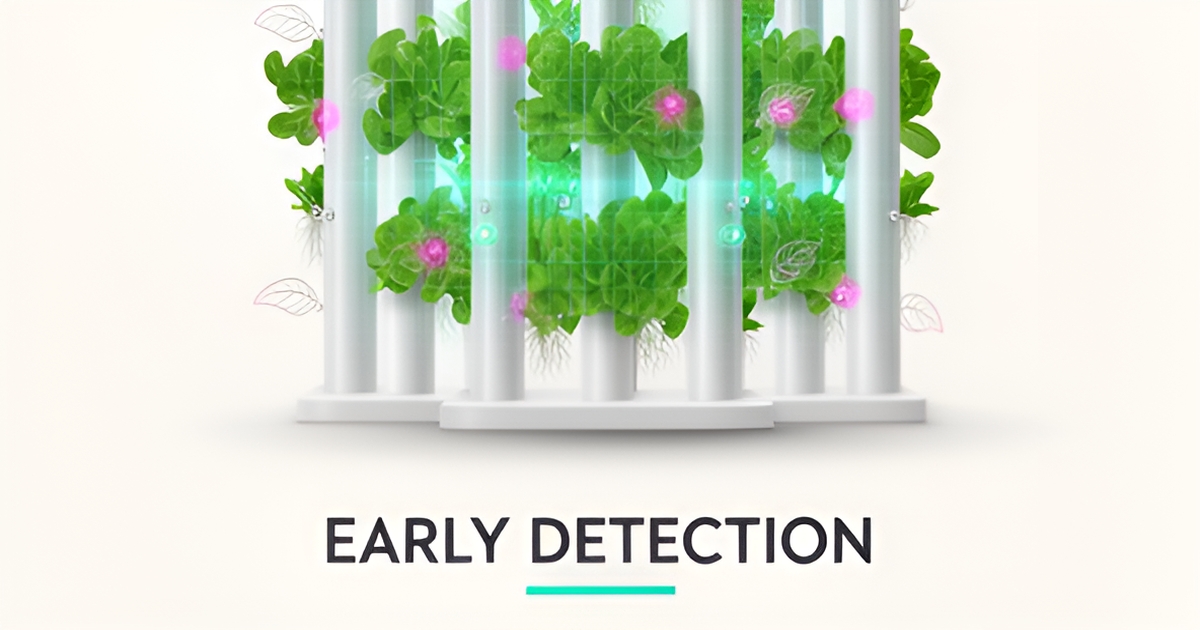
AI for Plant Health Monitoring: Detecting Issues Before They Impact Yields
Key Facts
- AI can detect nutrient deficiency signs days before visible symptoms appear in hydroponic plants
- Pest infestations cause an estimated 30-33% annual crop productivity loss according to agricultural research
- CNN-based plant disease diagnosis has achieved over 98% accuracy with real-time processing speeds per Scientific Reports study
- A majority of farmers using AI plant health apps report earlier disease detection compared to traditional methods
- AI-powered monitoring can identify fungal colonization through subsurface spectral changes invisible to human eyes
- Sensor fusion combining pH, EC, and multispectral imaging flags stress before leaf discoloration begins
- AI image recognition follows five steps: acquisition, preprocessing, segmentation, feature selection, and classification per plant science research
Hire a team member that works 24/7 — for less than a part-time wage.
AI receptionists, SDRs, dispatchers and 99+ roles. Trained on your business, fully managed.
Not sure where to start? Ask our AI planner
The Hidden Cost of Late Plant Stress Detection
By the time nutrient deficiencies or fungal infections become visible in hydroponic systems, yield loss has often already begun. Subtle physiological changes occur internally long before leaves yellow or spots appear, meaning growers miss critical windows for intervention. This delayed detection transforms manageable stress into avoidable productivity erosion.
Research confirms that pest infestations alone cause an annual decrease in crop productivity of roughly 30-33%, highlighting how quickly undetected issues compound in controlled environments like hydroponics where conditions favor rapid pathogen spread. In such systems, nutrient imbalances can disrupt osmotic balance and enzyme function within hours, while fungal hyphae establish colonies invisibly before sporulation triggers visible symptoms. Waiting for visual cues means reacting to damage rather than preventing it.
Early detection hinges on identifying biochemical and spectral shifts imperceptible to the human eye—changes in chlorophyll fluorescence, leaf reflectance patterns, or subtle morphological shifts that precede visible stress. AI-powered monitoring platforms integrating multispectral imaging with root-zone sensor data can flag these anomalies in real time, enabling precise adjustments to nutrient formulations or environmental controls before metabolic disruption escalates. This capability transforms plant health management from reactive treatment to proactive optimization.
- Detects nutrient deficiency signs days before visual symptoms typically appear
- Identifies fungal hyphae colonization through subsurface spectral changes
- Tracks stomatal conductance shifts indicating early water stress
- Monitors root electrolyte leakage as a precursor to pathogen invasion
- Flags photosynthetic efficiency drops preceding leaf chlorosis
For hydroponic operations where every percentage point of yield affects profitability, this predictive layer isn't just beneficial—it's essential. By catching stress at the molecular level, AI monitoring protects genetic potential and ensures that inputs like nutrients and light translate directly into harvestable biomass rather than being wasted on struggling plants. The cost of late detection isn't measured in lost plants alone, but in the irreversible erosion of yield potential that could have been preserved with timely, data-driven intervention.
How AI Image Recognition and Sensor Fusion Catch Stress Early
Imagine spotting a nutrient deficiency days before a single leaf turns yellow. That is the promise of AI-driven plant health monitoring, and it is already a working reality in modern agriculture.
The process follows a structured pipeline that turns raw images into actionable diagnoses. According to research published in Frontiers in Plant Science, the five predetermined steps are image acquisition, preprocessing, segmentation, feature selection, and classification. Each stage refines the data further, stripping away noise and isolating the visual patterns that signal disease, deficiency, or stress.
At the acquisition stage, cameras capture leaf and canopy images under controlled lighting. Preprocessing then normalizes color balance, removes background artifacts, and enhances contrast so the model receives clean, consistent input. Segmentation isolates individual leaves or regions of interest, while feature selection identifies the texture, color gradient, and shape characteristics most predictive of specific conditions.
The classification stage is where deep learning earns its reputation. A study in Scientific Reports demonstrated that a CNN-based plant disease diagnosis framework achieved over 98% overall accuracy with real-time inference speeds fast enough to scan hundreds of plants per hour without bottlenecks.
But images alone tell only part of the story. The real breakthrough comes from sensor fusion, where computer vision works alongside IoT sensors monitoring environmental variables. In hydroponic systems, this combination is especially powerful because stress signals often appear in sensor data before any visible symptom surfaces.
- pH and EC sensors flag nutrient imbalances before leaf discoloration begins
- Temperature and humidity monitors detect conditions that favor fungal growth
- Dissolved oxygen probes reveal root-zone stress invisible to cameras
- Multispectral imaging captures chlorophyll fluorescence shifts days before the human eye notices anything
The stakes are significant. Pest infestations alone cause an annual decrease in crop productivity of roughly 30 to 33%, according to the same Frontiers research. Catching problems even 48 hours earlier can mean the difference between a targeted correction and a lost crop cycle.
Adoption is accelerating because the results speak for themselves. Industry reporting suggests that a majority of farmers using AI plant health tools report earlier disease detection compared to traditional scouting methods.
AIQ Labs builds custom monitoring platforms that integrate exactly this kind of sensor fusion and image recognition pipeline, tailored to specific crops, growing environments, and operational workflows. The goal is not just detection but a system that learns your baseline and alerts you the moment anything drifts from it. Explore our [AI Workflow Builds](/workflow-builds) to see how a single high-cost workflow gets rebuilt first.
From Detection to Action in Hydroponic Operations
The moment a nutrient imbalance or fungal spore takes hold in a hydroponic system, the clock starts ticking on yield loss. Early detection transforms this race against time into a strategic advantage, allowing growers to intervene with precision before visible symptoms compromise plant health. AI-powered monitoring platforms achieve this by fusing image recognition with continuous sensor data, identifying subtle stress signals—like slight chlorophyll shifts or root zone anomalies—long before they become apparent to the human eye. This proactive capability is not just theoretical; a majority of farmers using AI plant health apps report earlier disease detection compared to traditional methods, directly enabling faster, more targeted responses.
When detection leads to action, the impact cascades through operational efficiency and resource conservation. Precision interventions—such as localized nutrient dosing or isolated environmental adjustments—replace broad-spectrum treatments that waste inputs and stress plants unnecessarily. Sensor fusion systems, which integrate multispectral imaging with real-time pH, EC, and temperature data, create a dynamic feedback loop that optimizes water, fertilizer, and energy use. Studies validating AI-driven diagnosis models show overall accuracy exceeding 98% in identifying plant pathogens, ensuring that actions are based on reliable, real-time insights rather than guesswork. This level of precision directly supports sustained yields by maintaining optimal growing conditions through continuous, automated monitoring.
The shift toward this data-driven approach is reshaping hydroponic operations from reactive to predictive. Growers leveraging AI monitoring report not only fewer crop losses but also measurable reductions in input waste—particularly in fertilizer and pesticide applications—thanks to site-specific treatment maps generated from fused data streams. As highlighted in agricultural AI research, accurate and rapid plant disease detection is critical for enhancing long-term agricultural yield, a principle that holds especially true in controlled environments where small imbalances can escalate quickly. AIQ Labs supports this transition by building custom monitoring platforms that turn early alerts into automated workflows, ensuring that every detection triggers the right action at the right time—without delay or overcorrection. This closed-loop system, where insight immediately informs intervention, is how hydroponic operations protect yield potential while minimizing environmental footprint and operational cost.
Building a Custom AI Monitoring Platform with AIQ Labs
Hydroponic operators lose yield before they see symptoms. Early stress signals hide in subtle color shifts, leaf texture changes, and micro-fluctuations in nutrient solution that human inspection misses daily.
AI-powered monitoring closes that gap by fusing continuous sensor data with image recognition trained to spot pre-visual stress. Research on plant disease detection confirms accurate and rapid identification is critical for enhancing long-term agricultural yield, while studies of crop losses note pest infestations cause an annual decrease in crop productivity of roughly 30-33%.
For SMB hydroponic growers, a custom platform replaces generic apps with an owned system built around their specific crops, grow rooms, and sensors. AIQ Labs has deployed 200+ multi-agent systems and runs four live SaaS products daily—these monitoring stacks are built as production-ready assets the business controls, not a subscription widget.
The build starts with workflow mapping and sensor integration. Cameras, EC/pH probes, temperature and humidity sensors feed a unified data layer. A multi-agent monitoring system then processes streams in parallel: one agent handles image acquisition and preprocessing, another runs classification, a third correlates sensor anomalies with visual cues.
Typical platform components include:
- Custom workflow builds for nutrient dosing alerts, fungal risk scoring, and deficiency tracking tied to existing grow management tools
- Sensor integration for real-time EC, pH, VPD, and environmental data fusion with imagery
- Multi-agent monitoring with specialized agents for image analysis, anomaly detection, and decision logging
- Ownership model delivering full code, agents, and data transfer to the client
Performance benchmarks from deep learning work support this approach. A CNN-based real-time disease diagnosis framework achieved over 98% overall accuracy with real-time inference speeds, demonstrating the speed needed for continuous canopy monitoring.
Adoption data reinforces the value. Industry reporting on AI plant health apps found that a majority of farmers using these tools report earlier disease detection compared to traditional methods, and that combining image recognition with weather and soil sensors enables precise input optimization before damage is visible.
Payment flexibility matters for hydroponic SMBs. Start Monthly delivers a managed AI employee with setup plus a flat monthly plan, including build, training, integrations, monitoring, and improvements—pause or adjust anytime. Build in Milestones splits a workflow or department system into phases you approve and pay per phase, keeping everything built so far. Own It Outright provides a full AI operating system with one project price or monthly Build Partnership and full ownership of code, agents, and data when complete. See [pricing](/pricing) for details.
The result is early detection of nutrient deficiency or fungal growth before visible symptoms appear, with an owned system that scales with the operation.
Still paying for 10+ subscriptions that don’t talk to each other?
We build custom AI systems you own outright. No vendor lock-in. Full control.
Not sure where to start? Ask our AI planner
Frequently Asked Questions
How much earlier can AI detect plant stress compared to visual inspection in hydroponic systems?
What accuracy do AI plant disease detection models actually achieve in real-time monitoring?
Do farmers using AI plant health tools actually see better results than traditional scouting?
How does sensor fusion improve detection beyond cameras alone in hydroponics?
What makes a custom AI monitoring platform different from off-the-shelf apps for hydroponic operations?
Is the cost of AI monitoring justified for small to mid-sized hydroponic growers?
The Yield You Save Is the Profit You Keep
Every day a hydroponic operation waits for yellow leaves or visible mold is a day yield potential quietly erodes. AI-powered monitoring—fusing image recognition with real-time sensor data—catches nutrient deficiencies and fungal colonization at the molecular level, often days before symptoms surface. With CNN-based diagnosis achieving over 98% accuracy and a majority of farmers reporting earlier detection, the shift from reactive treatment to proactive optimization isn't theoretical—it's operational. For growers, this means protecting genetic potential, slashing input waste, and converting every watt of light and gram of nutrient into harvestable biomass. AIQ Labs builds these custom monitoring platforms as owned assets, tailored to your crops and existing workflows, so you control the system that safeguards your margins. Ready to stop guessing and start preventing? Start the Fit Check—a two-minute assessment that leads to a free 30-minute strategy call where we'll map your highest-ROI automation opportunity. If there isn't a clear win, we'll tell you that too. Questions first? Reach us at [email protected].
Make AI your competitive advantage — not just another tool.
Strategy, implementation and ongoing optimization. One partner, end to end.
Not sure where to start? Ask our AI planner