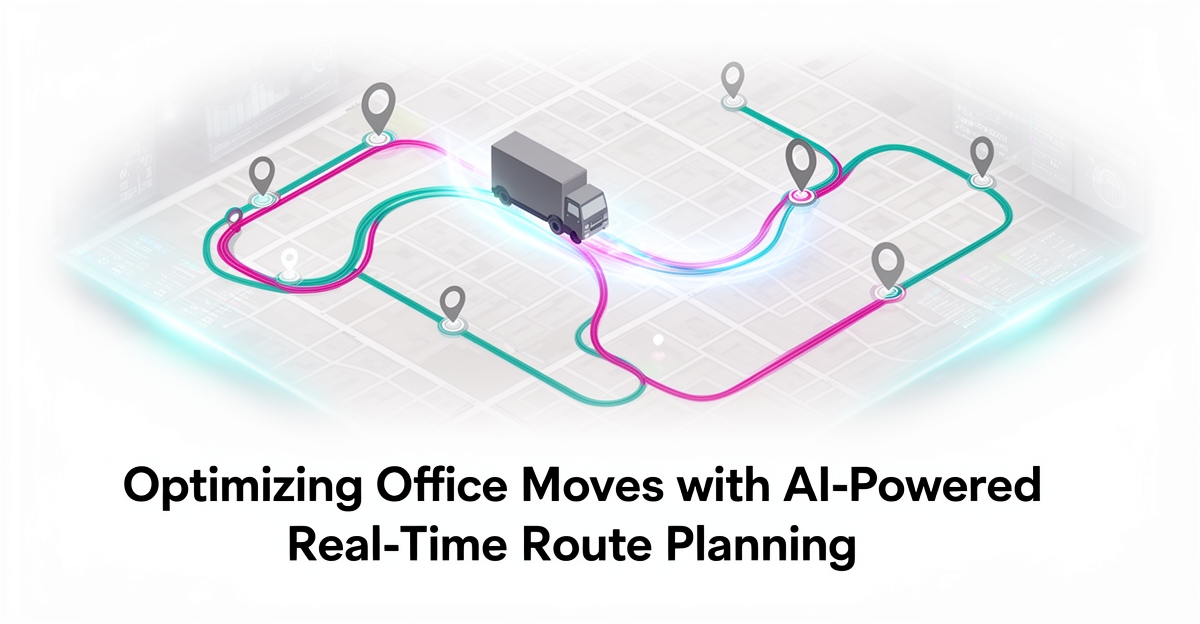
AI for Real-Time Route Optimization in Office Moving Operations
Key Facts
- Industry analyses commonly report that AI route optimization can reduce fuel costs by up to roughly 30% through dynamic rerouting.
- Route optimization works by combining live traffic and weather data with machine learning predictions and constraint-based planning.
- The route optimization software market has been growing steadily through the mid-2020s, with continued expansion projected through 2030.
- Most large logistics operations now use some form of AI-assisted planning, and adoption is spreading to smaller fleets and moving companies.
- For office moves specifically, constraint handling—elevator windows, loading dock slots, crew hours—matters as much as the route itself.
Hire a team member that works 24/7 — for less than a part-time wage.
AI receptionists, SDRs, dispatchers and 99+ roles. Trained on your business, fully managed.
Not sure where to start? Ask our AI planner
The Hidden Costs of Static Route Planning in Office Moves
Static route planning in office moving operations creates financial and operational inefficiencies that directly hit profitability. Traditional methods rely on fixed schedules and predetermined paths, which leads to unnecessary fuel consumption when vehicles hit unexpected traffic or road closures. That rigidity produces missed delivery windows—drivers can't adapt to real-time disruptions, causing delays that frustrate clients and disrupt business continuity at the new location. Static planning also leaves drivers idling in traffic or waiting for site access, wasting time and labor while adding vehicle wear and tear.
These inefficiencies compound quickly across multiple moves, driving up operational expenses without improving service quality. Industry analyses commonly report that AI-powered route optimization can reduce fuel costs by up to roughly 30% by dynamically adjusting routes based on live traffic, weather, and delivery constraints. Beyond fuel, AI minimizes idle time by optimizing arrival sequences and predicting delays, so crews spend more time productive and less time stuck in transit.
- Increased fuel consumption from suboptimal routing and traffic delays
- Missed delivery windows due to inability to adapt to real-time conditions
- Driver idle time wasted in traffic or waiting for site access
- Higher labor costs from extended move timelines and overtime
- Reduced customer satisfaction from unreliable ETAs and delays
For office moving businesses, these hidden costs erode margins and damage reputation, especially when clients expect precise timing to minimize operational downtime. AIQ Labs addresses these challenges through Workflow Builds that rebuild the routing-and-dispatch workflow that costs you the most—integrating with your dispatch software and GPS tracking so replanning responds to conditions as they unfold. This turns route planning from a static, error-prone process into a responsive, cost-saving function. By analyzing traffic patterns, distance, and delivery windows in real time, moving companies can eliminate waste, improve on-time performance, and deliver a smoother experience for every client transition.
How AI Transforms Route Optimization with Real-Time Data
Real-time conditions change by the minute, and office moving crews can't afford to chase static plans. AI-powered route optimization turns live traffic, weather and GPS feeds into continuously updated decisions that keep trucks on time and drivers productive.
AI systems ingest real-time data from GPS, traffic APIs and weather services to build a dynamic picture of current conditions. Machine learning algorithms analyze historical patterns to predict congestion and anticipate disruptions before they happen. Constraint-based optimization then enforces real-world limits such as vehicle capacity, time windows and driver availability.
The result is dynamic re-optimization that adjusts routes in motion rather than after the fact. When a bottleneck appears, the system recalculates the best path instantly and pushes the update to dispatch and drivers. This capability is why industry analyses commonly attribute fuel savings of up to roughly 30% to AI route optimization.
Adoption is accelerating across logistics. AI adoption is now mainstream across industries, and the route optimization software market has grown steadily through the mid-2020s, with continued expansion projected through 2030 as fleets of all sizes adopt dynamic planning.
For office moving operations, the mechanics translate into practical gains:
- Real-time traffic and weather ingestion keeps routes current
- Machine learning predicts delays and suggests alternatives proactively
- Constraint optimization respects elevator windows, loading dock slots and crew hours
- Dynamic re-routing delivers updates to drivers without manual replanning
These processes improve on-time arrivals, reduce idle time and increase driver efficiency as crews spend less time navigating and more time executing moves. Companies using AI route optimization typically see improved customer loyalty and satisfaction from accurate ETAs and reliable performance.
AIQ Labs builds custom route optimization systems that integrate with dispatch software and GPS tracking, analyzing traffic, distance and delivery windows to optimize routes dynamically—either as a standalone workflow rebuild or as part of a broader AI Operating System for your whole operation.
Implementing AI Route Optimization in Your Moving Business
Implementing AI route optimization begins with a clear assessment of your current office moving workflows. Map out how routes are planned today—whether manually or with basic software—and identify pain points like excessive mileage, missed delivery windows, or frequent last-minute changes. This baseline analysis reveals where AI can deliver the greatest impact, such as meaningful fuel savings through smarter routing decisions. Understanding your operational gaps ensures the solution targets real inefficiencies rather than adding complexity.
Next, choose an approach that integrates with your existing dispatch and GPS systems rather than replacing them. Look for solutions that ingest real-time traffic, weather, and road closure data to dynamically adjust routes as conditions change—critical for navigating urban office moves where delays are common. The system should support constraint optimization, factoring in truck capacity, crew schedules, and client time windows to generate feasible, efficient plans. AIQ Labs' fixed-price, phased build approach ensures the tool aligns with your specific moving business processes rather than forcing you to adapt to generic software.
Successful implementation hinges on staff training and change management. Dispatchers and drivers need hands-on practice using the new system to trust its recommendations over ingrained habits. Start with pilot routes to demonstrate time and fuel savings, then scale gradually. Continuously monitor key metrics like on-time arrivals, fuel usage per mile, and customer feedback to refine the AI model. As the system learns from historical data, it becomes more accurate at predicting traffic patterns and optimizing for your unique service areas—turning route planning from a reactive task into a proactive advantage.
- Assess current routing inefficiencies and set clear optimization goals
- Choose a solution with real-time data integration and constraint handling
- Train staff through pilot programs and monitor performance metrics
- Continuously refine the system using historical and real-time data
Still paying for 10+ subscriptions that don’t talk to each other?
We build custom AI systems you own outright. No vendor lock-in. Full control.
Not sure where to start? Ask our AI planner
Frequently Asked Questions
How much can AI route optimization actually save on fuel for office moves?
Is real-time route optimization only for big logistics companies?
Will AI routing work with our existing dispatch and GPS systems?
How does AI handle last-minute changes like traffic or loading dock delays?
What's the first step to implement AI route optimization in our moving business?
Every Minute in Traffic Is Money Off Your Margin
Static route planning quietly drains office moving businesses through wasted fuel, missed delivery windows, and idle crews—while AI-powered optimization keeps routes adapting in real time as traffic, weather, and schedules shift. The route optimization software market has grown steadily through the mid-2020s with continued expansion projected through 2030, and movers who adopt early will win the clients who demand precise timing. The path forward is practical: audit your current routing inefficiencies, pilot AI-driven routes on a few jobs, and scale what works. AIQ Labs builds custom route optimization systems that integrate directly with your dispatch software and GPS tracking—built in milestones at a fixed price, and owned outright with no vendor lock-in. Not sure where the biggest opportunity is in your operation? Start with the two-minute Fit Check at aiqlabs.ai/apply, then book a free 30-minute strategy call to map your highest-ROI automation wins. If there's no clear advantage, we'll tell you that too.
Make AI your competitive advantage — not just another tool.
Strategy, implementation and ongoing optimization. One partner, end to end.
Not sure where to start? Ask our AI planner