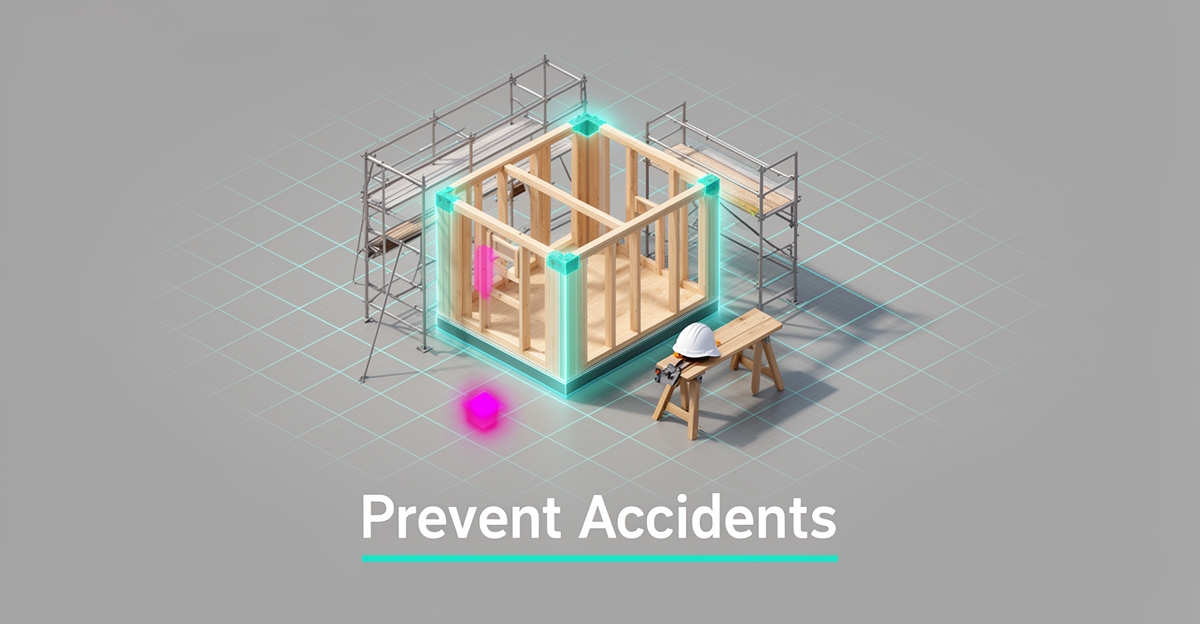
AI for Site Inspection & Safety Compliance: How Tiny Home Builders Can Prevent Accidents
Key Facts
- AI-powered site inspection is typically associated with meaningful reductions in safety incidents across construction compliance programs.
- Automated data analysis and reporting typically reduces administrative time for compliance teams, often by a quarter or more.
- Computer vision systems, when trained on relevant jobsite data, can detect many visible safety hazards with high accuracy as of late 2026.
- Computer vision can dramatically cut manual progress reporting time, freeing safety leaders to focus on prevention.
- AI-powered site inspection shifts compliance from reactive to predictive safety management.
Hire a team member that works 24/7 — for less than a part-time wage.
AI receptionists, SDRs, dispatchers and 99+ roles. Trained on your business, fully managed.
Not sure where to start? Ask our AI planner
The Hidden Safety Crisis in Tiny Home Construction
A single missed safety check on a tiny home build can cost far more than a repair bill—it can cost a worker their livelihood, or worse. Yet the very conditions that make tiny home construction appealing—compressed timelines, lean crews, and minimal formal oversight—also make it one of the riskier corners of the building industry.
Unlike large commercial sites, tiny home projects rarely have dedicated safety officers or layered inspection protocols. Builders juggle framing, electrical, and finishing work with small teams under aggressive deadlines, which means safety checks often become informal, inconsistent, or skipped entirely. When inspections happen only at milestone points, hazards that emerge between those checkpoints go undetected until they cause harm.
The scale of the problem is what makes it urgent. Industry compliance research has consistently found that AI-powered site inspection systems are associated with substantial reductions in safety incidents—meaning a meaningful share of construction accidents are preventable with better detection. For tiny home builders operating on thin margins, that represents both a human cost and a financial liability in the form of workers' compensation claims, project delays, and regulatory penalties.
The core issue isn't carelessness—it's visibility. Traditional manual inspections catch only what a human happens to look at, at the moment they look. AI-driven systems change that equation, with computer vision models trained on relevant jobsite data typically detecting a high share of visible safety hazards across varying site conditions as of late 2026.
For small builders, the gaps typically cluster in predictable areas:
- Unsafe practices that develop gradually and go unflagged between formal inspections
- Compliance documentation that is incomplete or inconsistent, creating liability exposure after an incident
- Recurring hazards that repeat across projects because no one analyzes patterns in past inspection records
- Real-time conditions—weather, equipment placement, crew behavior—that no scheduled walk-through can capture
What makes this a hidden crisis is that none of these failures announce themselves. A tiny home builder may complete dozens of projects without a serious incident, creating a false sense of security—until the one accident that does occur triggers costs that can threaten the entire business. The financial exposure compounds: rework, insurance premiums, legal fees, and reputational damage in a market built heavily on trust and referrals.
The good news is that the same AI capabilities transforming large construction sites are now accessible to smaller operations. Systems that analyze past inspections, flag unsafe practices, and generate real-time compliance reports—like the AI Workflow Builds AIQ Labs delivers for SMB builders—turn scattered field data into continuous safety oversight. Construction technology analysis has also found these tools typically deliver measurable schedule improvements alongside reductions in safety incidents, proving that safety and speed are not competing priorities.
The question for tiny home builders is no longer whether preventable accidents are happening on their sites—it's whether they're willing to deploy the tools that can stop them.
How AI-Powered Site Inspection Transforms Compliance from Reactive to Predictive
Tiny home builders can't afford a single preventable incident, yet manual inspections leave dangerous patterns hidden until it's too late. AI-powered site inspection flips that dynamic by turning historical field data into an early warning system for compliance.
Traditional checks rely on memory, checklists, and spot visits. AI analyzes thousands of inspection records with machine learning to surface repeat violations, high-risk zones, and unsafe behaviors before they escalate. AI-powered site inspection apps represent a shift from reactive compliance to predictive safety management.
Computer vision is the force multiplier for small crews. Visual AI scans jobsite photos and video in real time to flag missing PPE, unguarded edges, improper ladder use, and equipment misuse—typically with high accuracy when trained on relevant site data. That level of precision lets a two-person team maintain vigilance across multiple micro-sites without constant physical presence.
The operational gains compound quickly. Automated data analysis and reporting typically reduce administrative time significantly, freeing builders from paperwork and freeing supervisors for field leadership. Computer vision also supports schedule improvements by catching rework triggers early and keeping crews moving.
For tiny home builders, predictive compliance means fewer surprises and lower liability. AI systems monitor field data continuously and generate real-time compliance reports that document standards adherence for regulators and insurers. AIQ Labs integrates AI systems that monitor field data and provide alerts, helping builders maintain regulatory standards and reduce liability risks.
AI transforms inspection workflows from:
- Pattern detection across historical inspections to predict where incidents are likely
- Real-time computer vision alerts for visible hazards before workers are exposed
- Automated compliance reporting that reduces admin burden and supports audit readiness
- Resource allocation insights that prioritize high-risk tasks for small teams
The net effect is measurable. Builders using AI-powered inspection typically see meaningful reductions in safety incidents, while manual progress reporting time falls dramatically. Compliance becomes a continuous process rather than a weekly scramble.
With AI as a force multiplier, small teams gain enterprise-grade oversight without adding headcount, shifting safety from reactive fixes to predictive prevention.
Implementing AI Safety Systems Without Disrupting Your Workflow
Tiny home crews move fast, and safety checks often get squeezed between build milestones and client walkthroughs. That pressure creates gaps where hazards persist longer than they should.
Start with integration, not replacement. Map your existing project management and communication tools first, then connect AI monitoring so field photos, checklists, and timecards flow into one source of truth. AIQ Labs builds custom AI systems that businesses own, with deep two-way API integrations that create seamless operational workflows without forcing crews to learn a new platform.
Train the model on your site-specific risks before going live. Generic hazard libraries miss the realities of tiny home builds, such as confined-space electrical work, rooftop solar installs, and trailer transport. Feed historical inspection records, near-miss reports, and photos of your actual sites so the system learns what “unsafe” looks like for you. AI-powered inspection systems perform best—and reach their highest detection accuracy—when trained on relevant, site-specific data.
Keep humans in the loop for validation and trust. Use human-in-the-loop validation on the first 2-3 weeks of alerts so foremen confirm true positives and correct false positives. This feedback loop reduces bias, improves accuracy, and builds crew confidence that AI is an assistant, not an auditor.
A low-risk entry point helps teams adopt without workflow disruption. With AIQ Labs' Start Monthly model, you get setup plus a flat monthly plan that typically costs far less than a human hire, with build, training on your business, tool integrations, monitoring, and improvements included. You can pause or adjust anytime while maintaining ownership of the system. If you'd rather scope a single high-cost workflow first, a fixed-price AI Workflow Build rebuilds the one process that costs you the most, in phases. And for builders ready to connect safety, scheduling, and compliance into one layer, AI Operating Systems provide a connected operating layer you own outright.
Practical first steps for tiny home builders:
- Audit current inspection data and project management tools to identify manual handoffs and reporting bottlenecks.
- Pilot AI monitoring on one build site or one trade, such as electrical or roofing, with daily human review of alerts.
- Connect the AI system to existing scheduling and compliance software so real-time reports generate automatically.
- Establish clear escalation rules for critical hazards and document response times for regulatory records.
Automated analysis also frees administrative capacity. Compliance research consistently shows automated data analysis and reporting can cut administrative time significantly, while AI-powered site inspection is associated with meaningful reductions in safety incidents.
Computer vision adds visibility without adding walkthroughs. Construction technology analysis notes dramatic reductions in manual progress reporting time through computer vision, letting safety leaders focus on prevention rather than paperwork.
When adoption is staged, crews keep their rhythm and safety improves measurably.
Safety You Can See Before It Hurts You
The hidden crisis in tiny home construction isn't carelessness—it's visibility. Manual, milestone-based inspections leave hazards undetected between checkpoints, and the costs of one preventable accident can threaten a business built on thin margins and referrals. As this article has shown, AI-powered site inspection flips compliance from reactive to predictive: machine learning surfaces repeating violations across past inspection records, computer vision flags visible hazards in real time, and automated reporting cuts administrative burden—without adding headcount. The implementation path doesn't require disrupting your workflow: integrate with the tools you already use, train the system on your site-specific risks, and pilot on one build with human-in-the-loop validation. That's exactly how AIQ Labs approaches it—custom AI systems builders own outright, with flexible payment models (Start Monthly, Build in Milestones, Own It Outright) that typically cost far less than a human hire and can be paused anytime. Start with the two-minute Fit Check at aiqlabs.ai/apply, then book your free 30-minute strategy call. If there's a clear safety win on your sites, we'll map it with you—and if there isn't, we'll tell you that too.
Make AI your competitive advantage — not just another tool.
Strategy, implementation and ongoing optimization. One partner, end to end.
Not sure where to start? Ask our AI planner