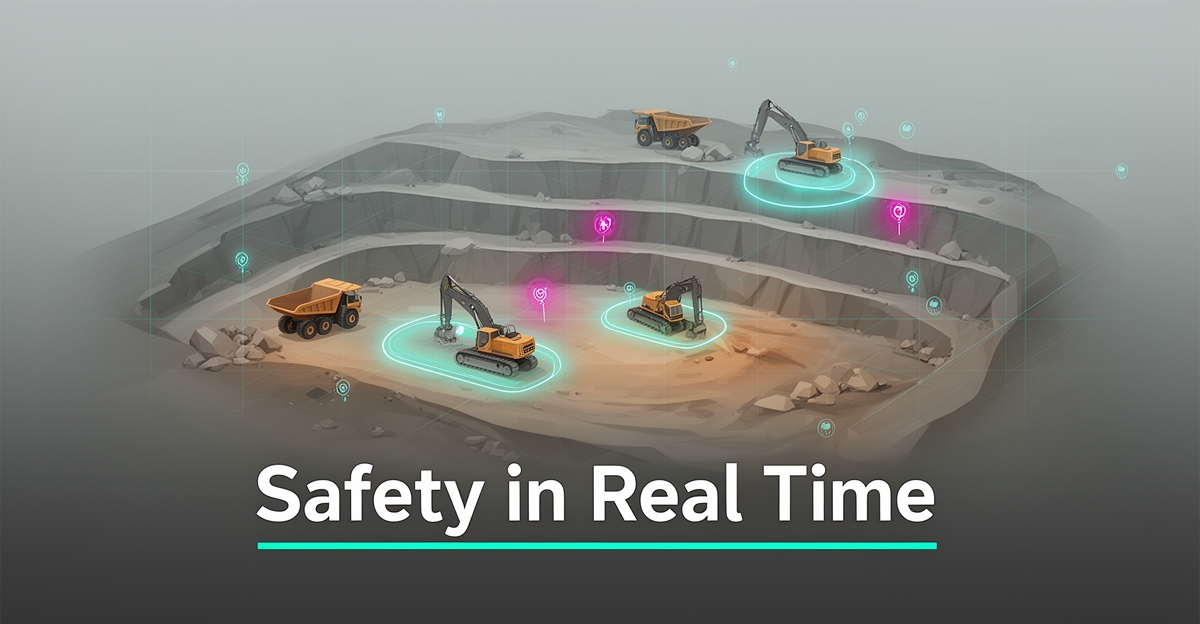
AI for Site Safety: How Real-Time Monitoring Can Prevent Accidents in Quarries
Key Facts
- Industry analyses suggest roughly 4.5 lakh road accidents are recorded annually in India
- Roughly 1.6 lakh lives are lost annually in those accidents, per widely cited industry figures
- Road accidents are estimated to drain around 5% of India's GDP, according to industry analyses
- Most collisions don't happen because of one mistake but because of combinations of factors
- AI-integrated systems provide immediate feedback so workers can self-correct risky behaviors in the moment
- pSIF scoring shifts focus from what might have been to what must not happen
- A combination of red light, pedestrian stepping forward, and driver texting is estimated at 2,000 to 3,000 times more dangerous than any single factor alone
Hire a team member that works 24/7 — for less than a part-time wage.
AI receptionists, SDRs, dispatchers and 99+ roles. Trained on your business, fully managed.
Not sure where to start? Ask our AI planner
The High Cost of Reactive Safety in Quarry Operations
Quarry operations remain dominated by reactive safety, and the human and financial cost is stark. Traditional programs rely on manual inspections, incident reports, and post-event investigations, leaving dangerous gaps between hazard emergence and response.
Reactive systems are built on lagging indicators. Supervisors depend on human observation to spot unsafe behaviors, which means hazards can persist for hours or days before documentation triggers action. Traditional safety programs respond after incidents occur, creating a cycle where prevention is secondary to documentation.
The scale of loss from delayed detection is visible across high-risk industries. Industry analyses suggest roughly 4.5 lakh road accidents are recorded annually in India, with around 1.6 lakh lives lost. The economic drain is equally severe, with road accidents estimated to drain around 5% of India's GDP, illustrating how reactive approaches translate into measurable societal cost.
In quarries, the same pattern plays out with pSIF risks. Without continuous monitoring, serious injury or fatality scenarios build from combinations of factors rather than single mistakes. Most collisions don't happen because of one mistake but because of combinations, a dynamic that manual oversight cannot reliably catch in real time.
Delayed detection also limits intervention quality. Post-incident analysis provides context after harm is done, while workers receive generic training instead of timely correction. AI-integrated systems provide immediate feedback to workers, helping them self-correct risky behaviors in the moment, a capability absent from paper-based reporting.
The financial toll compounds quickly:
- Production stoppages after incidents and investigations
- Regulatory fines, insurance increases, and legal exposure
- Lost experienced labor and workforce morale decline
- Reputational damage affecting contracts and community trust
This reactive model also fails to prioritize risk. Safety teams address the most frequent issues rather than the most severe. pSIF scoring shifts the focus from what might have been to what must not happen, a prioritization logic that manual systems cannot sustain.
AI-powered sensors and cameras change the equation by detecting unsafe behaviors and environmental hazards instantly, so immediate action can be taken before incidents occur. For quarry operators, this means moving from reactive documentation to proactive prevention, with real-time alerts that integrate into daily operations.
AIQ Labs builds custom AI Systems that fit this workflow, using computer vision, sensor fusion, and automated alerting to detect hazards and notify supervisors instantly. The goal is not surveillance for its own sake but a measurable shift toward a proactive safety culture where risks are interrupted before they escalate. See how we approach AI Systems for operations like yours.
How AI-Powered Real-Time Monitoring Transforms Hazard Detection
In a quarry, the difference between a near miss and a fatality is often measured in seconds. That's why AI-powered real-time monitoring is fundamentally changing how safety teams detect and respond to hazards, flagging unsafe behaviors the instant they happen so immediate action can be taken before incidents occur.
Three core technologies make this possible. Computer vision continuously scans camera feeds to detect specific unsafe actions, including workers without proper protective equipment, machinery operated outside safety protocols, or personnel entering restricted zones. IoT sensors track environmental conditions like dust levels, noise exposure, and equipment malfunctions. Together, they provide the continuous automated monitoring that traditional, human-dependent supervision simply cannot match.
The third layer, predictive analytics, turns detection into prevention. By analyzing historical and real-time data, these systems identify high-risk zones, dangerous time windows, and equipment that poses elevated risk, allowing safety teams to prioritize interventions where they're needed most. This data-driven approach replaces lagging indicators like near-miss reports with leading indicators drawn from live risk assessment.
A key advancement is pSIF scoring, or Potential Serious Injury or Fatality risk evaluation. Rather than ranking hazards by how often they occur, pSIF scoring assesses how severe the consequences could be, shifting the focus from what might have been to what must not happen. Safety teams can then concentrate resources on the most critical exposures instead of the most common ones.
AI systems also excel at recognizing how risks combine. Most collisions don't happen because of one mistake, they happen because of combinations. Predictive collision analytics estimate that a driver glancing at a text while a pedestrian steps forward and a light turns red is 2,000 to 3,000 times more dangerous than any single factor alone. In a quarry, where haul trucks, pedestrians, and unstable ground often interact, spotting these converging risk factors is exactly where AI adds the most value.
Real-time intervention closes the loop. In-cab alerts and instant supervisor notifications help operators self-correct risky behaviors in the moment, before a distraction or unsafe following distance escalates. When an incident does occur, integrated video and telematics data provide the complete context, accelerating analysis and improving future protocols.
For operations ready to make this shift from reactive to proactive safety, the technology must integrate with daily workflows rather than sit alongside them. That's the approach AIQ Labs takes when building automated safety monitoring: connecting detection, alerting, and reporting into a single connected layer, the same principle behind our AI Operating System, which supports a continuous safety culture rather than an after-the-fact audit trail.
From Alert to Action: Implementing AI Safety Systems in Quarry Workflows
Implementing AI safety monitoring in quarries begins with installing sensors and vision systems that flag hazards and unsafe behaviors instantly, enabling immediate action before incidents occur. This proactive detection shifts safety from reactive reporting to real-time prevention, which is critical in high-risk quarry environments where conditions change rapidly and seconds can prevent serious harm. AIQ Labs designs these systems to integrate with daily operations, creating a foundation for continuous risk assessment rather than periodic checks.
The implementation process requires integrating contextual data from multiple sources, including video feeds, environmental sensors, and equipment telematics, to provide a complete picture of risk factors. This fusion allows the system to recognize combination risks, such as a worker entering a blast zone while dust levels spike and machinery operates nearby, which traditional monitoring might miss. By analyzing these converging factors, AI identifies high-risk scenarios with greater accuracy than single-factor alerts.
Real-time intervention mechanisms then deliver instant feedback to workers and supervisors through in-cab alerts, wearable notifications, or site-wide alarms when pSIF (Potential Serious Injury or Fatality) risks are detected. These alerts enable self-correction in the moment, such as adjusting equipment operation or exiting a hazardous zone, before an incident escalates. Over time, the system uses this data to develop personalized coaching programs tailored to individual risk profiles, roles, and behaviors, moving beyond generic training to targeted safety improvement. AIQ Labs' AI Employees support ongoing optimization by continuously refining alert thresholds and coaching recommendations based on site-specific patterns, ensuring the system evolves with operational changes. To explore how this approach can be tailored to your quarry's safety workflow, start the Fit Check at https://aiqlabs.ai/apply for a free 30-minute strategy call.
Still paying for 10+ subscriptions that don’t talk to each other?
We build custom AI systems you own outright. No vendor lock-in. Full control.
Not sure where to start? Ask our AI planner
Frequently Asked Questions
How does AI-powered safety monitoring actually prevent accidents in quarries instead of just recording them?
What makes pSIF scoring different from traditional safety metrics we already track?
Can AI really detect complex risk combinations that human supervisors miss?
Will constant AI monitoring create privacy issues or 'alert fatigue' for our crews?
How does the system integrate with our existing quarry operations without disrupting production?
What kind of ROI can we expect from investing in AI safety monitoring?
Turning Safety Insights into Action: Your Path to a Proactive Quarry
The evidence is clear: reactive safety in quarries comes at a steep human and financial cost, with delayed detection allowing preventable risks to escalate. AI-powered real-time monitoring changes this dynamic by instantly flagging unsafe behaviors and environmental hazards, from missing PPE to converging risk factors like dust spikes and machinery proximity, enabling immediate intervention before incidents occur. By shifting focus from lagging indicators to pSIF scoring and predictive analytics, safety teams can prioritize what truly matters: preventing serious harm. For quarry operators ready to move beyond documentation to genuine prevention, the next step is exploring how these systems integrate into daily workflows. Start the Fit Check at https://aiqlabs.ai/apply for a free 30-minute strategy call to see where AI-driven safety monitoring can deliver measurable risk reduction and operational resilience for your site.
Make AI your competitive advantage — not just another tool.
Strategy, implementation and ongoing optimization. One partner, end to end.
Not sure where to start? Ask our AI planner