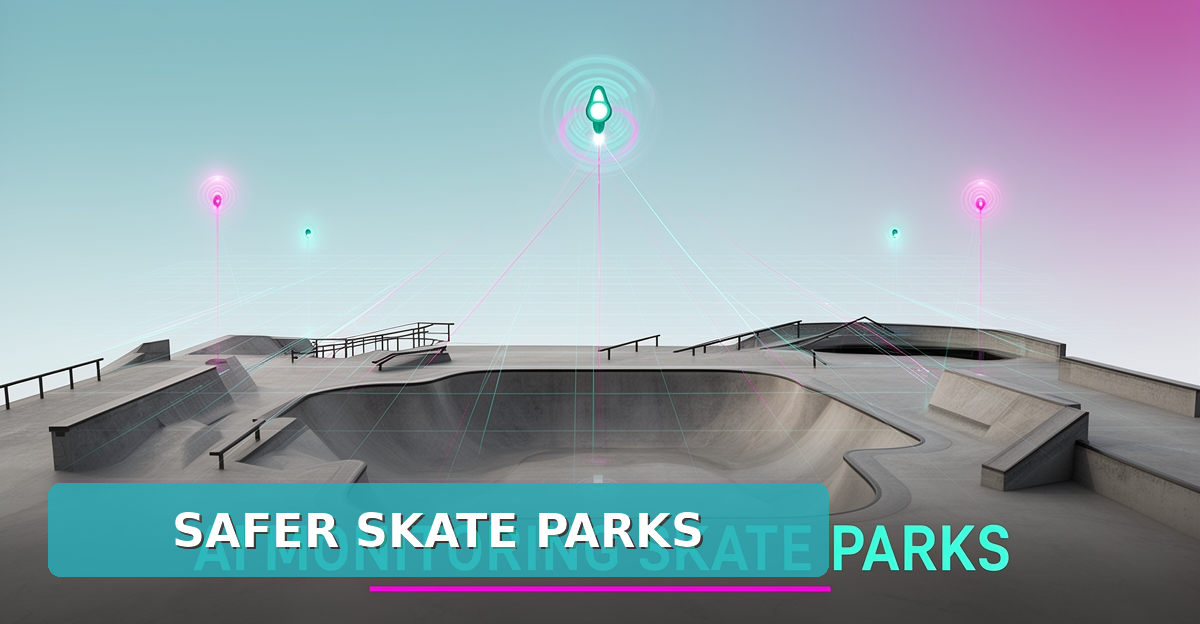
AI for Skate Park Safety: Real-Time Risk Detection and Alerts
Key Facts
- A substantial share of skateboarding injuries occur in skate parks, making concentrated risk management essential for operators
- Modern AI-powered monitoring solutions detect unusual patterns and send real-time alerts to staff, enabling proactive safety management
- Real-time AI detection flags sudden spikes in falls or overcrowding before they escalate, giving teams actionable context
- Staff response time in reactive systems depends on where they are standing, not where risk is emerging, creating dangerous gaps in safety
- AI monitoring complements human judgment by providing earlier, clearer signals for staff to assess and act
- Proactive safety management reduces preventable accidents and strengthens community confidence in the facility
Hire a team member that works 24/7 — for less than a part-time wage.
AI receptionists, SDRs, dispatchers and 99+ roles. Trained on your business, fully managed.
Not sure where to start? Ask our AI planner
The Hidden Costs of Reactive Safety Management
Manual supervision feels safe until the moment it isn't. Skate parks are high-energy environments where risk accumulates quickly, and traditional reactive protocols leave dangerous gaps between incident and response.
A substantial share of skateboarding injuries occurs in skate parks, according to risk management analysis of the category. That concentration of harm means operators carry outsized liability exposure, yet most still rely on human patrols and post-incident reporting to manage safety.
Reactive safety management is built around visibility, not prediction. Staff can only watch a fraction of the park at once, and incident reports are filed after the damage is done. Effective risk management strategies include identifying and assessing risks, implementing safety protocols, and providing user education — but those steps remain manual and intermittent without continuous monitoring.
The blind spots created by this approach show up repeatedly:
- Crowding and flow changes go unnoticed until collisions rise
- Repeated near-misses are never logged or trended
- Staff response time depends on where they are standing, not where risk is emerging
- Maintenance issues and hazard zones persist between scheduled checks
These gaps translate directly into financial and reputational cost. Liability insurance is essential for protecting park operators from financial loss, yet insurance does not prevent the accident, the injury, or the negative word-of-mouth that follows. Skate park risk management is crucial for ensuring user safety and minimizing accidents, but reactive systems struggle to deliver that consistently.
Real-time pattern detection changes the equation. AI-powered monitoring solutions can detect unusual patterns and send alerts to staff in real time, enabling proactive safety management and rapid response. Using sensors and visitor data, AI can flag sudden spikes in falls or overcrowding before they escalate, giving teams actionable context instead of hindsight.
This is where real-time monitoring applies to public spaces. Systems can continuously interpret park activity and surface anomalies for immediate action. AIQ Labs builds these kinds of monitoring workflows — typically as a fixed-price AI Workflow Build targeting the one process that costs a park the most, or as part of a broader AI Operating System that connects safety, maintenance, and operations in one layer.
The shift from reactive to responsive is also about trust. Parks that demonstrate visible, intelligent stewardship protect users and reputation at the same time. Proactive safety management reduces preventable accidents, supports staff effectiveness, and strengthens community confidence in the facility.
How Real-Time AI Detection Transforms Park Safety
Skate parks live in a constant balance between high-energy fun and real risk. With a large share of skateboarding injuries occurring in park environments, safety management can no longer rely on spot checks and reactive response alone.
Real-time AI detection shifts the model from watching incidents happen to preventing them before escalation. Modern AI-powered monitoring solutions use computer vision to detect unusual patterns and send alerts to staff in real time, enabling proactive safety management and rapid response. These systems analyze sensor data and visitor patterns to flag sudden spikes in falls, overcrowding in specific zones, or unusual behavior, giving teams a timely window to intervene.
This proactive approach changes how risk is managed. Skate park risk management is crucial for ensuring user safety and minimizing accidents, and effective strategies include identifying and assessing risks, implementing safety protocols, and providing user education. Real-time monitoring adds a continuous assessment layer that human staff alone cannot sustain during peak hours.
Beyond safety, the technology supports operational goals. Cleaner sightlines, reduced congestion, and faster staff response contribute to a smoother user experience and stronger community perception. Well-monitored parks tend to attract more users and sustain their reputation over time.
Using sensors and visitor data, AI can detect unusual patterns — like sudden spikes in falls or overcrowding — and send alerts to staff in real time. AIQ Labs aligns real-time analytics with park operations, building monitoring systems that fit how each facility actually runs.
Staff receive actionable alerts instead of raw video feeds. Typical signals include:
- Sudden spikes in falls within a single bowl or street plaza zone
- Overcrowding that exceeds safe capacity thresholds
- Unusual loitering or behavior near high-risk features
- Equipment anomalies or sensor-triggered maintenance needs
The shift is from reactive response to predictive prevention. Instead of documenting incidents after the fact, teams can redirect traffic, open alternative lines, or dispatch staff before a minor issue becomes an injury. That change reduces liability exposure and supports continuous improvement through incident pattern analysis.
Real-time monitoring also complements existing safety fundamentals. Regular maintenance checks, emergency response planning, and analyzing incident reports remain vital for continuous improvement in skate park safety. AI layers on top, ensuring those protocols are triggered by live conditions rather than schedules alone.
For operators, the result is a safer, more welcoming environment that sustains reputation and usage. When safety is visible and responsive, riders stay longer, return more often, and recommend the park.
Building a Comprehensive Risk Management Strategy
A safe skate park starts long before a sensor is installed. With a large share of skateboarding injuries occurring in skate parks, operators need a layered approach where technology supports, not substitutes, human responsibility.
Effective risk management is crucial for ensuring user safety and minimizing accidents. Effective strategies include identifying and assessing risks, implementing safety protocols, and providing user education. These foundations remain the backbone of any modern safety program.
Systematic risk identification sets the tone. Staff walk the site to map hazards by park type, user skill level, and time of day. Incident logs are reviewed to spot repeat locations and patterns. This human-led assessment creates the baseline that AI monitoring later amplifies.
Regular maintenance protocols protect the physical environment. Surfaces, coping, rails, and drainage are inspected on a set schedule and after weather events. Equipment is repaired or closed until safe. Regular maintenance checks and emergency response planning are vital for continuous improvement in skate park safety.
Emergency response planning ensures fast, coordinated action. Roles for first aid, evacuation, and communication are assigned and rehearsed. Signage, first-aid stations, and staff radios are checked routinely. Liability insurance is also essential for protecting park operators from financial loss.
User education closes the loop. Clear rules, skill-appropriate zones, and visible safety briefings reduce risky behavior. On-site staff model safe practices and intervene early. Education is reinforced by signage and community messaging.
AI amplifies these practices through real-time monitoring. Using sensors and visitor data, AI can detect unusual patterns — like sudden spikes in falls or overcrowding — and send alerts to staff in real time. AIQ Labs builds these monitoring capabilities as phased, fixed-price workflow builds, so parks can start with the highest-risk zone and expand from there.
When integrated properly, AI monitoring complements the human system:
- Risk identification becomes continuous, with AI flagging emerging hotspots from usage data
- Maintenance is prioritized by evidence, not guesswork, using incident and wear patterns
- Emergency response is accelerated with instant alerts to the right staff member
- User education is reinforced by real-time crowd management and flow guidance
This is technology amplifying human judgment, not replacing it. Staff still assess, decide, and act. AI simply gives them earlier, clearer signals.
The result is a comprehensive risk management strategy that is proactive, documented, and adaptive. Safety isn't just a priority; it's a way of life.
Implementing AI Monitoring: From Assessment to Action
Implementing AI monitoring in skate parks begins with a thorough facility risk assessment to identify high-traffic zones, blind spots, and recurring incident patterns. Because a large share of skateboarding injuries occurs in skate parks, it is essential to map where falls and collisions are most likely to happen. This assessment should evaluate lighting, surface conditions, and user flow to determine optimal sensor placement for maximum coverage.
Once risks are identified, operators can select appropriate sensor and AI monitoring solutions tailored to their specific environment. Modern computer vision systems detect unusual patterns — such as sudden spikes in falls or overcrowding — and send real-time alerts to staff, enabling proactive safety management and rapid response. These tools integrate with existing infrastructure, including cameras and access control systems, to create a unified safety network without requiring a complete overhaul.
Establishing clear alert protocols and staff response workflows is critical for turning data into action. When the AI detects a potential hazard, it should trigger tiered notifications — such as on-site alerts for immediate staff and mobile notifications for supervisors — based on severity. Training staff to interpret these alerts and execute predefined responses, like clearing congested areas or checking on injured users, ensures timely intervention. Regular drills and feedback loops help refine these workflows over time.
Finally, integrating AI monitoring with existing safety infrastructure and liability insurance requirements strengthens overall risk management. Documented AI-assisted incident reports can support insurance claims and demonstrate due diligence in maintaining a safe environment. By combining real-time data with routine maintenance checks, emergency planning, and user education, skate park operators create a comprehensive safety strategy that protects users and reduces operational risk. AIQ Labs supports this transformation through phased builds that fit each park's budget and safety goals — start with a two-minute Fit Check to see if your facility is a match, then book a free 30-minute strategy call to map the highest-impact first step.
Still paying for 10+ subscriptions that don’t talk to each other?
We build custom AI systems you own outright. No vendor lock-in. Full control.
Not sure where to start? Ask our AI planner
Frequently Asked Questions
How many skateboarding injuries actually happen in skate parks?
Can AI monitoring replace human staff in skate parks?
What specific risks can AI-powered monitoring detect in real time at skate parks?
Does using AI in skate parks help with more than just safety?
How does AI monitoring integrate with existing skate park safety practices?
How can a skate park operator get started with AI monitoring?
Where Safety Meets Smarter Operations
AI-powered monitoring transforms skate park safety from reactive patchwork to proactive stewardship. By detecting rising risks — like sudden falls or overcrowding — before they escalate, operators gain the visibility to act early, reduce liability, and build community trust. This approach doesn't replace human judgment; it amplifies it with real-time insights that support staff, improve flow, and protect reputation. For skate park operators ready to move beyond spot checks and incident reports, the path forward starts with understanding where AI fits into a layered safety strategy. To explore how real-time monitoring can strengthen your park's operations without overhauling what works, take the two-minute Fit Check at aiqlabs.ai/apply and book a free 30-minute strategy call to map your highest-impact opportunities.
Make AI your competitive advantage — not just another tool.
Strategy, implementation and ongoing optimization. One partner, end to end.
Not sure where to start? Ask our AI planner