AI for Soil Health Assessment: How Ag Consulting Firms Can Stay Ahead
Key Facts
- Large-scale soil testing programs — such as India's Soil Health Card Scheme, which has issued hundreds of millions of cards through thousands of labs — show both the demand for and the limits of point-based testing
- Industry analyses typically report fertilizer efficiency gains of up to 30% when AI-driven precision approaches augment conventional testing
- Dozens of commercial AI soil analysis tools now combine multi-source data streams into scalable soil intelligence, and the field keeps growing as of late 2026
- AI can deliver actionable soil insights in hours rather than the days or weeks conventional lab turnaround typically demands
- Precision agriculture approaches combining AI and lab testing are commonly associated with yield improvements in the 15–20% range compared to non-automated methods
- Traditional point-based soil sampling creates spatial blind spots across heterogeneous fields that shift every season
- Hybrid AI-lab workflows enable micro-zone management maps that replace uniform prescriptions with variable-rate scripts for seed and fertility
Hire a team member that works 24/7 — for less than a part-time wage.
AI receptionists, SDRs, dispatchers and 99+ roles. Trained on your business, fully managed.
Not sure where to start? Ask our AI planner
Why Soil Health Advice Is Stuck Between Lab Precision and Field Reality
For decades, agricultural consultants have operated in a frustrating gap: lab results deliver chemical precision for a single coordinate, yet the farm itself is a mosaic of micro-zones that shift every season. Traditional soil testing relies on point-based sampling that creates spatial blind spots across heterogeneous fields, and lab turnaround of days or weeks means recommendations often arrive too late for critical input decisions. These test results are essentially point estimates that cannot capture field-scale variability, leaving consultants advising on yesterday's data for today's problems.
The scalability ceiling is equally rigid. Large national programs — India's Soil Health Card Scheme has issued hundreds of millions of cards through a network of thousands of labs — demonstrate what physical sampling logistics can achieve, and also where they stall: recurring costs for transport, analysis, and re-sampling. Consultants managing large or diverse operations face a binary choice: sparse sampling that misses variability, or dense sampling that breaks the budget and the timeline. Lab testing remains the gold standard for chemical precision, but it fundamentally lacks the spatial resolution and speed modern precision agriculture requires.
- Point samples represent single coordinates, not field-scale reality
- Lab turnaround of days to weeks delays critical nutrient decisions
- Physical sampling costs scale linearly with acreage and frequency
- Static snapshots cannot capture dynamic moisture, temperature, or microbial shifts
- Heterogeneous farms require resolution that grid sampling cannot economically provide
This is where the consulting workflow breaks down. Advisors need to translate lab precision into field-scale prescriptions, but the data pipeline — sample, ship, wait, report — was built for a different era. AIQ Labs works with consulting firms to close this gap by developing custom models that ingest lab reports, satellite imagery, and climate history to generate predictive soil insights across every acre, not just the sampled points. The result is a living data layer that updates in hours rather than weeks, turning static snapshots into dynamic decision support without replacing the lab science that grounds it.
How AI Augments Soil Tests With Satellite, Sensor and Climate Data
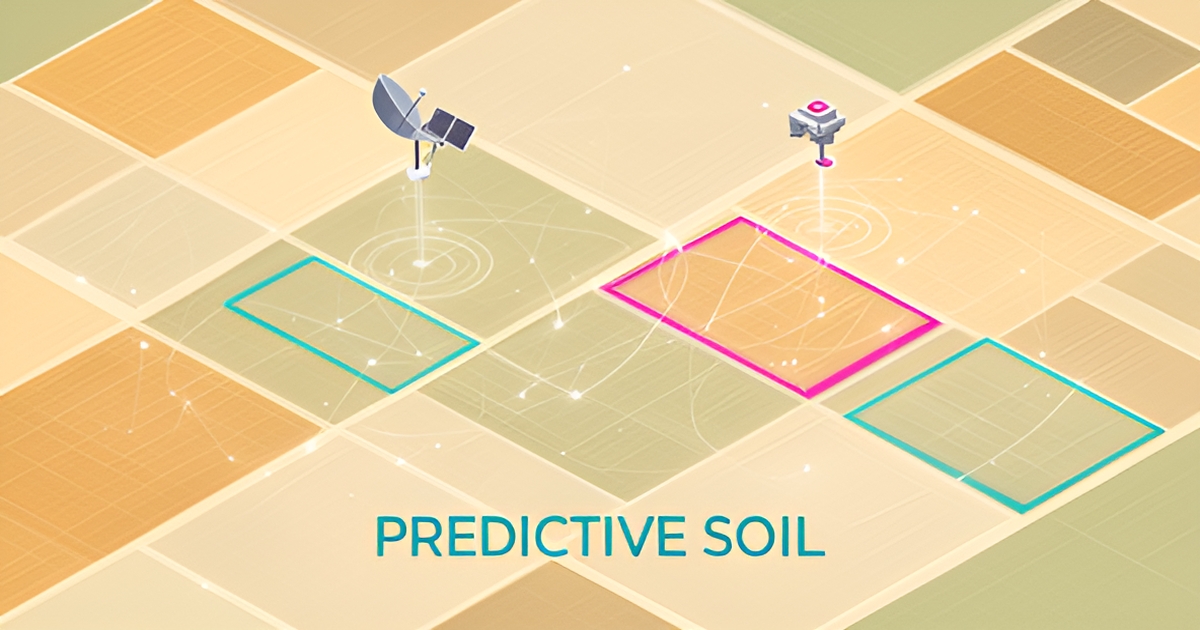
Traditional soil tests deliver precise chemistry for a single point, yet fields vary meter by meter. AI changes that equation by fusing lab results with satellite imagery, in-field sensors, and decades of climate records to model nutrient content, moisture, pH, and organic matter across entire landscapes. As of late 2026, the commercial market includes dozens of AI soil analysis tools, with the most capable platforms combining multi-source data streams into scalable soil intelligence.
- Satellite spectral bands reveal surface organic matter and moisture patterns invisible to sparse sampling
- IoT sensors stream real-time temperature, EC, and volumetric water content at depth
- Historical climate normals and anomaly data contextualize current conditions against long-term trends
- Lab reports anchor the model, providing ground-truth calibration for predictive layers
Hybrid workflows are emerging as the standard. AI models depend on strong datasets and typically require initial baseline lab tests to calibrate predictions, yet they reveal patterns a few point samples cannot capture. Large-scale soil testing programs have also created massive regional training corpora that make predictive models more accurate year over year. AIQ Labs develops custom AI models that augment traditional soil analysis with predictive insights, helping consultants move from static snapshots to dynamic, forward-looking recommendations. The speed advantage is decisive: actionable insights typically arrive in hours rather than the days or weeks conventional lab turnaround demands.
From Insights to Client Value: Building Predictive Soil Health Workflows
The gap between a soil test result and a profitable management decision has always been the consultant's hardest bridge to cross. Traditional lab reports deliver precise chemistry for a single point, yet fields operate as complex, variable systems that demand spatial and temporal intelligence.
AI-powered platforms now close that gap by fusing lab data, satellite imagery, and climate history into predictive models that reveal field-scale patterns invisible to point sampling. Industry analyses commonly report fertilizer efficiency improvements of up to 30% from these precision approaches, with insights processed in hours instead of the days or weeks required for traditional lab turnaround. Hybrid approaches — periodic lab calibration layered with continuous AI monitoring — deliver the precision of chemistry with the scalability of remote sensing.
For consulting firms, this capability translates directly into three high-value deliverables:
- Micro-zone management maps that replace uniform prescriptions with variable-rate scripts for seed, fertility, and amendments
- Irrigation planning models that forecast soil moisture dynamics across topography and weather scenarios
- Regenerative program baselines that quantify soil carbon and organic matter trajectories for verification markets
Leading AI soil platforms now offer exactly this workflow: baseline assessment, scenario planning, execution tracking, and outcome reporting. AIQ Labs builds on that foundation by developing custom AI models that embed a firm's proprietary agronomic logic — crop rotations, regional calibrations, client history — into predictive engines the consultancy owns outright. Unlike black-box SaaS tools, these systems become intellectual property that appreciates with every field season, turning seasonal consulting engagements into recurring revenue streams anchored in data assets the firm controls. Explore AI Workflow Builds to rebuild the one workflow that costs your firm the most, or AI Operating Systems for a fully connected operating layer you own.
Implementing AI Soil Health Assessment Without Replacing Your Lab Partner
The most successful agricultural consulting firms aren't choosing between AI and traditional lab testing — they're strategically combining both to deliver superior soil health insights while maintaining scientific rigor.
Implementation begins with baseline lab calibration, where you collect physical soil samples and submit them to your existing laboratory partner for chemical analysis. AI models typically require this initial ground-truth data to calibrate predictions accurately. This establishes your reference point for nutrient levels, pH, and organic matter content.
Next, integrate your AI system with multiple data streams. Connect satellite imagery, weather station data, and historical soil test results into a unified platform. Leading platforms in this category combine sensor data with machine learning to assess moisture levels, nutrient content, and organic matter at scale. This integration allows AI to identify spatial variability across entire fields — something point-based lab samples simply cannot capture.
Model validation follows a structured approach:
- Compare AI predictions against lab results for identical locations and timeframes
- Document accuracy rates for each soil parameter (nitrogen, phosphorus, potassium, pH)
- Establish confidence thresholds where AI predictions trigger confirmatory lab testing
- Refine algorithms based on seasonal performance patterns
- Maintain audit trails for regulatory and client reporting requirements
The hybrid model proves remarkably cost-effective. While traditional testing delivers precision for specific points, AI typically provides insights in hours rather than days or weeks, enabling real-time decision-making. You maintain lab partnerships for quarterly or seasonal verification while AI handles continuous monitoring between sampling events.
Client reporting transforms when you combine both approaches. Present lab-verified baseline data alongside AI-generated predictive maps showing field variability, moisture trends, and nutrient depletion zones. Industry analyses indicate this precision agriculture approach can improve fertilizer efficiency by up to 30% and is commonly associated with yield gains of 15–20% compared to non-automated methods.
AIQ Labs structures implementation through flexible engagement models: Start Monthly with a managed AI employee for immediate soil analysis automation, Build in Milestones through phased custom model development, or Own It Outright with a complete system your firm controls. Each approach preserves your laboratory relationships while adding predictive capabilities that position your consultancy ahead of competitors still relying solely on point-sample testing. Not sure which fits? Start with the 2-minute Fit Check.
Still paying for 10+ subscriptions that don’t talk to each other?
We build custom AI systems you own outright. No vendor lock-in. Full control.
Not sure where to start? Ask our AI planner
Frequently Asked Questions
Does AI replace traditional soil lab testing for consultants?
How much faster is AI soil analysis compared to sending samples to a lab?
Can AI really see soil variability that point samples miss?
What kind of efficiency gains can consultants expect from AI soil health workflows?
Do I need to collect lab samples first before starting AI soil monitoring?
Which AI soil analysis tools are considered leaders right now?
Key Takeaways
Soil consulting has always been caught between the precision of a lab report and the reality of a 500-acre mosaic. AI doesn't replace the lab — it extends its reach, turning point samples into field-scale intelligence that updates in hours, not weeks. The firms winning in 2026 run hybrid workflows: lab-calibrated baselines, continuous AI monitoring, and micro-zone prescriptions their clients can act on the same day. The question isn't whether AI belongs in your soil practice — it's whether you build it into an asset you own or keep renting someone else's black box. AIQ Labs builds custom predictive soil systems you own outright, with engagement models that fit your budget and timeline. Start with the 2-minute Fit Check at aiqlabs.ai/apply and book a free 30-minute strategy call.
Make AI your competitive advantage — not just another tool.
Strategy, implementation and ongoing optimization. One partner, end to end.
Not sure where to start? Ask our AI planner