AI in Packaging Distribution: Cutting Order Errors with Document Processing
Key Facts
- Continuous AI validation replaces spot checks, catching mismatched SKUs, quantity discrepancies, and pricing anomalies before fulfillment
- Multi-document reconciliation links POs, receipts, and invoices into a single verified record, preventing fulfillment errors upstream of the warehouse
- AI validation layers integrate with existing ERP and WMS systems via API—no infrastructure replacement required
- Clean orders process automatically around the clock; human review is reserved for flagged exceptions
- AIQ Labs has deployed 200+ multi-agent systems and runs 4 live SaaS products daily—systems built for production, not pilots
- AI employees handle routine order and document work at roughly 80% less cost than a comparable human hire, operating 24/7/365
Hire a team member that works 24/7 — for less than a part-time wage.
AI receptionists, SDRs, dispatchers and 99+ roles. Trained on your business, fully managed.
Not sure where to start? Ask our AI planner
The Costly Reality of Manual Order Processing in Packaging Distribution
Mid-sized packaging distributors operate in a high-pressure environment where manual order entry creates daily operational friction. Employees juggle disconnected systems—spreadsheets, email chains, and legacy databases—while trying to keep up with fluctuating demand and complex SKUs. This fragmented workflow inevitably leads to human error, where miskeyed quantities, incorrect product codes, or delayed confirmations ripple through the supply chain. The result is not just costly mistakes, but eroded customer trust and distorted inventory levels that prevent accurate forecasting and efficient fulfillment.
These inefficiencies compound as the industry automates around you. Packaging and distribution operations across the board are investing in intelligent systems—automated document handling, validation layers, and connected order workflows. Distributors still relying on manual entry face persistent bottlenecks: delayed order processing, rising labor costs from rework, and growing exposure as competitors shorten their order-to-cash cycles.
The consequences of manual order processing extend far beyond administrative hassle. Each error triggers a cascade of operational waste—expedited shipping fees to correct mistakes, customer service hours spent resolving disputes, and inventory inaccuracies that lead to overstocking or stockouts. AI-powered document processing addresses the root cause by validating every order continuously rather than relying on periodic spot checks. For distributors aiming to compete in an increasingly automated landscape, continuing to rely on manual entry isn't just inefficient—it's a strategic liability that undermines profitability and customer retention at scale.
How AI Document Processing Cuts Order Errors
Manual order entry in packaging distribution is where costly mistakes hide in plain sight. A typical mid-sized distributor processing hundreds of purchase orders weekly finds that human validation alone cannot keep pace with volume, leading to repeated errors and downstream fulfillment issues.
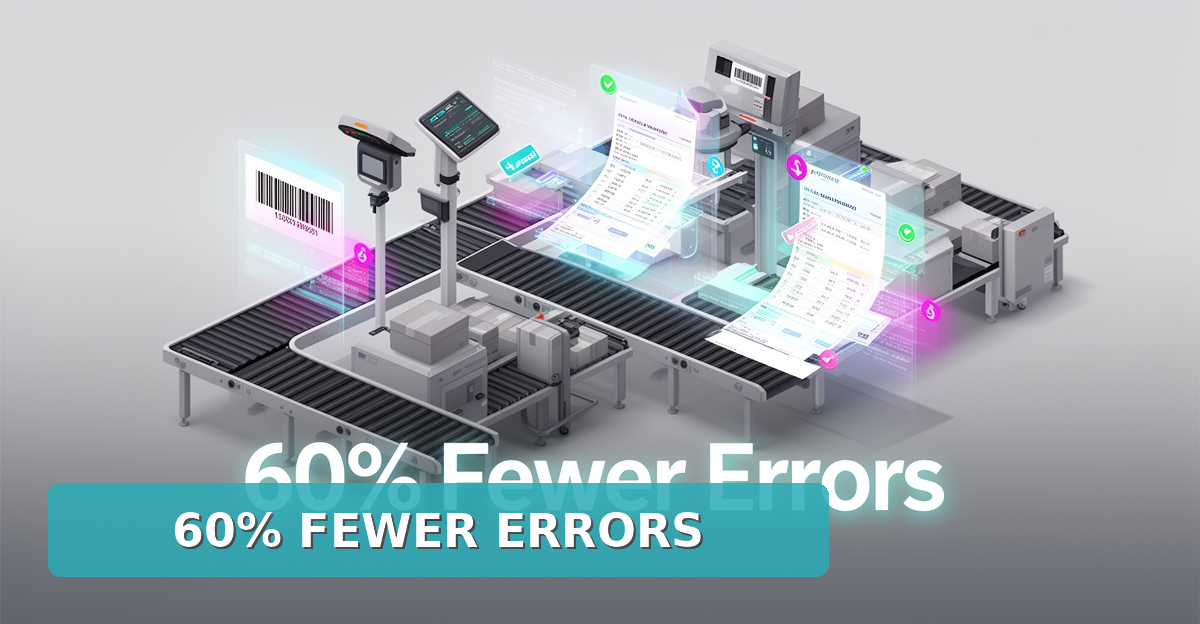
AI-powered data validation replaces spot checks with continuous verification across every document. The system ingests purchase orders, packing slips, and invoices, then extracts and normalizes fields in real time. In production deployments, this kind of validation layer typically cuts manual order processing errors dramatically—often by half or more—while pushing overall order accuracy well above what manual review sustains under volume.
Automated alerts act as an early warning layer before an error reaches the warehouse. When the AI detects mismatched SKUs, quantity discrepancies, or pricing anomalies, it flags the record immediately for review. This prevents incorrect picks, returns, and customer disputes that erode margin.
Intelligent document processing ties validation and alerts together in a closed loop. The approach is field-tested in packaging distribution, where accuracy directly impacts shipping speed and inventory integrity.
The technical approach that delivers these results in production includes:
- AI data extraction with contextual validation against ERP and WMS records
- Real-time anomaly detection that triggers automated alerts to operations teams
- Multi-document reconciliation that links POs, receipts, and invoices into a single verified record
- Continuous learning from corrections to improve accuracy over time
For distributors, the business impact is measurable. Fewer errors means fewer rework hours and less expedited shipping. Higher order accuracy strengthens customer retention by delivering the right product, the right quantity, on time. AIQ Labs builds this through targeted [AI Workflow Builds](/workflow-builds)—rebuilding the one workflow that costs you the most, at a fixed price, in phases—with systems designed for production environments rather than pilots.
The result is a validation layer that works before mistakes become costly, supporting more reliable fulfillment across the packaging supply chain.
Implementing AI Order Processing: A Practical Roadmap for Distributors
Cutting order errors doesn't require a massive IT overhaul—it demands a targeted approach that prioritizes high-impact workflows and integrates intelligent validation into existing systems. For packaging distributors ready to move beyond manual data entry, the path forward involves three strategic phases: identifying automation-ready processes, embedding AI validation into current infrastructure, and establishing automated alert protocols that operate continuously with human oversight reserved for exceptions.
The first step involves auditing your order-to-cash cycle to pinpoint where manual data entry creates the most risk. Focus your initial implementation on high-volume, document-heavy workflows such as purchase order processing, invoice matching, and shipping documentation—areas where AI-powered document processing delivers immediate error reduction while freeing staff for exception handling.
Once you've identified target workflows, integrate AI validation layers that cross-reference incoming orders against historical data, inventory levels, and customer specifications. This isn't about replacing your ERP or warehouse management system; it's about creating an intelligent middleware that validates data before it enters your core systems. The goal is a validation checkpoint that catches discrepancies in real time rather than discovering them after shipment.
Establishing automated alert protocols ensures that your team only intervenes when necessary. Configure the system to trigger immediate notifications for exceptions such as quantity mismatches, pricing discrepancies, or inventory shortages, while allowing clean orders to process automatically. This is the operational model AIQ Labs builds into every deployment: production-grade systems running 24/7 with human oversight reserved for edge cases. For distributors who want routine order and document handling handled end to end, managed [AI Employees](/ai-employees) cover 99+ roles—from order processors to dispatchers—at roughly 80% less cost than a comparable human hire.
Key implementation priorities include:
- Map your highest-volume document workflows to identify where manual entry creates the greatest error risk
- Deploy AI validation layers that integrate with existing ERP systems via API without requiring infrastructure replacement
- Configure automated alert thresholds for exceptions requiring human review, enabling true 24/7 processing capability
- Establish feedback loops where the AI learns from corrections to continuously improve accuracy rates
The transition from manual data entry to AI-assisted operations represents a fundamental shift in how packaging distributors approach order accuracy. Rather than dedicating staff to repetitive validation tasks, organizations can deploy intelligent systems that process documents around the clock, flag potential issues before they impact customers, and maintain audit trails for continuous improvement. For distributors ready to connect order processing, inventory, and fulfillment into one layer they own outright, an [AI Operating System](/ai-operating-systems) built in phases turns order accuracy from a cost center into a durable competitive advantage.
Still paying for 10+ subscriptions that don’t talk to each other?
We build custom AI systems you own outright. No vendor lock-in. Full control.
Not sure where to start? Ask our AI planner
Frequently Asked Questions
How does AI reduce order errors in packaging distribution?
Will implementing AI order processing require replacing our existing ERP or warehouse management system?
What kind of accuracy improvements can we realistically expect beyond error reduction?
How does AI handle exceptions and cases where human judgment is still needed?
Can AI help with inventory accuracy, not just order processing?
What's the typical implementation timeline and approach for a mid-sized packaging distributor?
Turning Order Accuracy into a Strategic Advantage
The pattern is clear: manual order processing in packaging distribution isn't just inefficient—it's a drain on profitability, customer trust, and scalability. By implementing AI-powered document processing, distributors cut errors, lift order accuracy, and free teams from repetitive validation to focus on higher-value work. These improvements don't just fix operational leaks; they create a foundation for reliable fulfillment, stronger customer retention, and the agility to grow without adding headcount. The path forward starts with auditing your order-to-cash workflows to pinpoint where manual entry creates the most risk, then layering in intelligent validation that works with your existing systems. If you're ready to move beyond pilots and build AI that scales with your business, start with AIQ Labs' 2-minute [Fit Check](/apply) to see if there's a fit, then book a free 30-minute strategy call to map your biggest bottlenecks and identify where automation delivers the fastest ROI. Schedule your strategy call to see how a targeted AI workflow fix can transform order processing from a cost center into a competitive edge.
Make AI your competitive advantage — not just another tool.
Strategy, implementation and ongoing optimization. One partner, end to end.
Not sure where to start? Ask our AI planner