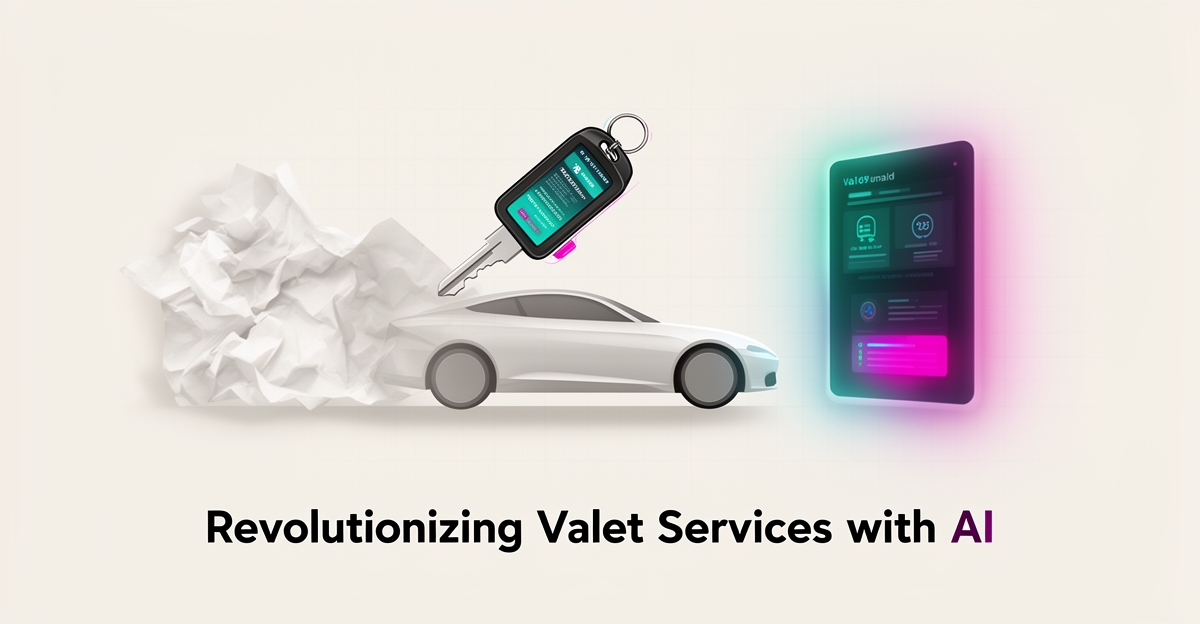
AI-Powered Check-In Systems: How Valet Services Can Go Beyond Paper Forms
Key Facts
- Well-designed AI automation typically reduces operational costs significantly by removing repetitive manual work.
- AI agents ensure every interaction is handled instantly and reliably at any scale.
- AI automation reduces human error by capturing information once at the source.
- Custom AI agents provide 24/7 availability and reduce workload on internal teams.
- Successful AI implementation requires well-mapped processes and system compatibility.
- Real-time digitization of vehicle details speeds check-ins and reduces guest wait times.
Hire a team member that works 24/7 — for less than a part-time wage.
AI receptionists, SDRs, dispatchers and 99+ roles. Trained on your business, fully managed.
Not sure where to start? Ask our AI planner
The Hidden Costs of Paper-Based Valet Check-In
Every valet stand has a moment where the line stalls: a guest waiting, a runner hunting for a pen, and a handwritten ticket that may or may not be legible. That small friction, repeated across hundreds of arrivals, quietly becomes one of the most expensive parts of the operation.
Paper-based check-in creates bottlenecks at exactly the wrong moment — the front door. Each vehicle requires manual transcription of license plates, driver details, and service requests, and every handoff between the podium, the key wall, and the return lane is another chance for information to be misread or misplaced. When work cannot move seamlessly across teams and systems, manual handoffs and process bottlenecks become structural, not incidental.
The error problem compounds over a shift. Illegible handwriting, duplicate tickets, and incomplete vehicle descriptions all stem from the same root cause: humans re-entering data that already exists. AI automation is specifically designed to reduce human error by capturing information once, at the source, rather than passing it through multiple manual steps.
The costs show up in several predictable ways:
- Slower service delivery — every manual entry adds seconds or minutes to each arrival and retrieval, directly extending guest wait times.
- Staff time diverted to clerical work — attendants spend attention on transcription instead of customer experience and vehicle handling.
- No real-time visibility — paper logs offer no live view of vehicle location, outstanding requests, or peak-period load, forcing managers to make decisions on instinct.
- Inconsistent service quality — accuracy depends on who is holding the pen, which makes performance unpredictable across shifts and locations.
These inefficiencies carry a measurable price. Operators who deploy well-designed automation typically report meaningful reductions in operating costs, largely because repetitive manual work disappears — savings that begin with removing exactly the kind of manual data entry paper check-in demands. In a valet context, that means capturing vehicle details, driver information, and service requests digitally in real time, so nothing is re-typed, re-read, or re-verified downstream.
The fix is not simply swapping paper for a generic app. Successful automation depends on well-mapped processes and system compatibility — clear use cases, structured data, and workflows defined around how the operation actually runs. That is the approach AIQ Labs takes with [AI Workflow Builds](/workflow-builds): rebuilding the one workflow that costs the most, digitizing the intake process end-to-end so the podium, the key wall, and the return lane all work from the same live record.
Paper feels free, but every illegible ticket and every extra minute of guest waiting is a cost the business absorbs silently. Understanding where those costs accumulate is the first step toward eliminating them.
How AI Automation Transforms Valet Check-In Processes
Paper logs and manual entry slow valet check-ins down and invite errors. AI-powered automation digitizes vehicle and driver data capture in real time, replacing clipboards with intelligent workflows that work alongside staff.
AI solutions eliminate manual handoffs and process bottlenecks by integrating directly into existing systems. Automation removes friction between tasks and enables work to move seamlessly across teams and systems. That integration is critical for valet operations where speed and accuracy matter at the curb.
Real-time capture reduces human error and speeds service delivery. AI agents handle every interaction instantly and reliably, delivering dependable service at any scale. For valet check-in, that means license plate, make, model, driver info, and service requests are logged as they happen, not after a queue builds.
The operational impact extends beyond speed. Well-designed AI systems cut repetitive work and give teams clear, actionable insights they can rely on. Intelligent document processing applies directly to forms, tickets, and ID checks, turning unstructured inputs into structured data without rekeying.
Custom AI agents provide 24/7 availability and reduce workload on internal teams. In a valet context, that translates to consistent check-in quality during peak arrivals and late-night shifts — and where guests call ahead or need status updates, [AI Employees](/ai-employees) can handle those interactions around the clock at a fraction of the cost of additional headcount.
Successful implementation follows proven steps for AI automation: identifying clear use cases, structuring data, defining workflows, and assessing system compatibility before design and monitoring. For valet services, that means mapping vehicle intake, driver verification, and service request flows first.
Integration with existing infrastructure is a shared requirement across AI applications. Technology builders stress seamless integration with existing surveillance and IoT networks to enable real-time response. Valet systems benefit from the same principle when connecting to parking management, payment systems, and access control.
AIQ Labs builds these systems as custom workflow builds and, for operations that need a fully connected layer across locations, as [AI Operating Systems](/ai-operating-systems) — capturing vehicle details, driver info, and service requests in real time while integrating with current operations. The result is faster check-ins and fewer errors without replacing staff.
Key transformation areas for valet check-in include:
- Real-time digitization of vehicle details and driver information at arrival
- Automated service request capture and routing to the right team
- Intelligent document processing for IDs, tickets, and waivers
- Seamless integration with parking management and payment systems
With well-structured data and clear use cases, AI automation delivers consistent service quality and actionable insights for better decision-making.
Implementation Roadmap: From Paper to AI-Powered Valet Service
Valet services still relying on paper forms and manual data entry face delays every interaction, from vehicle drop-off to final handoff. Transitioning to an AI-powered check-in system begins with assessing current workflows to identify where automation delivers the greatest impact, such as capturing license plates, driver details, and service requests without human intervention. AIQ Labs' implementation process starts with a discovery phase that maps existing processes, evaluates data infrastructure, and designs a solution architecture — ensuring the system addresses real operational pain points rather than adding complexity.
Successful deployment hinges on structuring data for AI consumption and defining clear, repeatable workflows. High-quality, well-structured data is essential for reliable AI performance, while well-mapped processes and system compatibility determine automation success. Valet businesses must standardize how vehicle information, driver credentials, and special instructions are captured and stored, creating a foundation where AI agents can extract, validate, and act on information consistently. This preparation enables seamless integration with existing tools like scheduling platforms or payment systems through APIs, allowing the AI check-in system to trigger actions such as notifying drivers or updating service tickets in real time.
Once data and workflows are ready, the AI system is built, integrated, and deployed in phases to minimize disruption. AIQ Labs follows a proven process: custom development, tool integration, rigorous testing, and compliance verification before go-live — with payment structured in milestones so you only advance as each phase delivers. Staff receive role-specific training, and performance monitoring is established from day one. Post-deployment, continuous optimization refines accuracy, expands capabilities — such as adding voice-based check-ins or predictive staffing alerts — and scales the system as the valet operation grows. This end-to-end approach transforms check-in from a manual bottleneck into a streamlined, intelligent touchpoint that improves speed, accuracy, and customer experience. To begin, complete the [2-minute Fit Check](/apply) and, if it looks like a match, book a free 30-minute strategy call to map your highest-impact opportunities.
Still paying for 10+ subscriptions that don’t talk to each other?
We build custom AI systems you own outright. No vendor lock-in. Full control.
Not sure where to start? Ask our AI planner
Frequently Asked Questions
How does AI-powered valet check-in actually reduce errors compared to paper forms?
Will switching to AI valet check-in require replacing our existing staff or systems?
What specific operational improvements can valet services expect from AI check-in automation?
Can AI automation really lower operating costs for valet services?
How does AI handle service requests and special instructions during valet check-in?
What steps are involved in implementing an AI-powered valet check-in system?
Turning Valet Chaos into Seamless Service
Paper-based valet check-in creates hidden costs through slow service, staff distraction, and error-prone manual entry — inefficiencies that compound across every shift and impact the guest experience from the first moment. AI-powered automation solves this by digitizing vehicle details, driver information, and service requests in real time, eliminating repetitive work, reducing errors, and enabling seamless integration with parking management and payment systems. The result is faster check-ins, consistent service quality, and actionable insights that let teams focus on hospitality instead of paperwork. For valet operators ready to move beyond clipboards and guesswork, the path forward starts with understanding where automation delivers the highest impact. Book your free 30-minute strategy call to explore how AI-powered check-in can improve speed, accuracy, and guest satisfaction — no obligation, just clarity.
Make AI your competitive advantage — not just another tool.
Strategy, implementation and ongoing optimization. One partner, end to end.
Not sure where to start? Ask our AI planner