AI-Powered Client Communication: How Space Planners Can Improve Engagement
Key Facts
- Professionals who consolidate scattered tools into a unified AI system typically recover a meaningful number of hours each week previously lost to context-switching and copy-pasting between platforms
- AI-driven software can automatically tailor messages, recommendations, and follow-ups for each client based on their past behavior and stated preferences
- Personalized follow-ups that reference specific discussion points build trust faster than generic templates and keep post-site-visit momentum high
- Predictive lead scoring lets planners focus effort on the most promising opportunities instead of spreading attention evenly across all prospects
- AIQ Labs has deployed 200+ multi-agent systems and runs 4 live SaaS products daily—systems are built in phases and owned outright, with no vendor lock-in
Hire a team member that works 24/7 — for less than a part-time wage.
AI receptionists, SDRs, dispatchers and 99+ roles. Trained on your business, fully managed.
Not sure where to start? Ask our AI planner
Why Traditional Client Communication Fails Space Planners
You just wrapped a promising site visit. The client loved the initial concepts, asked detailed questions about materials, and mentioned they need to decide by next month. Then you spend the next three days juggling emails, updating your CRM, and trying to remember if they preferred the minimalist Scandinavian look or the industrial aesthetic. By the time you send that follow-up, the momentum has cooled.
This scenario repeats across space planning firms because traditional client communication relies on fragmented, manual processes that drain time and dilute engagement. Professionals who work across disconnected platforms routinely lose hours each week to context-switching and copy-pasting information between systems. For space planners managing multiple projects simultaneously, that lost time represents missed opportunities to deepen client relationships.
The problem extends beyond simple inefficiency. When your design consultation lives in one app, your email in another, and your project notes in a third, critical preference signals slip through the cracks. Did the client mention they hate open shelving? Was it the warm wood tones or the cool grays that made them light up during the walkthrough? Manual communication workflows force planners to rely on memory rather than data, resulting in generic follow-ups that fail to reference specific client priorities.
The fragmentation creates specific operational bottlenecks:
- Context-switching between design software, email platforms, and CRM systems eats into every working day
- Manual follow-ups often lack personalization because planners cannot easily access conversation history or preference data
- Missed behavioral cues during site visits lead to misaligned design proposals and reduced conversion rates
- Inconsistent messaging across team members creates confusion and erodes client confidence
The financial impact compounds quickly. When you multiply inefficiency across every client touchpoint—from initial inquiry through final approval—the cumulative delay costs projects. Space planners cannot afford to treat client communication as an administrative afterthought when every delayed follow-up gives a competitor a window to step in.
Generic follow-ups exacerbate the problem. Sending the same "Great meeting you today" template to every client ignores the reality that each project involves distinct aesthetic preferences, functional requirements, and decision-making timelines. Without AI-powered systems to analyze client behavior and suggest personalized next steps, planners default to one-size-fits-all communication that fails to resonate. The result is a leaky funnel where engaged prospects gradually disengage because they don't feel understood.
AIQ Labs works with space planning firms to replace these fragmented workflows with unified systems that capture preference data during consultations and automatically generate personalized follow-ups. Whether that starts with a single AI Workflow Build or grows into a full AI Operating System, planners reclaim time for actual design work while ensuring no client preference goes unrecorded. When your communication tools work as hard as your design skills, engagement transforms from a bottleneck into a competitive advantage.
How AI Analyzes Preferences and Suggests Design Styles
AI transforms how space planners understand and respond to client preferences by analyzing consultation data to build detailed client profiles. Modern AI systems—such as ChatGPT, Google Gemini, and similar large language models—process verbal and written feedback from initial meetings, identifying patterns in style preferences, functional needs, and aesthetic inclinations. This creates a foundation for personalized recommendations that go beyond generic suggestions to reflect each client's unique vision, freeing planners to focus on creative strategy rather than administrative overhead.
These systems match client preferences to proven design styles by leveraging the specialized strengths of different AI models. One model may excel at interpreting descriptive client language and translating it into creative design concepts, while another provides logical analysis to ensure recommendations align with spatial constraints and budget realities. Multimodal models can integrate visual references and material samples to refine style matches. This collaborative approach ensures that suggested designs are not only aesthetically appealing but also practically viable, increasing the likelihood of client approval and project progression. AI-driven software can automatically tailor messages and recommendations for each client based on their past behavior and preferences, a capability space planners use to generate highly relevant design proposals.
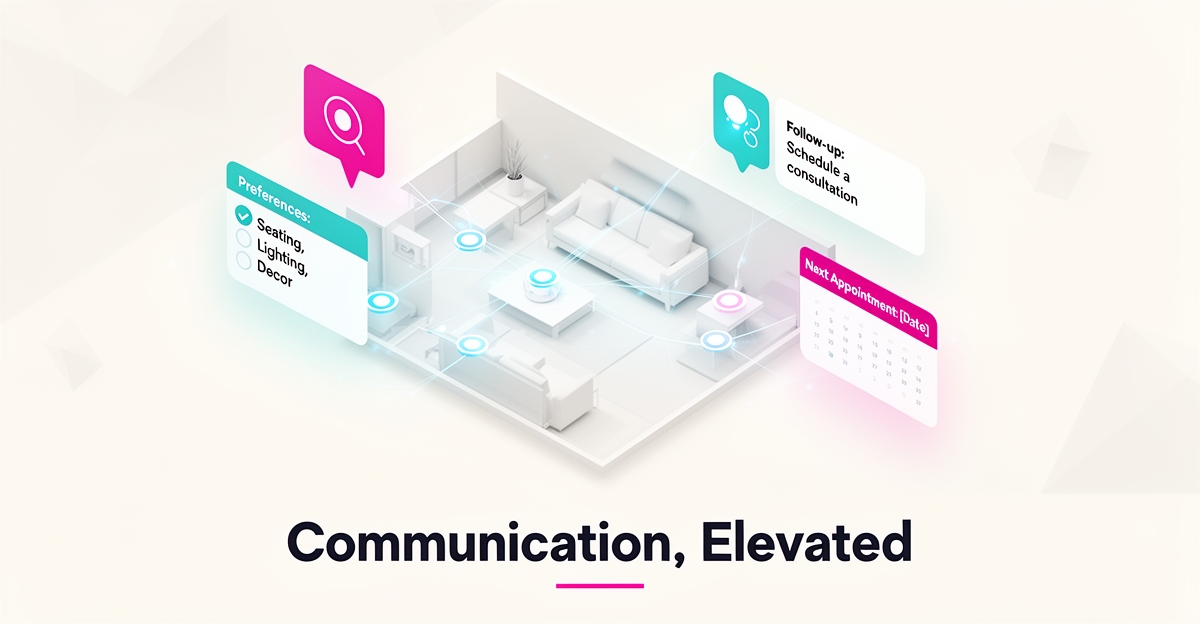
After site visits, AI generates personalized follow-up messages that reference specific discussion points, concerns, or preferences mentioned during the consultation. By analyzing visit notes and client feedback, the system creates communications that demonstrate attentive listening and reinforce trust. This level of personalization significantly improves engagement, as clients feel genuinely understood rather than receiving generic templates. AIQ Labs implements these multi-model approaches within custom AI systems that space planners own and control, ensuring long-term adaptability to evolving client needs and design trends. The result is a more efficient, engaging client journey that strengthens relationships and improves conversion rates throughout the planning process.
Automating Personalized Follow-Up After Site Visits
Site visits generate a flood of notes, preferences and unspoken priorities that are easy to lose between the walk-through and the proposal. Space planners who capture that detail in real time and turn it into a timely, specific follow-up keep momentum and signal professionalism.
AI-powered workflows analyze the conversation points from a visit and draft a customized message that references the exact rooms discussed, materials mentioned, and concerns raised. This moves follow-up from a generic template to a personalized post-visit message that feels immediate and attentive.
The efficiency gain is real. What once took 15+ minutes of piecing together notes, drafting, and CRM updates can typically be compressed to a few minutes when transcription, preference extraction, and drafting live in one system. For space planners handling multiple clients weekly, that reduction compounds across every touchpoint.
Time recovered adds up quickly. Teams that consolidate scattered tools into a unified system routinely reclaim hours each week previously lost to platform switching—a friction that disappears when notes, preference extraction and drafting live in one place.
In practice the AI workflow can:
- Transcribe and summarize site visit notes into client-specific preference profiles
- Reference specific discussion points, measurements and style cues in the follow-up email
- Suggest next steps and design options aligned to the stated budget and timeline
- Queue the message for delivery at the optimal time and log it back to the CRM
This approach supports AI Customer Relationship Management and AI Customer Journey Optimization by tailoring communications across the entire planning journey. AIQ Labs builds custom AI systems that understand client behavior and tailor communications across the planning journey—either as a fixed-price Workflow Build targeting your most expensive workflow, or with managed AI Employees handling follow-ups without adding headcount.
Response rates improve because the message proves listening. Clients receive confirmation that their priorities were heard, which builds trust before proposals are even sent. Planners gain back creative time for design rather than admin.
The result is faster follow-up, fewer dropped leads, and a client experience that feels both human and highly responsive.
Predictive Analytics for Prioritizing High-Intent Clients
Predictive analytics transforms how space planners prioritize their most promising opportunities by identifying behavioral patterns that signal strong purchase intent. AI systems analyze historical client data, website interactions, and consultation notes to forecast which prospects are most likely to proceed with projects, allowing planners to focus their expertise where it yields the highest return. This data-driven approach replaces guesswork with precision, ensuring time and resources flow toward clients demonstrating clear engagement signals.
Space planners using AI-powered predictive tools report meaningful efficiency gains in their client qualification process. By automatically scoring leads based on factors like consultation duration, design preference specificity, and follow-up responsiveness, planners can spend far less time on low-probability prospects. This targeted approach means that for every hour invested in high-intent clients, planners see substantially higher conversion rates compared to traditional outreach methods. Unified AI platforms further amplify these benefits by consolidating predictive models that previously required multiple separate tools, cutting administrative overhead while improving forecast accuracy.
The implementation creates a virtuous cycle where better prioritization leads to improved outcomes, which in turn refines the AI's predictive capabilities. As planners consistently engage with high-intent clients identified by the system, the algorithms learn from successful conversions to become even more accurate at spotting similar patterns in future prospects. This continuous improvement means space planning firms using AI predictive analytics don't just optimize current workflows—they build increasingly intelligent systems that adapt to evolving client behaviors and market conditions. AIQ Labs helps space planners implement these predictive capabilities through custom AI workflow development that integrates directly with existing CRM and project management tools, with 200+ multi-agent systems deployed to date.
Building a Unified AI Workspace for Your Planning Practice
Space planners often juggle fragmented tools that slow down client communication and inflate costs. A unified AI workspace eliminates this complexity by integrating multiple models and workflows into a single, owned system that streamlines engagement from consultation to follow-up.
Start by selecting a multi-model approach that gives each task the most appropriate tool—reasoning models for constraint and budget analysis, multimodal models for visual references and material samples, and creative models for drafting client-facing content. Because the system is built around your practice rather than around a subscription product, the learning curve stays short and team adoption stays consistent. AIQ Labs builds these custom systems and you own them outright—no vendor lock-in, no per-seat tax on growth.
Next, establish automated workflows that trigger personalized actions based on client behavior. For example, after a site visit, the system can generate a tailored email referencing specific design preferences discussed, then schedule a follow-up call if no response is received within 48 hours. Teams using unified AI workspaces recover hours each week by eliminating context-switching between platforms, with per-task effort dropping from 15+ minutes to a fraction of that. This efficiency gain directly translates to more time spent on creative planning and client strategy.
Finally, unify billing and collaboration under one clear engagement model. AIQ Labs offers three ways in: Start Monthly, Build in Milestones, or Own It Outright—no fake prices, no invented case-study numbers, just a fixed-scope build of the one workflow that costs you the most. By replacing fragmented tools with a cohesive AI system, space planners create a scalable, client-centered communication engine that drives engagement and retention. See the full breakdown at aiqlabs.ai/pricing.
Still paying for 10+ subscriptions that don’t talk to each other?
We build custom AI systems you own outright. No vendor lock-in. Full control.
Not sure where to start? Ask our AI planner
Frequently Asked Questions
How much time do space planners actually lose to manual client communication?
Can AI really capture preferences from a site visit that I might forget?
How fast can AI follow up after a site visit compared to doing it manually?
Will AI follow-ups sound generic or actually personal?
Is a unified AI workspace cheaper than using multiple AI tools?
How does AI help prioritize which clients to focus on?
Turning Client Conversations into Lasting Partnerships
Space planners who move beyond fragmented communication reclaim hours every week by unifying their AI workflows—time that can be reinvested into creative design and strategic client engagement. AI-powered systems capture preference signals during site visits, generate personalized follow-ups that reference specific discussions, and use predictive analytics to prioritize high-intent prospects. This transforms communication from an administrative burden into a competitive advantage where every interaction builds trust and moves projects forward. AIQ Labs helps space planners build custom, owned AI systems that analyze behavior, tailor messages across the planning journey, and eliminate context-switching without vendor lock-in. To see how a unified approach could work for your team, take the 2-minute Fit Check and then book a free 30-minute strategy call to map your biggest bottlenecks and identify high-ROI automation opportunities.
Make AI your competitive advantage — not just another tool.
Strategy, implementation and ongoing optimization. One partner, end to end.
Not sure where to start? Ask our AI planner