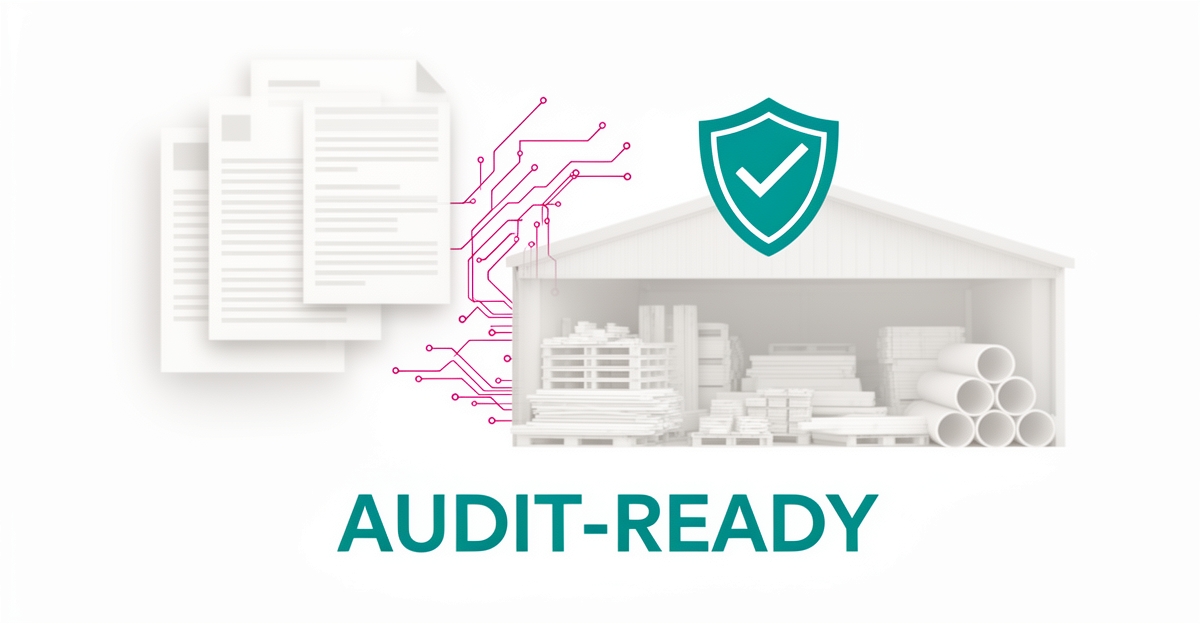
AI-Powered Compliance & Recordkeeping: How Building Material Suppliers Can Stay Audit-Ready
Key Facts
- Automating routine compliance tasks with AI can meaningfully reduce compliance costs—industry analyses as of late 2026 commonly cite savings of up to 60% on manual workflows.
- AI systems enable real-time monitoring, so audit requests can be answered in minutes rather than days.
- In construction and building materials, compliance lapses can cause costly project delays or legal issues.
- Machine learning detects risks early by learning from historical compliance data.
- Natural language processing can parse thousands of pages to extract compliance information and track legislation changes across jurisdictions.
- AI-driven OCR scans and stores Certificates of Insurance accurately, eliminating manual entry errors in supplier records.
Hire a team member that works 24/7 — for less than a part-time wage.
AI receptionists, SDRs, dispatchers and 99+ roles. Trained on your business, fully managed.
Not sure where to start? Ask our AI planner
The Compliance Burden: Why Manual Processes Fail Building Material Suppliers
Building material suppliers face mounting regulatory pressure as safety standards, environmental rules, and contract requirements grow more complex across jurisdictions. Manual compliance tracking—relying on spreadsheets, email chains, and periodic document reviews—creates critical blind spots where human error thrives. A single missed certificate of insurance or outdated safety data sheet can trigger project stoppages, fines, or legal disputes, especially in high-risk sectors like construction where lapses directly impact timelines and liability.
In industries such as construction, compliance failures frequently lead to costly delays and legal exposure, undermining both operational efficiency and stakeholder trust. Manual processes are inherently reactive, forcing teams to scramble for documentation during audits instead of preventing issues proactively. This approach not only increases the risk of oversight but also diverts skilled staff from strategic tasks toward repetitive, error-prone data entry.
AI-powered systems transform this dynamic by automating routine compliance functions with precision. Machine learning analyzes historical data to predict regulatory risks before they materialize, while natural language processing continuously monitors regulatory updates across jurisdictions, flagging changes that affect material specifications or handling requirements. Robotic process automation eliminates manual data entry for documents like certificates of insurance and safety certifications, reducing human error and freeing teams to focus on risk mitigation rather than paperwork.
- AI-driven compliance automation can meaningfully reduce costs by replacing manual workflows with intelligent process handling.
- Real-time monitoring enabled by AI allows instant audit readiness, eliminating delays caused by document retrieval during inspections.
- Predictive analytics identify compliance gaps early, preventing issues from escalating into legal penalties or project disruptions.
For building material suppliers managing complex supplier contracts, safety documentation, and jurisdictional variations, AI provides a scalable foundation for audit resilience. Unlike manual systems that struggle to keep pace with growth or regulatory shifts, AI platforms adapt continuously—ensuring records remain accurate, accessible, and defensible. This shift from reactive firefighting to proactive compliance management isn't just about avoiding penalties; it's about building operational integrity that supports reliable project delivery and long-term partner trust. AIQ Labs helps suppliers implement these secure, auditable systems—through workflow builds or a fuller AI operating system—without expanding compliance headcount, turning documentation from a liability into a strategic advantage.
How AI Transforms Compliance: From Reactive Tracking to Proactive Risk Management
Building material suppliers can no longer afford reactive compliance. Manual tracking of safety documentation and contracts creates exposure when regulations shift overnight.
AI repositions compliance from a cost center to a risk control function. Machine learning analyzes large datasets to identify patterns and make predictions, allowing systems to detect potential risks and irregularities by learning from historical data. Natural language processing enables AI to understand and interpret human language, parsing thousands of pages of text to extract critical compliance information and track legislation changes across jurisdictions. Robotic process automation handles repetitive, rule-based tasks such as data entry, certificate of insurance tracking, and routine reporting.
Together these technologies automate safety documentation, contract management, and real-time auditing. Industry analyses of AI compliance automation commonly report that businesses can cut compliance costs significantly—often by up to 60%—by automating routine tasks. The shift frees teams from clerical work so compliance staff move from data entry clerks to strategic risk managers.
Proactive risk management replaces firefighting. AI tools predict compliance gaps and identify trends that signal potential risks, which is vital for construction and building materials where a single lapse can halt a project or result in significant legal penalties. AI systems monitor regulatory bodies continuously and alert teams immediately when rules change, allowing adjustment without manual surveillance of every update.
Real-time auditing and immutable trails change audit readiness. Modern tools facilitate real-time monitoring and reporting, enabling organizations to generate comprehensive reports instantly by extracting essential data from internal documents and aligning it with specific regulatory requirements. Secure, immutable data ledgers ensure audit trails are tamper-proof.
For regulated suppliers, the practical impact shows up in three areas:
- Automated safety documentation with AI-driven optical character recognition to scan and store Certificates of Insurance accurately
- Contract management powered by NLP that flags clause deviations and tracks regulatory changes across jurisdictions
- Predictive risk alerts from machine learning models that foresee compliance gaps before they escalate
This is the approach AIQ Labs applies for building material suppliers needing auditable AI systems that manage documentation in real time without requiring full-time legal staff. Proactive compliance automation reduces manual errors while creating scalable governance.
The result is enhanced accuracy and scalability without expanded legal or compliance teams. By automating policy enforcement, document review, and reporting, organizations achieve precision analysis of large datasets and staff can focus on strategic decision-making and complex issues.
Implementation Roadmap: Deploying Secure, Auditable AI Systems Without Legal Overhead
Implementing AI for compliance doesn't require a complete overhaul—it starts with understanding your current workflow. Building material suppliers often manage safety data sheets, contractor contracts, and insurance certificates through fragmented spreadsheets and email chains, creating audit vulnerabilities. A thorough process evaluation identifies where manual tasks like data entry or document tracking consume time and introduce error risk, setting the foundation for targeted automation.
Selecting the right approach means prioritizing scalability, security, and seamless integration with existing systems like accounting or project management platforms. Solutions must handle growing document volumes, adapt to evolving regulations such as OSHA or local building codes, and ensure sensitive data remains protected through encryption and access controls. Tools lacking these capabilities can create more compliance gaps than they solve, especially when handling high-volume safety documentation or real-time contract reviews.
Successful deployment hinges on compatibility assessment and thoughtful integration. Before connecting AI to your infrastructure, map all data sources—structured databases and unstructured files like PDFs or scanned forms—to ensure accurate synchronization. Define standardized formats for safety records and configure secure APIs for data transfer, then rigorously test the system to validate accuracy in extracting compliance details from documents. This step prevents siloed information and ensures audit trails remain complete and trustworthy.
Training transforms technology adoption from a disruption into an advantage. Staff need hands-on guidance to interact with AI systems—whether reviewing flagged contract clauses, validating auto-extracted insurance data, or generating real-time compliance reports—while understanding how their role shifts toward strategic oversight. Establishing clear support channels during and after rollout builds confidence, reduces resistance, and ensures the system delivers sustained value without requiring dedicated legal personnel to manage it.
You also don't have to commit to a full platform on day one. AIQ Labs offers three entry points: AI employees for managed staff roles, fixed-price workflow builds that rebuild the one compliance workflow costing you the most, or a phased AI operating system you own outright. Payment models are flexible—start monthly, build in milestones, or own it outright. For suppliers ready to begin, start the two-minute Fit Check, then schedule your free 30-minute strategy call at aiqlabs.ai/book.
Still paying for 10+ subscriptions that don’t talk to each other?
We build custom AI systems you own outright. No vendor lock-in. Full control.
Not sure where to start? Ask our AI planner
Frequently Asked Questions
How much can building material suppliers save on compliance costs by using AI automation?
What specific AI technologies help building material suppliers manage safety documentation and contracts?
Can AI really help prevent project delays caused by compliance issues in construction?
Is it necessary to hire additional legal or compliance staff when implementing AI for compliance management?
How does AI improve audit readiness for building material suppliers?
What are the first steps for a building material supplier looking to implement AI for compliance?
Stop Chasing Paperwork and Start Controlling Risk
Building material suppliers no longer need to choose between growth and governance. By replacing fragmented spreadsheets with intelligent automation, you can cut manual compliance costs while transforming your team from data-entry clerks into strategic risk managers. AI-powered systems handle the heavy lifting—scanning certificates of insurance, tracking regulatory shifts across jurisdictions, and flagging contract deviations before they trigger project delays or legal exposure. This shift from reactive firefighting to proactive risk management creates tamper-proof audit trails that stand up to scrutiny without requiring an army of legal staff. AIQ Labs builds these secure, auditable systems specifically for suppliers, with flexible payment models—start monthly, build in milestones, or own it outright—so you maintain complete ownership and control. Ready to turn compliance into a competitive advantage? Start with our two-minute Fit Check to identify your highest-impact automation opportunities, then schedule a free 30-minute strategy call to map your implementation roadmap.
Make AI your competitive advantage — not just another tool.
Strategy, implementation and ongoing optimization. One partner, end to end.
Not sure where to start? Ask our AI planner