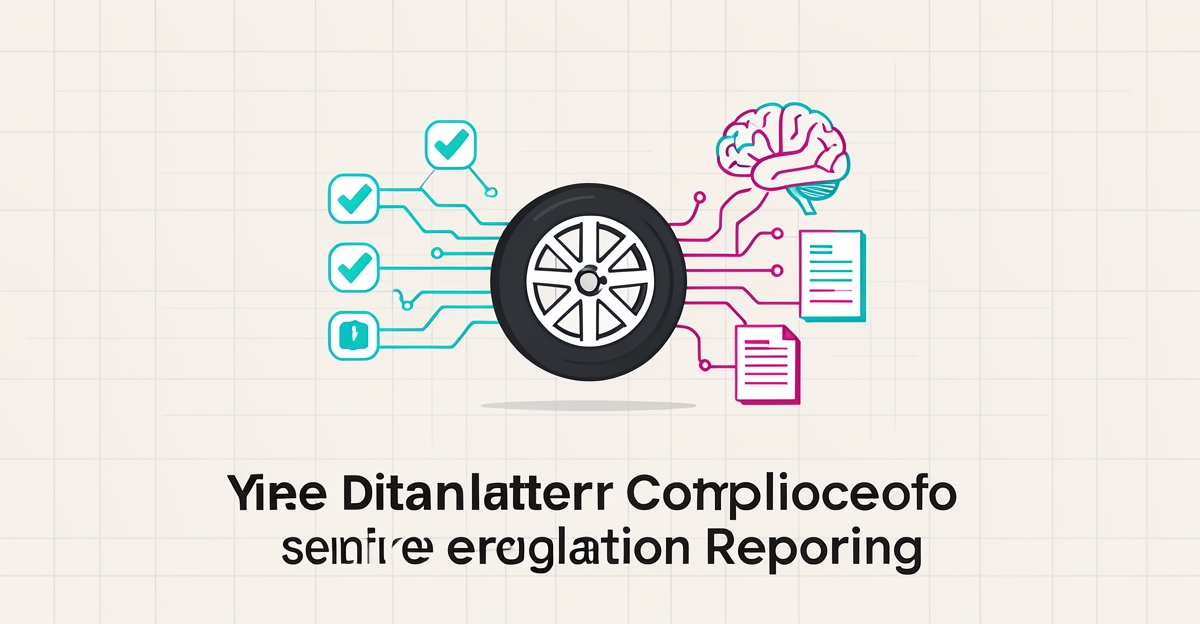
AI-Powered Compliance: How Tire Distributors Can Automate Safety and Regulatory Reporting
Key Facts
- AI compliance tools typically reduce human error by automating repetitive data entry and evidence collection tasks according to compliance research
- Most businesses now treat compliance as a core operational function rather than a back-office afterthought according to compliance research
- Traceability requirements for tire distribution are expected to tighten as EU regulations phase in through 2027–2028 according to tire distribution research
- Compliance automation software typically compresses months of compliance work into weeks according to automation guidance
- AI systems continuously monitor processes and identify compliance deviations in real time rather than waiting for periodic audits according to compliance research
- AI automates evidence collection and audit preparation, eliminating manual spreadsheet chases before inspections according to compliance automation guidance
Hire a team member that works 24/7 — for less than a part-time wage.
AI receptionists, SDRs, dispatchers and 99+ roles. Trained on your business, fully managed.
Not sure where to start? Ask our AI planner
The Compliance Burden Facing Tire Distributors
For tire distributors, compliance is no longer a back-office function—it's a growing operational burden that touches every tire that moves through the warehouse. Product safety standards, labeling requirements, and traceability obligations are expanding at the same time that regulators demand faster, more verifiable documentation.
The challenge starts with the sheer scope of what must be tracked. Distributors are responsible for maintaining accurate records across product safety, labeling, and supply chain traceability—often across multiple brands, DOT codes, and batch numbers. As tire distribution research notes, the regulatory landscape is becoming increasingly complex, with new requirements emerging frequently across sectors and creating significant challenges for traditional, manual compliance methods.
The pressure is set to intensify. As of late 2026, traceability requirements affecting tire distribution are expected to tighten as EU regulations phase in through 2027–2028, introducing end-to-end documentation demands that many distribution operations are not currently equipped to meet. Distributors who wait until enforcement approaches will face a costly scramble to digitize records that should already be systematic.
Manual processes amplify the risk. Spreadsheets, paper logs, and disconnected systems are prone to human error, and periodic audits only catch problems after they've occurred. By contrast, compliance research consistently finds that AI and cloud compliance tools reduce human error, automate manual tasks, and prove more effective and efficient than traditional approaches.
The cost of getting this wrong compounds quickly:
- Missed or inaccurate labeling documentation that triggers recalls, fines, or shipment holds
- Incomplete traceability records that fail audit scrutiny under tightening regulations
- Hours of staff time lost to manual data entry and evidence collection instead of higher-value work
- Reactive, last-minute audit preparation that compresses months of work into panicked weeks
The industry is already responding. A recent survey found that the vast majority of businesses have established or are actively building a culture of compliance, and the market for AI in compliance is growing as regulatory complexity increases. Compliance automation platforms now compress what used to take months into weeks, and automation guides note that organizations can achieve certification-readiness far faster than through manual effort alone.
For tire distributors specifically, the opportunity lies in applying these proven approaches to their own workflows: automated documentation, consistent product labeling verification, and audit trails that are complete by design rather than assembled after the fact. That's where purpose-built AI systems—like the AI Workflow Builds AIQ Labs delivers for compliance documentation and audit readiness—turn a mounting regulatory burden into a manageable, largely automated process. The distributors who act before enforcement deadlines arrive will find the transition far less painful than those who don't.
How AI Automates Safety and Regulatory Reporting
Tire distributors operate under tightening safety and traceability rules, and manual reporting can no longer keep pace with real-time regulatory demands. AI shifts compliance from reactive paperwork to continuous, auditable control.
Automated monitoring forms the first layer of protection. AI systems continuously monitor systems and processes against compliance requirements, identifying deviations and potential risks in real time. For tire distribution, this means sidewall data, DOT codes, and shipment records are checked as they move through the warehouse and logistics chain. With traceability requirements expected to tighten through 2027–2028, continuous monitoring is becoming essential rather than optional.
Evidence collection and management become faster and more complete. AI can automate the collection and organization of evidence required for audits, reducing manual effort and ensuring comprehensive documentation. Instead of teams chasing spreadsheets before an inspection, the system assembles product labeling records, safety certificates, and chain-of-custody logs automatically. Compliance automation software typically compresses months of compliance work into weeks, accelerating readiness without adding headcount.
Audit preparation is streamlined through automated reporting. AI tools can streamline the audit process by automatically generating reports and providing insights into compliance status. Distributors gain a live view of labeling accuracy, recall readiness, and regulatory gaps, with the audit trails regulators expect.
Risk assessment and real-time reporting close the loop. AI algorithms can analyze data to identify and assess compliance risks, helping organizations prioritize mitigation efforts. Real-time dashboards surface anomalies in inventory, supplier certifications, or transport conditions before they become violations. This proactive posture supports improved accuracy and reduced manual error.
Research shows the impact is measurable across industries:
- Compliance research consistently finds AI and cloud compliance tools reduce human error and automate manual tasks more effectively than traditional approaches
- Compliance automation software typically compresses months of compliance work into weeks
- Real-time monitoring surfaces deviations before they become violations, rather than after
These gains matter for distributors who must prove safety and regulatory adherence daily. AIQ Labs builds AI systems that ensure regulatory reporting is accurate, timely, and auditable, with evidence management and audit trails designed for regulated industries. The result is a compliance function that is faster, more reliable, and built to scale as requirements evolve.
From Manual Audits to Proactive Compliance Systems
A single mislabeled tire or one missing document in an audit trail can trigger recalls, fines, and reputational damage that takes years to repair. For tire distributors navigating tightening safety standards, the old way of managing compliance — spreadsheets, paper files, and periodic manual audits — is breaking under the weight of modern regulatory demands.
Traditional compliance is fundamentally reactive. Teams gather evidence after the fact, scramble before scheduled audits, and rely on manual data analysis that is slow, costly, and prone to human error. According to compliance research, most organizations that adopt AI-powered compliance tools find they reduce human error and automate manual tasks — a direct indictment of the manual status quo.
AI-powered compliance flips this model from reactive to proactive. Instead of periodic audits, intelligent systems monitor processes continuously, flag deviations in real time, and assess risks before they become violations. The contrast is stark:
- Manual data analysis gives way to automated analysis across thousands of records simultaneously
- Periodic audits are replaced by continuous, always-on monitoring
- Reactive scrambling becomes proactive risk management with real-time alerts
- Error-prone documentation transforms into consistent, auditable digital trails
The efficiency gains are substantial. Research from Sprinto's compliance automation guide shows that automation compresses months of compliance work into weeks, enabling organizations to achieve certification-readiness at a fraction of the manual cost. For tire distributors, this means labeling verification, documentation, and reporting happen as a byproduct of daily operations rather than as a separate, labor-intensive effort.
The urgency is real. Traceability requirements across the distribution chain are expected to tighten through 2027–2028 according to tire distribution research. Distributors who build proactive compliance infrastructure now will be positioned to meet these requirements without disruption.
This is precisely where AIQ Labs operates. Rather than offering a generic compliance tool, AIQ Labs builds custom, production-ready systems that distributors own outright — no vendor lock-in, no platform dependencies. These systems automate documentation capture, generate accurate product labeling records, and maintain complete audit trails with built-in validation layers and human-in-the-loop controls for critical decisions. For distributors who need a connected compliance layer across departments, AI Operating Systems provide one operating layer, built in phases and owned outright.
The result is a compliance operation that runs continuously in the background: every label verified, every document filed, every audit trail complete and accessible on demand. As industry analysts note, the future of compliance is intelligent, automated, and proactive — and for tire distributors, that future is available today.
Implementing AI Compliance Without Disruption
Tire distributors can't afford compliance downtime when safety reporting and product traceability are under constant scrutiny. With traceability requirements expected to tighten through 2027–2028 for tire distribution, a low-disruption rollout is essential.
Start by mapping the specific regulatory requirements that touch daily operations. Identify where safety documentation, product labeling, and audit trails are created, stored, and reported. Clarify the data sources, responsible teams, and recurring manual steps that create risk.
Data readiness determines how smoothly automation lands. Evaluate quality, accessibility, and structure of records for tires, shipments, and certifications. Clean, connected data reduces rework and lets AI models learn the business rules accurately.
Integration should leverage existing systems, not replace them. Connect AI workflows to CRM, inventory, and document management tools so compliance data flows automatically. Seamless integration preserves team habits while removing repetitive copy-paste and filing.
Human oversight remains the control point. AI augments teams by automating evidence collection and monitoring, but experts review exceptions, interpret findings, and sign off on submissions. This approach reflects what compliance research consistently shows: AI and cloud compliance tools reduce human error and automate manual tasks most effectively when paired with human judgment.
A practical implementation path for distributors includes:
- Identify compliance needs by auditing current safety and labeling requirements and mapping manual handoffs
- Assess data readiness across tire specifications, lot numbers, and shipment records
- Integrate with existing systems to automate evidence collection and reporting workflows
- Maintain human-in-the-loop controls for approvals, exceptions, and audit sign-off
AIQ Labs supports this path in three ways. AI Workflow Builds rebuild the one workflow that costs you the most, at a fixed price and in phases. AI Employees are managed AI staff — intake, documentation, and follow-up handled around the clock at a fraction of the cost of a human hire. And for distributors ready to connect compliance across the whole operation, AI Operating Systems deliver one connected layer you own outright.
Compliance automation software compresses months of compliance work into weeks according to compliance automation guidance, enabling faster certification-readiness without disrupting operations. Distributors who implement incrementally gain speed and confidence while keeping teams in control.
Still paying for 10+ subscriptions that don’t talk to each other?
We build custom AI systems you own outright. No vendor lock-in. Full control.
Not sure where to start? Ask our AI planner
Frequently Asked Questions
How does AI actually reduce human error in tire compliance reporting?
What regulatory changes should tire distributors prepare for by 2027–2028?
Can AI compliance tools integrate with our existing warehouse and inventory systems without disrupting daily operations?
How much time can AI really save on audit preparation compared to manual methods?
Is AI in compliance just for large enterprises, or can small tire distributors benefit too?
What happens if we wait until enforcement deadlines arrive to implement compliance automation?
Turning Compliance from a Burden into a Competitive Advantage
For tire distributors, the path forward is clear: AI-powered compliance transforms a reactive, error-prone process into a proactive, auditable system that protects operations and builds trust. By automating documentation, enabling real-time monitoring, and ensuring end-to-end traceability, distributors can meet evolving regulations without disruption—freeing teams to focus on growth instead of paperwork. The shift isn't just about avoiding risk; it's about creating a compliance function that scales with your business and strengthens your market position. AIQ Labs helps tire distributors make this transition with custom-built systems they own, designed to integrate with existing workflows and scale as requirements evolve. To see how this applies to your operations, start with a 2-minute Fit Check, then book a free 30-minute strategy call to map your biggest compliance bottleneck and identify high-ROI automation opportunities—no obligation, just clarity on your AI opportunity. Questions first? Reach us at [email protected].
Make AI your competitive advantage — not just another tool.
Strategy, implementation and ongoing optimization. One partner, end to end.
Not sure where to start? Ask our AI planner