AI-Powered Customer Journey Optimization for Moving Companies
Key Facts
- Buyers are consistently willing to pay more for a great customer experience—industry research has repeatedly shown a majority will do so, according to Copy.ai.
- A widely cited Bain & Company finding holds that increasing customer retention by just 5% can boost profits by 25% to 95%, per research summaries.
- It typically costs several times more to acquire a new customer than to retain an existing one, research shows.
- Around 80% of customers say the experience a company provides matters as much as its products, according to industry data.
- Emotionally intelligent AI doesn't replace human empathy but scales it, according to YourCX research.
- Fragmented, poor-quality data is the primary reason AI initiatives fail, per Info-Tech Research Group.
Hire a team member that works 24/7 — for less than a part-time wage.
AI receptionists, SDRs, dispatchers and 99+ roles. Trained on your business, fully managed.
Not sure where to start? Ask our AI planner
The Hidden Cost of Poor Customer Experience in Moving
The moving experience is often ranked among life's most stressful events, and much of that anxiety stems not from the physical act of relocation, but from how the process is managed. Fragmented communication—where customers receive conflicting updates via email, text, and phone—creates confusion and erodes trust from the very first inquiry. When service remains purely reactive, addressing issues only after they escalate, customers feel unsupported during a time when they need guidance most. Generic scripts and standardized timelines fail to acknowledge the unique emotional and logistical weight of each move, compounding the problem.
These experience gaps carry real financial consequences. Industry research has repeatedly found that a large majority of buyers are willing to pay more for a great customer experience, making superior service a direct revenue lever rather than a nicety. The cost of inaction is just as clear: a widely cited Bain & Company finding holds that increasing retention rates by just 5% can increase profits by 25% to 95%. It typically costs several times more to acquire a new customer than to retain an existing one, meaning every avoidable churn event drains growth potential disproportionately.
The hidden cost of poor CX in moving isn't limited to lost sales—it shows up in damaged reputations, negative reviews, and diminished referral potential in an industry where trust is everything. Customers who feel unheard or unsettled during their move are far less likely to recommend the service, regardless of how smoothly the trucks arrived or how carefully the furniture was wrapped. For moving companies relying on word-of-mouth and local reputation, this silent attrition can be more damaging than any competitive threat.
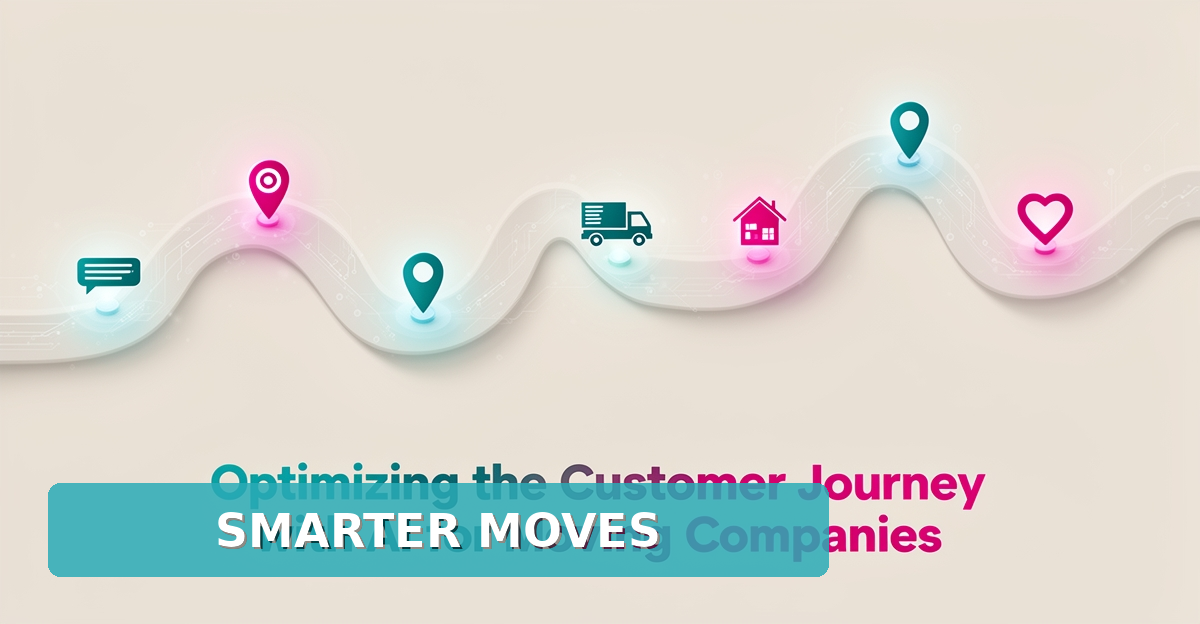
Transforming this journey requires more than incremental fixes—it demands rethinking how data, communication, and empathy intersect across every touchpoint. By mapping the full customer journey from initial quote to final delivery, AI-powered systems can identify where friction typically occurs and intervene before frustration turns into churn. This isn't about replacing human touch with automation; it's about using AI to ensure that when human interaction happens, it's informed, timely, and genuinely helpful—turning a traditionally stressful ordeal into a differentiator that drives loyalty and sustainable growth.
How AI Transforms the Moving Journey from Inquiry to Delivery
Moving is one of the most stressful life events a customer can face, yet most moving companies still manage that experience reactively—waiting for the phone to ring. AI flips this dynamic, transforming the journey from a static sequence of transactions into a proactive, empathetic partnership that anticipates needs from the first inquiry to the final box.
According to industry research, around 80% of customers say the experience a company provides is just as important as its products or services. For moving companies, this means the journey begins long before the truck arrives. AI enables hyper-personalization at this critical awareness stage, analyzing behavioral data and inferred intent to deliver context-aware quotes, packing checklists, and scheduling options tailored to each household's specific inventory and timeline.
As the journey progresses, predictive analytics shifts the company from reactive to proactive. Rather than waiting for anxious customers to call with concerns, AI models forecast which clients are likely to feel stress about their move date based on historical patterns, triggering reassuring updates before anxiety peaks. This capability proves particularly valuable during the high-stakes pre-move phase, where uncertainty can derail satisfaction.
The operational backbone of this transformation relies on intelligent automation that handles routine inquiries—such as "What time will the crew arrive?"—while dynamically routing complex issues to human agents. This intelligent routing ensures customers receive immediate answers 24/7 without sacrificing the nuanced handling that delicate situations require. This is exactly what AI Employees are built for: managed AI staff—receptionists, dispatchers, and 99+ other roles—that answer every call and message around the clock, typically at a fraction of the cost of a human hire.
Perhaps most critically for an emotionally charged industry, AI now scales human empathy through sentiment analysis. Using natural language processing and voice analysis, these systems detect frustration or excitement in real-time, enabling "AI-powered empathy" that routes angry customers to senior agents or suggests calming scripts for stressed clients. As YourCX research notes, emotionally intelligent AI systems don't supplant human empathy but dramatically scale it, leading to material increases in loyalty and Net Promoter Score.
Key AI capabilities transforming the moving journey include:
- Hyper-personalization: Context-aware quotes and content based on real-time behavior and specific inventory details
- Predictive analytics: Forecasting customer anxiety and churn risk to trigger proactive support
- Sentiment analysis: Real-time emotional detection enabling empathetic routing and response suggestions
- Intelligent routing: Automated 24/7 handling of routine inquiries with seamless escalation for complex issues
For moving companies ready to implement these capabilities, the transition requires more than software installation. AIQ Labs approaches journey optimization through AI Workflow Builds—rebuilding the one workflow that costs you the most, at a fixed price and in phases—so AI integrates directly with your existing CRM and scheduling tools, ensuring clean data flows and continuous learning. The result is a dynamic journey map that adapts in real-time, identifying friction points as they emerge rather than relying on static, outdated diagrams.
When executed effectively, this AI-driven approach transforms the moving experience from a logistical burden into a managed, supportive transition. By combining predictive insights with emotionally intelligent automation, moving companies can deliver the seamless, personalized experience that modern customers demand—turning one-time clients into lifelong advocates.
A Phased Implementation Plan for Moving Companies
Moving companies face a unique challenge: the customer journey is inherently stressful, emotionally charged, and logistically complex. AI-powered optimization transforms this journey from reactive to proactive, using data to personalize communication, manage expectations, and deliver real-time updates—directly boosting satisfaction and retention. This isn't about adding technology for its own sake; it's about applying AI strategically where it solves real pain points, grounded in proven implementation frameworks.
AIQ Labs' phased approach begins with assessing readiness and unifying data—critical first steps since fragmented, poor-quality data is the primary reason AI initiatives fail. Moving companies must map current CX pain points, evaluate their technology stack, and integrate customer data from CRM, website, and call logs into a single, high-quality repository. Clean, relevant, and accessible information ensures models deliver accurate personalization and predictive insights rather than flawed outputs.
Next, pilot small-scale AI tools to validate impact before scaling. A practical starting point is deploying an AI receptionist or quote-generation assistant—a high-volume, routine inquiry that benefits from 24/7 availability and instant responses. Start with a limited trial (e.g., a single service area) to test effectiveness and gather feedback. During this phase, define clear KPIs tied to business outcomes like NPS or CSAT, avoiding vanity metrics, and train models using historical customer data to understand moving-specific behaviors and preferences.
Once the pilot proves successful, integrate the AI system with core operational tools such as CRM and scheduling software to enable seamless workflows. Equally vital is managing change: train staff on how to collaborate with AI, establish escalation paths for complex or emotional situations, and align incentives to drive adoption. Finally, continuously monitor performance against KPIs, use customer feedback to retrain models, and refine the system—recognizing that AI is not a "set and forget" solution but requires ongoing optimization to sustain gains in efficiency, personalization, and customer loyalty. Companies that want a fully connected layer across sales, dispatch, and follow-up can graduate to an AI Operating System—one operating layer, built in phases, owned outright. This disciplined, iterative process moves companies beyond pilots into scalable, transformation-ready AI capabilities.
Still paying for 10+ subscriptions that don’t talk to each other?
We build custom AI systems you own outright. No vendor lock-in. Full control.
Not sure where to start? Ask our AI planner
Frequently Asked Questions
How does AI actually reduce customer stress during a move?
Can AI really improve customer retention for moving companies?
What's the first practical step a moving company should take when implementing AI for customer journey optimization?
Is AI meant to replace human agents in moving company customer service?
How much does it cost to staff AI for a moving company?
How does AI personalize the moving experience beyond just using a customer's name?
Turn Moving Stress Into Your Competitive Advantage
The moving industry's hidden cost isn't just in missed appointments or damaged boxes—it's in the erosion of trust during one of life's most stressful transitions. AI-powered journey optimization turns that stress into opportunity through hyper-personalization, predictive support, and emotionally intelligent automation that scales empathy without losing the human touch. For moving companies, this means turning one-time clients into loyal advocates through proactive communication, real-time sentiment detection, and seamless integration with existing tools—directly protecting retention, referrals, and lifetime value. The path forward starts with assessing your data readiness and piloting a focused solution, like an AI receptionist for quote inquiries, to validate impact before scaling. Ready to see where AI can unlock your biggest CX gains? Take the free 2-minute Fit Check to map your bottlenecks, then book your free 30-minute strategy call with AIQ Labs to build a roadmap that turns customer journey optimization into measurable growth.
Make AI your competitive advantage — not just another tool.
Strategy, implementation and ongoing optimization. One partner, end to end.
Not sure where to start? Ask our AI planner