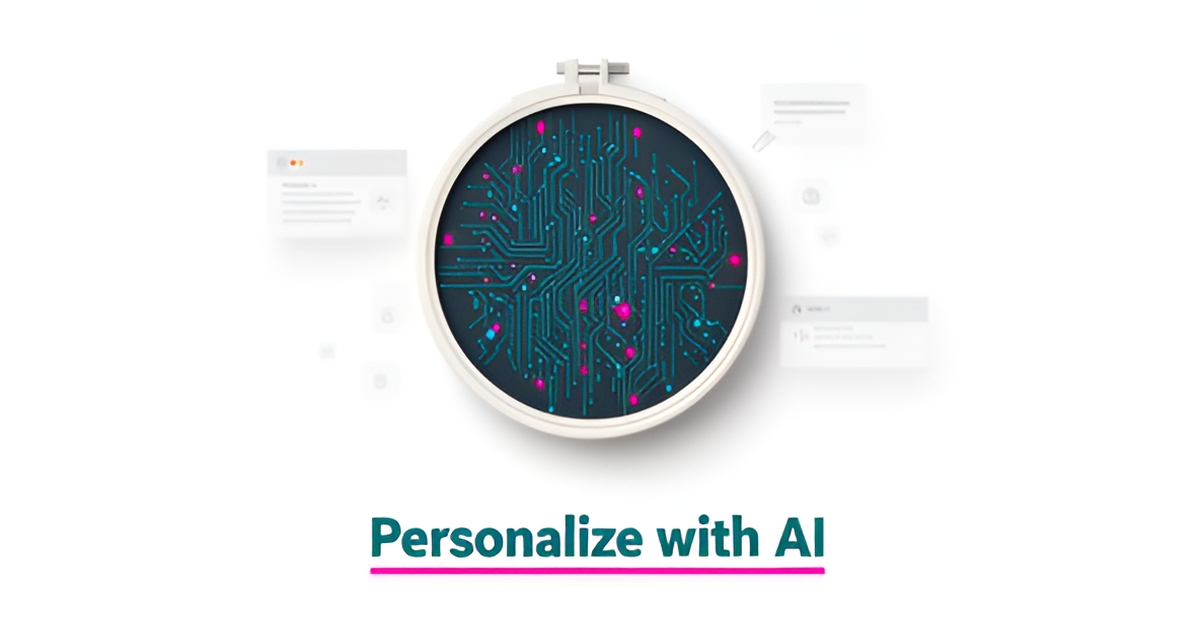
AI-Powered Customer Personalization: How Embroidery Shops Can Stand Out
Key Facts
- Industry research typically attributes materially higher revenue to hyper-personalization for fast-growing organizations compared with slower-moving competitors
- AI-assisted prepress and digitization can dramatically cut file-prep time for routine logos and text-based designs, according to printing industry workflow analysis
- Custom apparel shops that automate routine digitization typically report faster turnaround and meaningfully lower manual labor costs
- AI-powered design generation creates vector-ready artwork from text prompts, eliminating manual tracing
- Expert digitizers can focus exclusively on photo-realistic, gradient-heavy, or specialty-fabric jobs with AI handling routine tasks
- AI systems can analyze purchase history and browsing signals to recommend personalized designs and materials
Hire a team member that works 24/7 — for less than a part-time wage.
AI receptionists, SDRs, dispatchers and 99+ roles. Trained on your business, fully managed.
Not sure where to start? Ask our AI planner
The Personalization Gap in Embroidery
Embroidery shops today face a quiet crisis: customers expect the same anticipatory experiences they get from Netflix or Amazon, but most shops still rely on manual, reactive processes that cannot scale. Industry research consistently links hyper-personalization to stronger revenue growth for fast-growing organizations, yet the typical embroidery workflow treats every order as a fresh transaction — design files, material specs, and gift preferences live in disconnected emails, spreadsheets, or a digitizer's memory.
This gap widens with every new customer. A shop might remember that a corporate client prefers polyester twill for durability, but that knowledge vanishes when the account manager goes on vacation. Gift buyers browsing for Mother's Day receive generic catalogs instead of suggestions based on past purchases. The result is a ceiling on average order value and a loyalty model built on hope rather than intelligence.
AI in embroidery is shifting from production automation to customer intelligence. Modern systems can analyze purchase history, design complexity preferences, fabric selections, and seasonal patterns to recommend the right stabilizer for a stretch fabric, suggest a monogram style that matches a previous order, or flag a corporate reorder cycle before the client even asks.
- Design recommendations based on stitch-count history and aesthetic preferences
- Material matching that accounts for fabric type, durability needs, and colorfastness
- Gift curation triggered by purchase anniversaries and recipient profiles
- Proactive reorder prompts aligned with corporate uniform cycles
Shops that close this personalization gap don't just retain customers — they increase average order value by turning single transactions into predictable, compounding relationships. The technology to deliver this at scale exists today; the competitive advantage belongs to shops that implement it before personalization becomes the baseline expectation.
How AI Transforms Customer Intelligence into Revenue
Embroidery shops compete on speed and sentiment, and AI turns customer data into both. Instead of waiting for requests, AI analyzes history, browsing behavior and purchase patterns to anticipate what a customer wants before they ask.
AI personalization moves from reactive to proactive experiences, anticipating customer needs rather than simply responding to behavior. That shift is measurable. Industry analysis of hyper-personalization programs typically finds that fast-growing organizations generate significantly more revenue from personalization than their competitors. For embroidery, that means recommending personalized designs, optimal materials and timely gift ideas at the moment of intent.
Real-time learning lets models continuously update as behavior changes, enabling personalization to evolve across web, mobile, email and other channels. AI can analyze large datasets in near real-time to predict user intent and automate the delivery of one-to-one experiences that drive engagement, loyalty and conversions. The result is higher conversion rates and stronger emotional connection that drives loyalty in competitive markets.
Customer intelligence becomes revenue when it is operationalized. AI systems can:
- Analyze purchase history and browsing signals to recommend personalized designs and materials
- Surface timely gift ideas based on seasonality, past gifting patterns and engagement
- Adjust recommendations by fabric type and stitch complexity to reduce errors and rework
- Deliver one-to-one content that feels personal at scale across the customer journey
In production embroidery workflows, automation already changes economics. Custom apparel shops that implement automated digitization typically report substantially faster turnaround and meaningful reductions in manual labor costs, with higher customer satisfaction attributed to quicker delivery. Faster turnaround and consistent quality lead to higher customer satisfaction.
AI also enhances the creative side. AI-assisted embroidery workflows can flag likely mistakes in digitized designs—such as excessive stitch density or areas prone to fabric puckering—before production, reducing errors that might cause fabric damage or uneven stitching.
When applied to customer relationship management and journey optimization, AI turns historical signals into proactive recommendations that lift average order value. Personalization can increase conversion rates by presenting the right products or services to the right customers at the right time, and personalized experiences create a strong emotional connection between customers and brands, making them more likely to remain loyal and make repeat purchases.
AIQ Labs works with SMBs to architect these capabilities as owned systems rather than rented tools, integrating customer data, recommendation logic and fulfillment workflows into a unified AI customer journey. For shops that want to start smaller, a single managed AI employee can handle intake, reorder prompts, and customer communication from day one.
From Digitizing to Delivery: The Hybrid AI Workflow
The old model of embroidery production forces a false choice: rush through digitizing and risk costly errors, or meticulously hand-digitize every file and watch turnaround times balloon. A hybrid AI workflow dissolves that trade-off by routing each job to the right level of intelligence—automated for the routine, human for the complex—so capacity scales without sacrificing the stitch quality your reputation depends on.
Printing industry workflow analysis as of late 2026 suggests that integrating AI into the prepress stage can cut prepress time dramatically for routine jobs, turning what was once a multi-hour bottleneck into a minutes-long automated pass. For straightforward logos and text-based designs, automated digitization typically delivers much faster turnaround while cutting manual labor costs by roughly a third, according to custom apparel case studies tracking the shift from file intake to machine-ready output. Those gains come from AI handling stitch-type assignment, fill mapping, and underlay generation on simple artwork, then exporting directly to .DST, .PES, or .JEF formats without human intervention.
- AI-powered design generation creates vector-ready artwork from text prompts, eliminating manual tracing
- Automated digitization handles simple logos and monograms in roughly one minute per file
- Expert digitizers focus exclusively on photo-realistic, gradient-heavy, or specialty-fabric jobs
- Integrated personalization engines connect storefront uploads straight to production queues
- Human QA checkpoints remain for complex orders before machines start stitching
The personalization layer is where the workflow becomes a revenue engine. By analyzing purchase history, design preferences, and even seasonal gifting patterns, an AI engine can recommend complementary thread colors, fabric upgrades, or monogram placements at the moment a customer uploads artwork—boosting average order value without adding sales headcount. This mirrors the broader finding that fast-growing organizations typically generate significantly more revenue from hyper-personalization than competitors by anticipating needs rather than reacting to them. When the storefront, design engine, and production queue share a single data layer, the manual handoffs that limit scalability disappear, and the shop can accept rush personalization orders that would have been impossible under a fully manual process.
AIQ Labs builds exactly this kind of end-to-end system. A workflow build rebuilds the one workflow that costs you the most—file intake, digitizing routing, or reorder automation—at a fixed price, phased so you see value at each milestone. For shops ready to connect storefront, production, and customer data into one layer, an AI operating system does it in phases and is owned outright, not rented. If you're ready to see where the biggest bottleneck sits in your current flow, start the two-minute Fit Check at https://aiqlabs.ai/apply and book a free 30-minute strategy call at https://aiqlabs.ai/book. We'll map the highest-ROI automation opportunities together—no obligation, just clarity.
Measuring What Matters: Loyalty, AOV, and Operational Leverage
Deploying AI personalization without tracking its impact is like stitching with your eyes closed—you're creating work, but you have no idea if it's wearable. For embroidery shops investing in automated design recommendations and customer journey optimization, four specific metrics separate profitable personalization from expensive guesswork.
Start with repeat purchase rate, the clearest signal that your personalization efforts resonate. When AI analyzes customer history to suggest relevant thread colors, fabric pairings, or complementary designs, you should see that reflected in how often clients return. Industry research consistently links this anticipatory approach—rather than reactive marketing—to the revenue advantage fast-growing personalization leaders enjoy.
Next, monitor average order value lift alongside your design-to-production time. AI tools excel at analyzing customer preferences to recommend personalized designs, materials, and gift ideas that naturally increase basket size. When these same systems automate technical workflows—converting artwork to stitch files or optimizing thread paths—shops often see dramatic operational improvements. Custom apparel shops that automate routine digitization typically report much faster turnaround and meaningful labor cost reductions, with customer satisfaction climbing specifically due to quicker delivery.
To validate your AI investment, track these essential metrics:
- Repeat purchase rate to measure loyalty gains from tailored recommendations
- Average order value to quantify upsell success from AI-suggested materials and add-ons
- Design-to-production time to capture efficiency gains from automated digitizing
- Customer satisfaction scores to verify that faster turnaround translates to better experiences
Finally, don't ignore the operational leverage hidden in your workflow data. AI-assisted prepress and digitization can cut file-prep time dramatically for routine jobs, according to printing industry workflow analysis. When you connect these efficiency gains to your customer-facing metrics, you create a complete picture of how personalization drives both revenue growth and cost reduction.
At AIQ Labs, we help embroidery businesses implement measurement frameworks that track these KPIs from day one, ensuring your AI investment delivers measurable returns rather than just technological novelty. Whether you're deploying a single AI employee to handle customer inquiries or building a comprehensive personalization engine, establishing these baselines before you launch lets you prove ROI with confidence. Flexible payment models—start monthly, build in milestones, or own it outright—mean you can match the investment to your cash flow. Curious where to begin? The two-minute Fit Check at https://aiqlabs.ai/apply is the fastest first step.
Still paying for 10+ subscriptions that don’t talk to each other?
We build custom AI systems you own outright. No vendor lock-in. Full control.
Not sure where to start? Ask our AI planner
Frequently Asked Questions
How can AI personalization actually increase revenue for my embroidery shop?
Will AI replace my skilled digitizers or just make their jobs harder?
What specific metrics should I track to know if my AI investment is working?
Is AI personalization only for big shops with lots of data, or can small embroidery businesses benefit too?
How fast can I expect to see results from implementing AI in my embroidery workflow?
What's the difference between AI-powered digitizing and AI-powered customer personalization—do I need both?
Turning Stitches into Strategy: Your Path to Smarter Embroidery
AI-powered personalization isn't just about smarter recommendations—it's about transforming how embroidery shops operate, from the moment a customer lands on your site to the final stitch. By connecting customer history with production workflows, shops can boost average order value through timely material and design suggestions, increase loyalty with proactive gift curation, and reduce turnaround times by automating routine digitizing—freeing experts to focus on complex, high-value work. The result is a scalable system where personalization drives revenue and operational efficiency work hand in hand. Ready to see where your biggest opportunity lies? Start the two-minute Fit Check at https://aiqlabs.ai/apply to map your highest-ROI automation areas, then book a free 30-minute strategy call to explore how AIQ Labs can help you build an owned, end-to-end system that turns customer intelligence into lasting competitive advantage.
Make AI your competitive advantage — not just another tool.
Strategy, implementation and ongoing optimization. One partner, end to end.
Not sure where to start? Ask our AI planner