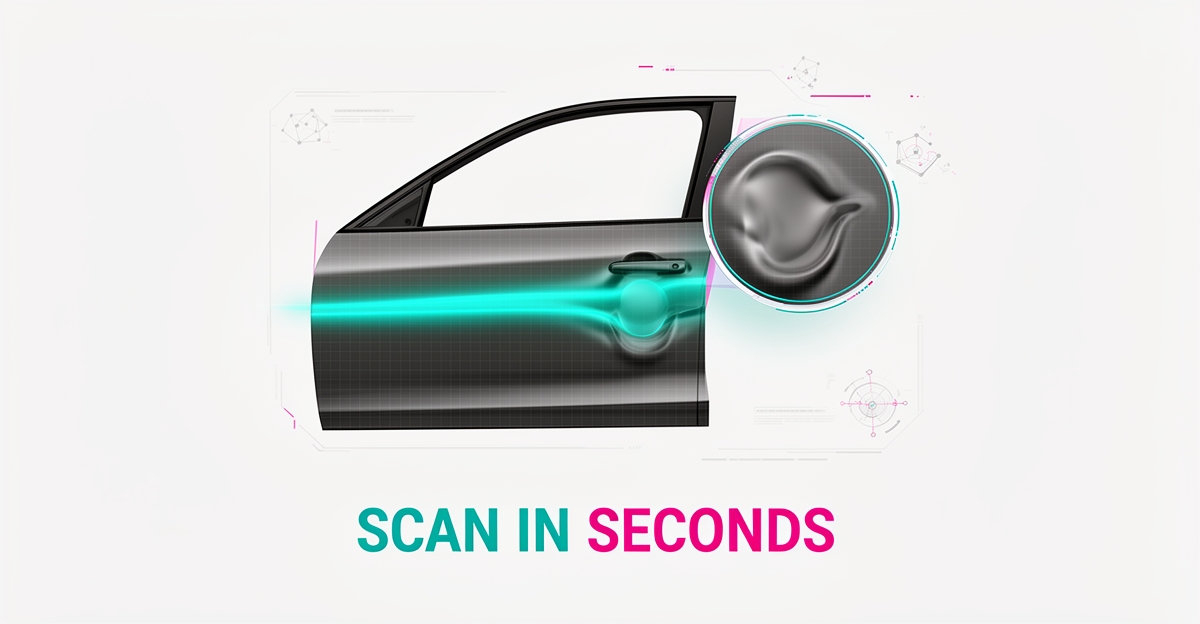
AI-Powered Damage Detection: How Your PDR Shop Can Scan Photos Instantly
Key Facts
- AI-based image assessment increasingly relies on deep convolutional networks trained on human expert annotations, because traditional pixel metrics fail on modern camera processing pipelines per technical analysis
- Industry surveys consistently flag employees inputting sensitive data into AI systems as a leading governance concern, with roughly a third of leaders citing it as their top risk
- Agentic AI activity surged sharply through late 2025, and the same tools that power legitimate automation can also generate convincing synthetic images at scale
- AI-powered damage detection can reduce initial assessment time from hours to seconds per technical analysis
- Photo-based fraud is a growing operational concern for any business that quotes from customer-submitted images, as of late 2026
Hire a team member that works 24/7 — for less than a part-time wage.
AI receptionists, SDRs, dispatchers and 99+ roles. Trained on your business, fully managed.
Not sure where to start? Ask our AI planner
The Speed-Accuracy Trade-Off in Modern Damage Assessment
PDR shops live in a tension between speed and trust. Customers expect an instant assessment from a photo, while technicians need enough context to quote accurately and avoid costly rework.
AI can collapse initial triage from hours to seconds by analyzing client-submitted vehicle photos to detect dents, estimate severity, and recommend repair types. That speed is real, but it also compresses the window for validation. When discovery outpaces response, the bottleneck shifts from detection to prioritization and remediation.
AI governance research describes this pattern clearly: AI can help uncover findings faster than businesses can assess, prioritize, and remediate them. For PDR, that means an AI flag arrives instantly, but someone still must decide if it is actionable, who owns the response, and how quickly action is needed.
The risk is not theoretical. Industry surveys consistently show that roughly a third of business leaders cite employees inputting sensitive data into AI systems as their top concern, and many attribute risky AI behavior to insufficient training or pressure to act quickly. Speed without guardrails encourages over-reliance on automated assessments.
Image-based systems add another layer. AI-based quality assessment now uses deep convolutional networks trained on human expert annotations, because traditional metrics fail on non-linear processing pipelines. That approach highlights why validation matters: models learn what humans perceive, not just what pixels show.
Fraud and manipulation also move faster. As of late 2026, AI-doctored images are a documented and growing problem for any business that quotes from customer photos, and agentic AI activity surged sharply through late 2025. When fraud resembles legitimate automation, distinguishing genuine damage from manipulated photos becomes a core operational problem.
Balancing speed and accuracy requires explicit operational design, not just model performance:
- Define clear ownership for AI-generated findings and escalation paths before deployment
- Implement validation steps that match discovery speed, including human review for edge cases
- Train staff on system capabilities and limitations to prevent over-reliance
- Monitor for gaming or image manipulation and maintain audit trails for assessments
AIQ Labs builds AI systems trained on real PDR repair data to deliver accurate, fast results in seconds, but the value emerges only when those results feed into governed workflows. Discovery outpacing response is the core challenge, and it is solved with structure, accountability, and confidence to act on what the AI finds.
How AI Damage Detection Actually Works: Beyond Simple Image Analysis
AI-powered damage detection goes beyond basic image analysis by leveraging perceptual AI metrics and agentic systems to assess not just the presence of dents, but their severity, location, and repair feasibility. Unlike traditional pixel-based analysis, these systems use deep convolutional networks trained on human-annotated datasets to evaluate image quality and damage characteristics through a psychophysical approach that aligns with expert judgment. This method accounts for non-linearities in modern camera processing pipelines that can distort conventional optical measurements, ensuring assessments reflect how humans actually perceive damage. Perceptual AI-based metrics enable this by scaling pairwise human comparisons into Just Objectionable Difference (JOD) units, creating a reliable benchmark for AI evaluation.
The technology also incorporates agentic AI frameworks where specialized sub-agents collaborate to analyze different aspects of the damage—such as depth estimation, panel contour analysis, and lighting consistency—to build a comprehensive assessment. This mirrors the multi-agent orchestration AIQ Labs uses across its deployed systems, with 200+ multi-agent systems in production today. However, as agentic activity has surged since late 2025, the same capabilities that enable sophisticated damage analysis can be exploited to generate convincing fake damage photos, making authenticity verification a critical component of any robust system. Widely available AI tools can now create synthetic evidence at scale, lowering the barrier to manipulation and increasing the risk of false claims submitted to PDR shops.
To counter these risks, effective AI damage detection must include validation layers that cross-reference visual findings with contextual data like image metadata, shadow consistency, and surface texture patterns—techniques drawn from fraud detection systems that identify coordinated abuse through anomalies in automated behavior. Without such safeguards, the speed advantage of AI—reducing assessment time from hours to seconds—could be undermined by undetected manipulation, shifting the bottleneck from detection to remediation as organizations struggle to validate findings faster than they are generated. Governance frameworks must evolve to match this discovery speed, ensuring human oversight remains integrated where AI confidence is low or edge cases arise. For PDR shops, this means implementing systems that not only detect damage quickly but also flag potential inconsistencies in submitted photos, maintaining trust in the assessment process while preserving efficiency gains. AIQ Labs builds systems trained on real PDR repair data to balance speed with robustness, ensuring AI enhances—not replaces—expert judgment in the repair workflow.
Implementing AI Detection Without Compromising Quality or Trust
AI-powered damage detection can transform your PDR shop's efficiency, but only if you implement it with the right safeguards. The technology's ability to analyze photos in seconds creates both opportunity and risk—without proper controls, you could face quality issues, customer disputes, or even fraud.
The primary challenge is that AI can identify problems faster than organizations can respond. This "discovery outpacing response" pattern means your shop needs clear protocols for validating AI findings before acting on them. Human oversight remains essential even as AI accelerates the initial assessment process.
Here are five critical steps to implement AI damage detection safely:
- Establish clear governance frameworks that define who reviews AI findings and when human expertise is required
- Implement validation processes to verify AI damage assessments before providing repair recommendations
- Train staff on AI capabilities and limitations to prevent over-reliance on automated assessments
- Develop protocols for handling false positives or negatives, including re-evaluation procedures
- Create continuous monitoring systems to track AI performance and detect potential manipulation
The risk of manipulation is real. As of late 2026, AI-powered fraud techniques can create convincing fake evidence with widely available tools. For PDR shops, this means your AI system must not only detect damage but also verify the authenticity of submitted photos. Trust but verify should be your guiding principle.
AIQ Labs builds AI systems trained on real PDR repair data, ensuring the system understands the nuances of vehicle damage while incorporating validation layers and human-in-the-loop controls. Whether that starts as a single AI Workflow Build around your photo-intake and quoting process or grows into a fuller AI Operating System for your shop, the approach maintains quality while delivering the speed benefits that make AI valuable.
The DXOMARK approach to image quality assessment offers a useful parallel. Their perceptual AI metrics combine machine learning with human expert annotations to ensure results align with human judgment. Similarly, your PDR shop should use AI as a tool that augments rather than replaces human expertise.
Research on organizational security consistently shows that businesses with formal governance structures experience fewer incidents. The same principle applies to AI implementation—structured oversight prevents problems before they occur. By following these steps, you can harness AI's speed without compromising the quality and trust that define your PDR business.
Still paying for 10+ subscriptions that don’t talk to each other?
We build custom AI systems you own outright. No vendor lock-in. Full control.
Not sure where to start? Ask our AI planner
Frequently Asked Questions
How fast can AI actually assess vehicle damage from a photo for PDR shops?
What is the biggest risk when using AI for damage detection in PDR shops?
How can PDR shops prevent over-reliance on AI damage assessments?
Is AI damage detection vulnerable to fraud or manipulated images?
What steps should PDR shops take to implement AI damage detection safely?
Does AI replace the need for human technicians in PDR shops?
Speed Wins Jobs. Trust Keeps Them.
AI-powered damage detection can turn your PDR shop's photo intake from hours of back-and-forth into a seconds-long assessment—but only when speed is matched by structure. As this article showed, the real challenge isn't detection; it's building the governance, validation steps, and staff training that keep AI findings trustworthy, especially as AI-doctored images become easier to produce. The shops that win will pair instant AI triage with human-in-the-loop oversight, clear escalation paths, and models trained on real PDR repair data—not generic image tools. That's exactly how we approach it at AIQ Labs: systems you own outright, built in phases, designed to augment your technicians' judgment rather than replace it. If you're ready to see what instant, reliable photo assessment could look like in your shop, start with the two-minute Fit Check at aiqlabs.ai/apply and book a free 30-minute strategy call with an AI engineer. It's a working session, not a sales pitch—and if there isn't a clear win for your business, we'll tell you that too.
Make AI your competitive advantage — not just another tool.
Strategy, implementation and ongoing optimization. One partner, end to end.
Not sure where to start? Ask our AI planner