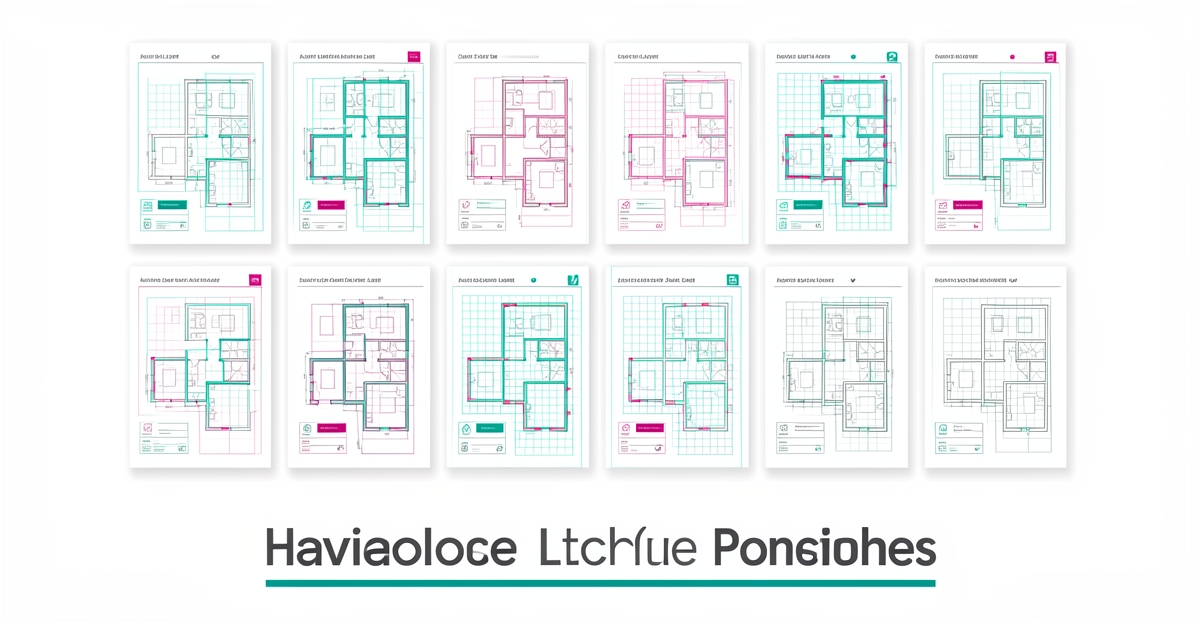
AI-Powered Design Consistency: How Drafting Firms Can Standardize Schematics Across Projects
Key Facts
- AI cuts manual drafting time from 90 minutes down to just 5 minutes.
- Automated standard libraries reduce production time by 80% on repeatable formats.
- Poor consistency costs companies an average of 9% of annual revenue.
- AI reduces complex review cycles from 4 rounds down to just 2.
- Structured libraries effectively automate 80% of predictable drafting documents.
- AI output within 10% of manual quality satisfies 80% of creative needs.
- Hybrid AI workflows save teams 50 hours of manual work monthly.
What if you could hire a team member that works 24/7 for $599/month?
AI Receptionists, SDRs, Dispatchers, and 99+ roles. Fully trained. Fully managed. Zero sick days.
The Hidden Cost of Schematic Drift
Every time a drafter chooses between two similar layer names or adjusts a font size, they make a micro-judgment that seems trivial in isolation but accumulates into massive operational drag. These invisible decisions create schematic drift, where the same firm produces inconsistent deliverables across different projects or team members.
This inconsistency is not just an aesthetic issue; it is a direct financial liability. Poor contract management costs companies an average of 9% of annual revenue, a metric that translates directly to drafting firms through rework, client confusion, and delayed approvals. When standards vary, review cycles lengthen, and the "polished but incorrect" output creates a dangerous perception of accuracy.
AI-powered standardization is most effective when it replaces manual "micro-judgments" with locked-in libraries of preferred standards. By removing the cognitive load of minor formatting choices, AI allows engineers to focus on high-value design decisions rather than mechanical consistency.
The cost of inconsistency extends far beyond wasted time. It creates a cycle of rework that erodes margins and damages client trust. When a firm cannot guarantee that every schematic follows the same scale, layer naming convention, or annotation style, they force their clients to spend additional time reviewing and correcting formatting errors.
Consider the efficiency gains seen in related professional services. In contract drafting, AI produces a first draft in 2–5 minutes compared to 45–90 minutes manually, reducing review cycles from an average of 2–4 rounds to 1–2 rounds according to Lawxy AI. Drafting firms face similar bottlenecks; however, the solution is not just speed, but structural uniformity.
- Eliminate Micro-Judgments: Automate choices like layer selection to prevent drift.
- Reduce Review Cycles: Consistent formatting means reviewers focus on design, not style.
- Lower Rework Costs: Prevents the need to reformat entire project sets after approval.
The most significant trend in AI standardization is the move away from vague prompts toward structured, pre-approved libraries. Just as legal firms lock preferred language into a "clause library" to eliminate drift, drafting firms must digitize their schematic standards into machine-readable formats. This ensures that AI enforces consistent layer naming, scale, and annotation styles across every project.
Building this library is a domain task, not just a technical one. Engineers must extract their preferred standards and tag each element with metadata that tells the AI when to use it. AI drafting is most effective for the 70–80% of documents that follow predictable patterns as reported by Lawxy AI, making this library approach highly scalable for routine schematic types.
The leading enterprise AI adoption pattern is a hybrid model where AI handles structure and first drafts, while humans provide polish and accuracy. AI should generate the base schematic structure and apply standard layers automatically, allowing engineers to review for technical nuance. This approach leverages the fact that AI content and design tools reduce production time by 60–80% on repeatable formats according to VentureBurn.
However, governance is critical. In regulated industries, the risk is not AI failure, but "false precision"—polished outputs that are subtly incorrect. Drafting firms must implement mandatory human verification against source data and regulatory codes before release. AI supports professional judgment but never replaces it, ensuring that consistency does not come at the cost of safety or compliance.
By standardizing the mechanical aspects of drafting, firms can break the cycle of drift and deliver predictable, high-quality schematics every time.
From Vague Prompts to Structured Libraries
Stop relying on generic AI prompts that produce inconsistent results. The future of drafting automation lies in structured Schematic Standard Libraries that enforce enforceable consistency across every project.
Instead of hoping an AI generates the right layer names or scales, firms must digitize their preferences into machine-readable rules. This shift transforms AI from a creative assistant into a precise enforcement tool.
AI handles the mechanical consistency, freeing engineers to focus on complex design nuances. By locking standards into a library, you eliminate the drift that occurs when different team members interpret rules differently.
Key Benefits of Standard Libraries:
- Eliminates "Micro-Judgments": Removes the hidden decision costs of choosing layer names or annotation styles for every single line.
- Enforces Brand Identity: Ensures every output matches your firm’s specific visual and technical standards automatically.
- Reduces Review Cycles: Cuts manual checking time by up to 80% by preventing basic errors before they reach the review stage.
This approach mirrors successful AI adoption in legal and finance sectors, where clause libraries replaced vague instructions with precise, pre-approved templates.
The most effective enterprise AI model is a hybrid workflow. AI generates the base schematic structure and applies standard layers, while humans provide polish and technical verification.
This method leverages AI for speed and structure without sacrificing the strategic nuance only experienced engineers can provide. It prevents the "false precision" risk where polished but incorrect outputs create a dangerous perception of accuracy.
AI produces first drafts in minutes, compared to hours of manual setup. This allows engineers to spend their time on high-value verification rather than low-value formatting.
Workflow Statistics:
- Speed: AI reduces production time by 60–80% on repeatable formats according to VentureBurn.
- Efficiency: Drafting time drops from 45–90 minutes to 2–5 minutes when using structured libraries as reported by Lawxy AI.
- Quality Threshold: AI output is considered "good enough" for 80% of creative tasks if it performs within 10% of manual quality according to EasyGrader.
This hybrid model ensures that AI acts as a force multiplier for your team, not a replacement for their expertise.
Building the library is a domain task, not a technical one. Engineers must extract their preferred standards and tag each rule with metadata that tells the AI when to apply it.
AIQ Labs specializes in this digitization process. We help firms transform tribal knowledge into structured, production-ready AI systems that learn from past projects.
Our approach involves developing custom AI workflows that integrate directly with your existing CAD/BIM tools. We don’t just deploy software; we architect the logic that drives it.
Implementation Steps:
- Audit Current Standards: Identify repetitive formatting, layer naming conventions, and scale rules.
- Digitize Preferences: Convert these rules into a structured, machine-readable format.
- Train AI Agents: Configure AI employees to reference the library for every new schematic.
- Establish Governance: Implement audit trails to track AI decisions and human approvals.
This ensures true ownership of your intellectual property, avoiding vendor lock-in and ensuring your standards evolve with your business.
In regulated industries, the primary risk of AI is not failure, but false precision. A polished but incorrect output is more dangerous than an obvious error because it erodes trust.
To mitigate this, firms must implement strict governance frameworks. Every AI-generated schematic must undergo mandatory human verification against source data and regulatory codes.
AIQ Labs builds human-in-the-loop controls into every system. This ensures that AI handles the volume while humans handle the liability.
Risk Mitigation Strategies:
- Audit Trails: Log every AI action for traceability and compliance.
- Validation Layers: Require human approval for critical design changes.
- Fallback Systems: Ensure graceful degradation if AI components fail.
By combining engineering excellence with robust governance, drafting firms can scale consistency without scaling risk.
The Hybrid Workflow: Speed Meets Precision
AI handles mechanical structure while humans focus on strategic nuance. This hybrid model eliminates the "blank page paralysis" that slows down drafting firms. By automating repetitive tasks, engineers reclaim hours previously lost to formatting.
Consider a firm processing standard floor plans. AI reduces production time by 60–80% for repeatable formats according to VentureBurn. This speed allows senior staff to focus on complex design challenges rather than basic layer assignments.
Manual drafting is bogged down by hidden decision costs. Every choice between similar layer names or annotation styles consumes mental energy. These "micro-judgments" accumulate into significant weekly delays.
AI enforces consistency by locking standards into a structured library. This mirrors legal drafting practices where preferred clauses replace vague prompts. Firms must digitize their preferred scales and naming conventions before deployment.
- Standardize Layer Naming: Ensure uniformity across all team members
- Lock Scale Settings: Prevent scaling errors in final deliverables
- Automate Annotations: Apply consistent text styles automatically
- Reduce Review Cycles: Cut feedback loops from 4 rounds to 2 as reported by Lawxy AI
AI generates the first draft; humans provide the final polish. This division of labor maximizes both speed and accuracy. Engineers verify technical accuracy against source data and regulatory codes.
In regulated industries, "false precision" is a critical risk. A polished but incorrect output can be more dangerous than an obvious error. Therefore, mandatory human verification is non-negotiable for responsible implementation.
- Initial Draft Generation: AI applies base structures and standard layers
- Technical Verification: Engineers check for code compliance and safety
- Nuance Application: Humans add complex design considerations
- Final Approval: Senior staff sign off on the completed schematic
The financial impact of this hybrid approach is measurable. Poor contract management costs companies an average of 9% of annual revenue according to Lawxy AI. Inconsistent schematics create similar waste through rework and client confusion.
AI is most effective for the 70–80% of documents that follow predictable patterns. Drafting firms should start with high-volume, low-complexity projects. This allows teams to refine their standard libraries before scaling to novel designs.
For teams creating multiple presentations monthly, AI saves 20–50 hours monthly according to SlidesMate. This time saving translates directly into higher project capacity without adding headcount.
AIQ Labs builds systems that clients own outright. Unlike vendors offering point solutions, we architect custom "Schematic Standard Libraries." This ensures long-term control without vendor lock-in.
We don't just deploy software; we partner to digitize your existing standards. Engineers define the rules, and our AI enforces them consistently across every project. This approach transforms tribal knowledge into scalable, automated processes.
Ready to standardize your schematics? Contact AIQ Labs to discuss your specific workflow needs.
Governance, Audit Trails, and Risk Management
AI-generated schematics can create a dangerous illusion of perfection, leading to what experts call "false precision"—polished but incorrect outputs that bypass scrutiny. This risk is particularly acute in regulated industries where a subtle error in scale or layer naming can have costly downstream consequences.
To mitigate this, firms must implement strict governance frameworks that prioritize verification over volume. AI supports professional judgment, but never replaces it, making human oversight a non-negotiable principle for responsible deployment.
The primary threat in AI drafting is not failure, but "false precision," where AI produces outputs that look authoritative but contain silent errors. In finance, for instance, a polished but incorrect output is often more dangerous than an obvious mistake because it lulls reviewers into a false sense of security.
Drafting firms face similar risks when AI enforces standards without understanding context. If an AI applies a standard scale to a non-standard component, the schematic may look consistent but remain technically invalid.
- Silent Errors: AI may apply correct formatting to incorrect data without flagging the discrepancy.
- Compliance Gaps: Automated outputs might violate specific regional building codes if not explicitly programmed.
- Liability Exposure: Undetected errors in AI-generated schematics can lead to significant legal and financial liability.
Governance requires visibility. Every AI-generated change, from layer renames to scale adjustments, must be logged in a tamper-proof audit trail. This ensures that every decision is traceable back to its source, whether human or algorithmic.
For drafting firms, this means integrating audit trails and documentation directly into the AI workflow. This capability is already proven in regulated sectors; our own AI collections platform uses full compliance tracking and audit trails to meet strict industry requirements.
- Change Logs: Record who or what initiated every modification to a schematic.
- Version Control: Maintain a clear history of all AI and human edits.
- Approval Workflows: Require mandatory human sign-off before finalizing AI drafts.
The most effective governance strategy is a hybrid workflow where AI handles structure while humans handle nuance. AI should generate the base schematic based on strict internal libraries, followed by human verification against source data and regulatory codes.
This approach aligns with the finding that AI drafting is most effective for the 70–80% of documents that follow predictable patterns. By automating the routine 80%, engineers can focus their verification efforts on the complex 20% where risk is highest.
- Automated First Drafts: AI applies standard layers, scales, and annotations instantly.
- Human Review: Engineers verify technical accuracy and complex design nuances.
- Standardized Libraries: Input standards must be digitized to ensure consistent AI output.
AIQ Labs builds production-ready systems, not prototypes, ensuring that governance is baked into the architecture from day one. Our multi-agent architectures proven at scale include validation layers that check every action before execution, ensuring reliability in high-stakes environments.
By partnering with AIQ Labs, drafting firms gain not just automation, but complete control over customization and future development. This ensures that your governance framework evolves with your business needs, free from vendor lock-in.
We handle the technical complexity of embedding these controls, allowing your team to focus on delivering accurate, compliant designs with confidence.
Next Steps: Building Your Schematic Standard Library
Transforming your drafting firm with AI begins not with software installation, but with digitizing your institutional knowledge. The most successful AI implementations in drafting rely on a hybrid workflow where AI generates consistent first drafts based on strict internal libraries, while human experts verify technical nuance.
To unlock this efficiency, you must first move away from vague instructions and toward structured, pre-approved libraries. Just as legal firms lock preferred language into clause libraries to prevent drift, drafting firms can enforce consistent layer naming, scale, and annotation styles through centralized standard databases.
According to legal drafting research, AI is most effective for the 70–80% of documents that follow predictable patterns. By codifying your firm’s preferred standards into a machine-readable format, you eliminate the "micro-judgments" that currently slow down every project.
Before deploying any AI agents, your team must define and tag your schematic standards. This is a domain task, not a technical one. Engineers must extract preferred layer names, scale rules, and annotation styles, then structure them for AI consumption.
Key actions for this phase include:
- Audit Existing Standards: Identify recurring patterns in your top 20% of projects.
- Digitize Tribal Knowledge: Convert informal team habits into explicit, tagged rules.
- Define Governance Rules: Establish which standards are mandatory versus optional.
Building this Schematic Standard Library is the foundation of your AI transformation. Without it, AI output lacks the consistency required for professional deliverables.
Once your library is established, implement a hybrid workflow that leverages AI for speed and humans for precision. This model allows your firm to handle high volumes of routine work without sacrificing quality.
In this workflow, AI handles the mechanical consistency of fonts, spacing, and layer assignments, while engineers focus on strategic design decisions. This approach can reduce production time by 60–80% on repeatable formats, according to industry analysis.
Specific benefits of this hybrid approach include:
- Faster First Drafts: AI generates base structures in minutes rather than hours.
- Reduced Review Cycles: Standardized outputs require fewer iterations for approval.
- Scalable Quality: Consistency is maintained across all team members automatically.
For teams creating multiple schematics monthly, this efficiency saves 20–50 hours, freeing up senior talent for complex problem-solving.
In regulated industries, the primary risk of AI is not failure, but "false precision"—polished but incorrect outputs that create a false perception of accuracy. To mitigate this, you must implement strict governance frameworks for AI-generated schematics.
Integrate audit trails into your AI systems to log every automated change. Ensure that AI-generated layers, scales, and annotations undergo mandatory human verification against source data and regulatory codes before release.
According to responsible AI guidelines, human supervision is a non-negotiable principle for deployment. This ensures that while AI handles volume, your firm retains full accountability for technical accuracy.
Do not attempt to automate your entire portfolio at once. Successful AI adoption starts narrow, focusing on high-volume, low-complexity projects like standard floor plans or repetitive detail sheets.
This targeted approach allows you to measure ROI and refine your standard libraries before scaling to complex, novel designs. By proving value on routine tasks, you build internal confidence and demonstrate tangible efficiency gains.
With a solid library and a hybrid workflow in place, your firm is ready to scale. AIQ Labs can help you architect these custom systems, ensuring you own the technology and the competitive advantage it delivers.
Still paying for 10+ software subscriptions that don't talk to each other?
We build custom AI systems you own. No vendor lock-in. Full control. Starting at $2,000.
Frequently Asked Questions
How much time can an AI standard library actually save on routine drafting tasks?
Is AI reliable enough for drafting without risking 'false precision' errors?
Do I need to build a custom library before we can start automating our schematics?
What is the financial impact of inconsistent design standards on a firm?
How does AIQ Labs handle the technical setup and ownership of these systems?
End Schematic Drift: Turn Consistency Into Competitive Advantage
Schematic drift is not merely an aesthetic inconsistency; it is a hidden financial liability that erodes margins, delays approvals, and damages client trust. By allowing manual 'micro-judgments' to dictate layer names, scales, and annotations, drafting firms invite costly rework and operational drag. AI-powered standardization offers a structural solution: by replacing these trivial choices with locked-in libraries of preferred standards, firms eliminate cognitive load and ensure every deliverable meets exact specifications from the start. At AIQ Labs, we transform this potential for inconsistency into a scalable competitive advantage. As your AI Transformation Partner, we architect custom AI systems that learn from your past projects and automatically apply these standards across all workflows. Whether through AI Development Services or managed AI Employees, we help SMBs move beyond pilot stages to true operational transformation. Stop letting minor formatting errors impact your bottom line. Contact AIQ Labs today to discover how we can architect your competitive advantage through intelligent, production-ready automation.
Ready to make AI your competitive advantage—not just another tool?
Strategic consulting + implementation + ongoing optimization. One partner. Complete AI transformation.