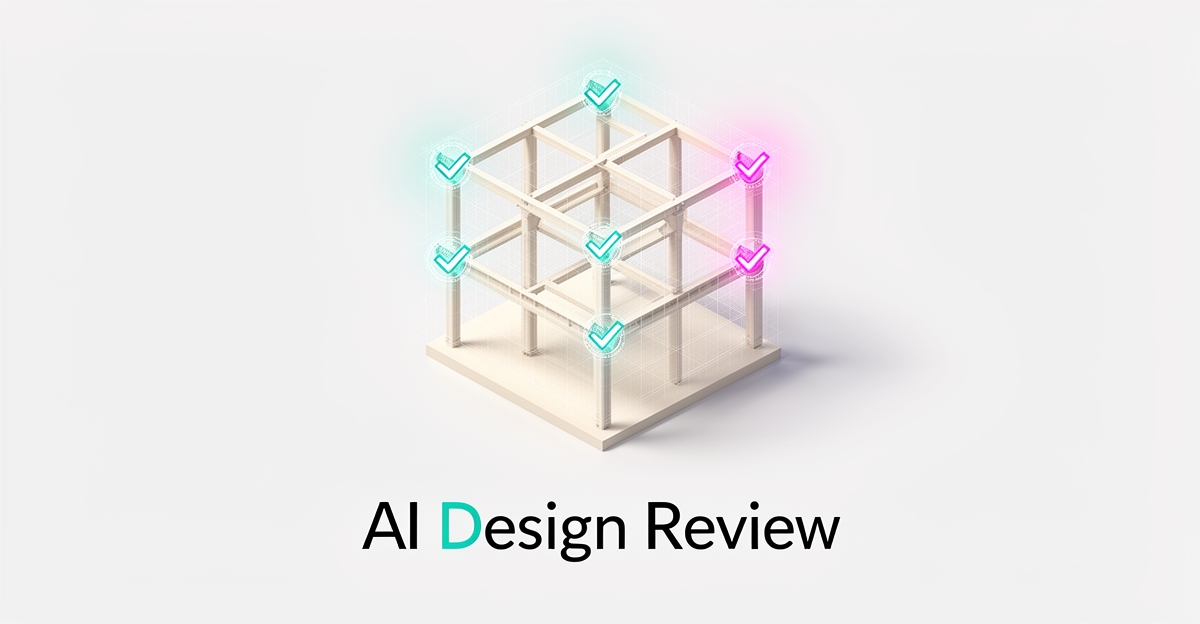
AI-Powered Design Review in Structural Engineering: A Safe, Scalable Solution
Key Facts
- AI tools can substantially cut time spent on repetitive estimating and scheduling work—firms in adjacent design disciplines report major time savings as of late 2026
- Most design professionals using AI report measurable productivity gains on routine, repetitive tasks
- The NCSEA Foundation has dedicated over $100,000 to its AI Initiative to support responsible AI advancement
- The profession's own guidance is clear: AI should augment, not replace, the engineer of record
- Audit-ready AI review systems log every check, flag, and human decision—creating defensible compliance trails
Hire a team member that works 24/7 — for less than a part-time wage.
AI receptionists, SDRs, dispatchers and 99+ roles. Trained on your business, fully managed.
Not sure where to start? Ask our AI planner
The Growing Burden of Manual Design Validation in Structural Engineering
Structural engineers face mounting pressure as project volumes rise alongside increasingly stringent compliance demands and persistent talent shortages. Manual design validation processes, once sufficient for simpler workflows, now create significant bottlenecks in fast-paced engineering environments. Engineers routinely spend excessive time on repetitive checks—verifying calculations, cross-referencing code requirements, and validating documentation—that divert focus from high-value analysis and innovation.
Across design-related fields, most professionals using AI report meaningful time and cost savings on repetitive tasks, a trend increasingly relevant to structural engineering QA/QC workflows. These gains reflect a broader shift: automating low-value tasks lets experts reclaim time for complex problem-solving. In structural practice specifically, the payoff shows up in the tedious middle of the process—code clause checks, load take-off verification, drawing-to-model consistency—rather than in the judgment work at either end.
The growing burden is amplified by the volume and complexity of modern structural projects, which generate vast amounts of documentation requiring meticulous verification. Manual QA/QC processes are not only time-consuming but also prone to fatigue-related errors, increasing risk in safety-critical applications. As noted by the NCSEA Foundation, AI should augment—rather than replace—human expertise, serving as a force multiplier that enhances accuracy and consistency while preserving engineering judgment NCSEA Foundation. This aligns with AIQ Labs' approach: systems built to integrate into existing workflows, providing audit-ready validation without displacing expert oversight.
- Automating repetitive design checks reduces manual effort and minimizes human error
- AI-powered validation ensures consistent application of code standards across projects
- Engineers regain time for high-value tasks like optimization and innovation
- Audit trails and traceability support compliance and liability management
- Scalable AI systems adapt to growing project volumes without proportional staffing increases
By offloading routine validation to AI, structural engineering teams can maintain rigorous quality control while accelerating project timelines. This shift addresses immediate operational pressures and supports long-term resilience in a profession facing evolving demands and skill gaps. The result is a safer, more scalable approach to design review—one that strengthens, rather than supplants, the engineer's role in ensuring structural integrity.
How AI Enhances Design Review Without Replacing Engineering Judgment
The fear is understandable: if a machine can review a structural design, what exactly is the engineer for? The answer, increasingly, is everything that matters most. AI handles the repetitive verification work that consumes engineering hours, while humans retain final authority over judgment calls that carry real-world consequences.
The National Council of Structural Engineers Associations has been explicit on this point. Through its AI Initiative—backed by over $100,000 in dedicated funding—the NCSEA Foundation emphasizes that AI should augment rather than replace human expertise, focusing on enhancing the efficiency, accuracy, and longevity of structural engineering practice. That framing treats AI as a decision-support tool, not a decision-maker.
In practice, that division of labor takes three forms. First, AI-driven QA/QC systems automatically analyze the vast documentation, calculations, and datasets that engineering projects generate, flagging discrepancies, errors, or deviations from established standards. STRUCTURE magazine notes this significantly enhances reliability and consistency while reducing the manual verification burden on engineers.
Second, natural language processing helps engineers navigate lengthy, intricate regulatory texts—a process historically vulnerable to misinterpretation or oversight. Tools like NCSEA's own SE GPT, built on a database of webinar and STRUCTURE magazine content, represent early steps toward engineers asking precise code questions and receiving context-specific answers.
Third, AI algorithms such as genetic algorithms and neural networks can generate and assess thousands of design configurations, surfacing optimal or near-optimal solutions that human engineers might overlook due to complexity or time constraints.
What separates a trustworthy deployment from a risky one is architecture. Production-grade review systems should include:
- Complete audit trails that log every check performed, every flag raised, and every human decision that followed
- Consistent, repeatable results so the same document always receives the same validation standard
- Human-in-the-loop controls that route ambiguous or high-stakes findings to a licensed engineer
- Clear boundaries on AI authority, with final design validation and sign-off remaining with the engineer of record
These guardrails matter because the technical challenges are real. Current tools can perform preliminary reviews, but they are not yet substitutes for comprehensive engineering analysis—and liability for design outcomes remains a human responsibility. Engineers must maintain accountability for final decisions and design validation, a principle the profession's own guidance reinforces.
The efficiency upside is well documented across adjacent design disciplines, where firms report significant reductions in time spent on estimates, schedules, and plan generation when repetitive work is automated. Structural engineering stands to capture similar gains in its most tedious workflows.
This is the thinking behind AIQ Labs' AI Workflow Builds: rebuild the one review workflow that costs your firm the most, at a fixed price and in phases, with the engineer firmly in charge of the decisions that carry liability and public safety consequences.
Implementing AI-Powered Design Review with Auditability and Scalability
Structural engineering firms can move from pilot experiments to reliable, auditable AI review by treating automation as a workflow design problem, not a software purchase.
Start by mapping repetitive review tasks that consume engineer hours with limited judgment value. Structure Magazine guidance recommends identifying routine checks, calculations and documentation first, then targeting those for automation while keeping final validation with licensed engineers. This preserves human-in-the-loop control for safety-critical decisions.
Integration is the next bottleneck. AI review must read the same sources engineers use daily. That means connecting to BIM models, calculation packages and document management systems so validation runs on live project data, not exported snapshots. Firms that embed AI inside existing workflows reduce rework and maintain traceability across design iterations.
Auditability requires deliberate design from day one. Every AI flag should carry a source reference, confidence score and a clear escalation path to an engineer. Production-grade document processing and review systems support this by logging inputs, model outputs and human overrides, creating a defensible trail for compliance and peer review. AIQ Labs builds these as AI Operating Systems—one connected operating layer, built in phases and owned outright, so firms retain control of their data and logic with no vendor lock-in.
A practical rollout follows a phased, measurable path:
- Identify automatable review tasks such as code clause checks, load take-off verification and drawing-to-model consistency
- Connect AI to BIM and document repositories with two-way API integration for real-time context
- Deploy human-in-the-loop workflows where AI pre-screens and engineers approve, reject or refine
- Instrument audit trails, model versioning and compliance reporting for every review decision
Scalability comes from standardization and governance. Firms define review playbooks, acceptance thresholds and escalation rules once, then reuse them across projects. The NCSEA Foundation notes AI should augment rather than replace human expertise, focusing on enhancing efficiency, accuracy and longevity of practice. With clear ownership of custom systems, teams can evolve models as codes change without waiting on a vendor.
If you're not sure where to start, take the two-minute Fit Check at https://aiqlabs.ai/apply. If it's a fit, you'll get a free 30-minute strategy call to map your highest-ROI review workflows and design an auditable AI deployment plan.
Still paying for 10+ subscriptions that don’t talk to each other?
We build custom AI systems you own outright. No vendor lock-in. Full control.
Not sure where to start? Ask our AI planner
Frequently Asked Questions
Will AI replace structural engineers in the design review process?
How much time can AI save on repetitive structural design validation tasks?
What specific tasks in structural design review are best suited for AI automation?
How does AI ensure auditability and compliance in structural design reviews?
Can AI help interpret complex building codes and standards for structural engineers?
Is it safe to rely on AI for preliminary design validation in structural engineering?
Building Smarter, Not Harder: The Future of Structural Design Review
AI-powered design review isn't about replacing engineers—it's about giving them back their time. By automating repetitive checks, ensuring audit-ready validation, and keeping human judgment at the helm, structural engineering teams can reclaim capacity for innovation while strengthening safety and compliance. The result is a scalable, resilient approach that meets rising project demands without proportional staffing increases. For firms ready to move beyond manual bottlenecks, start with the two-minute Fit Check at aiqlabs.ai/apply. If it's a fit, you'll get a free 30-minute strategy call to map your highest-ROI workflows and design an auditable AI deployment plan that fits your practice—no obligation, just actionable next steps.
Make AI your competitive advantage — not just another tool.
Strategy, implementation and ongoing optimization. One partner, end to end.
Not sure where to start? Ask our AI planner